


1930s Bronze Dog
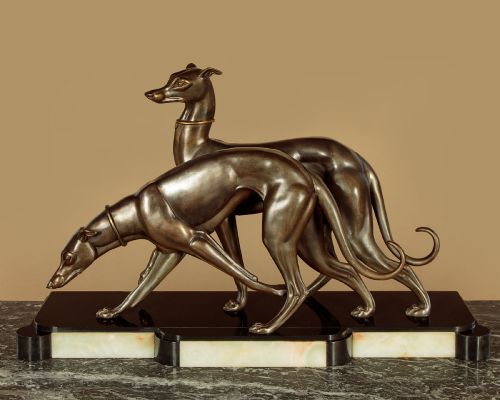
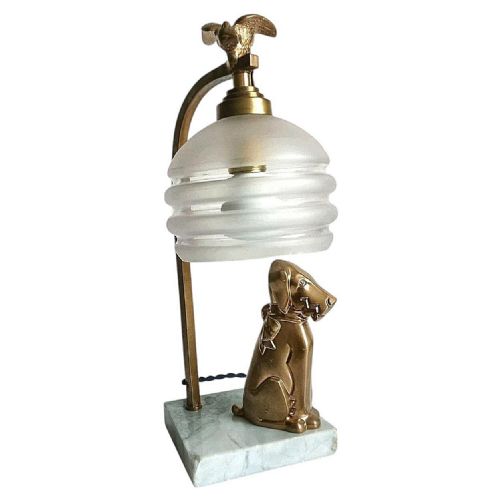
These 1930s bronze dog pieces capture the sleek lines of Art Deco design and the enduring appeal of hounds.
1930s Bronze Dog
When you search for a 1930s bronze dog, you are looking at figures, clock sets, table lamps, and car mascots created during the Art Deco period. These objects capture popular breeds such as greyhounds, borzois, poodles, and alsatians, often mounted on heavy stone bases.
The versions you are most likely to meet on this page originate from French workshops and include figural groups featuring girls, parrots, or classic cars alongside the canine subjects. Many serve dual purposes as night lights, mantel clocks, or novelty alarm clocks.
The evidence shows periods spanning from the nineteenth century through the 1920s, 1930s, and into the 1940s, though the dominant aesthetic remains firmly rooted in Art Deco style. The craftsmanship ranges from standalone sculptures to functional pieces incorporating frosted glass and marble.
How they were made
The makers utilised traditional casting methods to shape bronze, spelter, and silvered bronze into dynamic animal forms. These metal figures were then mounted onto contrasting plinths of marble or onyx to provide stability and visual weight.
Functional items integrated illumination and timekeeping, combining metalwork with frosted glass panels for night lights and clock movements within the sculptural composition. Surface finishes varied from polished metal to patinated or bronzed effects that highlighted the musculature of the dogs.
Greyhounds race endlessly across marble plinths, while an observant borzoi keeps watch beside a glowing night light.
What varies in quality
The distinction between tiers of these pieces lies in the fidelity of the casting and the quality of the supporting materials. Finer examples display crisp detail in the fur and facial expressions of the dogs, paired with carefully selected marble or onyx bases that show rich veining.
Signatures from known sculptors elevate the standing of a piece, as do complex compositions that combine multiple figures, such as children or birds, with the animal subject. Simpler castings or pieces utilising alternative metals like spelter sit lower in the hierarchy than heavy, solid bronze works.
Karl Hagenauer·Alexandre Kelety·Geo Maxim
The 1930s Bronze Dog Glossary
- Art Deco
- A design style characterised by streamlined shapes, geometric forms, and a sleek modern aesthetic. It dominated decorative arts throughout the 1920s and 1930s.
- Spelter
- A zinc alloy commonly used as a cost-effective substitute for bronze in decorative figures. It often received a bronze-coloured surface finish.
- Automobilia
- Collectable items associated with motor cars, including the radiator cap mascots produced in this period. These figures were mounted onto vehicle bonnets.
- Patina
- The surface coloration and sheen acquired by bronze over time or through chemical treatment. It enhances the depth and texture of the metal sculpture.
- Night light
- A small decorative lamp designed to provide low-level illumination, often featuring frosted glass panels illuminated from within by an internal bulb.
1930s Bronze Dog: Frequently Asked Questions
What materials are these dogs made from?
The pieces primarily utilise bronze, silvered bronze, and spelter for the animal figures. These are frequently mounted on bases made of marble or onyx.
Additional elements such as frosted glass appear in the lighting pieces, while brass and other metals form the mechanical components of the clocks.
Are all these pieces actually from the 1930s?
The majority of the listings date from the 1920s and 1930s, aligning directly with the height of the Art Deco movement. A small number trace back to the nineteenth century or extend into the 1940s.
Stylistically, they share the distinct geometric and streamlined qualities typical of interwar European design.
How were these decorative items used originally?
Many served as standalone sculptures or bookends, while others incorporated practical functions into the design. Examples include mantel clocks, novelty alarm clocks, and night lights that doubled as bedside illumination.
Automobilia pieces functioned as radiator mascots attached to the fronts of classic cars.
Which dog breeds appear most often?
Greyhounds and borzois dominate the sculptural forms, reflecting the Art Deco fascination with speed and sleek silhouettes. Poodles and alsatians also feature prominently in the available figures and night lights.
Some compositions pair these hounds with human figures, such as young girls or children with teddy bears.