


Art Deco Greyhound
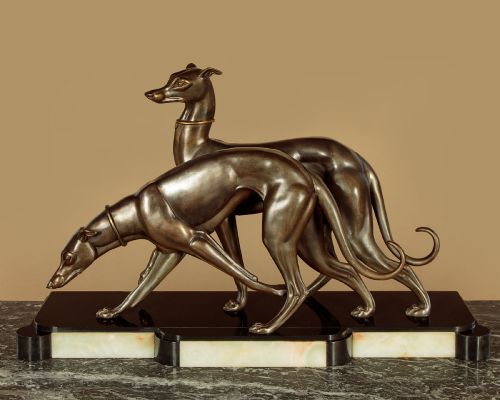
These art deco greyhound figures capture sleek modernist speed and domestic elegance in bronze, marble, porcelain and spelter.
Art Deco Greyhound
An art deco greyhound brings the streamlined velocity and clean geometric lines of the interwar years straight into a room. These pieces appear most frequently as standalone bronze sculptures, mantel clock sets and car mascots.
Makers across France, Britain and Germany rendered the breed in characteristic poses of full stretch or quiet repose. Figures often pair the hound with female figures, such as Diana the huntress or running youths, reflecting the era's taste for athletic movement.
The objects serve multiple decorative functions beyond pure sculpture, appearing on nutcrackers, trophy boxes, night lights and table lamps. Most examples date from the nineteen twenties and nineteen thirties, though interpretations stretch from the nineteenth century into the forties.
Materials and Technique
Foundry workers cast these dogs in bronze, silvered bronze and spelter, often mounting the heavy metal figures onto stepped bases of contrasting black marble or banded onyx. Metal casts receive various patinas, from dark bronze tones to bright silver plating, to accentuate the musculature.
Ceramic pieces utilise porcelain or craquele glazes, fired in European potteries to achieve smooth, glossy surfaces. Wood carvers also shaped the breed, while specialised automotive accessories utilised durable metal alloys suitable for exterior mounting on motor cars.
Listings feature four primary materials for these hounds: bronze, marble, porcelain and wood.
Distinctions in Quality
The choice of base materials significantly alters the presence of a piece, with genuine multi-coloured marble and heavy onyx slabs representing higher tier production than simpler wooden or basic metal mounts. Signed casts by named sculptors command greater attention than anonymous factory output.
Karl Hagenaur·Geo Maxim·Louis Lejeune·Uriano·Limousin·Duquenne·Ary Bitter·Charles Lemanceau·Jules Masson
The Art Deco Greyhound Glossary
- Spelter
- An alloy of zinc and lead often used as a cheaper alternative to bronze during the interwar period. It is softer than bronze and typically requires a patinated finish to imitate more costly metals.
- Car Mascot
- A decorative ornament mounted on the radiator cap of a motor car. Greyhound motifs were popular for their association with speed and aerodynamic form.
- Craquele
- A decorative ceramic glaze characterised by a network of fine intentional cracks across the surface. This technique was widely utilised by continental potteries.
- Patina
- The surface coloration and sheen developed on metal through age or chemical treatment. It highlights the underlying texture of the cast.
- Night Light
- A small decorative lamp designed to provide low illumination. These often combined a metal figure with a glass or lit marble panel.
Art Deco Greyhound: Frequently Asked Questions
What materials are these figures made from?
Sculptures utilise bronze, spelter and silvered bronze, frequently paired with marble or onyx bases. Ceramics and porcelain appear alongside wooden items.
Automotive mascots and functional objects like nutcrackers and clocks introduce additional metal alloys.
Are these pieces strictly from the 1930s?
The majority originate from the nineteen twenties and nineteen thirties during the height of the modernist design movement. Certain examples extend into the nineteenth century or reach the nineteen forties.
Stylistic markers remain consistent across these decades, focusing on streamlined canine forms.
How were these greyhound sculptures used originally?
Many served purely as decorative mantel sculptures or bookends in domestic interiors. Others performed practical duties as clock surrounds, table lamps, trophy boxes and radiator mascots.
Night lights combined sculpture with gentle illumination for bedrooms and hallways.
How do I identify a signed piece?
Artists and foundries often inscribed signatures directly into the metal base during the casting process. Ceramic versions bear factory stamps or painted monograms on the underside.
Anonymous production remains common among commercial decorative items from the period.