
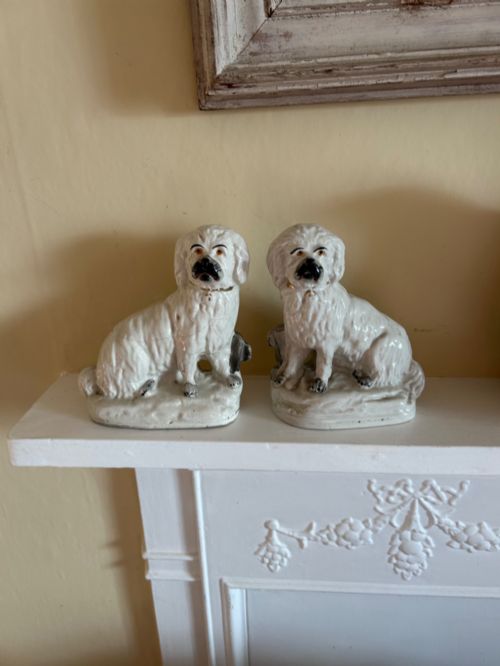


White Ceramic Dog Statue
These white ceramic dog statue pieces capture the charm of Victorian and continental animals, offering character and history to any mantelpiece.
White Ceramic Dog Statue
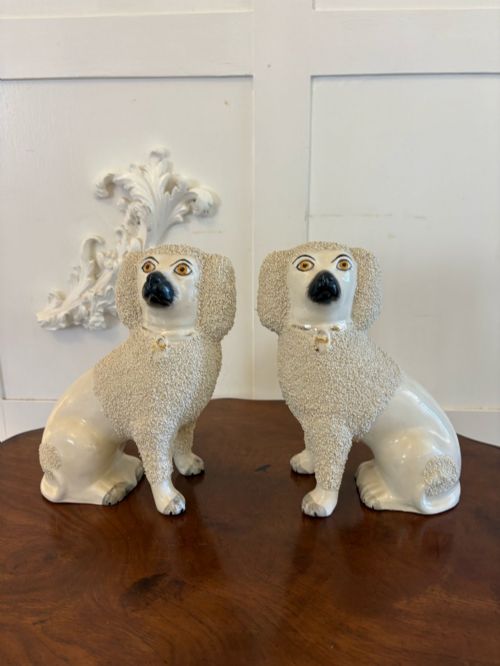
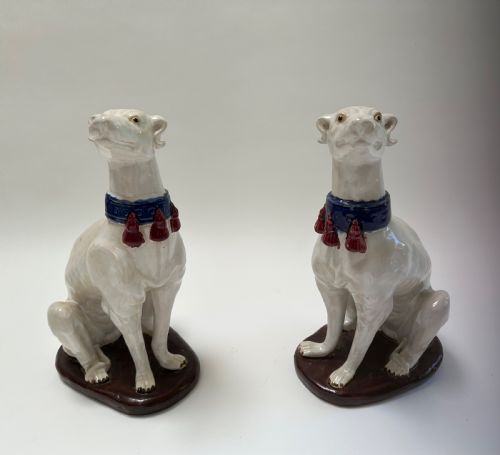
A white ceramic dog statue brings domestic animals and guardian figures into the room, ranging from Staffordshire spaniels and poodles to Japanese porcelain guardian lions. These sculptural pieces often appear in pairs, designed to sit symmetrically on mantelpieces or sideboards.
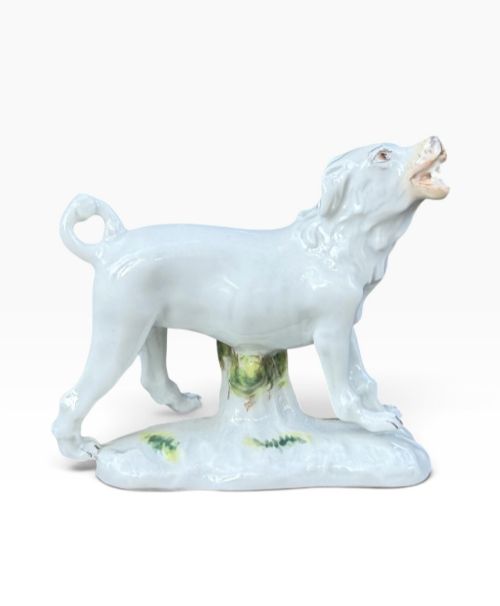
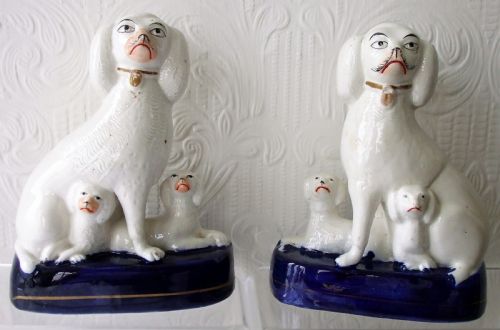
The selection here draws heavily on nineteenth-century Staffordshire pottery, alongside continental porcelain and Japanese Meiji period figures. Buyers encounter seated spaniels, poodles with pups, and hunting dogs shaped with distinct regional characteristics.
Victorian English examples dominate the selection, frequently featuring moulded earthenware finished with hand-painted details and gilt highlights. Alongside these sit porcelain groups and parian statuary reflecting mid-to-late nineteenth-century tastes.
How they were made
English Staffordshire works rely on dense pottery bodies coated in white slip and transparent lead glaze, whilst continental and Japanese items utilise finer porcelain clays fired at higher temperatures. Hand-painting brings individual expression to the eyes, muzzles, and surrounding decorative elements.
Several poodles arrive with tiny modelled pups tucked beside them, proving that nineteenth-century Staffordshire potters understood the appeal of canine family life.
What varies in quality
Hand-painting quality separates standard production items from superior works, particularly in the delicate rendering of eyes, noses, and facial expressions. The richness of the glaze and the careful placement of gold leaf distinguish the finest examples in this group.
Minton·Copeland·Beswick
The White Ceramic Dog Statue Glossary
- Staffordshire pottery
- Earthenware figures and groups produced in the Staffordshire potteries of England, particularly during the nineteenth century. These animals were modelled as fireside ornaments and mantel decorations.
- Parian ware
- A fine-grained unglazed porcelain resembling white marble, developed in the nineteenth century for portrait busts and statuary figures. It captures intricate detail without the gloss of traditional glaze.
- Lead glaze
- A glossy coating containing lead oxide applied to earthenware bodies before firing, giving a smooth and reflective surface. This finish protects the underlying ceramic and enhances painted colours.
- Blanc de chine
- A French term for white porcelain originating from China, used to describe unglazed or clear-glazed white porcelain figures of high purity. It valued smooth textures and monochromatic elegance.
- Enamel
- Opaque coloured glass fused to the surface of ceramics during a low-temperature firing. Enamels provide the vibrant red, black, and gold details seen on nineteenth-century pottery.
White Ceramic Dog Statue: Frequently Asked Questions
Are these dog statues usually found in pairs?
Many nineteenth-century figures, particularly Staffordshire spaniels and poodles, were manufactured specifically as matching pairs to flank a fireplace or mirror. This symmetry formed a standard part of Victorian interior arrangement.
Single figures do appear, but pairs remain the most common configuration in this tradition.
How do I identify a Victorian Staffordshire dog?
Victorian Staffordshire figures typically feature heavy earthenware bodies, white glaze, and hand-painted details such as copper lustre or gilt collars. They often show vent holes on the underside from the manufacturing process.
Looking closely at the weight, clay texture, and painting style helps separate these nineteenth-century pieces from later reproductions.
What is parian ware?
Parian ware is a type of biscuit porcelain designed to imitate white marble, introduced during the nineteenth century. It has a smooth, matte finish that shows fine sculptural detail without reflection.
雕 figures in this material often depict classical subjects or naturalistic animals rather than brightly coloured pottery.
How should I clean my ceramic dog statue?
Dusting gently with a soft, dry brush or cloth keeps the glaze and enamel safe from accumulation. Avoid harsh chemical cleaners or soaking, which can damage delicate gilt and hand-painted surface decoration.
Keeping the piece away from direct sunlight preserves the original colours of the enamel.