



Vintage Desktop Toilet Mirror
These vintage desktop toilet mirror pieces are classic dressing table essentials designed to sit upon furniture for daily grooming.
Vintage Desktop Toilet Mirror
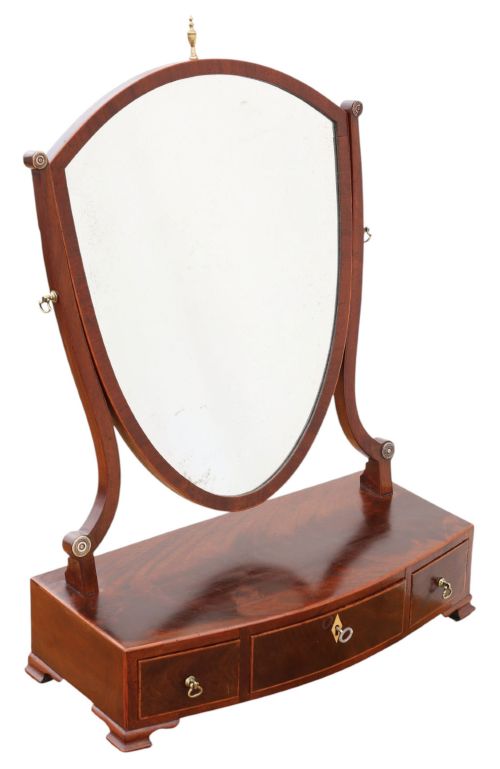
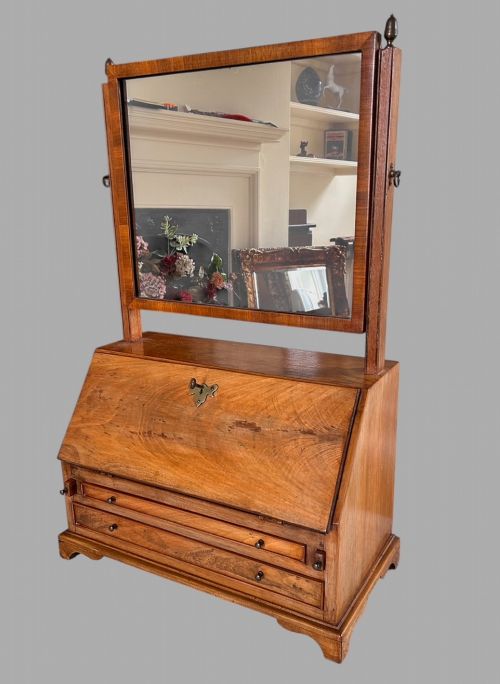
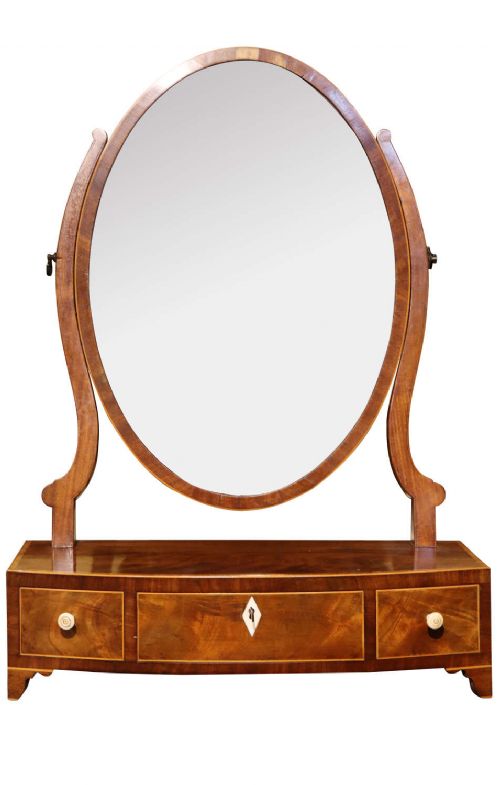
A vintage desktop toilet mirror provides a functional surface reflection while adding period character to a dressing table or chest of drawers. The pieces gathered under the phrase vintage desktop toilet mirror span several centuries, featuring compact tabletop formats designed for personal grooming.
Most examples you encounter here belong to the 18th Century, 19th Century, and Victorian eras, alongside Edwardian interpretations. These vary from simple swing mirrors on upright stands to more complex forms incorporating small drawer bases.
Makers utilised traditional cabinet-making formats, producing freestanding units that sit securely on a flat surface. The glass plate tilts within a supportive frame, allowing adjustable angles for the user.
Materials and construction methods
Cabinet makers relied heavily on timber selections such as mahogany, walnut, and satinwood to build the structural frames and miniature drawer units. Boxwood inlay frequently appears as a decorative border detail on refined surfaces.
Glass plates provide the reflective surface, mounted securely within wooden surrounds that pivot on brass hardware. Bone is occasionally used for small escutcheons or drawer pulls.
Some miniature drawer bases hide secret compartments just large enough for a love letter or a stray hairpin.
Distinguishing quality across examples
Superior execution shows in the choice of timber figurations, such as crossbanded veneers and well-matched grain patterns across the drawer fronts and frame surrounds. The finesse of boxwood inlay and the proportion of the supporting horns dictate visual refinement.
Mechanical execution distinguishes finer pieces through the smooth operation of the brass pivots and the precise dovetail construction of any integrated small drawers. Original mirror glass and well-preserved secondary timbers elevate the authenticity of the piece.
The Vintage Desktop Toilet Mirror Glossary
- Toilet mirror
- A small mirror designed for placement on a dressing table or chest. These pieces typically feature a swivelling glass plate mounted above a small base or box.
- Swing mirror
- A mirror plate hung on pivoting pins between two upright arms. This mechanism allows the user to tilt the glass angle freely.
- Crossbanding
- A decorative border of veneer laid perpendicular to the grain of the main surface. It frames the primary wood panel to enhance visual depth.
- Escutcheon
- A small protective plate surrounding a keyhole. On these mirrors, they are often rendered in bone or brass.
- Satinwood
- A pale, hard timber prized for its lustrous yellow sheen. It was frequently utilised for fine cabinetwork during the Georgian and Edwardian periods.
Vintage Desktop Toilet Mirror: Frequently Asked Questions
What is a toilet mirror?
A toilet mirror is a tabletop looking glass historically used for personal grooming and dressing. They sit directly on furniture surfaces rather than hanging on walls.
Most versions include a swivelling frame and occasionally small drawers for storing small accessories.
Where should I place a desktop mirror?
These pieces suit placement on dressing tables, chests of drawers, or sideboards in bedrooms and hallways. Their compact footprint requires minimal surface area.
Ensure the supporting furniture is stable and deep enough to accommodate the base.
How do I date a mahogany mirror?
Dating relies on examining the construction methods, timber choice, and hardware styles. Georgian pieces often display fine dovetailing and simpler upright profiles.
Later Victorian and Edwardian examples may feature heavier carvings or machine-cut veneers.
Do these mirrors tilt?
Yes, the mirror plate is mounted on brass pivots or screw pins between two vertical uprights. This allows the glass to swing freely to the desired angle.
Original hardware often includes wingnuts or threaded knobs to tighten the position.
Are the drawers functional?
Many tabletop mirror bases incorporate one, two, or three small drawers. These compartments were originally intended for jewellery, pins, or cosmetics.
They remain useful for storing small everyday items.