
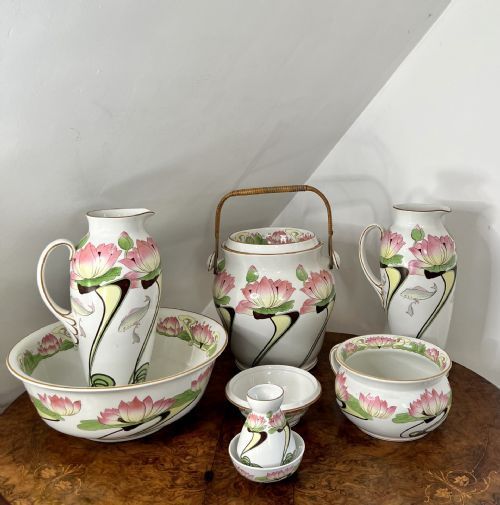


Vintage Ceramic Water Pitcher
A vintage ceramic water pitcher brings utility and hand-painted decoration into daily use, drawn from centuries of earthenware and stoneware production.
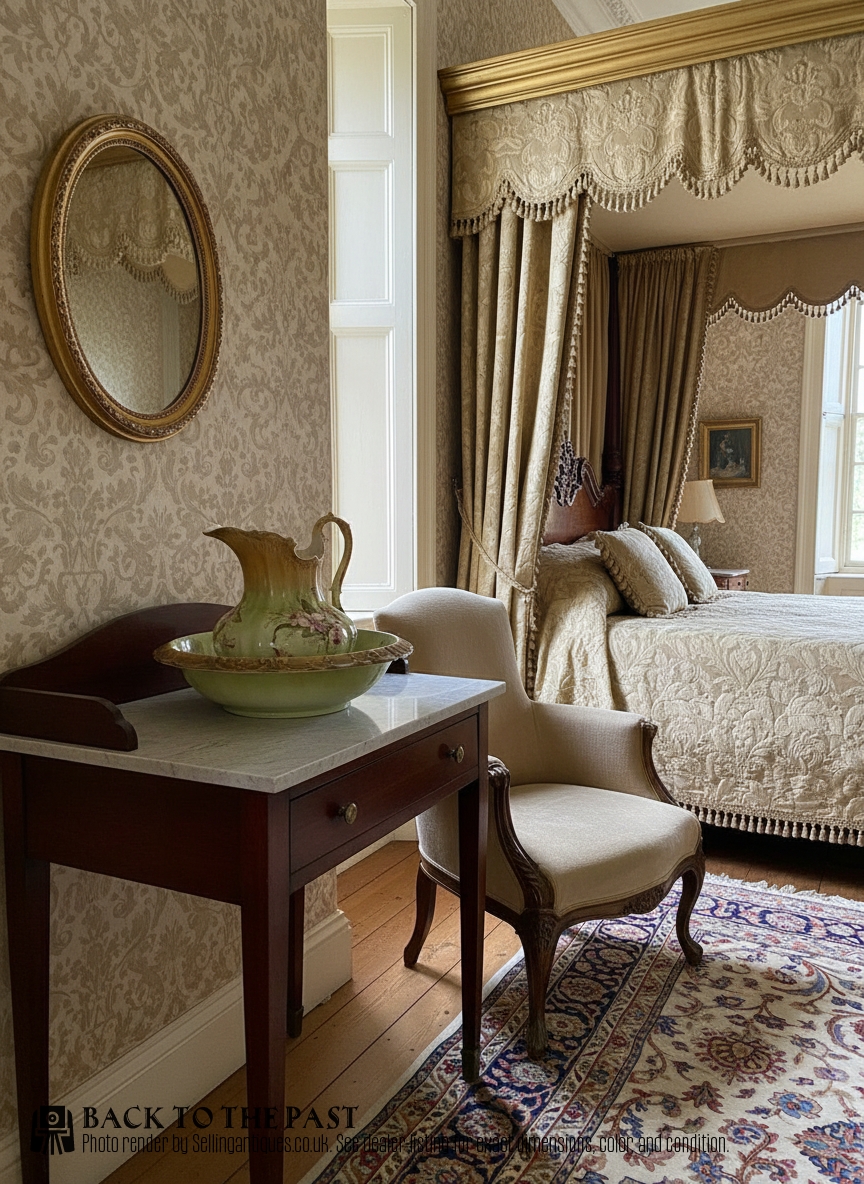
Vintage Ceramic Water Pitcher
A vintage ceramic water pitcher encompasses functional vessels designed for serving water, washing, or display, originating from periods spanning the Georgian era to the early twentieth century. Buyers seeking this phrase encounter sturdy earthenware and heavy stoneware alongside refined porcelain wash sets and washbasin jugs.
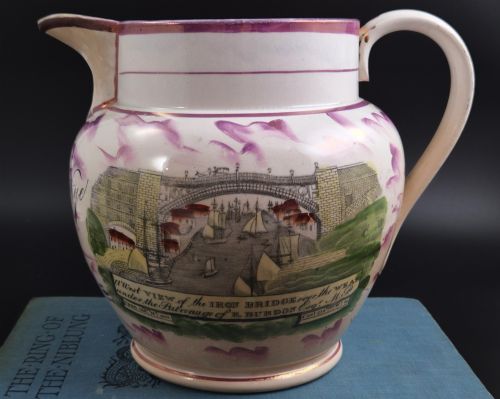
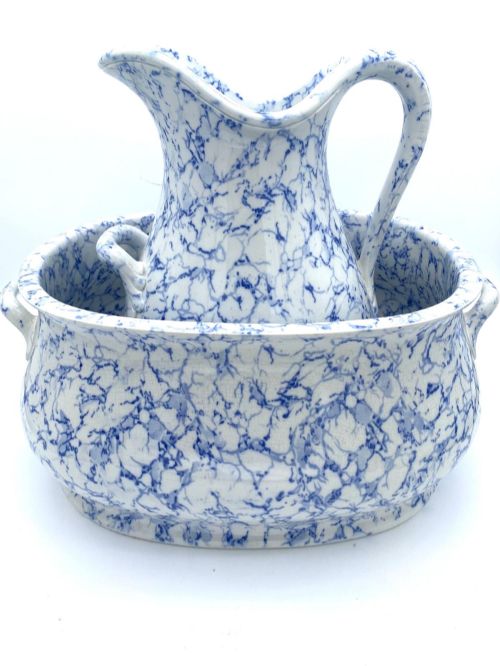
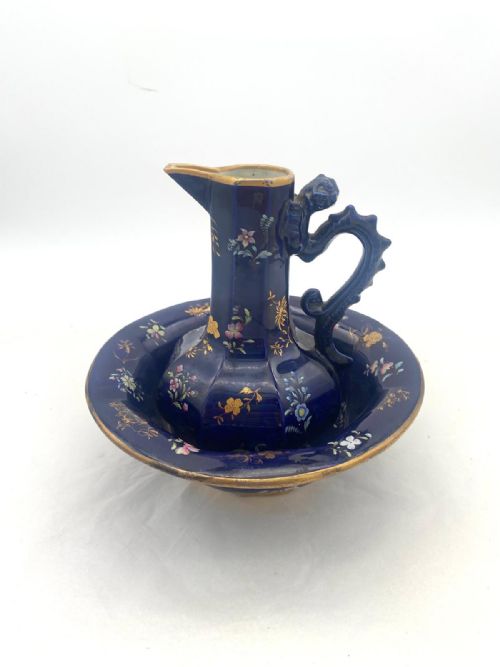
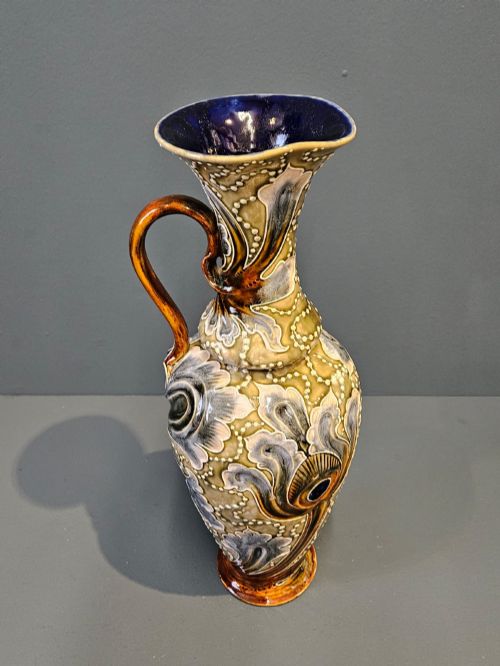
The selection on this page relies heavily on nineteenth-century Victorian pieces, including large salt-glazed ewers, transfer-printed ironstone, and relief-moulded jugs. Many examples survive alongside matching bowls, forming the core of traditional bedroom washing sets from the past.
How they were made
Potters shaped these vessels using earthenware, stoneware, and porcelain, frequently applying glaze to seal the porous clay body. Relief moulding allowed makers to raise figures and botanical motifs directly from the surface before firing.
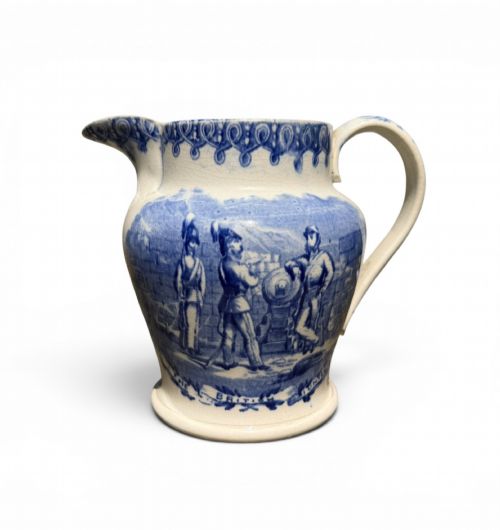
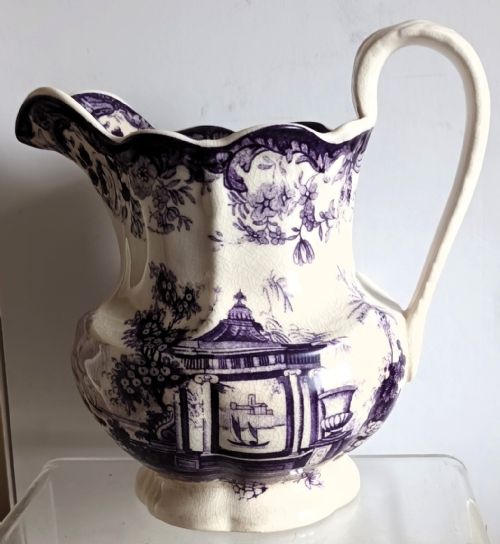
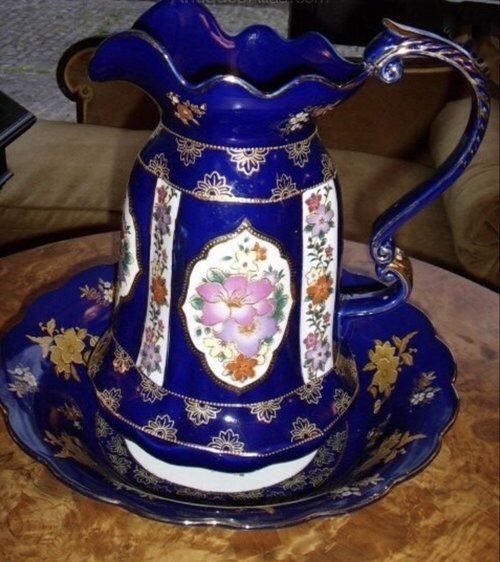
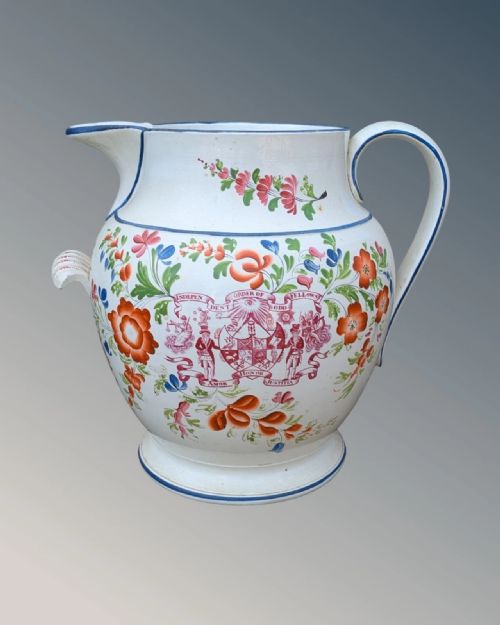
Decoration involved transfer printing in magenta, blue, or flow blue, alongside hand-painted enamels and gold leaf highlights. Salt glazing produced a distinctive textured finish on heavy stoneware vessels fired at high temperatures.
Bacchanalian revels dance across nineteenth-century stoneware jugs while playful mask heads peer from eighteenth-century spouts.
What varies in quality
Quality rests upon the crispness of the moulding and the depth of the glaze, where finer pieces exhibit sharply defined relief work and even colour distribution. Standard production wares display simpler transfer prints, while high-end exhibition pieces command attention through intricate hand-painted details and specialised ceramic bodies.
The weight and balance of the handle relative to the body indicate the maker's mastery, alongside the clarity of any applied transfer decoration. Well-preserved pieces retain their original surface sheen and exhibit minimal firing flaws from the kiln.
Minton·Masons Ironstone·Doulton Lambeth·Charles Meigh·Caughley Coalport·Livesley Powell And Co
The Vintage Ceramic Water Pitcher Glossary
- Earthenware
- A porous pottery body fired at lower temperatures, requiring an impermeable glaze to hold water. It forms the basis of many nineteenth-century domestic jugs.
- Stoneware
- A dense, vitrified ceramic fired at high heat until impervious to liquids. This material allows vessels to remain waterproof without internal glazing.
- Ironstone
- A durable type of heavy earthenware patented in the nineteenth century to imitate porcelain. It resists chipping and bears rich transfer-printed patterns.
- Transfer printing
- A technique where an engraved copper plate transfers a design onto tissue paper and then onto the ceramic surface. This method enabled consistent patterned decoration across large production runs.
- Relief moulding
- A process using carved moulds to raise decorative patterns above the main body of the vessel. It creates tactile surface depth on nineteenth-century jugs.
- Pearlware
- A refined earthenware developed in the late eighteenth century featuring a subtle bluish glaze. It bridged the gap between creamware and true white porcelain.
Vintage Ceramic Water Pitcher: Frequently Asked Questions
How do I date a ceramic pitcher?
Dating relies on examining the manufacturing marks stamped or printed on the base, combined with stylistic clues such as handle shape and glaze type. Makers often changed their registration marks or backstamps across decades.
Material composition also guides the timeline, as early pearlware gives way to ironstone and heavy stoneware by the later Victorian period.
Were these pitchers used for water?
These vessels served primarily as functional containers for fresh water within bedrooms, dining rooms, and kitchens. They frequently formed part of larger wash sets paired with matching basins.
Heavier stoneware versions handled large volumes for general household use, while delicate porcelain pieces stood on washstands for personal morning ablutions.
Can I use an antique pitcher daily?
Most antique ceramic pitchers hold liquids safely, though older earthenware requires gentle handling to prevent staining or crazing of the glaze. Thermal shock from boiling water should be avoided on nineteenth-century pieces.
Displaying them as flower jugs or keeping them on open shelves allows daily enjoyment without risking damage from frequent washing.
What is relief moulding?
Relief moulding involves pressing clay into a patterned mould so that figures, foliage, or heraldic designs stand proud of the vessel wall. This technique gained popularity during the Victorian era for decorative jugs.
Potters enhanced these raised scenes using contrasting coloured clays or simple glazes to catch the light.