
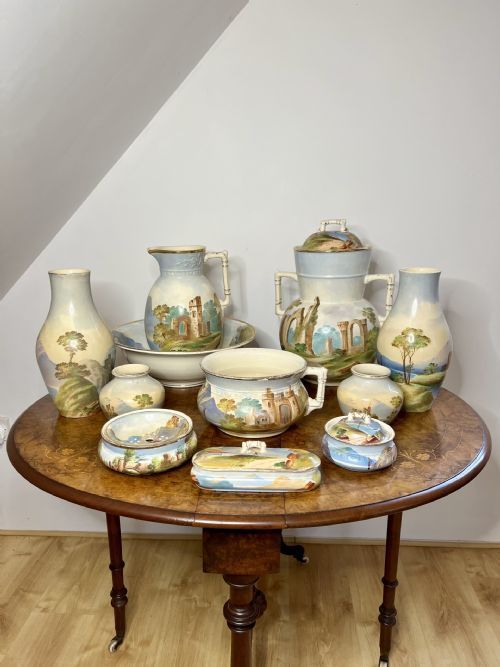


Antique Jug and Basin
These antique jug and basin sets bring the washstands and dressing rooms of the nineteenth and early twentieth centuries into modern homes with charm.
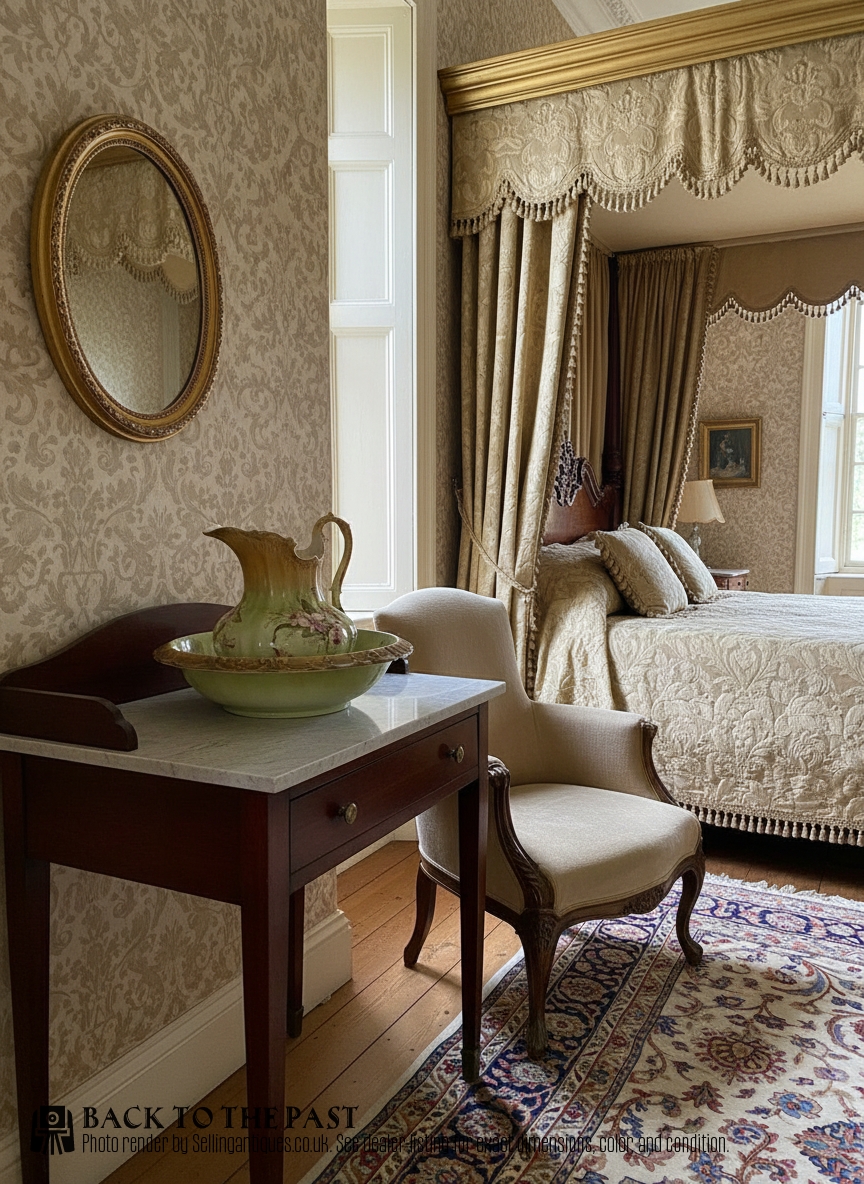
Antique Jug and Basin
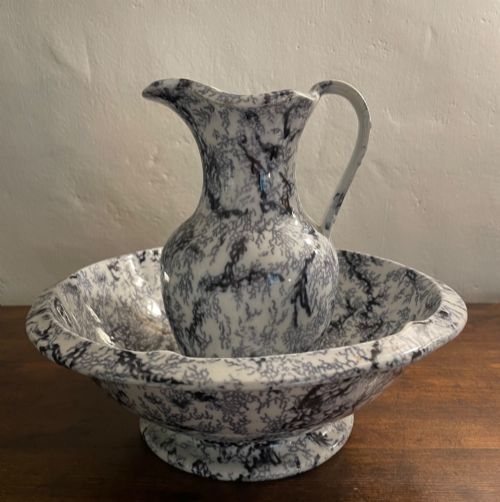
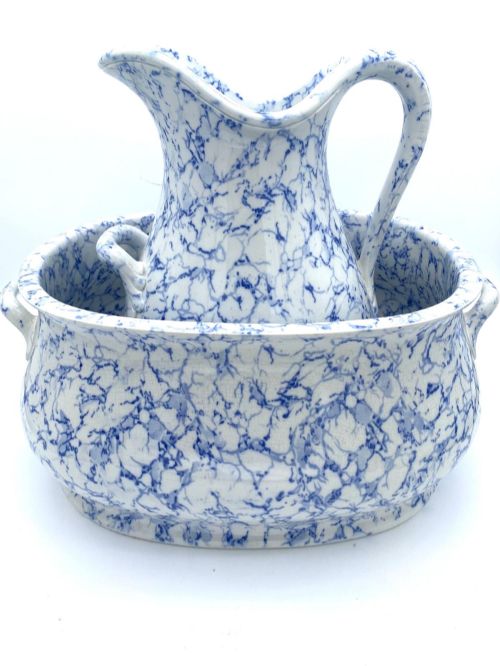
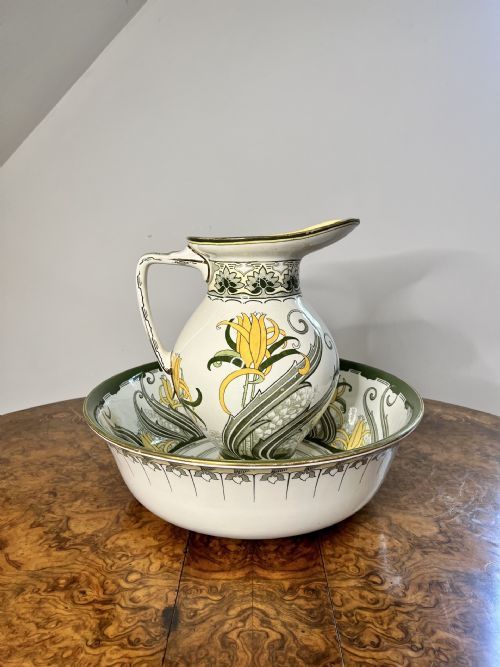
An antique jug and basin set forms a matching pair designed for personal washing before indoor plumbing became common in every bedroom. These functional vessels sat atop wooden washstands or dressing tables to hold water and catch runoff.
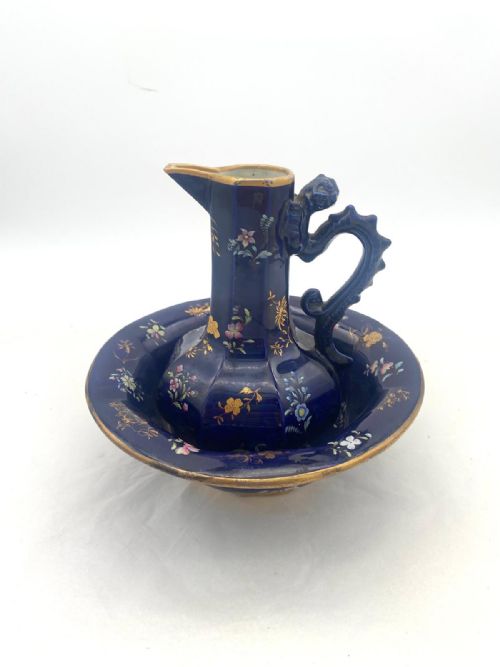
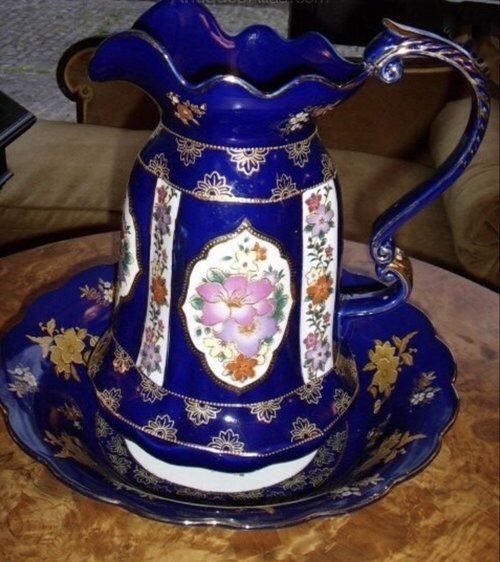
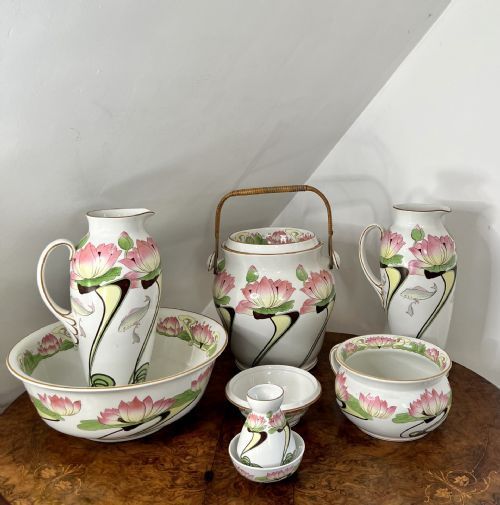
The pieces appearing on this page span from the early nineteenth century through the Edwardian period, with Victorian examples appearing frequently. They encompass large ceramic wash sets alongside smaller table sets and glass equivalents.
How They Were Made
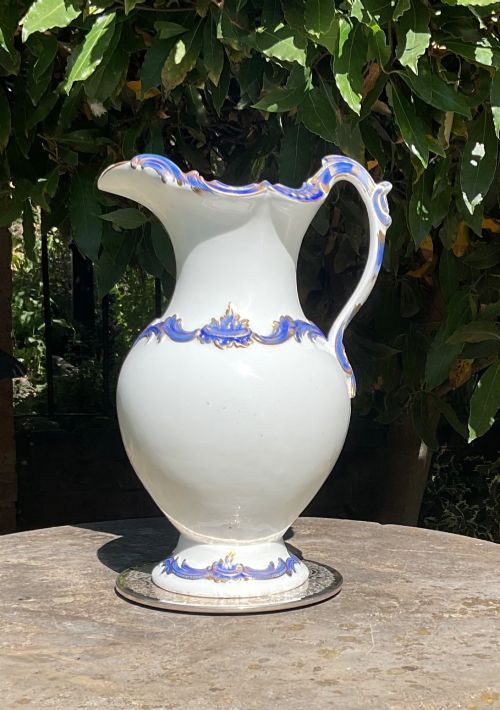
Potters utilised earthenware, porcelain, and ironstone as the primary bodies for ceramic sets, applying glazes and enamels to seal the clay and provide colour. Gold leaf and gilt details often highlight the rims and handles of finer examples.
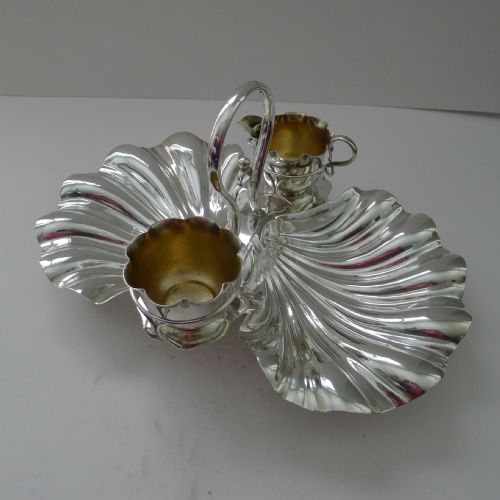
Glassmakers shaped cranberry, latticino, and standard glass into ewers and basins through blowing and moulding techniques. Silver plating and solid silver production also created metal jug and basin sets for domestic service.
The selection includes wash stands and dressing sets spanning from the Georgian era through the Edwardian period.
What Varies in Quality
The crispness of the transfer printing and the hand-painted brushwork dictate the visual merit of ceramic sets. Potters who employed intricate floral designs or elaborate moulding achieved a higher standard of manufacture.
The weight of the ceramic body and the uniformity of the glaze reveal the maker's technical skill. Heavier ironstone and fine porcelain represent a sturdier, more refined output than standard earthenware.
Minton·Doulton Burslem·Mason's Ironstone·Doulton Lambeth·Mark Jones and Sons·Shelley·Christofle·Robert Hennell·Daniel Arter
The Antique Jug and Basin Glossary
- Ironstone
- A durable type of earthenware patented in the nineteenth century that resists chipping better than standard pottery. It provides a heavy, resilient base for wash sets.
- Flow blue
- A transfer-printing technique where the cobalt blue pigment bleeds slightly into the glaze during firing. This creates a soft, hazy outline around the pattern.
- Ewer
- A large jug with a flared spout and a curved handle, traditionally used for holding water. It forms the primary vessel in a basin set.
- Cranberry glass
- A rich red glass coloured by the addition of gold chloride to the molten batch. It appears frequently in Victorian tableware and decorative sets.
- Latticino
- A type of Venetian glasswork featuring opaque white glass threads embedded within clear glass. This technique produces delicate linear patterns across the surface.
Antique Jug and Basin: Frequently Asked Questions
How were antique jug and basin sets used?
These sets served for morning and evening washing in bedrooms before plumbed bathrooms became standard. Water was poured from the jug into the basin for face and hands.
Servants filled the jugs from larger hot water cans brought up from the kitchen. The basins caught the water and drained into slop buckets kept underneath the washstand.
Can I use these sets for everyday display?
Many people display these sets on sturdy sideboards, tables, or bathroom counters to hold fresh flowers or dry items. Their size makes them striking decorative focal points in a room.
Ensure the surface supporting the jug and basin can bear the weight of the ceramic pieces safely. Placing felt pads underneath prevents scratching on both the furniture and the pottery base.
How can I tell the period of a set?
Stylistic clues such as floral transfer prints point towards the Victorian era, while clean lines often suggest Edwardian manufacture. Maker marks stamped on the underside provide the most reliable dating evidence.
Materials also indicate the age, as heavy ironstone gained popularity in the early nineteenth century. Glass techniques like cranberry colouring became widespread during the late Victorian period.