




Edwardian Ceramic Jug Bowl
These edwardian ceramic jug bowl sets are practical washroom pieces from the turn of the twentieth century that bring decorative earthenware and porcelain into a modern home.

Edwardian Ceramic Jug Bowl
When you search for an edwardian ceramic jug bowl, you are looking at utilitarian chamber sets and washware designed for the bedroom or washstand before plumbed bathrooms became universal. The pieces you meet on this page span the Edwardian period alongside examples from the late Victorian era up to the nineteen-twenties.
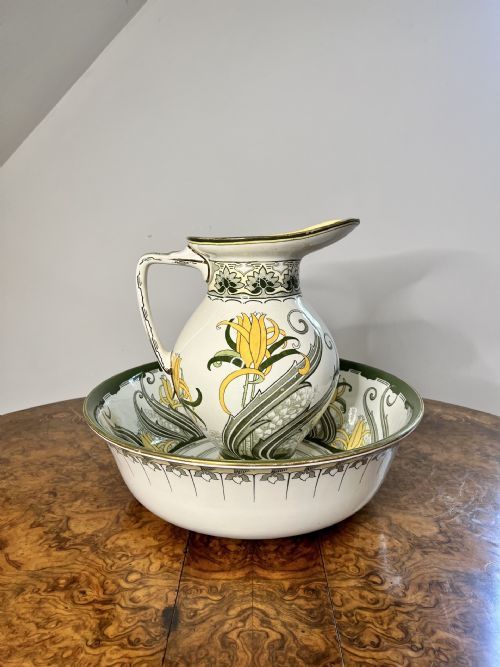
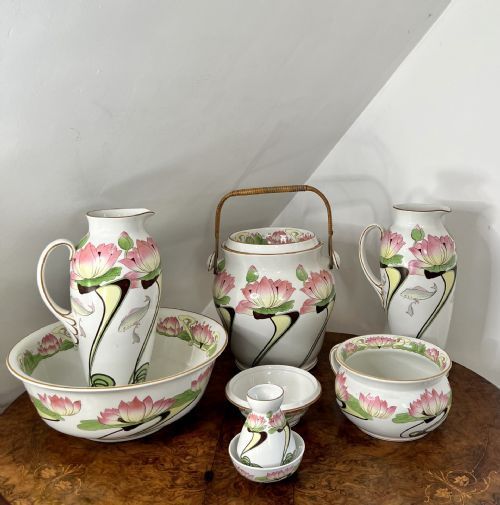
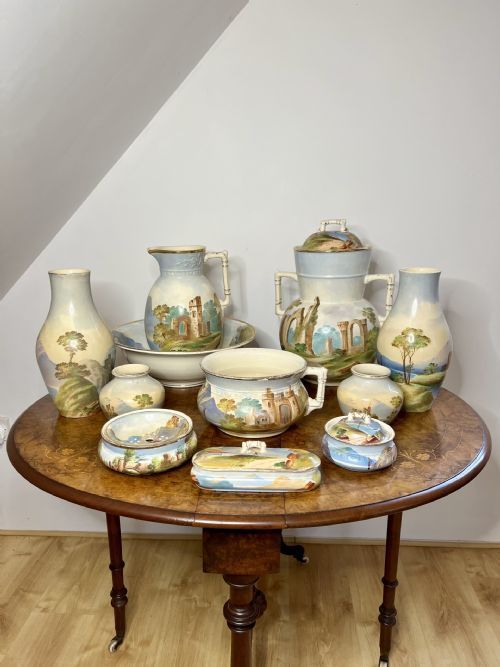
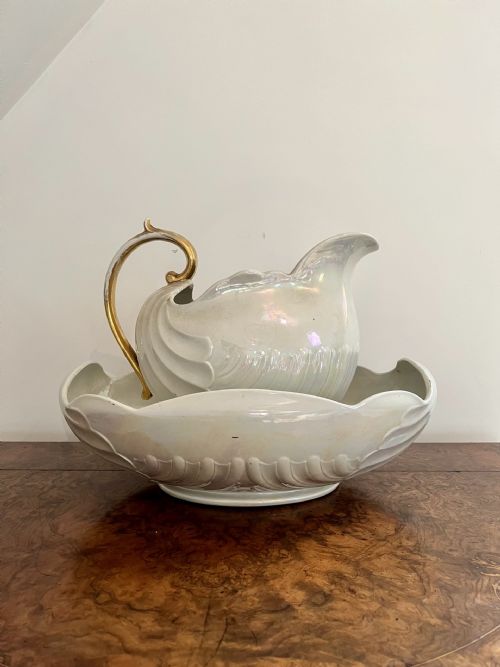
The primary forms take shape as large wash basins paired with matching pitchers, sometimes categorized within broader wash set or bathroom set terminology. They appear in styles ranging from plain utility wares to pieces bearing distinct Art Nouveau and Victorian Chinoiserie decoration.
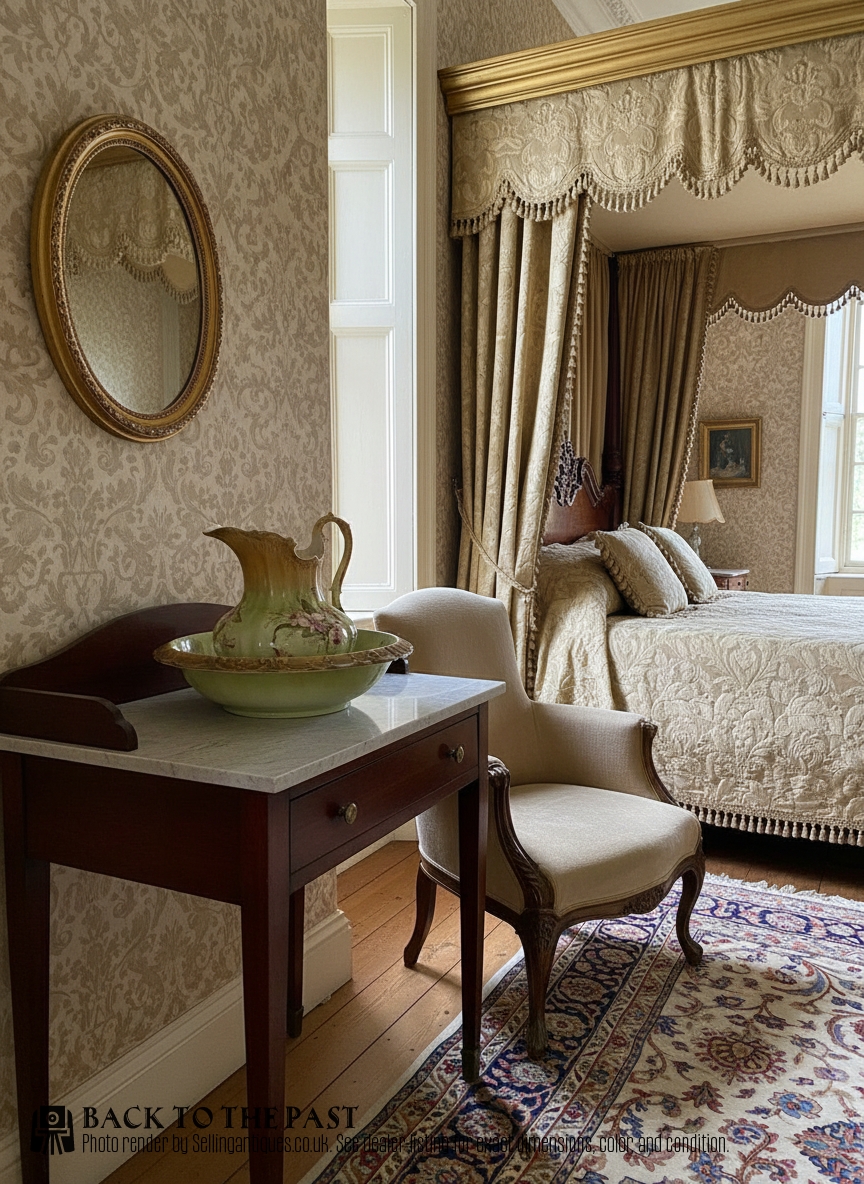
Makers and potteries of the era produced these sets in earthenware and porcelain, utilising glazes and enamel to create durable surfaces for daily washing. You will find complete sets designed for wooden washstands as well as standalone basin and jug combinations.
Materials and manufacture
Potteries shaped these items from earthenware, porcelain, and stoneware, relying on traditional ceramic body preparation and kiln firing. Earthenware formed the bulk of domestic washware due to its adaptability for large vessel production.
Makers applied liquid glazes to seal the porous clay bodies, frequently incorporating blue and white pigments, enamel detailing, and occasional gold leaf highlights. Stoneware bodies offered a denser, vitreous alternative suited to heavy daily use.
Listings feature periods spanning from eighteen ninety through nineteen twenty, alongside styles ranging from Art Nouveau to Victorian Chinoiserie.
Judging quality in washware
The standard of an edwardian ceramic jug bowl rests upon the clarity of the glaze and the crispness of the applied decoration, whether hand-painted enamel or printed transfer ware. Finer examples show careful attention to surface finish without pooling or pitting in the fired glaze.
The weight and balance of the jug relative to its accompanying bowl reflect the skill of the pottery. Well-thrown forms maintain uniform wall thickness and stable bases across both the pitcher and the basin.
Doulon Burslem·Doulton Lambeth·mark Jones & Sons·Shelley
The Edwardian Ceramic Jug Bowl Glossary
- Earthenware
- Porous pottery fired at lower temperatures than porcelain and typically glazed to ensure it holds water. It forms the standard material for most domestic wash sets.
- Wash set
- A matching group of vessels, principally a large jug and basin, designed for personal washing at a washstand before fixed plumbing. They often included soap dishes and chamber pots.
- Stoneware
- A robust, vitreous ceramic fired at high temperatures until semi-vitrified and impermeable. Doulton Lambeth utilised this durable body for utilitarian and decorative wares.
- Art Nouveau
- A decorative style prevalent around nineteen hundred featuring organic lines, flowing plant motifs, and stylized floral patterns. It appears frequently on the ceramics of this era.
- Enamel
- Opaque vitreous composition fused to the ceramic surface to add colour and pattern. It provides vibrant tones that sit above the primary glaze layer.
Edwardian Ceramic Jug Bowl: Frequently Asked Questions
What is an edwardian ceramic jug bowl used for?
These sets served as the primary washing apparatus in bedrooms before modern indoor plumbing was installed in domestic homes.
Today, they function primarily as decorative decorative items, umbrella stands, or large floral display containers in hallways and living spaces.
How do I date an edwardian ceramic jug bowl?
Dating relies on stylistic clues such as Art Nouveau motifs, maker marks stamped to the base, and period materials like earthenware or porcelain.
Most pieces date between eighteen ninety and nineteen twenty, reflecting the height of washstand production during the Edwardian era.
Are these jugs and bowls waterproof?
The glazed ceramic bodies are generally watertight, having been fired and sealed for holding basin water during daily washing.
However, collectors should inspect older earthenware for hairline cracks in the glaze before using them to hold fresh water or plants.
Did these sets come with washstands?
Many sets were made specifically to sit atop wooden washstands or shaving stands equipped with marble or wooden tabletops.
Some listings still pair the ceramic pieces directly with original bentwood or timber wash furniture from the period.