
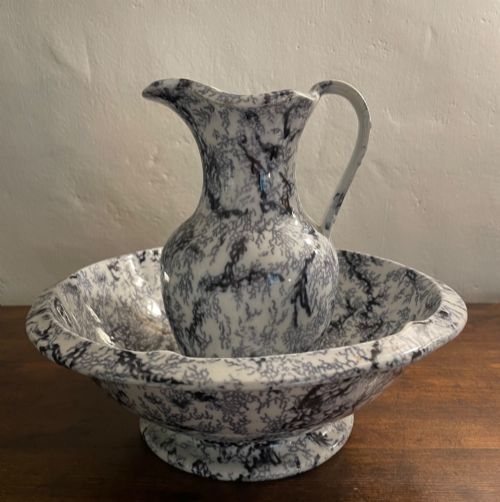
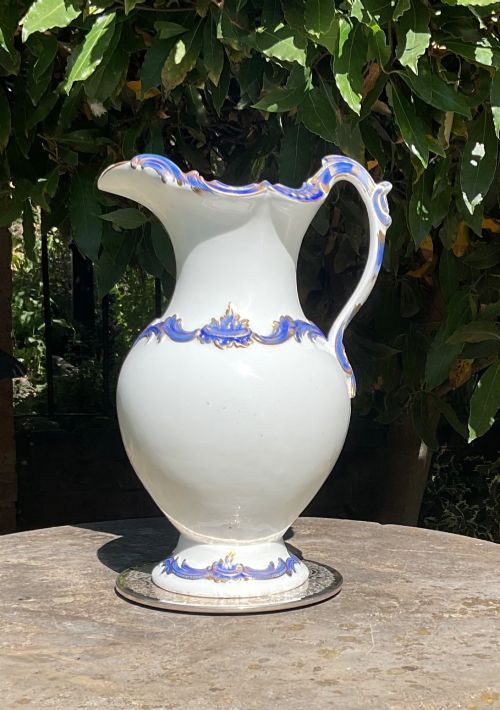


Victorian Ewer and Basin
These Victorian ewer and basin sets are washstand pieces that combine practical washroom service with decorative ceramic art.
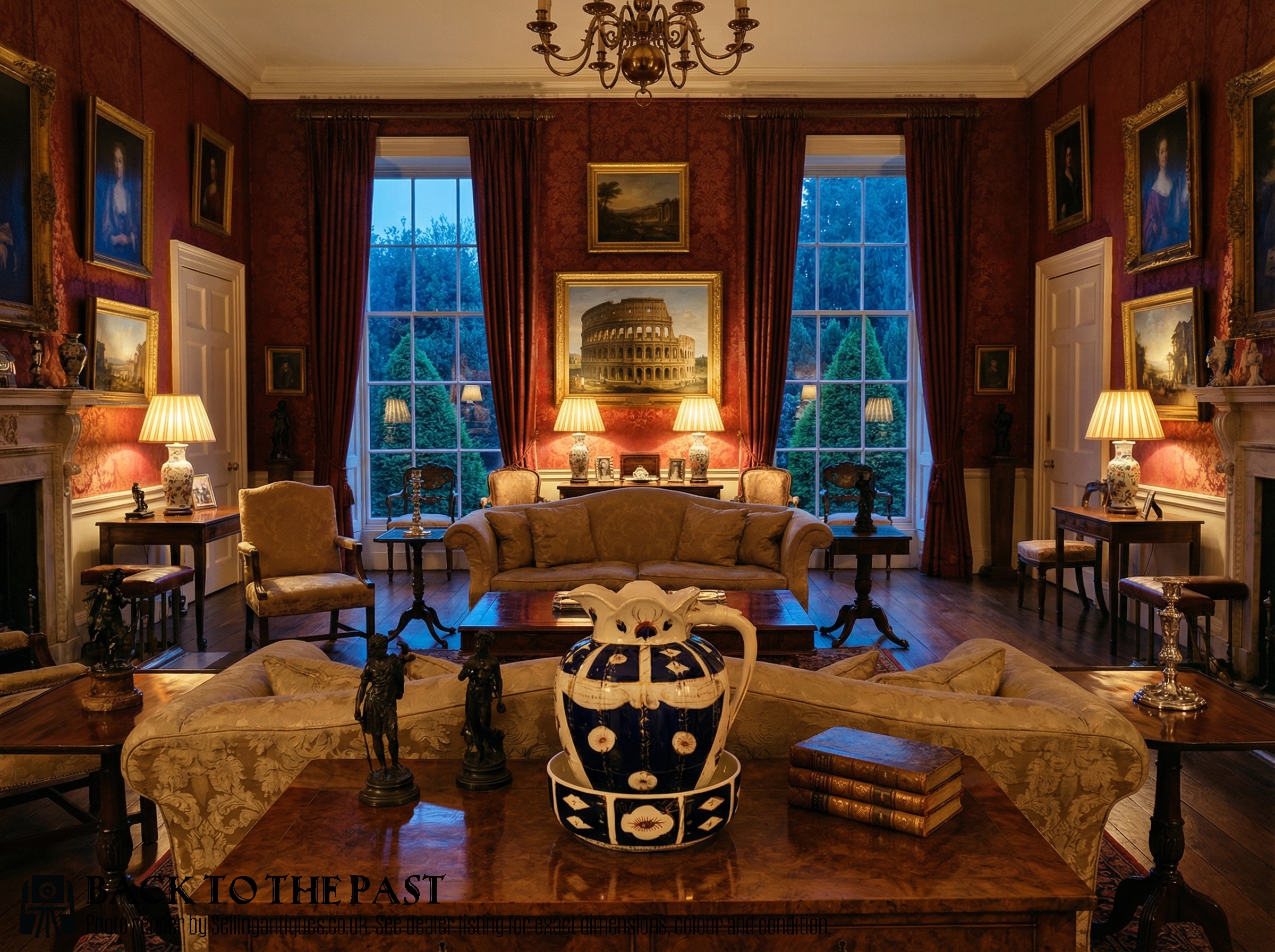
Victorian Ewer and Basin
A victorian ewer and basin search brings up washstand sets, jug and bowl sets, and water jugs from the nineteenth century alongside related porcelain and earthenware items. You will frequently encounter complete ceramic wash sets alongside individual pitchers and basins.
The materials span ironstone, porcelain, earthenware, and glass, reflecting the sanitary and decorative needs of period bedchambers. Makers utilised techniques such as flow blue decoration, gilding, and enamelling to finish these functional bedroom vessels.
Most examples date across the nineteenth century, from early periods through to Edwardian interpretations. You will find standard earthenware wash basin sets alongside more specialised items such as miniature ewers and Venetian glass claret jugs.
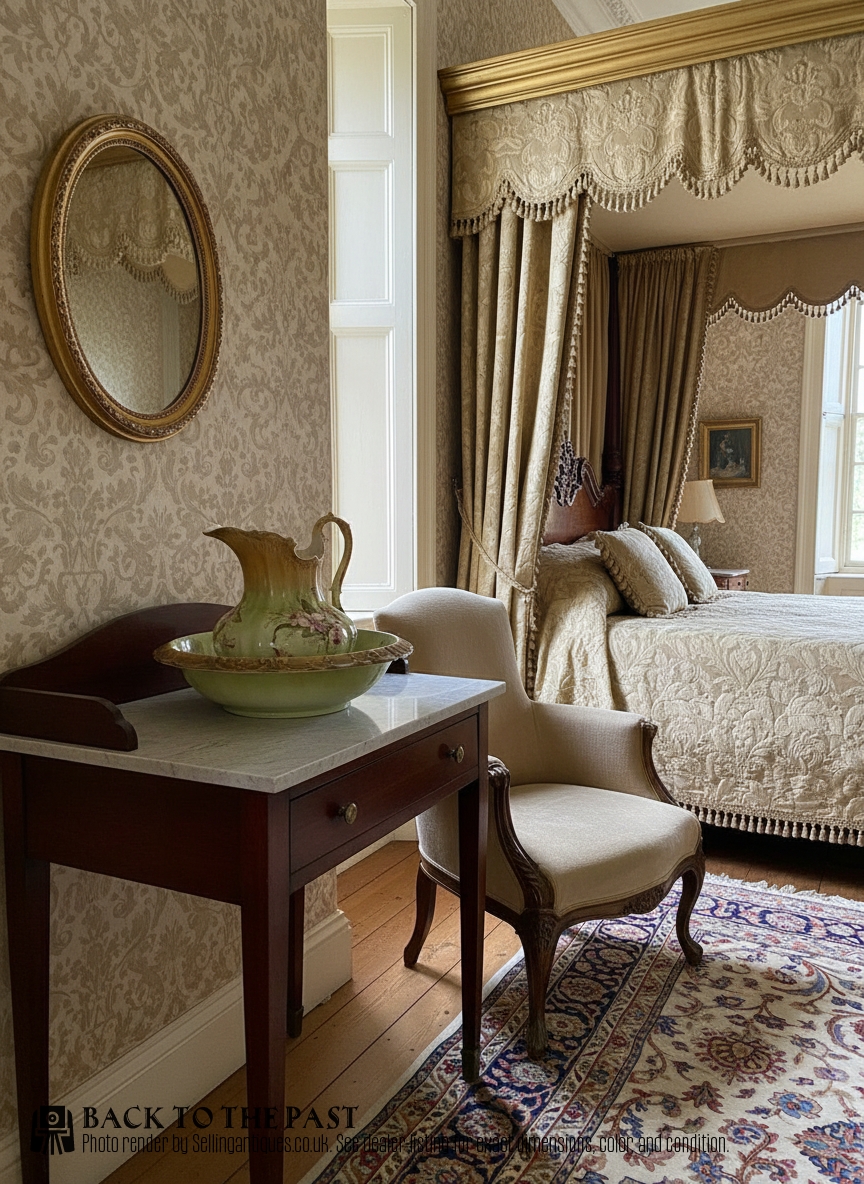
Materials and construction
Potteries shaped these pieces from ironstone, porcelain, and earthenware before applying glazes and hand-painted or transfer-printed patterns. Ironstone provided a heavy, durable body suitable for daily washing routines.
Decoration relied on applied enamels, gold leaf, and gilt highlights over a smooth glaze surface. Glass pieces such as Venetian lattico examples demonstrate alternate hot-working and trailing techniques rather than ceramic moulding.
Listings feature items from the nineteenth century alongside Edwardian examples, spanning earthenware, porcelain, and glass.
Judgements of quality
Quality rests on the crispness of the transfer print or the skill of the hand-applied enamel and gold leaf. Finer pieces display sharper moulding in the handle and rim, and a more even glaze across both ewer and basin.
Sets that retain their original matching bowls and ewers hold greater consistency than assembled pairings. The presence of specialised patterns, such as Chinoiserie or intricate Venetian glass work, elevates the ambition of the manufacture.
Masons Ironstone·Minton·Doulton Burslem
The Victorian Ewer and Basin Glossary
- Ewer
- A large jug with a wide spout and looped handle, designed specifically for holding washing water.
- Ironstone
- A dense, vitreous earthenware patented in the nineteenth century for its durability and resistance to chipping.
- Flow Blue
- A cobalt printing style where the blue colour deliberately bleeds into the surrounding white glaze during firing.
- Lattico
- An opaque white striped glass technique associated with Venetian production.
- Gaudy Welsh
- A brightly coloured earthenware style featuring cobalt blue, iron red, and copper lustre accents.
Victorian Ewer and Basin: Frequently Asked Questions
What were ewer and basin sets used for?
These sets served as the primary washing apparatus in bedchambers before plumbed bathrooms became common in homes. Water was poured from the ewer into the basin for morning and evening hygiene.
They sat upon wooden washstands alongside soap dishes and chamber pots. The paired vessels kept washing water contained within the bedroom space.
Can I use these sets for fresh water?
Older earthenware and ironstone can develop hairline cracks or porous spots that absorb moisture over time. Using them for display rather than daily service preserves the material.
Thermal shock from very hot water can also crack nineteenth century ceramic bodies. Gentle handling ensures the glaze and any applied decoration remain stable.
How do I date a Victorian wash set?
Makers marks stamped or printed on the underside provide the most reliable guide to manufacturing dates. Stylistic clues such as Art Nouveau curves or flow blue patterns also point to specific decades.
Weight, body thickness, and the composition of the glaze shift between earlier ironstone pieces and later Edwardian wares. Comparing the decorative motifs with known factory timelines helps narrow the origin.