




Edwardian Ceramic Pitcher Basin
These edwardian ceramic pitcher basin sets are washstand essentials for daily hygiene, offering timeless utility and classic bedroom charm.
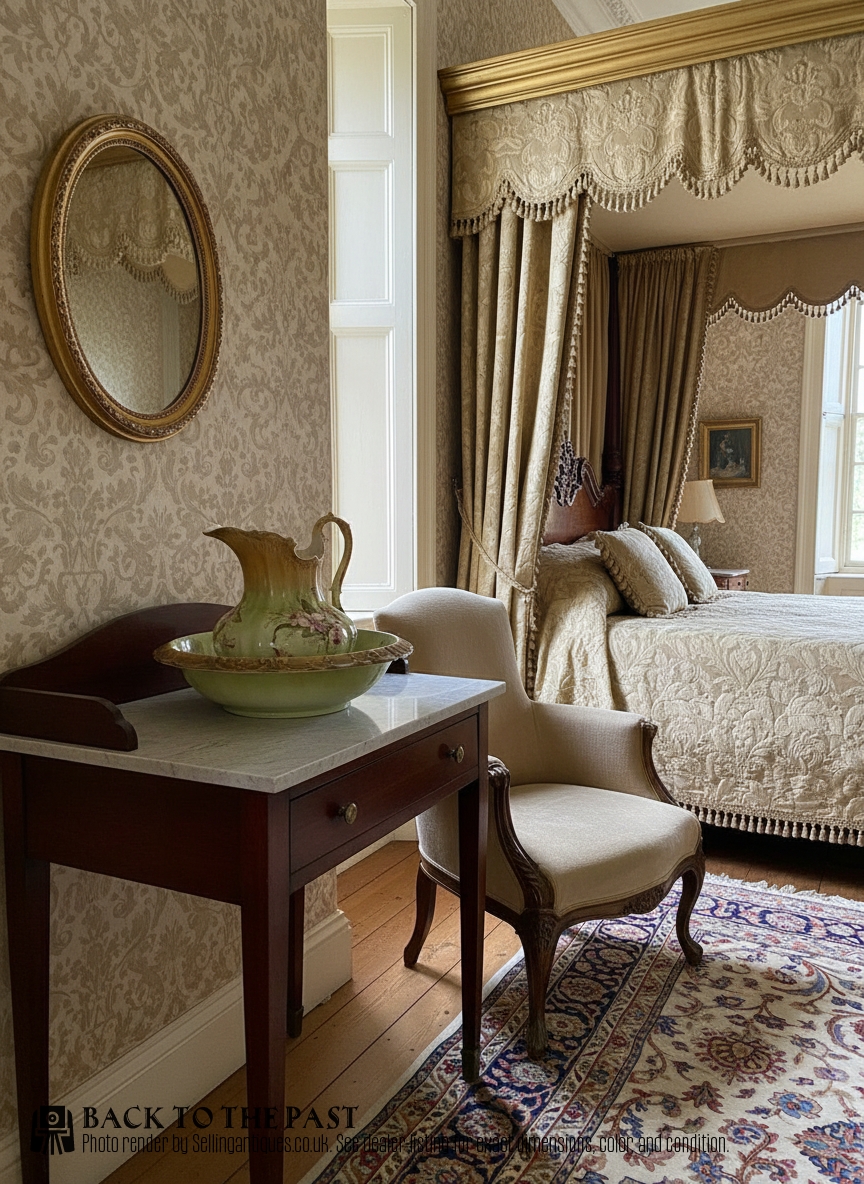
Edwardian Ceramic Pitcher Basin
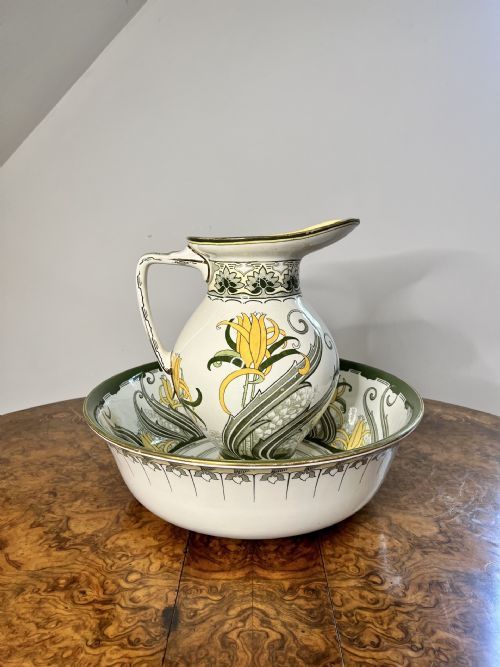
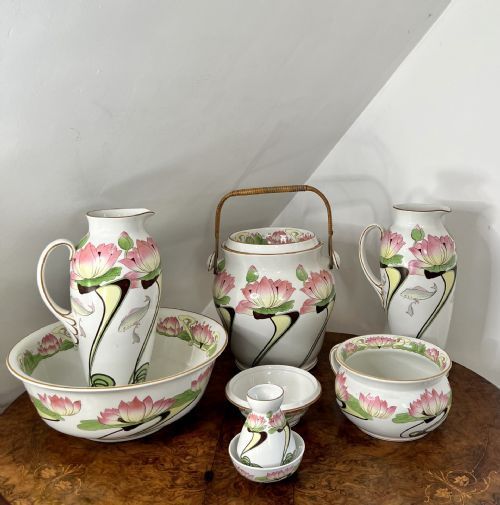
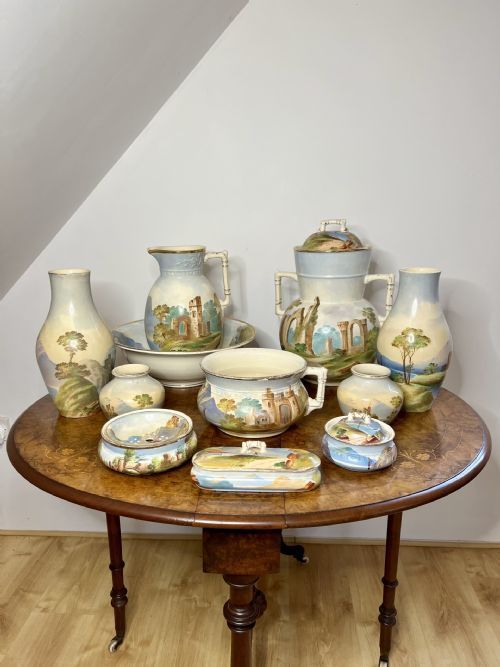
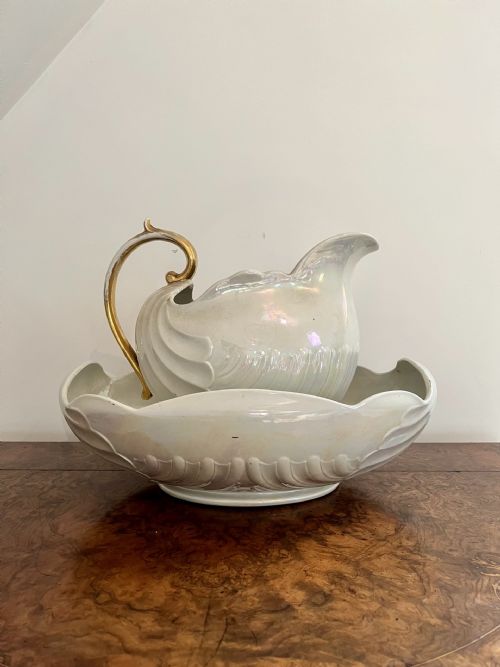
When searching for an edwardian ceramic pitcher basin, you are looking at utilitarian sets designed for personal washing before plumbed bathrooms became universal. These items appear primarily as jug and bowl sets, wash sets, and washstand sets spanning the period from eighteen ninety to nineteen twenty.
The pieces typically combine a large water pitcher with a matching deep basin, frequently housed on dedicated washstands or bentwood shaving stands. Most examples date from the Edwardian era, drawing on stylistic influences such as Art Nouveau and Victorian Chinoiserie.
Buyers most frequently encounter complete washware combinations produced in earthenware, porcelain, and glazed ceramic. These sets served a central domestic function in bedrooms across England before the widespread adoption of indoor plumbing.
How they were made
Makers utilised earthenware, porcelain, and stoneware shaped into functional pitchers and deep basins. Potters applied smooth glaze surfaces to seal the porous clay and facilitate daily washing.
Decoration involved applied enamel, blue and white transfer printing, and occasional gold leaf detailing. Stylistic elements from the Art Nouveau and Victorian Chinoiserie traditions were painted or glazed onto the ceramic bodies.
Listings feature items spanning the years from eighteen ninety to nineteen twenty, with the Edwardian period most heavily represented.
What varies in quality
Quality differences rest upon the finesse of the ceramic body and the complexity of the surface decoration, ranging from simple utilitarian earthenware to refined English porcelain. Well-executed blue and white patterns and delicate enamel work elevate the visual standard of a wash set.
The reputation of the pottery or manufacturer also distinguishes standard sets from notable workshop productions. Pieces carrying identifiable marks from established makers demonstrate superior ceramic forming and glaze application.
Doulton Burslem·Doulton Lambeth·Mark Jones & Sons·Shelley
The Edwardian Ceramic Pitcher Basin Glossary
- Edwardian
- Pertaining to the reign of King Edward VII, spanning from nineteen hundred to nineteen ten, characterised by lighter domestic furnishings. This period produced numerous matching washstand sets.
- Earthenware
- A porous pottery body fired at lower temperatures, requiring an impermeable glaze to hold water. This material forms the base of many standard wash jugs.
- Porcelain
- A fine, dense ceramic material fired at high temperatures, offering a smooth white surface and superior durability. English porcelain represents a finer tier of washware production.
- Stoneware
- A robust, vitrified ceramic fired at high temperatures to achieve natural impermeability without extensive glazing. Doulton Lambeth pieces utilise this durable material.
- Transfer printing
- A decoration technique where a design is engraved on a metal plate, printed on tissue paper, and transferred onto the unglazed or bisque ceramic. This method allowed intricate blue and white patterns on bathroom sets.
Edwardian Ceramic Pitcher Basin: Frequently Asked Questions
What was a pitcher basin set used for?
These sets provided the primary means for washing faces and hands in bedrooms before fitted indoor plumbing became standard. Water was poured from the pitcher into the deep basin for morning ablutions.
They sat upon wooden washstands or dedicated bathroom furniture alongside soap dishes and chamber pots. The pairing of jug and bowl ensured water was readily available where people slept.
How do I date an edwardian ceramic pitcher basin?
Dating relies on stylistic clues, pottery marks, and the materials used in manufacture. Pieces from the Edwardian period often feature softer floral motifs or Art Nouveau curving lines.
Makers' stamps printed or impressed on the underside of the ceramic provide the most reliable chronological indicator. Comparing these marks with known operational dates of potteries narrows the timeframe down accurately.
Are these sets still functional today?
Many of these ceramic pieces remain watertight and suitable for gentle everyday use in a modern home. However, collectors often treat them as decorative display items rather than utilitarian washware.
Placing them on sturdy surfaces protects the historical glaze and ceramic body from accidental impact. They make striking decorative arrangements in guest rooms or hallways.
What is the difference between earthenware and porcelain wash sets?
Earthenware is a heavier, more porous ceramic that requires complete glazing to hold liquids safely. It forms the bulk of domestic wash sets produced during the period.
Porcelain is finer, thinner, and vitrified throughout, representing a higher grade of manufacture. Porcelain pieces often feel lighter and display a more translucent white body.