


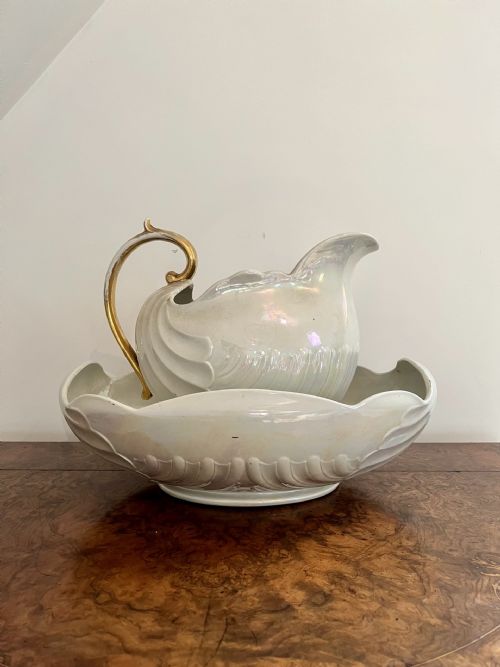

Porcelain Jug and Bowl
These porcelain jug and bowl sets bring utility and craftsmanship together to anchor a bedroom scheme with period character.
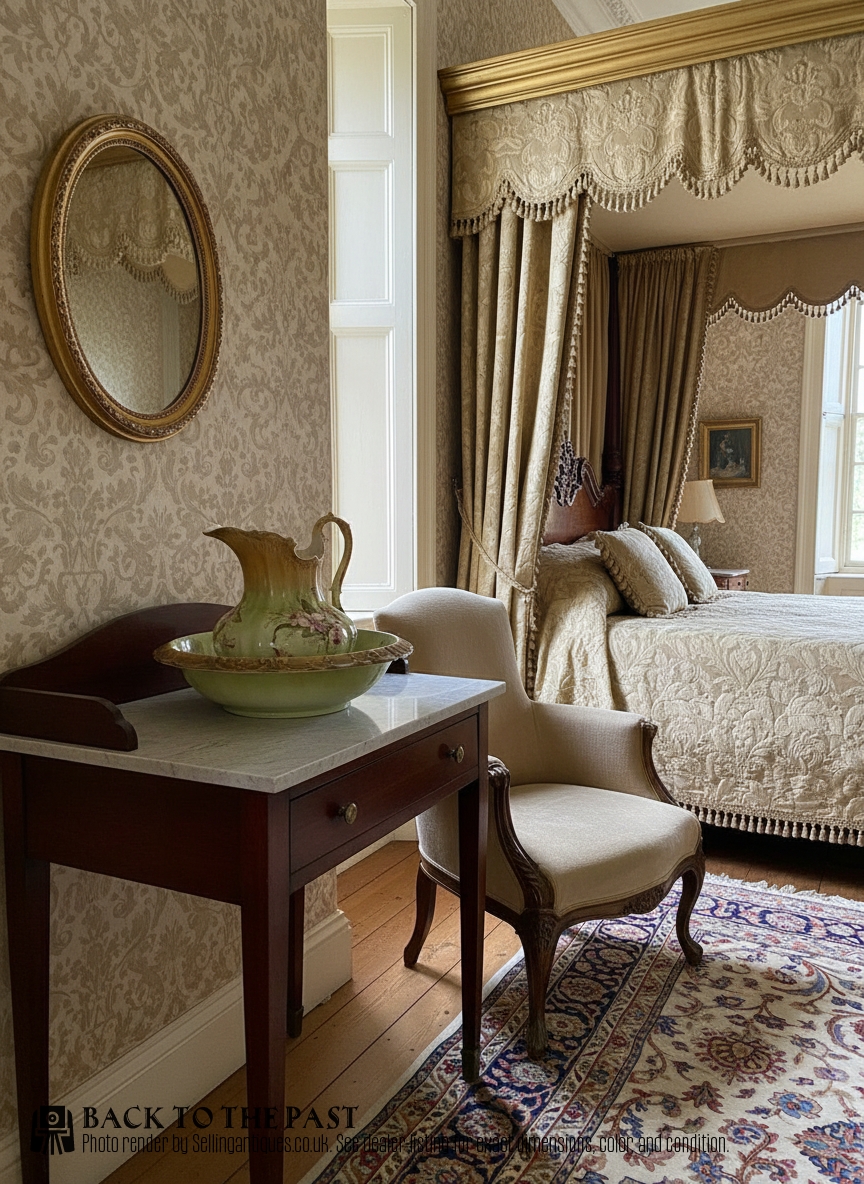
Porcelain Jug and Bowl
A porcelain jug and bowl set provides the traditional washing vessel combination for a washstand or dresser. Buyers searching for a porcelain jug and bowl encounter practical basin and pitcher pairings spanning the nineteenth century through the early twentieth century.
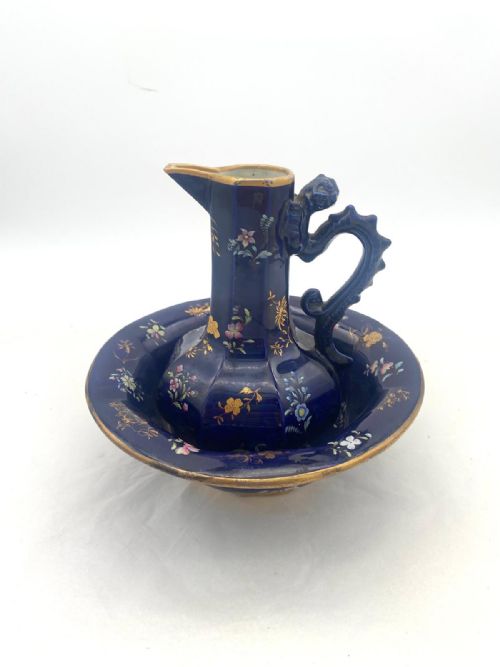
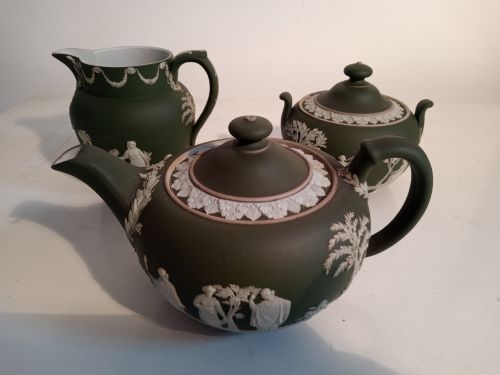
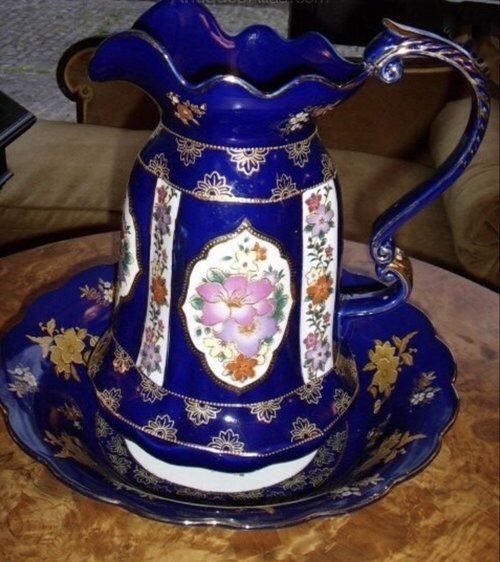
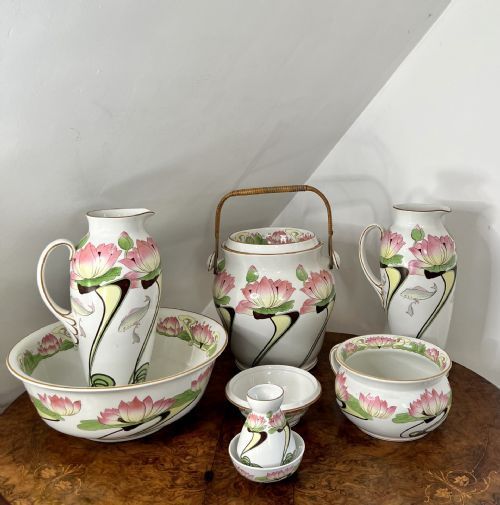
The selections on this page range from full-sized Edwardian bathroom sets to miniature Victorian examples and specialised tea or coffee wares. Makers utilise materials such as ironstone, earthenware, and glazed ceramic alongside porcelain to achieve both decorative and utilitarian vessels.
Stylistic influences vary from Victorian neoclassical and Chinoiserie to Edwardian blue and white designs. These items serve as functional decorative accents or collecting foci for period interiors.
Judging Quality and Execution
Quality rests upon the crispness of the ceramic form and the precision of the painted or printed decoration. A well-executed glaze application sits evenly across the body without pooling or thinning at the footrim.
The finesse of hand-painted details, such as floral motifs or fruit studies, distinguishes standard production from finer output. Gilding preservation and the crisp definition of moulded elements like octagonal panels elevate certain pieces above simpler counterparts.
Matching sets display consistency in glaze colour and mould registration between the pitcher and the basin. The integration of maker marks further denotes manufacturing origin and period standing.
Listings feature periods spanning from the nineteenth century through the 1930s, encompassing Victorian, Edwardian, and Regency styles.
Masons Ironstone·Wedgwood·Royal Davenport·Doulton Burslem·Royal Worcester·Shelley
The Porcelain Jug and Bowl Glossary
- Ironstone
- A heavy, durable type of earthenware patented in the nineteenth century that mimics porcelain. It offers high resistance to chipping and forms a robust base for domestic jugs and basins.
- Washstand
- A dedicated piece of furniture designed to hold a jug and bowl set for morning ablutions. These stands often feature marble tops and tile splashbacks.
- Gilt
- A thin layer of gold applied to the ceramic surface to accent handles, rims, and panels. This technique adds reflective warmth to Victorian and Edwardian wares.
- Chinoiserie
- A decorative style reflecting European interpretations of Chinese artistic traditions. It appears on ceramic pieces through blue and white landscape and floral motifs.
- Glaze
- A glassy coating fused to the ceramic body by kiln heat to render the piece waterproof. Coloured glazes, such as cobalt blue and olive green, define the visual identity of many sets.
Porcelain Jug and Bowl: Frequently Asked Questions
How were jug and bowl sets used?
These sets served personal hygiene needs in bedrooms before modern indoor plumbing became standard. Water was poured from the large jug into the basin for washing hands and face.
They also functioned as decorative centrepieces on washstands, often accompanied by soap dishes and chamber pots to complete the bedroom suite.
Where should I display my set?
A wash set sits naturally atop a period washstand, chest of drawers, or sideboard where the pitcher and basin remain visible. Miniature sets work well on smaller display shelves or tables.
Grouping complementary pieces allows the ceramic glazes and painted details to catch the light within a room.
How do I date a porcelain set?
Dating relies on stylistic clues, ceramic bodies like ironstone versus earthenware, and stamped maker marks on the underside. Victorian pieces often feature heavy neoclassical forms or rich transfer prints.
Edwardian examples tend towards lighter blue and white patterns or refined floral decorations that reflect changing domestic tastes.
What is the difference between ironstone and porcelain?
Ironstone is a dense, opaque earthenware developed for durability in heavy-use items like wash jugs. It provides strength while mimicking the appearance of true porcelain.
Porcelain is a vitrified ceramic material fired at higher temperatures, resulting in a more translucent body and a finer grain often reserved for tea and coffee wares.