




English Lustreware Pitcher
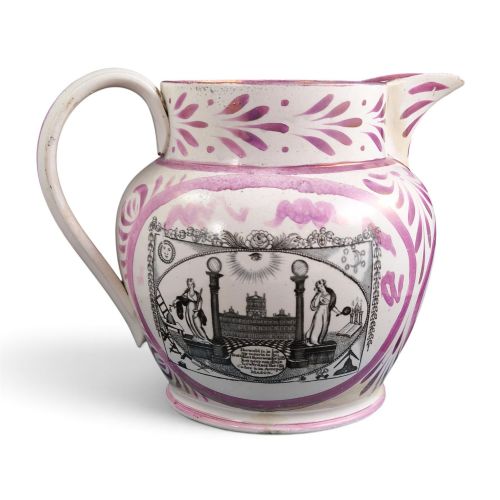
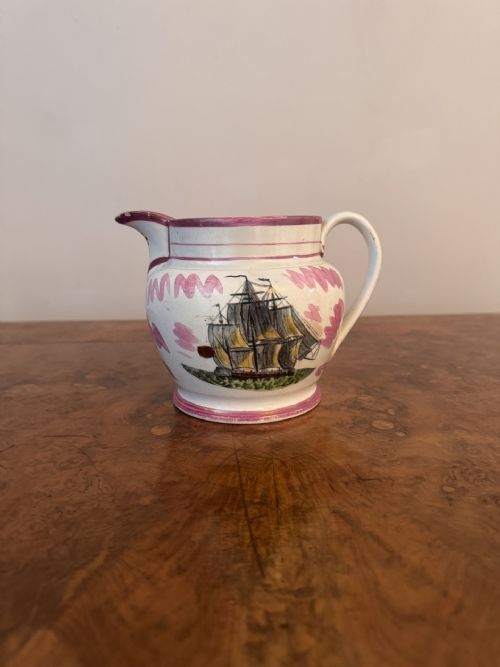
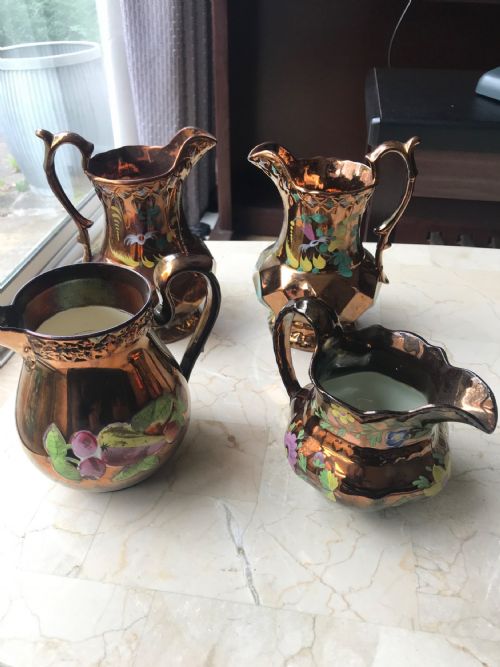
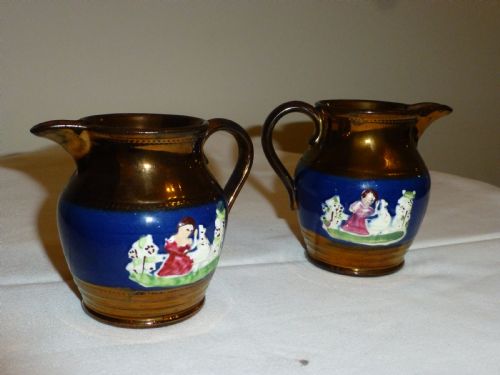
These English lustreware pitcher examples bring metallic glazes and transfer-printed scenes of maritime vessels, bridges and poetic verses straight to the table.
English Lustreware Pitcher
When you search for an English lustreware pitcher, you encounter earthenware and pearlware vessels created during the Georgian and Victorian periods. These pieces serve primarily as jugs, cream jugs, and milk jugs, decorated for domestic use or commemorative display.
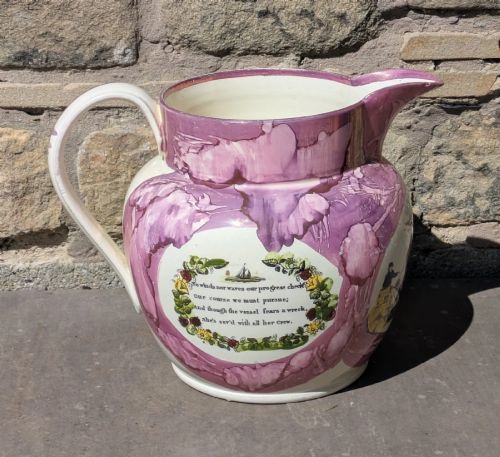
The selections available here range from large Sunderland pink lustre jugs featuring transfer-printed poems and ships to Staffordshire copper lustre jugs adorned with hand-decorated fruit or purple transfer motifs. Most examples date from the early nineteenth century up to the late Victorian era.
How they were made
Potters shaped these vessels from earthenware, creamware, ironstone, and pearlware bodies, often applying metallic oxides to the surface to achieve the characteristic reflective sheen. Firing techniques utilised copper and pink lustre glazes to create iridescent finishes that catch the light.
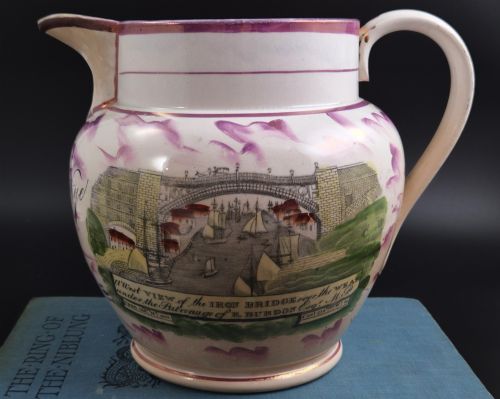
Many jugs incorporate enamel colours alongside purple or black transfer printing to depict intricate scenes such as the Iron Bridge over the Wear or tall ships. Potters then fired the pieces multiple times to set the metallic films and decorative panels permanently.
Sailors bought pink lustre jugs inscribed with poems like 'Dear Jack' to ensure their wives had poetic company while they were away at sea.
What varies in quality
The brilliance and consistency of the metallic lustre glaze distinguish finer examples from standard production pieces. Rich pink splash effects and deep copper tones demonstrate superior kiln control during the reduction firing process.
Clarity in the transfer-printed maritime scenes, poetry panels, and hand-decorated botanical or fruit motifs also dictates the standing of a piece. Well-defined transfers and crisp polychrome enamel work reflect higher skill levels among potters and decorators.
Livesley Powell and Co·Wedgwood
The English Lustreware Pitcher Glossary
- Lustre glaze
- A ceramic finish containing metallic oxides that produces a reflective, iridescent surface upon firing. This technique creates the signature metallic sheen seen on nineteenth-century jugs.
- Pearlware
- A refined earthenware body developed in the late eighteenth century featuring a subtle bluish glaze in the recesses. It served as a smooth canvas for transfer-printed decoration.
- Pink lustre
- A decorative metallic glaze created using gold or copper to produce vibrant pink or purple tones. It appears frequently on Sunderland jugs alongside transfer-printed verses.
- Transfer printing
- A method of applying pre-printed paper designs from engraved copper plates onto ceramic surfaces before firing. This technique allowed potters to replicate complex ships and poems consistently.
- Creamware
- A fine, pale yellow-cream earthenware developed during the eighteenth century that provided a lighter alternative to traditional salt-glazed stonewares.
English Lustreware Pitcher: Frequently Asked Questions
What is an English lustreware pitcher?
These ceramic vessels feature metallic glazes that produce a reflective, copper or pink sheen across earthenware or pearlware bodies. Potters decorated them with transfer-printed maritime themes, bridges, and moral verses.
Most examples date from the Georgian and Victorian periods, functioning primarily as jugs for milk, cream, or water.
How do I date a lustreware jug?
Stylistic shifts and ceramic bodies offer reliable clues for dating individual pieces. Pearlware bodies and specific transfer subjects often point to the Georgian era, while later Victorian pieces utilise ironstone and heavier earthenware.
Inscribed dates, named subjects like the Iron Bridge, and specific maker marks help narrow the timeline further.
Where were Sunderland lustre jugs made?
Potteries around the River Wear in North East England produced these distinctive pink splash and lustre jugs. They often commemorated local landmarks such as the Iron Bridge and celebrated maritime trades.
Sailors and merchants frequently purchased them as personal tokens or named presentation pieces.
How should I display lustreware?
Position these jugs where ambient light can catch the metallic oxides and iridescent pink or copper glazes. Placing them on open shelving or within glass cabinets highlights the reflective surfaces.
Keep them away from direct, harsh sunlight to protect any delicate enamel colours applied over the glaze.