

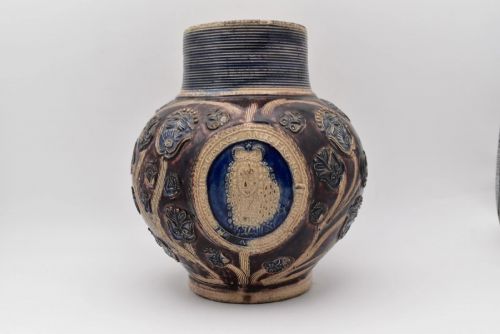


Commemorative Ceramic Jug
A commemorative ceramic jug records a specific person, place or event in clay, offering a tangible piece of social history for your cabinet.
Commemorative Ceramic Jug
A commemorative ceramic jug serves as a durable record of public events, royal jubilees, political societies and personal milestones, turning everyday vessels into historical archives. When you examine a commemorative ceramic jug on this page, you encounter forms that span several centuries of British ceramic production.
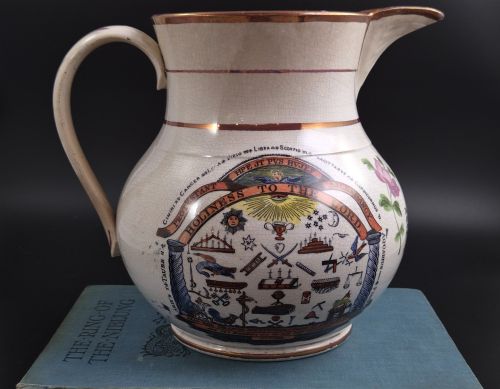
The pieces appearing here range from robust stoneware vessels bearing royal portraits to delicate porcelain and earthenware pieces decorated with printed scenes, dates and names. You are most likely to meet 19th-century earthenware examples, particularly pink lustre pieces from Sunderland and figurative Staffordshire pottery jugs.
Materials and methods
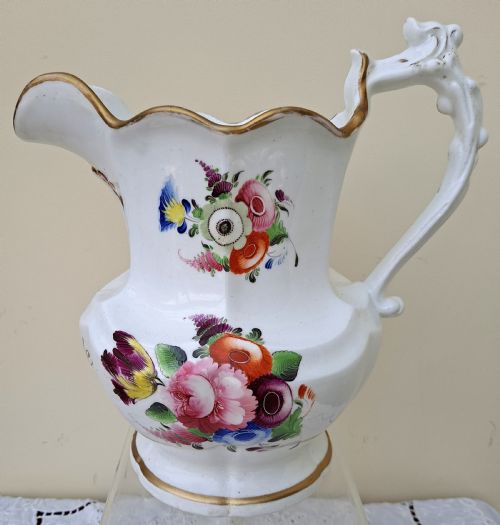
Makers shaped these vessels using earthenware, porcelain and heavy stoneware, applying metallic lustre glazes, enamel colours and occasionally gold leaf to highlight the surface details. Sunderland pieces often utilise a characteristic pink splash lustre technique, created by dropping oil onto the wet metallic glaze to scatter the pigment.
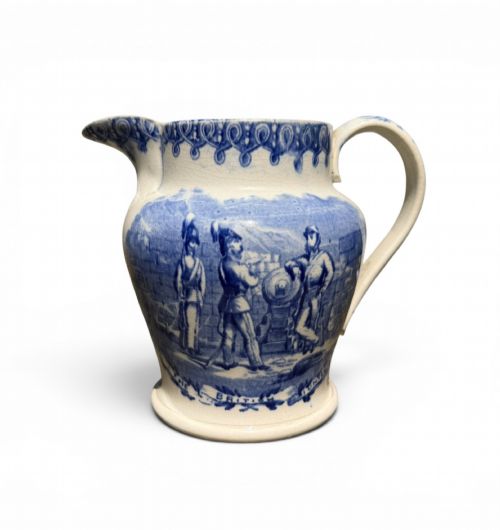
Decoration relied heavily on transfer printing for intricate historical scenes, portraits and commemorative verse, combined with hand-painted polychrome highlights and raised moulded reliefs. Salt-glazed stoneware production involved throwing heavy clay on a wheel and introducing salt into the kiln during firing to achieve a characteristic pitted texture.
Listings feature items spanning the 17th century through the Edwardian period, utilising earthenware, porcelain, stoneware, and metallic lustre glazes.
Factors of quality
The application of metallic lustre and glaze provides another distinction, where smooth, even coverage without firing blemishes separates finer workshop output from simpler utilitarian wares. Heavier capacity vessels, such as large marriage jugs and large stoneware jugs, demonstrate greater skill in successful kiln firing without distortion.
The Commemorative Ceramic Jug Glossary
- Lustreware
- Earthenware or porcelain decorated with a metallic glaze that produces an iridescent sheen. This metallic film reflects light in copper, silver or pink tones depending on the oxides used.
- Stoneware
- A heavy, dense ceramic fired at high temperatures until vitrified and rendered waterproof. It resists chipping and allows for sharp moulded decoration without requiring a glaze.
- Transfer printing
- A decoration method where an engraved copper plate transfers a printed design onto paper and then onto the ceramic surface before firing. This technique allowed factories to produce detailed historical scenes and lengthy inscriptions consistently.
- Polychrome
- Decoration employing multiple distinct colours painted onto the ceramic body or glaze. These pigments were fixed by a secondary kiln firing.
- Character jug
- A vessel shaped as the head and shoulders of a recognizable historical figure, literary character or military leader. These pieces combine sculptural portraiture with the functional form of a pitcher.
Commemorative Ceramic Jug: Frequently Asked Questions
What events do these jugs typically commemorate?
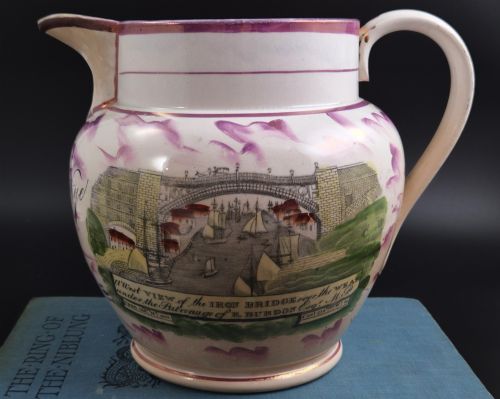
These vessels record royal accessions, coronations, political associations like the Orange Order, marriages, and notable military figures such as Lord Kitchener and the Duke of Wellington. Local landmarks and industrial achievements, such as the Iron Bridge over the Wear, also appear.
Such subjects allowed local communities and organizations to mark shared loyalties and public milestones through permanent household objects.
How do I identify a Sunderland lustre jug?
Sunderland examples are distinguished by their pink splash or mottled lustre glaze, often combined with transfer-printed images of bridges, shipping scenes, or moral verses. Many include specific names, dates, or commemorative poetry applied alongside the metallic pink decoration.
They were produced extensively in the North East of England during the nineteenth century as commemorative pieces for sailors and local inhabitants.
What is the difference between earthenware and stoneware jugs?
Earthenware is a porous, lower-fired ceramic that requires a glaze to hold liquids, allowing for bright enamel painting and transfer-printed decoration. Stoneware is fired at much higher temperatures until the clay body vitrifies, resulting in a heavier, impervious material suited to salt-glazed finishes and moulded reliefs.
Stoneware pieces from earlier periods often present darker, salt-textured surfaces, whereas 19th-century earthenware offers lighter, more colourful commemorative displays.
Were these jugs used for everyday pouring or display?
Many large vessels, such as marriage jugs or presentation pieces holding up to a gallon and a half, served ceremonial functions during public gatherings, club meetings, or family celebrations. Others acted as commemorative display items intended for mantelpieces and dressers rather than daily table use.
Their survival in good condition often depends on whether they were preserved as commemorative mantel ornaments or subjected to heavy kitchen wear.
How can I tell the period of a Staffordshire jug?
Dating relies on combining the historical subject matter, such as specific royal jubilees or named individuals with recorded dates, with the material style and manufacturing technique. Earlier 17th-century pieces like Westerwald stoneware use distinct cobalt blue salt-glaze incisions, while 19th-century Staffordshire output utilises moulded earthenware and transfer printing.
Inscribed dates and named recipients provide the most direct confirmation of the period of manufacture.