

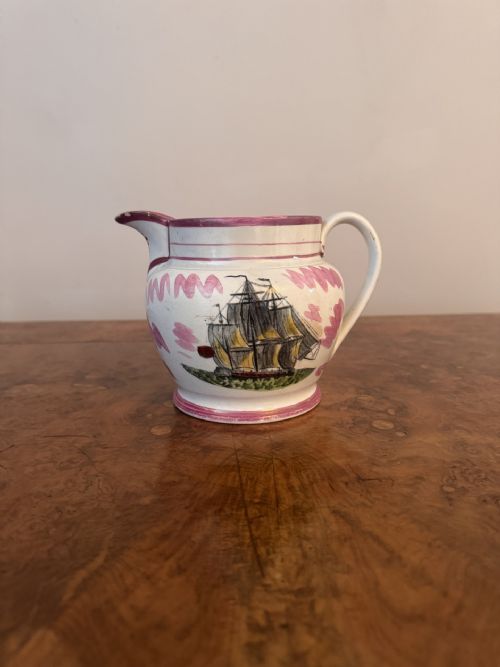


Splash Lustre Ceramic Jug
These splash lustre ceramic jug examples bring bold nineteenth century maritime scenes and transfer prints to any table.
Splash Lustre Ceramic Jug
A splash lustre ceramic jug represents a distinct tradition of English pottery, primarily emerging from the nineteenth century across Georgian and Victorian periods. Buyers exploring this category encounter earthenware vessels featuring characteristic metallic pink or purple washes alongside transfer-printed motifs.
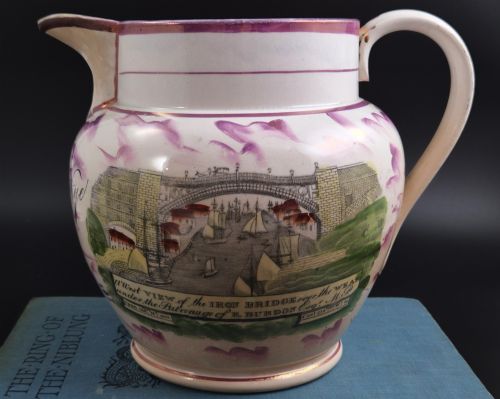
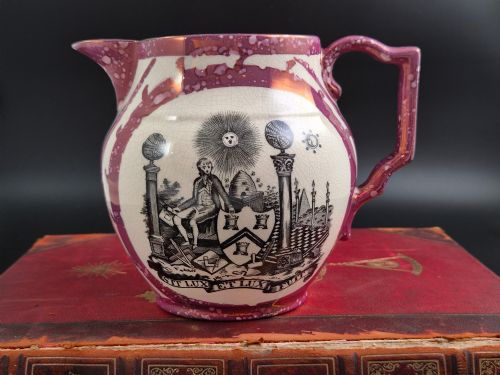
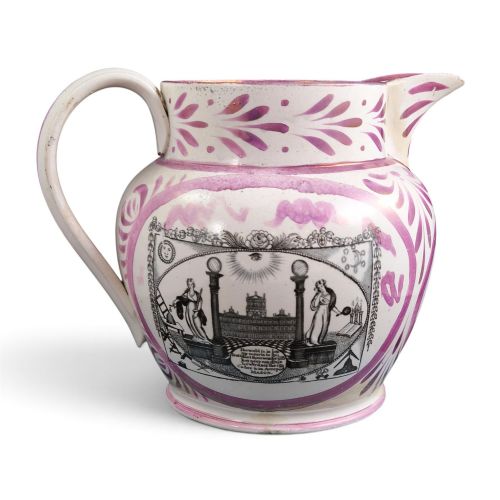
The pieces on this page heavily feature Sunderland origins, showcasing maritime themes, poetic panels, and commemorative subjects like the Iron Bridge over the River Wear. Collectors frequently find vessels dedicated to masonic imagery, tall ships, boxing, and named or dated personal mementoes.
Forms range from standard domestic pitchers to large display jugs intended to commemorate specific events or individuals. The aesthetic combines robust earthenware bodies with the distinctive optical effect of splash lustre decoration.
Materials and production methods
Potters built these jugs using earthenware and pearlware bodies, forming the structural shape before applying surface decoration. Metallic oxides were manipulated during the firing process to create the characteristic splash or pink lustre glaze effects.
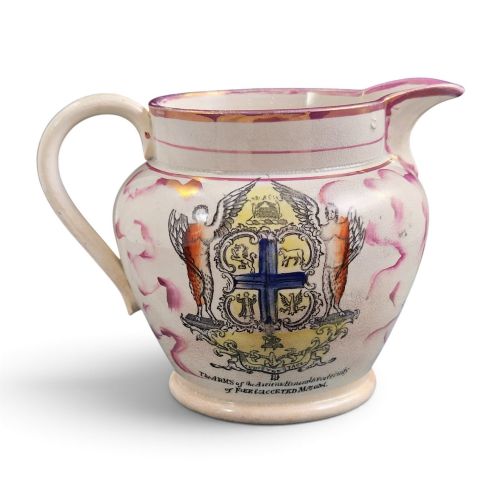
Transfer printing formed the primary method for adding complex imagery such as ships, poetry, and masonic symbols directly onto the ceramic surface. Artisans frequently enhanced these monochrome or multi-colour prints with hand-applied enamel highlights.
Splash Lustre Ceramic Jug Retail Price Guide 2026
Typical asking prices for splash lustre ceramic jug among the pieces listed under this phrase on Sellingantiques today, from the lower quarter to the upper quarter. They describe what is for sale here now, not the wider market.
Listings in this category span the nineteenth century, encompassing both Georgian pearlware jugs and later Victorian earthenware productions with metallic glaze.
Assessing quality in splash lustre ceramic jug examples
Distinctions in quality often rest on the crispness and complexity of the transfer-printed transfers, alongside the richness of the metallic lustre glaze. Pieces with multiple printed panels or detailed hand-coloured enamel additions typically display superior artistic ambition.
The condition of the glaze application and the clarity of named inscriptions or historical dates influence the visual impact of each vessel. Finer examples maintain an even coverage of splash lustre without excessive blurring in the underlying earthenware body.
Garrison Pottery
The Splash Lustre Ceramic Jug Glossary
- Splash lustre
- A metallic glaze technique creating mottled or splashed pink and purple patterns across earthenware surfaces. This effect defines the visual character of Sunderland pottery jugs.
- Pearlware
- A refined type of earthenware featuring a pale bluish-white glaze developed in the eighteenth century. It served as a popular canvas for early nineteenth century lustre jugs.
- Earthenware
- Porous pottery fired at lower temperatures than stoneware or porcelain, requiring a protective glaze to hold liquids. It forms the standard ceramic body for nineteenth century jugs.
- Transfer printing
- A method of applying engraved designs to ceramics using paper or tissue pulled from a copper plate. This technique allowed complex maritime and masonic scenes to be repeated across multiple jugs.
- Enamel
- Opaque glass-like pigments applied over the glaze and fired at a lower temperature to add colour. Artisans used enamel to hand-tint transfer-printed motifs on pottery.
Splash Lustre Ceramic Jug: Frequently Asked Questions
What is a splash lustre ceramic jug?
These vessels are nineteenth century earthenware pitchers decorated with metallic pink or purple lustre glazes and transfer-printed designs. They often celebrate maritime history, masonic themes, or local landmarks.
Potteries primarily produced them in the North East of England, combining industrial transfer printing with hand-painted enamel details.
How were these jugs used originally?
While some functioned as practical containers for serving liquids at the table, many served commemorative or decorative roles. Their transfer-printed poetry and naval imagery made them fitting gifts or display pieces for sailors and tradesmen.
Larger examples were likely showcased on mantelpieces or in clubrooms rather than subjected to daily kitchen use.
How do I date a Sunderland lustre jug?
Dating relies on stylistic clues, ceramic bodies, and occasionally direct inscriptions or named dates on the piece. Pearlware bodies and specific transfer subjects often point toward the earlier decades of the nineteenth century.
Later Victorian examples shift slightly in colour tone and decorative density, reflecting changing tastes in regional English pottery.
How should I display a lustre jug?
Display these jugs away from direct sunlight and areas prone to heavy vibrations to protect their earthenware bodies and glazed surfaces. Placing them on stable shelving allows the metallic splash lustre to catch ambient light effectively.
Because the glazes and enamels can be sensitive, gentle dusting with a dry cloth is the safest maintenance method.