
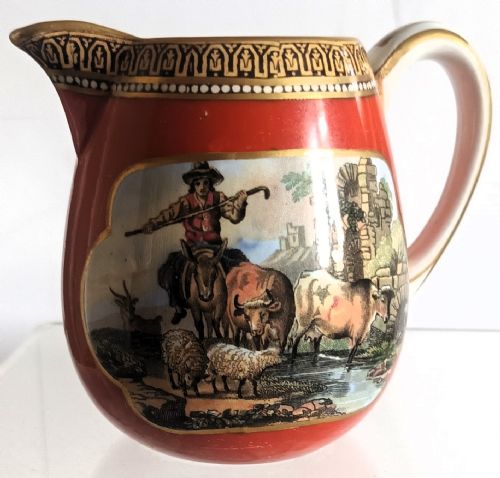
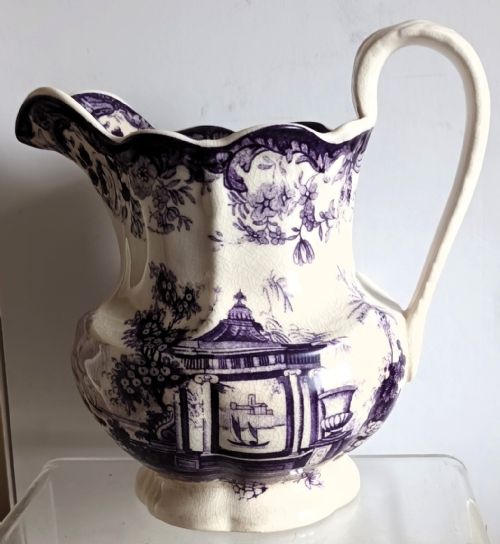


Transferware Ceramic Pitcher
A transferware ceramic pitcher brings printed narrative and historic domestic utility into your room.
Transferware Ceramic Pitcher
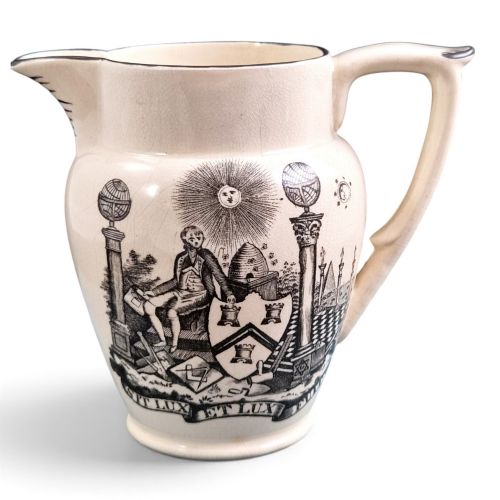
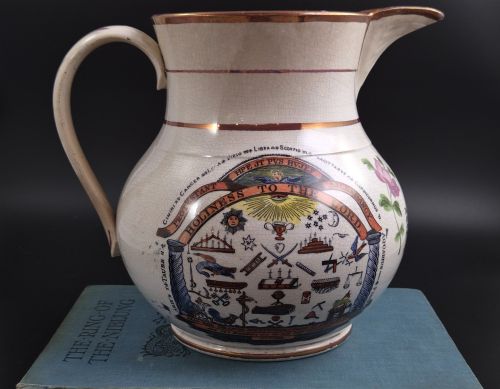
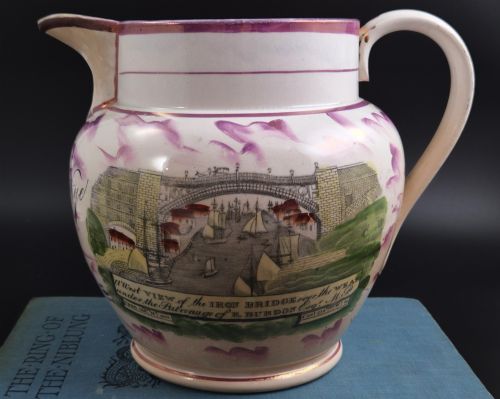
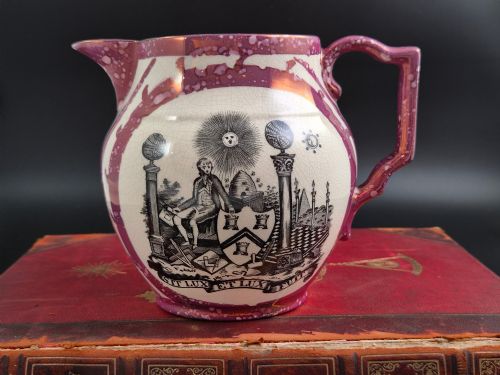
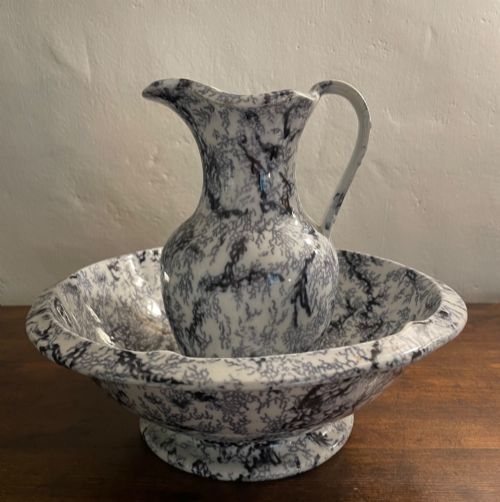
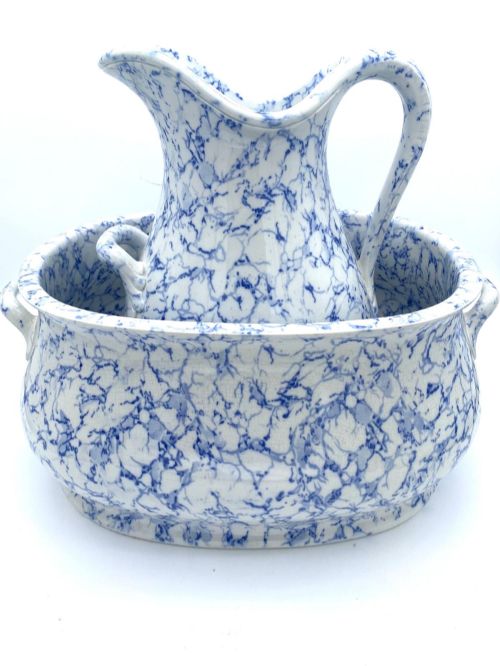
When you search for a transferware ceramic pitcher, you encounter utilitarian and commemorative vessels produced primarily across the nineteenth century. These pieces range from compact cream jugs to large one-gallon vessels and complete wash set basins.
Staffordshire potteries dominate the selections, alongside contributions from Minton, Worcester, and Caughley Coalport. Forms span Georgian Masonic pieces, Sunderland lustre tall ships, and Edwardian bathroom sets.
The practical origins of these vessels lie in serving water, milk, or hot beverages, as well as functioning within larger bedroom washing arrangements. Their survival reflects both daily domestic service and commemorative display.
Materials and construction
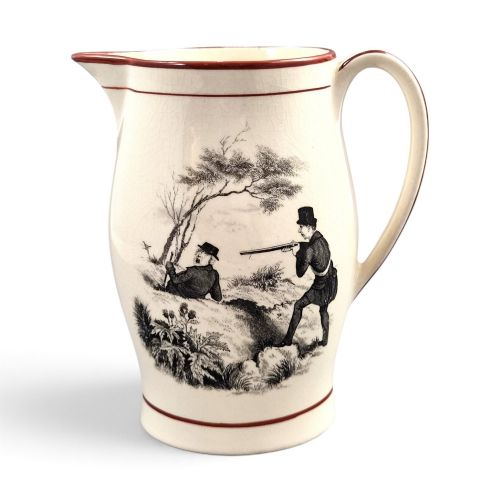
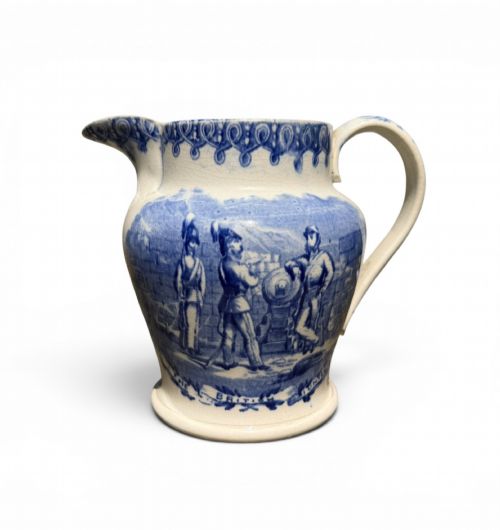
Potters shaped these vessels from earthenware, creamware, and pearlware bodies before applying monochrome or polychrome transfer prints. Copper-plate engraving allowed intricate designs, such as Chinoiserie scenes and topographical views, to transfer smoothly onto curved ceramic surfaces.
Many examples incorporate secondary embellishments including metallic lustre glazes, pink splash effects, gold leaf, enamel highlights, and gilt borders. These decorative finishes were applied over or under the glaze and fired again to fix the metallic and coloured pigments.
Listings span earthenware, creamware, and pearlware bodies decorated with transfer printing, metallic lustre, and enamel.
Evaluating quality and execution
Quality reveals itself in the crispness of the transfer print and the registration of the engraved lines against the earthenware body. Superior examples display sharp pictorial detail without smudging, bleeding, or gaps in the printed transfer.
The application of supplementary decoration further separates standard utility wares from exhibition pieces. Hand-painted enamel colours, rich pink splash lustre, and carefully applied gold leaf or gilt accents indicate higher workshop ambition.
Minton·Caughley Coalport·Doulton Burslem·Mountford
The Transferware Ceramic Pitcher Glossary
- Transferware
- Pottery decorated by transferring a printed design from an engraved copper plate onto tissue paper and then onto the ceramic body. This technique enabled uniform mass production of complex pictorial scenes.
- Pearlware
- A refined earthenware developed in the late eighteenth century featuring a bluish glaze that pooled in recesses to mimic Chinese porcelain. It forms the body of many early nineteenth-century jugs.
- Creamware
- A fine earthenware with a warm, pale yellow lead glaze perfected by Josiah Wedgwood and widely adopted by Staffordshire potteries. It provides a smooth ground for black and coloured transfer prints.
- Lustreware
- Earthenware finished with a metallic glaze that creates an iridescent sheen. Sunderland pink splash lustre is particularly common on commemorative and maritime jugs.
Transferware Ceramic Pitcher: Frequently Asked Questions
What were transferware pitchers used for?
These vessels served practical domestic roles ranging from pouring water and milk at the table to holding hot liquids in the kitchen. Larger examples functioned as part of bedroom wash sets alongside matching basins.
Many pieces also served commemorative purposes, recording fraternal memberships, local landmarks, naval vessels, and political events of the nineteenth century.
How do I date a transferware pitcher?
Dating relies on stylistic clues, ceramic bodies like creamware or pearlware, and specific historical events referenced in the printed designs. Georgian pieces often feature neoclassical forms or Masonic emblems, while Victorian examples shift towards dense floral patterns or sanitary wash sets.
Inscribed dates, named subjects, and known workshop patterns provide further chronological anchors for individual pieces.
Are these pitchers safe for daily use?
While structurally sound, antique earthenware and pearlware can absorb liquids through microscopic crazing in the glaze over time. Historic glazes may also contain lead compounds unsuited for modern food consumption.
Collectors generally treat these vessels as decorative or display objects rather than functional kitchenware to preserve their historic surfaces.
How do I clean an antique ceramic pitcher?
Dusting with a dry, soft cloth is sufficient for routine maintenance of display pieces. Avoid harsh chemical cleaners or abrasive scouring pads that can damage delicate enamel highlights, lustre glazes, and gold leaf.
If washing is necessary, use lukewarm water and mild soap, ensuring the piece is dried immediately to protect old ceramic bodies.