
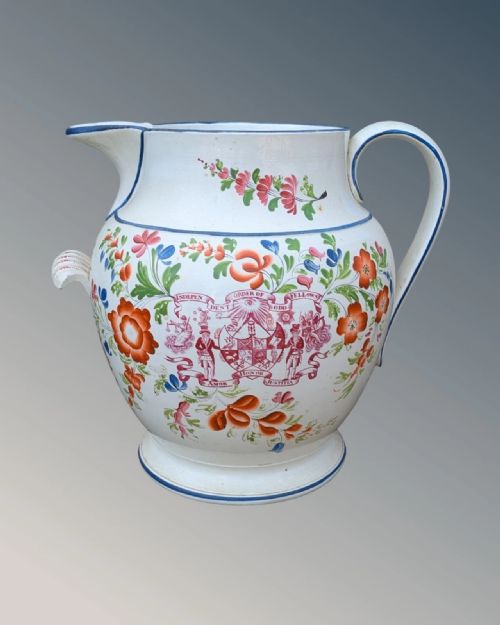
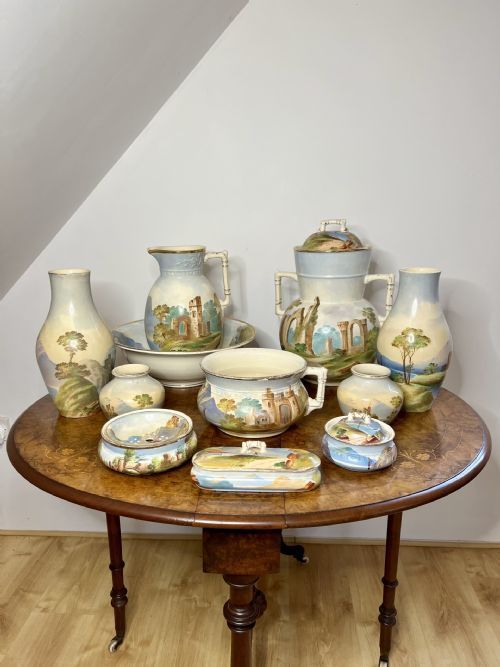


Polychrome Earthenware Jug
A polychrome earthenware jug brings vivid colour and historic character to a room, offering tactile appeal through painted glazes and varied ceramic forms.
Polychrome Earthenware Jug
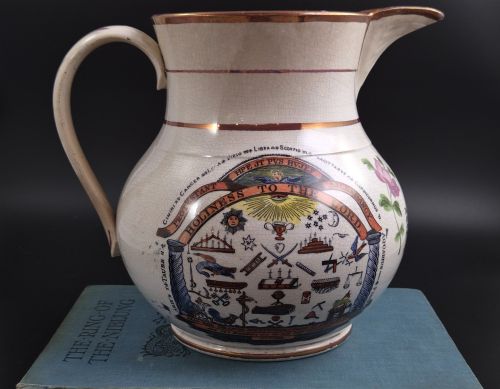
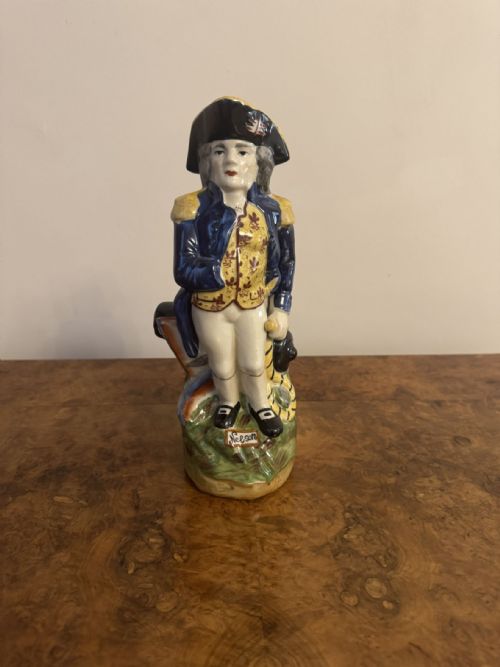
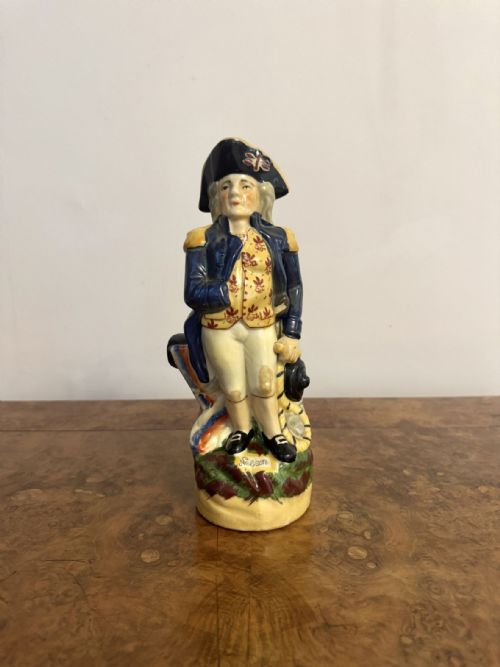
A polychrome earthenware jug spans multiple centuries of ceramic tradition, incorporating styles from Georgian pearlware to Victorian Staffordshire figures and continental tin-glazed wares. Buyers encounter diverse functional and decorative forms, ranging from utilitarian beer steins and pharmacy wet drug jars to sculptural toby jugs depicting notable figures.
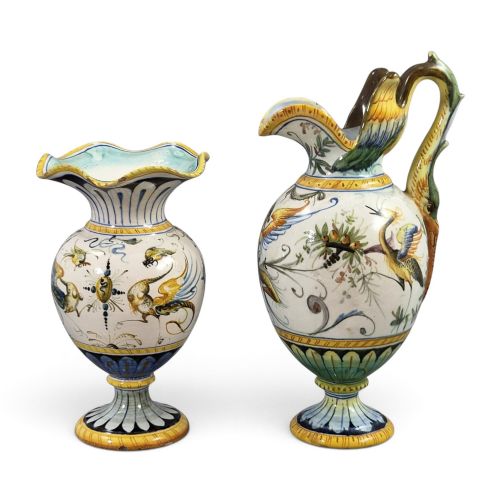
The pieces on this page originate from British, Italian, Dutch, German, and Belgian workshops, reflecting distinct regional glazing techniques and aesthetic movements. Domestic Staffordshire potteries sit alongside continental faience and majolica ewers, providing a broad spectrum of historical utility and ornament.
Materials and construction methods
Potters shaped these vessels from earthenware and creamware clay bodies, applying tin glazes or metallic lustre glazes to create smooth surfaces for decoration. These porous ceramic bases required opaque white or tinted coatings to prepare the ground for subsequent hand-painted designs.
Artisans applied enamel and pigment pigments directly onto the glazed surfaces, often firing the pieces multiple times to fix the bright palette of colours. Mould-pressed relief details and hand-modelled spouts frequently accompanied these painted schemes, particularly on figural vessels and larger pitchers.
Frog mugs conceal a small ceramic amphibian inside the rim, designed to leap out and surprise the drinker as the ale empties.
Assessing quality and craftsmanship
The distinction between standard domestic production and superior execution lies in the crispness of the moulded relief and the control of the painted brushwork. Finer examples display meticulous detail in facial expressions on figural toby jugs and precise execution of floral or architectural motifs on tin-glazed surfaces.
Glaze consistency and colour saturation further differentiate the tier of a piece, with superior specimens retaining vibrant hues and stable surfaces without excessive firing flaws. The complexity of the form, such as specialised mask spouts or integrated covers, also signals higher ambition from the maker.
Cantagalli Florence
The Polychrome Earthenware Jug Glossary
- Tin glaze
- An opaque white glaze containing tin oxide that provides a smooth, pale background for hand-painted polychrome decoration. It was widely used across European faience and delftware traditions.
- Pearlware
- A refined form of earthenware developed in the late Georgian period, featuring a thin glaze with a slight bluish tinge that pooled in crevices to mimic Chinese porcelain.
- Toby jug
- A pottery jug modelled in the shape of a seated, stout person, typically holding a mug of beer and a tobacco pipe. These figures frequently represent historical individuals or caricatures.
- Majolica
- A type of earthenware coated in an opaque tin glaze and painted with metallic oxide colours, revived extensively during the nineteenth century in Renaissance styles.
- Faience
- European tin-glazed earthenware produced chiefly in France, Germany, and the Netherlands. The technique allows for intricate multi-coloured painting over a white surface.
Polychrome Earthenware Jug: Frequently Asked Questions
How are polychrome earthenware jugs dated?
Dating relies on examining the characteristics of the clay body, the tone of the glaze, and the stylistic conventions of the painted decoration. Comparing pieces to established regional manufacture periods helps narrow the timeframe.
Changes in palette, such as the manganese and cobalt pigments common on eighteenth-century pieces versus later Victorian enamels, provide reliable chronological markers.
What is the difference between delftware and majolica?
Delftware generally refers to tin-glazed earthenware produced in the Netherlands and England, often featuring blue and white or soft polychrome palettes. Majolica encompasses tin-glazed pottery with a rich, vibrant multi-coloured glaze tradition originating in Italy and later revived across Europe.
Both employ a tin oxide glaze, but their stylistic vocabulary and regional origins diverge significantly.
Were these jugs used daily or displayed?
Many vessels served practical domestic roles for holding liquids, beer, or wash water, while others functioned primarily as ornamental items or commemorative pieces. Pharmacy jars held specific medicinal preparations in apothecary settings.
Figural toby jugs and decorative ewers were frequently displayed on mantelpieces or sideboards rather than subjected to heavy utilitarian wear.
How should I clean my antique jug?
Cleaning requires gentle dusting with a soft, dry cloth to protect the historic glaze and any delicate hand-painted enamel decoration. Submerging porous earthenware in water should be avoided, especially if the piece has pre-existing hairline cracks.
Harsh chemical cleaning agents will strip the antique glaze and pigments, permanently damaging the surface integrity.