
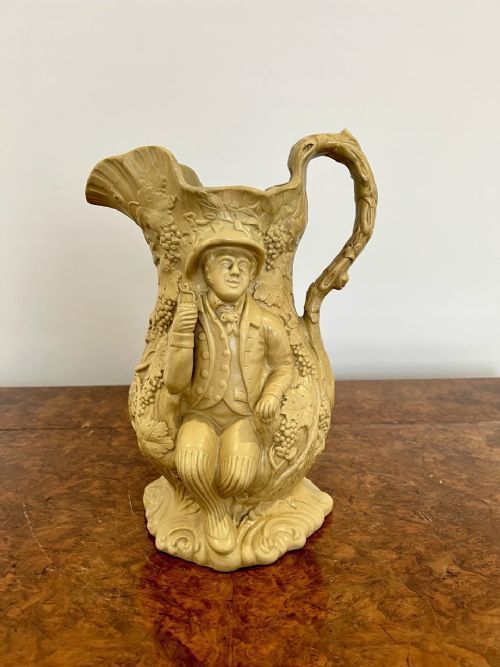


Victorian Staffordshire Jug
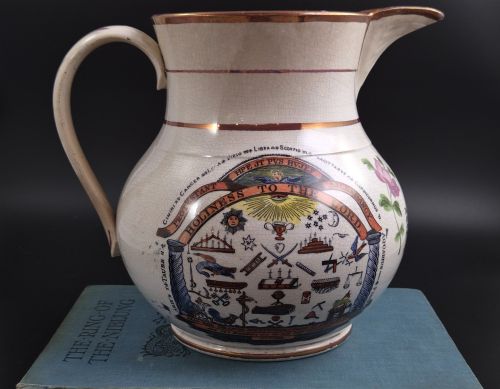
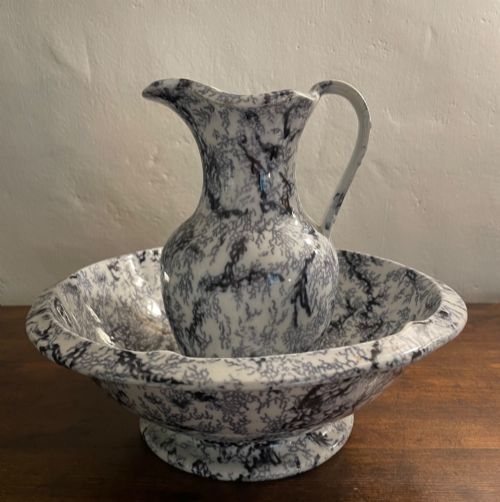
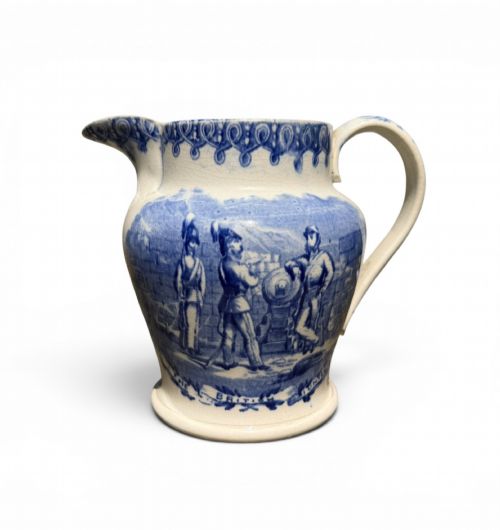
These Victorian staffordshire jug examples bring domestic earthenware to life with characterful figures, copper lustre, and transfer-printed scenes.
Victorian Staffordshire Jug
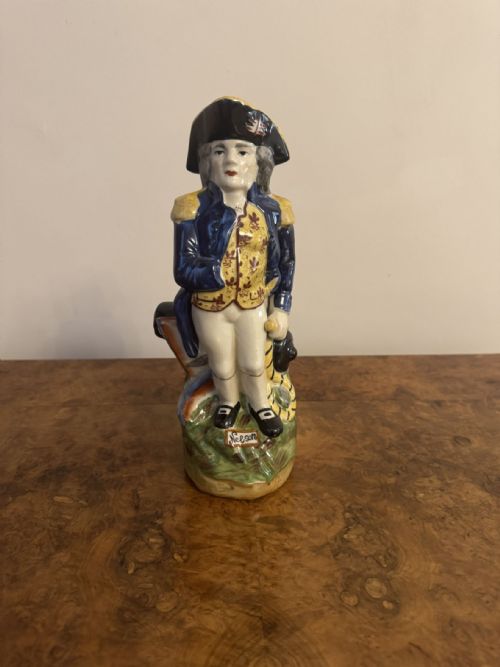
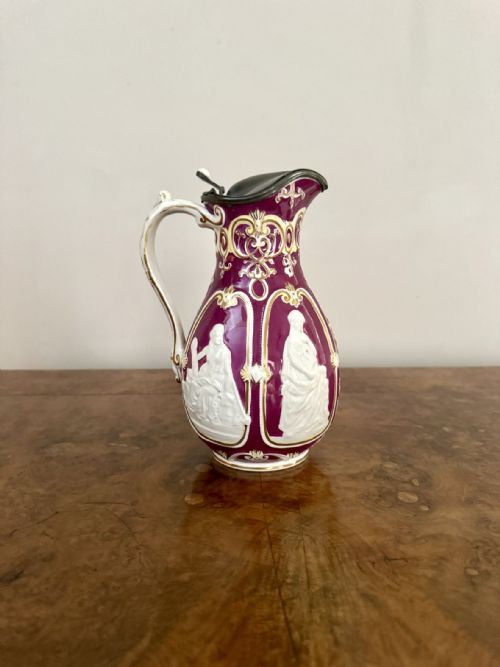
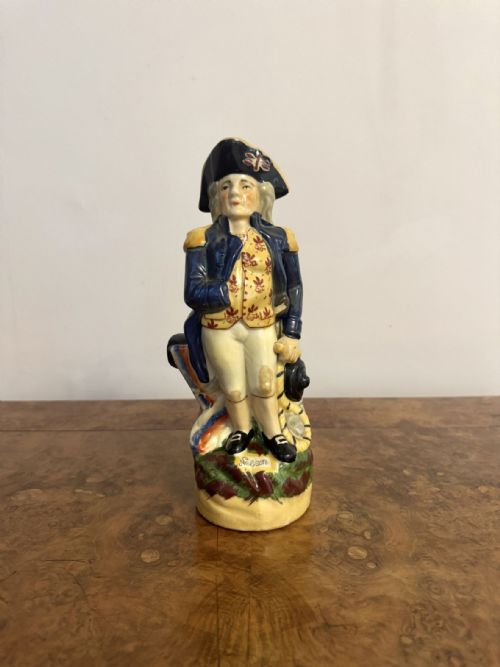
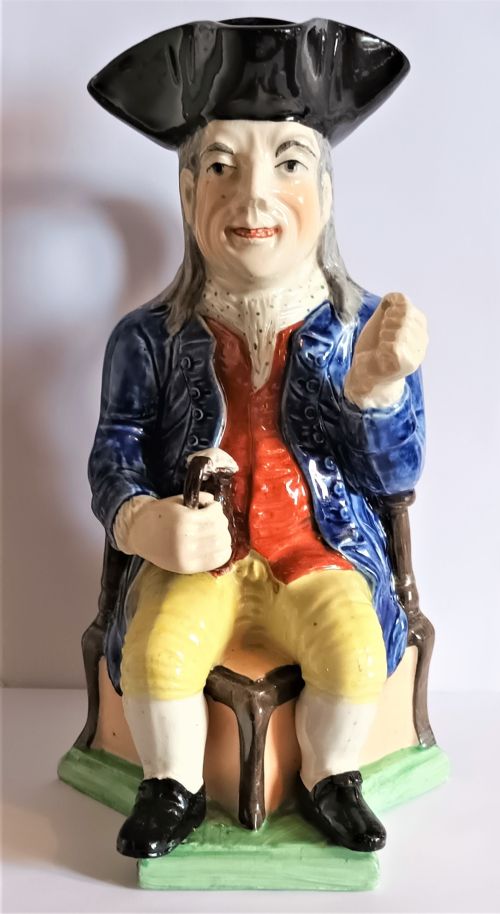
A victorian staffordshire jug embodies the robust domestic pottery traditions of nineteenth-century kilns, spanning utilitarian vessels and characterful figural forms. Buyers encounter everything from relief-moulded milk pitchers and blue-and-white basins to humorous toby jugs depicting notable figures like Lord Nelson or Mr Snuff.
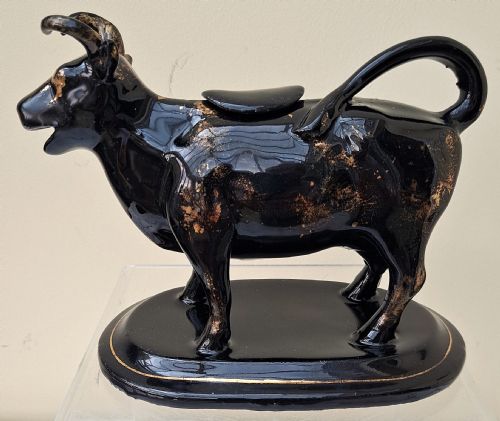
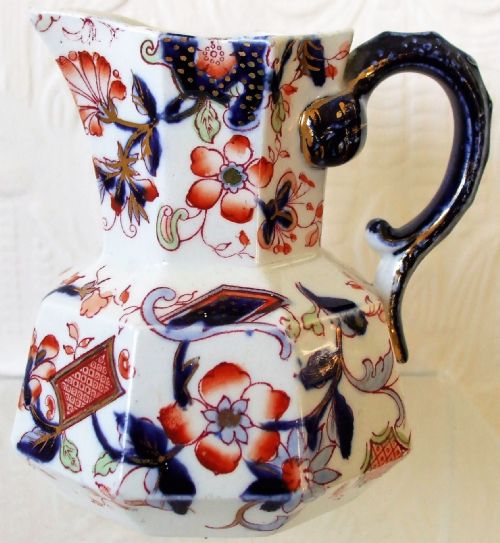
The selection ranges from early nineteenth-century earthenware and pearlware pieces through to later Victorian porcelain and ironstone examples. Functional water jugs and cream jugs appear alongside commemorative pieces and figural animal creamers modelled as cows or spaniels.
How They Were Made
Potters shaped these earthenware, stoneware, and ironstone vessels using relief moulding, slip-casting, or hand-throwing techniques. Many forms incorporate metal lids in pewter or feature applied handles and spouts.
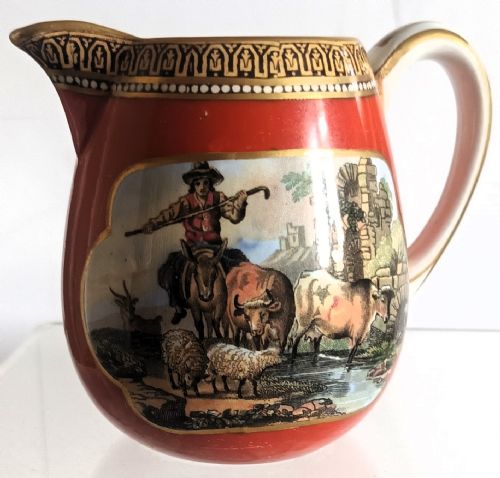
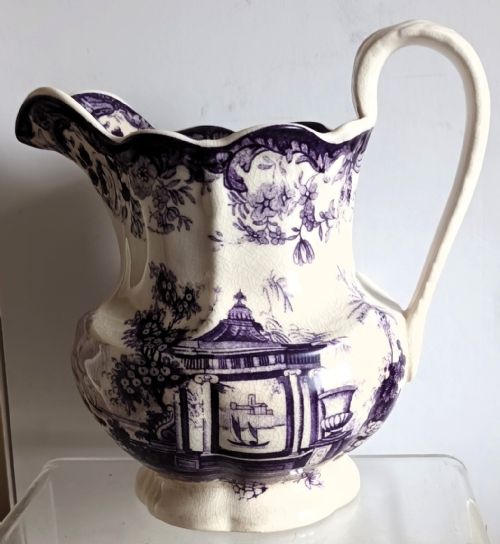
Makers applied hand-painted polychrome enamel details, copper lustre glazes, and flow blue or magenta transfer-printed patterns before firing the ceramic bodies to vitrification.
Several cows serve as dairy vessels here, pouring cream straight from their mouths.
What Varies in Quality
Graduated sets and matched pairs command greater attention, showing consistent colour application and well-balanced proportions across every vessel in the grouping.
Charles Meigh·Jones & Walley·Keeling & Co·Copeland Spode·George Jones·Mountford
The Victorian Staffordshire Jug Glossary
- Toby jug
- A pottery pitcher modelled as a stout, jovial person, typically seated and holding a mug or jug of ale.
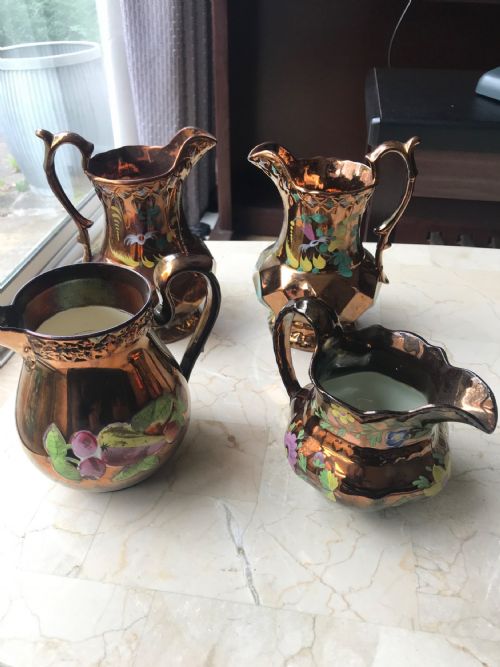
- Copper lustre glaze
- A metallic glaze finish producing a reflective, coppery sheen across the earthenware surface.
- Flow blue
- A cobalt blue transfer-printing technique where the colour purposefully bleeds slightly into the surrounding white glaze.
- Pearlware
- A refined earthenware developed with a bluish-tinted transparent glaze that makes the ceramic body appear whiter.
- Relief moulded
- A decorative technique where designs are pressed in low relief directly into the clay body using metal moulds.
Victorian Staffordshire Jug: Frequently Asked Questions
What were victorian staffordshire jugs used for?
These vessels served everyday domestic functions at the dining table and sideboard, holding milk, water, cream, or beer for household guests.
Larger pitchers managed service duties, while smaller creamers and figural vessels added decorative character to tea and supper service.
How do I identify a toby jug?
A toby jug depicts a full-bodied seated figure, usually wearing eighteenth-century attire and holding a mug of beer or a tobacco pipe.
Later Victorian interpretations often featured specific historical figures, fictional characters, or animals modelled in the same spirited style.
What is copper lustre?
Copper lustre is a metallic glaze technique that imparts a brilliant, reflective, coppery-brown sheen to the earthenware pottery body.
Potters often combined this lustrous finish with coloured enamel highlights or raised relief panels depicting fruit and floral motifs.
Are these jugs dishwasher safe?
Historic ceramics require gentle hand washing in lukewarm water with mild soap to preserve their delicate enamel pigments and metallic lustre glazes.
Harsh detergents and modern dishwashers will permanently damage the historic glaze surfaces and hand-painted decorations.