




Victorian Commemorative Pitcher
These Victorian commemorative pitcher examples are earthenware and porcelain vessels recording public loyalty, local events and personal milestones.
Victorian Commemorative Pitcher
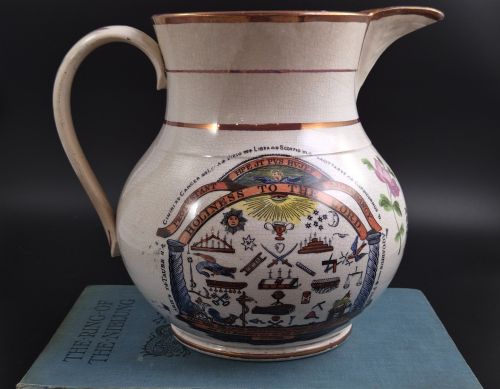
When you search for a Victorian commemorative pitcher, you are looking at utilitarian ceramic vessels transformed into historical records through transfer prints, hand-painting and inscriptions. The pieces on this page span the nineteenth century, including examples bearing dates from the Georgian era through to the late Victorian period. These jugs mark specific subjects such as political societies, local bridges, sporting events, military volunteers and royal jubilees.
The forms you are most likely to meet on this page include Staffordshire earthenware pieces, Sunderland lustre jugs with pink splash decoration, and heavy stoneware vessels. Many feature named individuals, marriage dates, or specific years like eighteen thirty-seven and eighteen fifty-nine. They serve as tangible survivals of popular public sentiment and family commemoration from the period.
Materials and Manufacture
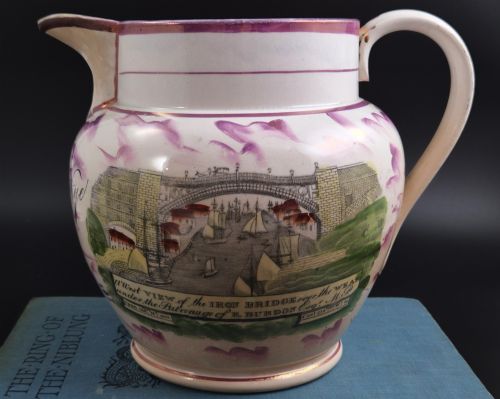
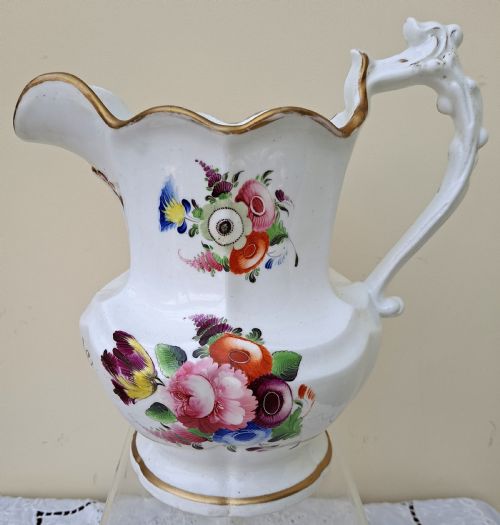
Potters built these vessels using earthenware, porcelain, and stoneware bodies, shaping them on the wheel or in moulds before firing. Makers applied metallic lustre glazes, notably the pink splash technique seen on Sunderland pieces, along with polychrome enamels and gold leaf highlights. Transfer printing allowed potteries to apply complex pictorial scenes, such as iron bridges or boxing matches, directly onto the ceramic surface before glazing.
Heavier items like large stoneware jugs required denser clay bodies fired at higher temperatures to hold substantial liquid volumes. Finer porcelain and earthenware versions received delicate hand-painted details to complement the printed inscriptions and dates.
Victorian Commemorative Pitcher Retail Price Guide 2026
Typical asking prices for victorian commemorative pitcher among the pieces listed under this phrase on Sellingantiques today, from the lower quarter to the upper quarter. They describe what is for sale here now, not the wider market.
One eighteen fifty-nine Sunderland jug proudly preserves the image of an iron bridge alongside a detailed depiction of a bare-knuckle boxing match.
Distinctions in Quality
Quality in these pitchers rests upon the crispness of the transfer print, the richness of the metallic lustre, and the clarity of the hand-painted inscriptions. Superior examples display carefully applied polychrome enamels and well-defined moulding on handles and spouts, whereas lesser pieces show blurred printing or uneven glaze pooling.
Historical specificity also elevates certain items, as jugs with named individuals, specific dates, and detailed local iconography demonstrate greater care by the original maker. The presence of gold leaf or sophisticated pink splash effects indicates a higher tier of production within nineteenth-century potteries.
Doulton Lambeth·Mountford
The Victorian Commemorative Pitcher Glossary
- Earthenware
- A porous pottery body fired at lower temperatures, commonly used for nineteenth-century Staffordshire jugs. It requires an impermeable glaze to hold liquids.
- Pink Lustre
- A metallic glaze technique creating a shimmering, mottled pink effect on the surface of Sunderland ceramics. Potters achieved this by applying a thin layer of gold or platinum solution before firing.
- Stoneware
- A dense, vitreous ceramic fired at high temperatures until non-porous, utilised for heavy utilitarian jugs and large vessels. It withstands frequent handling and heavy contents.
- Transfer Printing
- A method of applying engraved designs to pottery by transferring ink from a copper plate onto paper and then onto the clay body. This technique allowed potteries to produce detailed pictorial scenes consistently.
Victorian Commemorative Pitcher: Frequently Asked Questions
What were these pitchers used for?
These jugs served as functional vessels for pouring liquids at gatherings while simultaneously functioning as commemorative objects to mark public events, royal jubilees, or personal milestones like marriages.
Over time, many transitioned from everyday utility to display pieces held by families or local societies to preserve shared history.
How do I identify nineteenth-century dates?
Makers often incorporated specific years, royal names, or historical anniversaries directly into the transfer-printed text or hand-painted inscriptions on the ceramic body.
Stylistic cues such as pink splash lustre, transfer-printed bridge scenes, and earthenware bodies further anchor the pieces within the nineteenth century.
Where were these ceramics made?
Production centred on major ceramic hubs like Staffordshire and Sunderland, where specialised potteries manufactured earthenware and lustreware for local and national markets.
Individual factories utilised local clay bodies and regional decoration techniques, such as the distinctive pink splash glaze associated with Sunderland works.
How should I care for a ceramic pitcher?
Display these jugs away from direct sunlight and areas of high humidity to protect the enamel colours, gold leaf, and metallic lustre glazes from fading or degradation.
Dust them gently with a soft, dry cloth and avoid harsh cleaning agents or immersion in water to preserve the historical surface.