

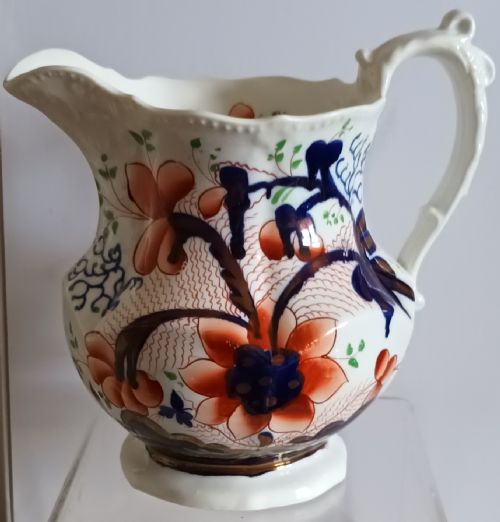


Lustreware Ceramic Pitcher
These lustreware ceramic pitcher examples bring metallic sheen and transfer-printed maritime or commemorative scenes straight from Georgian and Victorian pottery kilns.
Lustreware Ceramic Pitcher
A lustreware ceramic pitcher is a hollow vessel designed for pouring liquids such as milk, cream, or water, shaped into jugs of varying capacity from small creamers to large display pieces. When you search for this phrase, you encounter earthenware forms ranging from Georgian pearlware and creamware to robust Victorian ironstone.
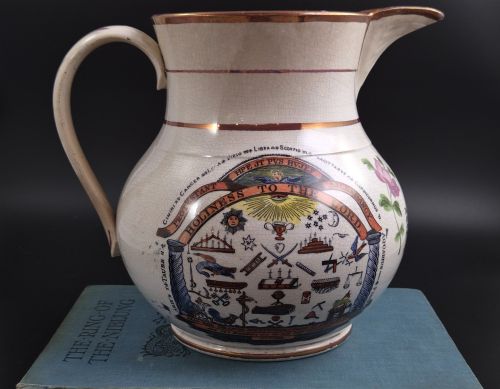
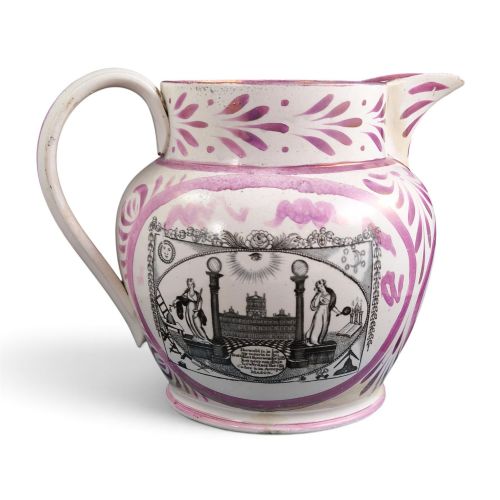
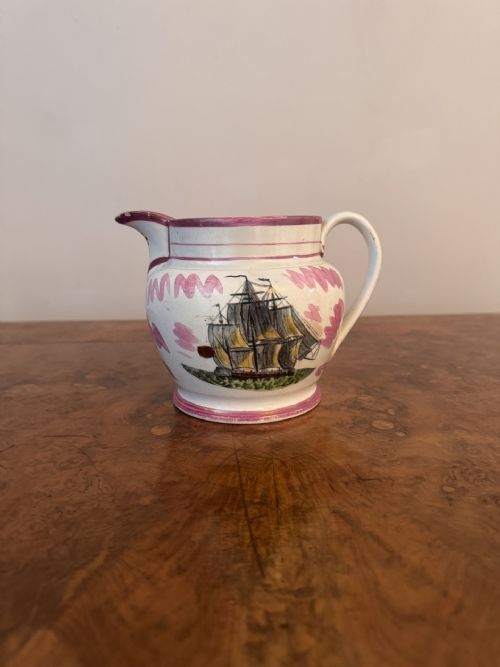
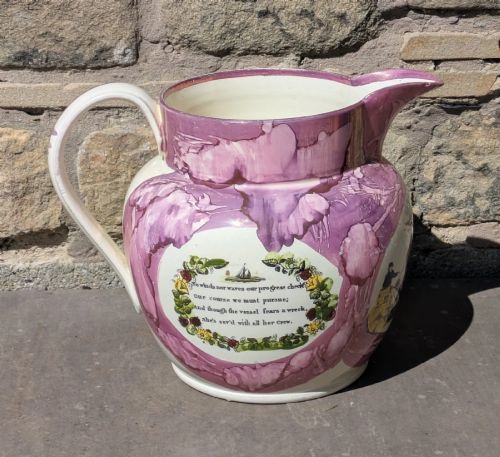
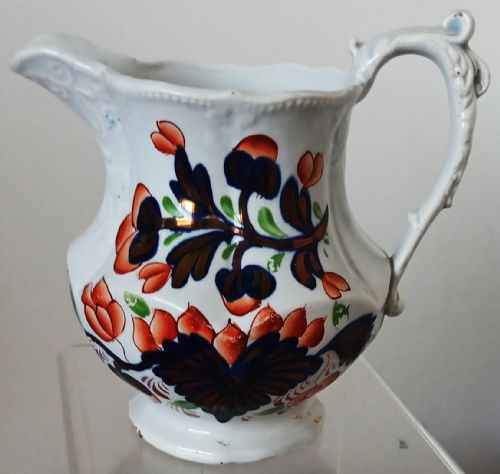
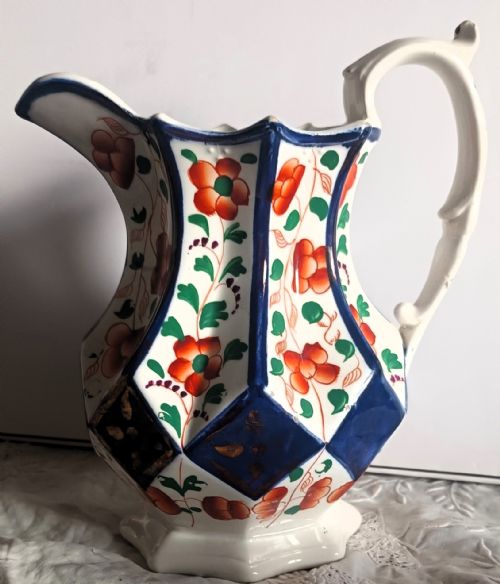
The specimens on this page originate predominantly across the nineteenth century, covering Georgian, Regency, Early Victorian, and Edwardian eras. Common forms include commemorative jugs bearing Masonic symbols, Orange Order motifs, naval themes, and poetic panels alongside botanical ironstone and Gaudy Welsh patterns.
Evaluating Quality and Finish
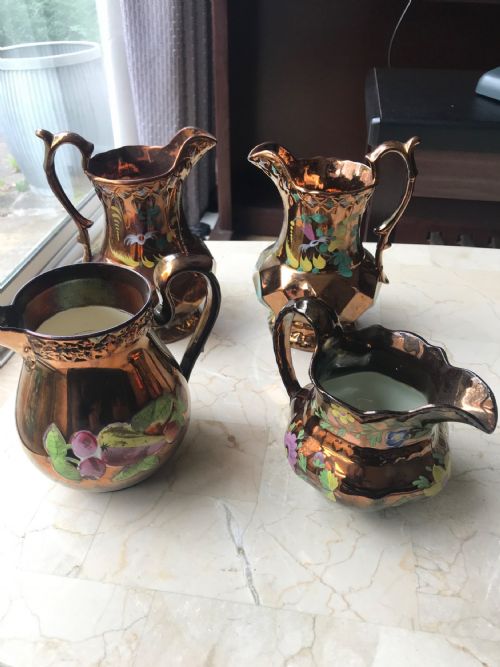
The distribution and depth of the metallic lustre glaze determine visual success, with even, brilliant washes of pink or copper commanding greater attention than thin or patchy applications. Superior pieces display crisp transfer printing where every detail of a ship rigging or poetic verse remains sharp.
Mould definition and potting weight also indicate standard, as finer vessels maintain thin, balanced walls while retaining structural integrity. Hand-decorated polychrome enamel additions should sit cleanly within the moulded relief and transfer lines without blurring.
The listings span the nineteenth century, featuring earthenware bodies finished with metallic lustre glazes and transfer-printed historical subjects.
Livesley Powell and Co·Wedgwood
The Lustreware Ceramic Pitcher Glossary
- Lustre glaze
- A ceramic finish containing metallic elements that produces a reflective, iridescent sheen resembling gold, copper, or silver upon firing. This technique dates back centuries before British potters adapted it during the Georgian period.
- Pearlware
- A refined earthenware developed in the late eighteenth century featuring a subtle blue-tinted glaze over a pale body to imitate Chinese porcelain. It frequently served as the base for early transfer-printed lustre jugs.
- Transfer printing
- A method of applying pre-printed paper designs from copper plates onto ceramic surfaces prior to glazing and firing. This innovation allowed potteries to mass-produce detailed maritime scenes and poetic verses.
- Creamware
- A fine light-colored earthenware perfected by English potters during the eighteenth century, possessing a warm yellowish tone beneath a transparent lead glaze. Wedgwood and other potteries utilised it extensively.
- Ironstone china
- A durable, heavy ceramic body patented in the nineteenth century to rival true porcelain in strength and utility. It provides a sturdy substrate for botanical patterns and everyday pouring vessels.
Lustreware Ceramic Pitcher: Frequently Asked Questions
What is a lustreware ceramic pitcher used for?
These vessels functioned originally for serving milk, cream, or water at the table, while larger examples served decorative or commemorative purposes. Many recorded pieces celebrate specific events, fraternal orders, or maritime achievements.
Today, collectors display them on shelves or dressers to showcase their reflective glazes and historical transfer prints. They remain primarily decorative objects due to their age and delicate enamel work.
How do I identify a Georgian lustreware ceramic pitcher?
Georgian examples often utilise creamware or pearlware bodies with hand-painted polychrome details or early transfer-printed panels. They typically date from the late eighteenth century up to the eighteen-thirties.
Look for softer earthenware bodies and distinct glaze pooling characteristics typical of early nineteenth-century Staffordshire production methods.
What causes the pink colour on Sunderland lustre jugs?
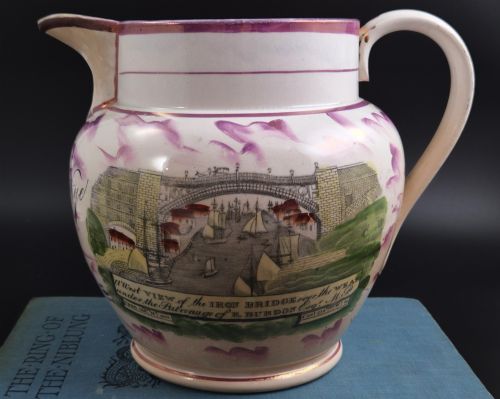
The signature pink effect results from gold or metallic oxide solutions applied over a white or light-colored earthenware base. When fired in a reducing atmosphere, the solution creates a mottled splash or bubble pattern.
Potters in the Sunderland region specialised in this distinct pink splash technique alongside transfer prints of the Iron Bridge over the River Wear.
Are Gaudy Welsh jugs related to lustreware?
Gaudy Welsh pottery frequently incorporates copper lustre accents alongside vibrant cobalt blue, red, and green enamel decorations. These pieces were produced in the nineteenth century for domestic markets.
They share manufacturing origins in the Staffordshire and Welsh border potteries that utilised similar earthenware bodies and lustre techniques.