


Vintage Brass Spark Guard
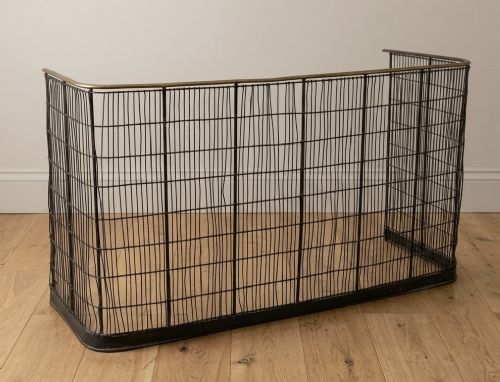
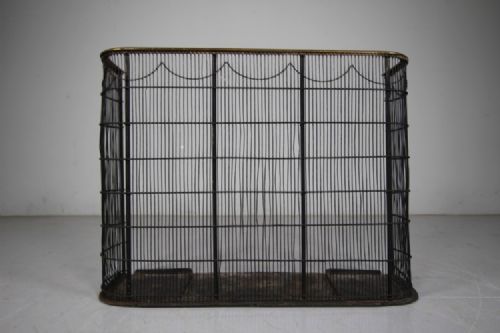
A vintage brass spark guard protects a room from stray embers while adding polished metal and wirework detail to the hearth.
Vintage Brass Spark Guard
A vintage brass spark guard serves as a functional hearth barrier, taking the form of fire screens, folding guards, and nursery fenders. These items appear across the nineteenth century, the Victorian era, and early twentieth-century decades up to nineteen twenty.
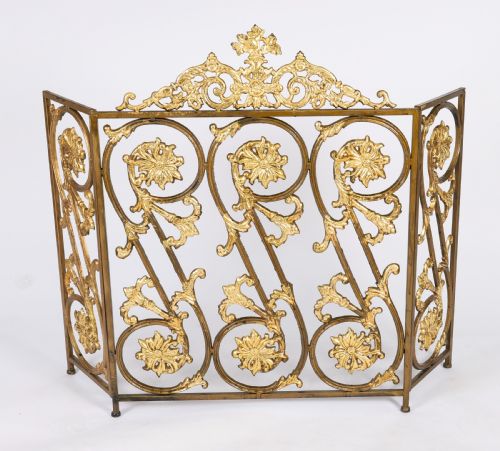
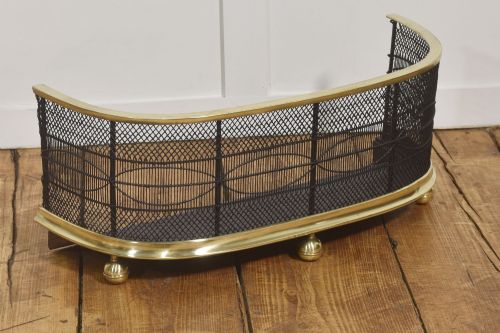
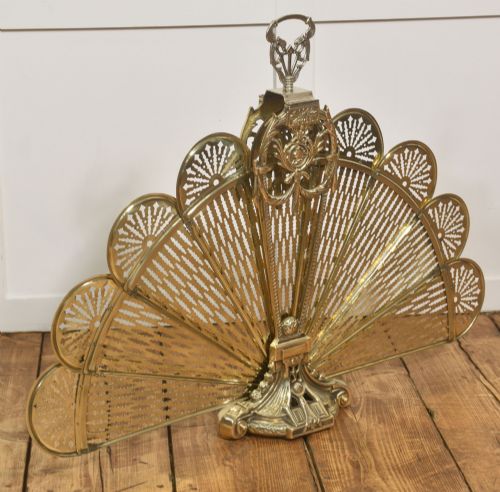
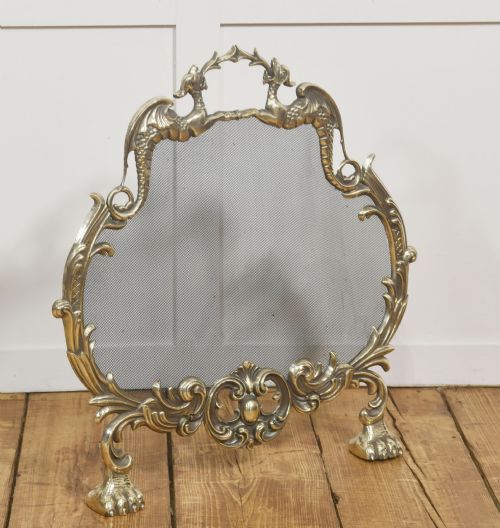
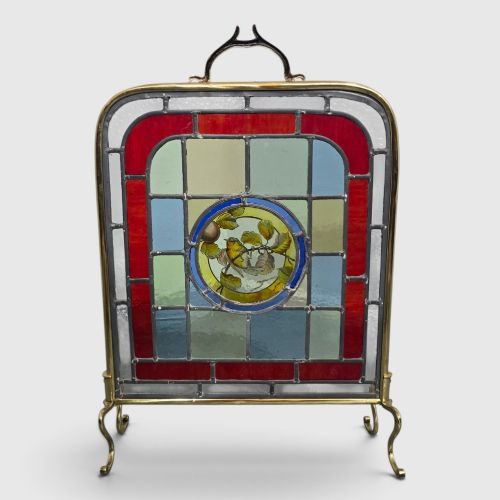
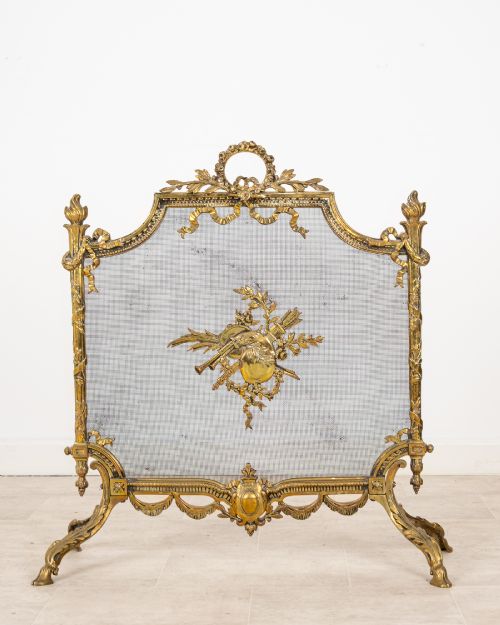
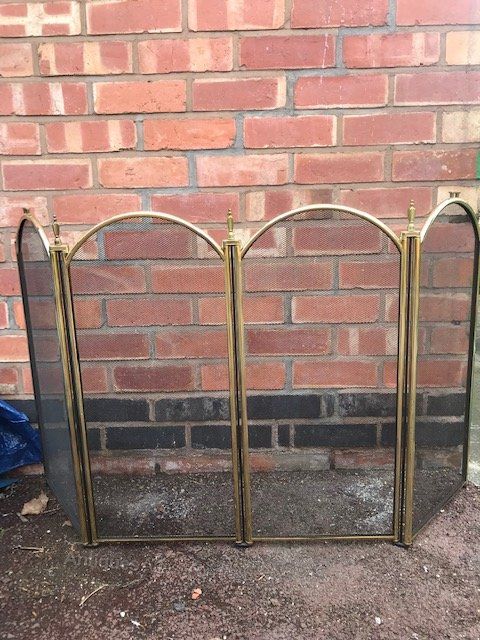
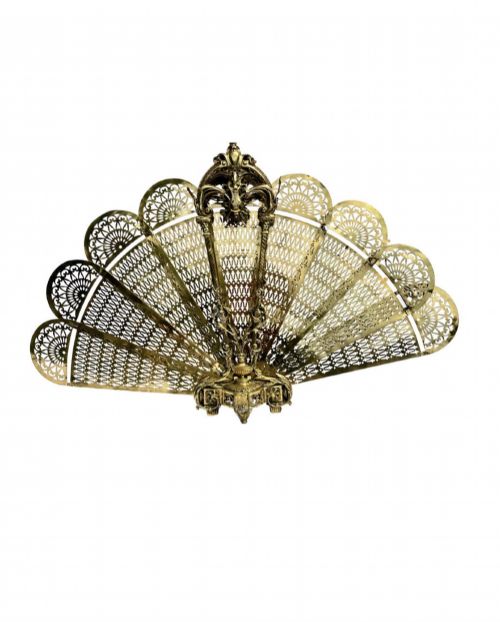
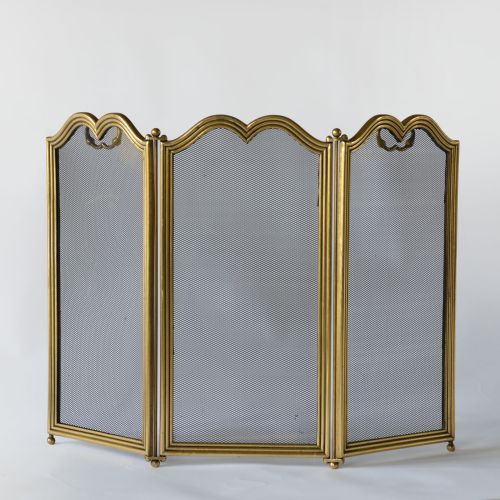
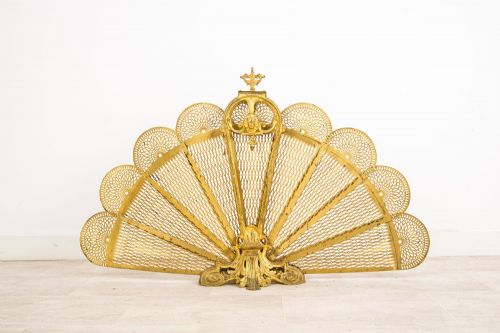
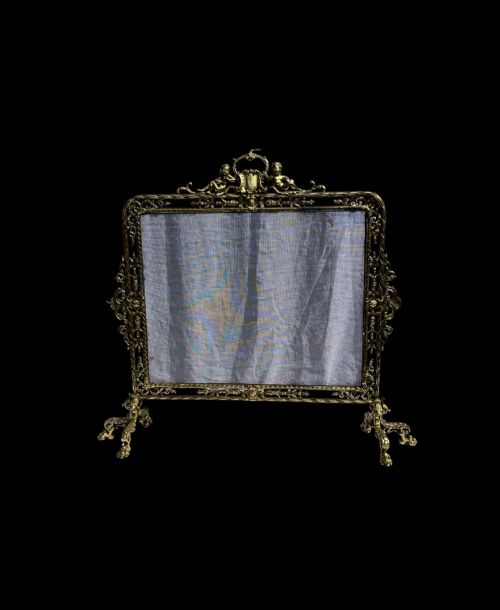
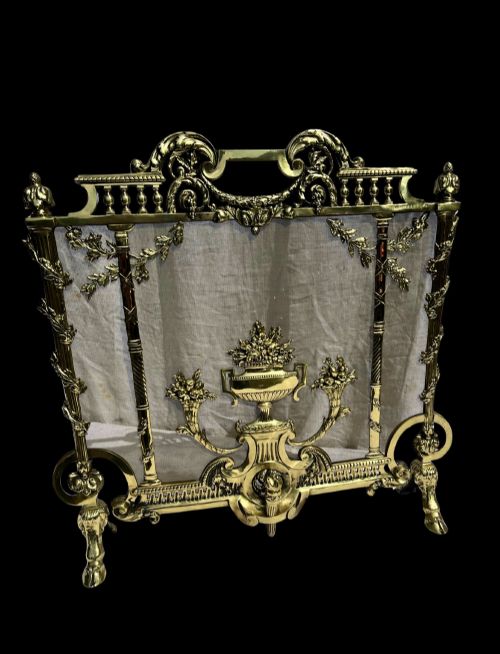
The selections on this page encompass various configurations, including peacock fan screens, tripartite folding panels, and wire mesh nursery guards. Stylistic influences span French Rococo Revival, Art Nouveau, and Regency periods, often incorporating glass, mirror, and iron elements.
Shoppers encounter both flat panel screens and multi-fold guards designed to encircle the hearth opening. Origin details point to domestic British workshops alongside continental French and Dutch examples featuring embossed and chased ornamentation.
Materials and construction
Construction relies heavily on brass, gilt brass, and gilt bronze frames combined with wire mesh, iron, and steel components. Metalworkers shaped these materials through casting, piercing, embossing, and chasing to produce ornamental motifs.
Folding versions utilise hinges to join multiple sections, while fan designs incorporate pivoting metal blades that open and close like a hand fan. Elements such as oak panels, cut glass, and sunburst mirrors integrate directly into the metal frameworks.
Vintage Brass Spark Guard Retail Price Guide 2026
Typical asking prices for vintage brass spark guard among the pieces listed under this phrase on Sellingantiques today, from the lower quarter to the upper quarter. They describe what is for sale here now, not the wider market.
Materials recorded across the inventory include brass, gilt bronze, wire mesh, iron, steel, oak, and cut glass.
Assessing quality
Quality differentiates through the crispness of chased and embossed detailing on frames and central panels, where finely rendered motifs like floral and musical trophies surpass plain pressed metal. The weight and rigidity of the brass framework also indicate superior construction.
Complex mechanical actions on folding spark guards and pivoting peacock fan screens reflect higher standards of original manufacture. Furthermore, the integration of supplementary materials, such as heavy wire mesh or inset mirror glass, elevates the execution of the piece.
The Vintage Brass Spark Guard Glossary
- Spark guard
- A protective barrier placed before an open fireplace to catch flying embers. These guards utilise wire mesh or metal panels to contain sparks safely.
- Nursery fender
- A low metal barrier enclosing a hearth to prevent children from approaching the fire. They frequently incorporate a raised frame with fine wire mesh.
- Peacock fan screen
- A hearth screen featuring multiple folding metal blades that spread outward into a semi-circular fan shape. They expand to cover the fireplace opening when needed.
- Chasing
- A metalworking technique where details are hammered into the front surface of the brass or bronze using punches. This creates raised ornamental designs without removing material.
- Rococo Revival
- A nineteenth-century design style emulating the exuberant scrollwork, asymmetry, and naturalistic curves of the eighteenth-century French Rococo movement.
Vintage Brass Spark Guard: Frequently Asked Questions
How do I clean a brass spark guard?
Dust the wire mesh and metal frame regularly with a dry cloth to prevent soot accumulation. Avoid harsh chemical cleaners that strip patination from older brass surfaces.
Apply a mild soapy solution only if grime persists, drying the metal thoroughly afterwards. Preserving the natural ageing of the brass maintains the historic character of the piece.
Will a folding screen fit my fireplace?
Measure the width and height of your fireplace opening before selecting a multi-fold spark guard or rigid screen. Tripartite and folding versions offer flexibility because the hinged panels adjust to fit various hearth dimensions.
Ensure the guard extends beyond the edges of the grate to provide adequate ember protection. Freestanding nursery fenders require sufficient floor space in front of the hearth.
What is the difference between a screen and a fender?
Fire screens generally stand upright on feet or legs to block the front of the fireplace opening. They include flat panels, folding sections, and fan designs that can be moved easily.
Fenders sit low to the ground and attach directly to the hearth floor to create a physical boundary. Nursery fenders combine this low barrier with high wire mesh sides for enhanced safety.
How do I date an antique brass spark guard?
Examine the construction methods, fastener types, and design styles visible in the metalwork. Pieces showing Regency or early nineteenth-century characteristics often display heavier cast components and hand-finished detailing.
Victorian and later Edwardian examples frequently utilise mass-produced wire mesh and machine-stamped motifs. Stylistic cues like Art Nouveau whip lines or Rococo scrollwork help narrow the period of manufacture.