

Brass Hearth Surround
A brass hearth surround defines the fireplace, framing the fire while protecting the floor with polished metal or leather.
Brass Hearth Surround
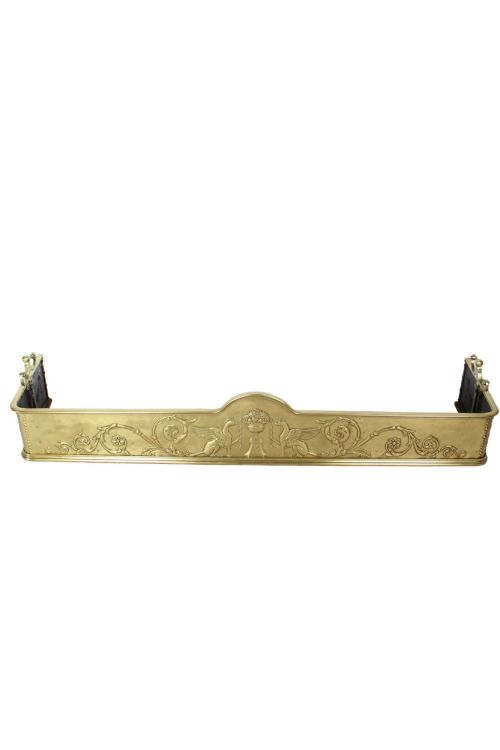
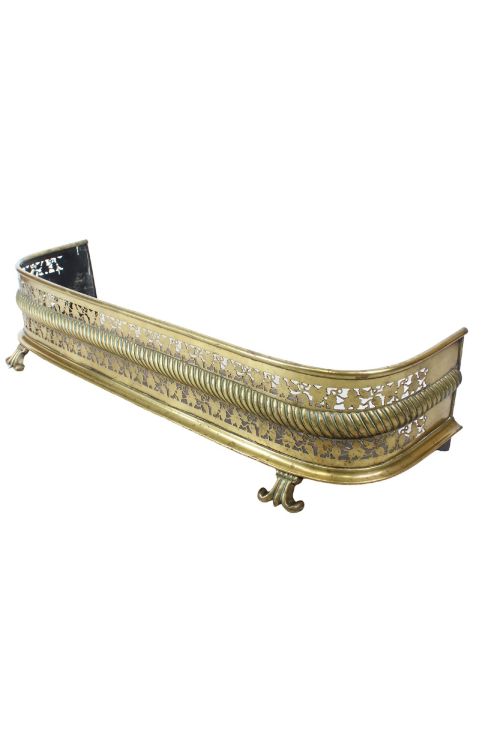
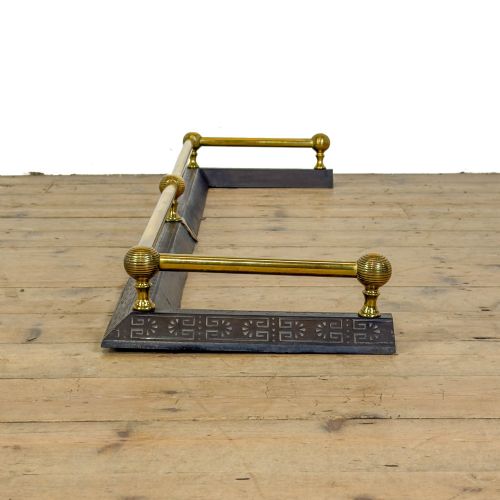
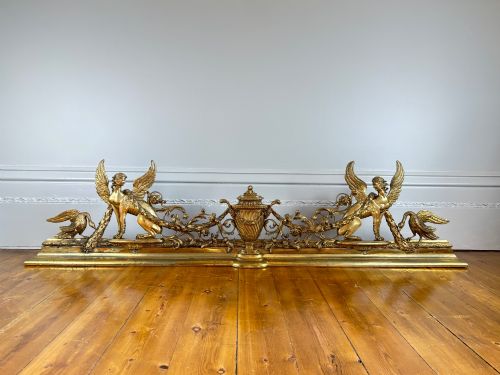
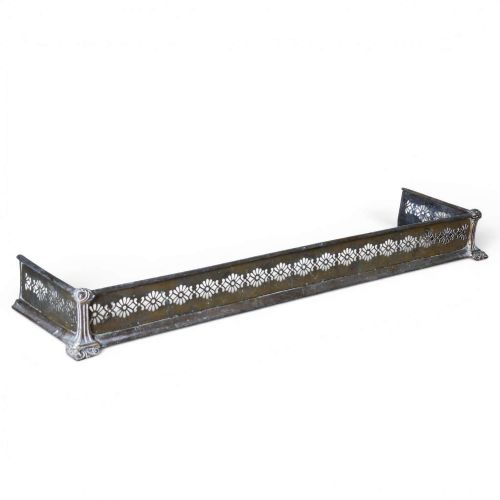
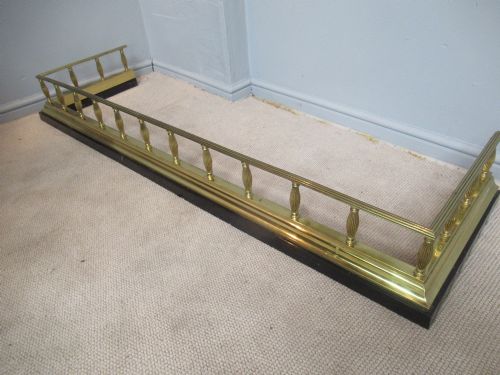
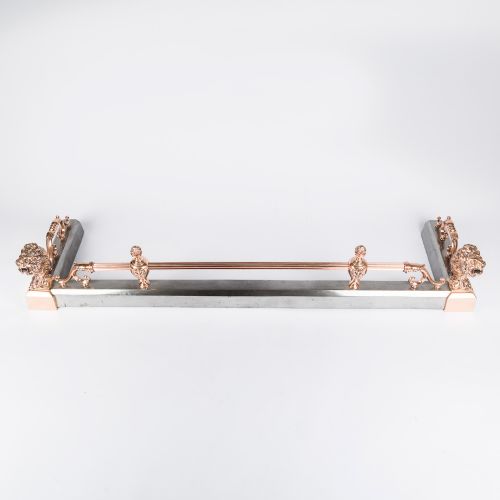
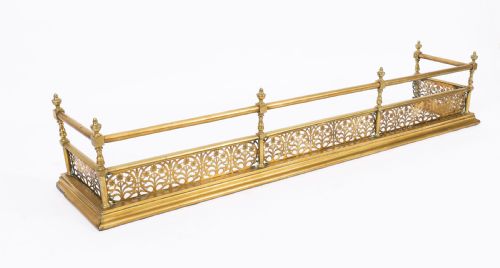
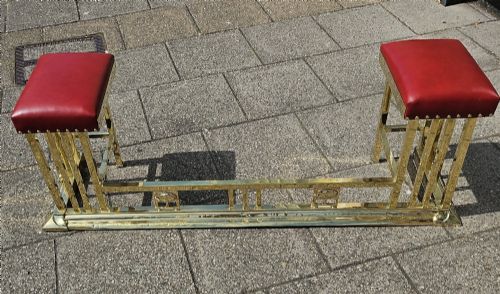
A brass hearth surround acts as a physical barrier for the fireplace, keeping embers contained while anchoring the proportions of the room. When searching for a brass hearth surround, buyers encounter various forms including standard fire fenders, heavy club fenders with upholstered seats, and architectural miniatures.
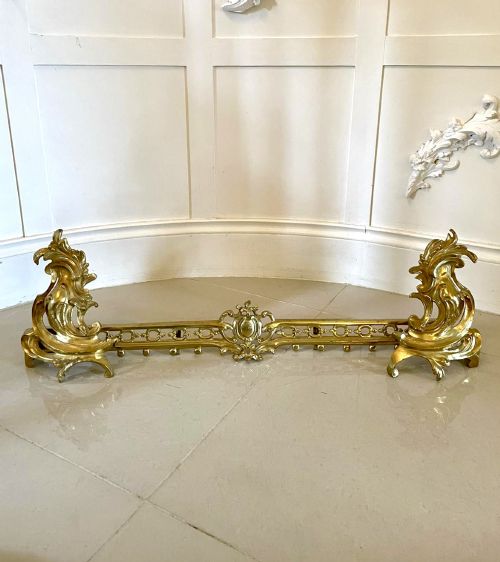
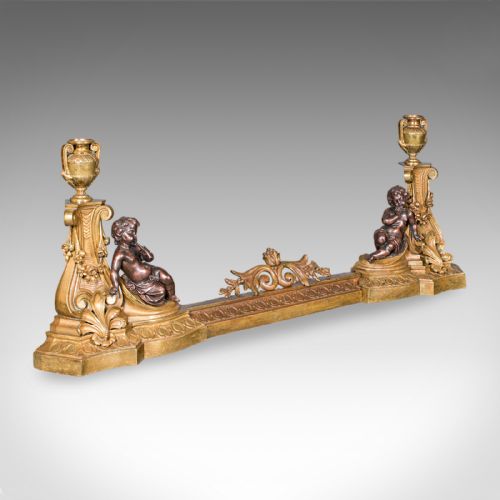
The pieces on this page span the Victorian and Edwardian eras, alongside pieces executed in Georgian, Art Nouveau, and French Rococo styles. Most examples date from the nineteenth century through the early twentieth century, showing substantial construction in brass, iron, and steel.
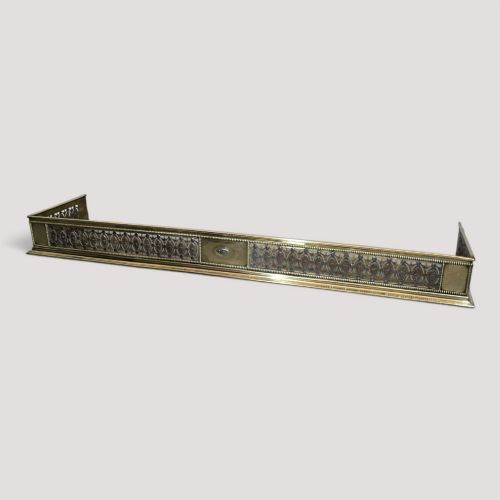
Forms range from simple pierced kerbs to extending frames and low benches covered in tan leather. Buyers also find occasional miniature salesman samples and architectural models reflecting full-scale hearth designs.
Assessing quality and craftsmanship
Quality rests upon the thickness of the metal gauge and the crispness of the detailing in cast or pierced ornaments. Flimser frames bend under pressure, whereas superior pieces utilise heavy-gauge brass and robust iron foundations that maintain their structural rigidity over decades of use.
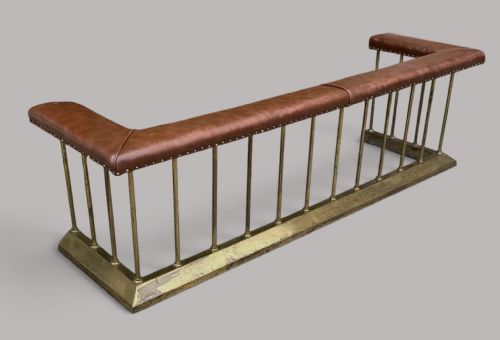
The joinery and mechanism construction separate ordinary production from finer work, particularly in extending models and club fenders where joints must slide smoothly or support the weight of a seated person. Leather upholstery on club fenders varies from simple modern replacements to thick, hand-finished hides secured with traditional brass tacks.
Decorative finish and patination dictate visual success, with superior pieces showing deep, natural ageing on the brass alongside clean, sharply defined casting work rather than soft, muddy relief.
Brass Hearth Surround Retail Price Guide 2026
Typical asking prices for brass hearth surround among the pieces listed under this phrase on Sellingantiques today, from the lower quarter to the upper quarter. They describe what is for sale here now, not the wider market.
Miniature salesman samples allowed travelling reps to carry tiny fire fenders in their pockets instead of hauling tons of brass through the mud.
E F Caldwell New York
The Brass Hearth Surround Glossary
- Fender
- A low metal guard placed around the hearth to keep burning coals from rolling onto the floor. It typically sits directly on the carpet or stone.
- Club fender
- A low fireside bench featuring a padded leather seat raised above a brass or iron frame. This form provides seating close to the fire.
- Pierced brass
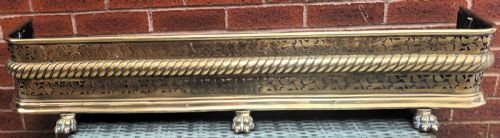
- Metal sheet perforated with decorative patterns such as scrolling foliage or geometric piercing. This technique lightened the visual weight of heavy brass guards.
- Ormolu
- Finely chased and gilt bronze applied to decorative objects and furniture. It provides a rich, gold-coloured finish on continental pieces.
- Cut steel
- Small steel studs faceted and riveted to a steel backing to catch the firelight. It appears on polished hearth furniture from the Georgian and Victorian periods.
Brass Hearth Surround: Frequently Asked Questions
What is a club fender?
A club fender is a low fireside bench built around a metal frame with an upholstered leather seat on top. It allows people to sit directly by the hearth while containing the fire.
Victorian and Edwardian versions often utilised brass balustrades and sturdy iron bases to support the weight.
How do I clean antique brass?
Antique brass responds best to gentle dusting and occasional cleaning with a mild, non-abrasive metal polish. Heavy scrubbing removes the historical pat patina that collectors value.
Leaving the surface with a warm, aged glow preserves the character acquired over a century or more.
Are all hearth surrounds adjustable?
Not all pieces adjust, though many Victorian examples include extending mechanisms designed to fit varying fireplace widths. Fixed frames were built for specific hearth dimensions.
Checking the inner channels reveals whether a piece possesses a sliding extension bar or remains a rigid single unit.
How do I date a brass fender?
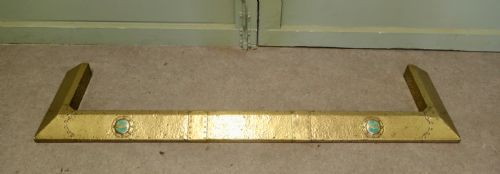
Dating relies on stylistic clues, construction methods, and material combinations typical of specific periods like the Victorian or Edwardian eras. Arts and Crafts pieces often feature hand-hammered surfaces and enamel cabochons.
Earlier Georgian and Regency examples tend towards cut steel and strict neoclassical symmetry, whereas later pieces introduce industrial extending screws and varied iron cores.