




Vintage Brass Andirons
Vintage brass andirons anchor a hearth with heavy cast metal and bright polish, bringing warmth and presence to an open fire.
Vintage Brass Andirons
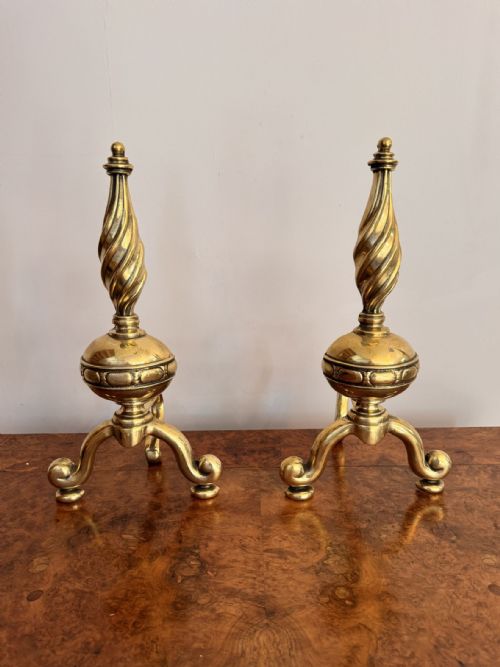
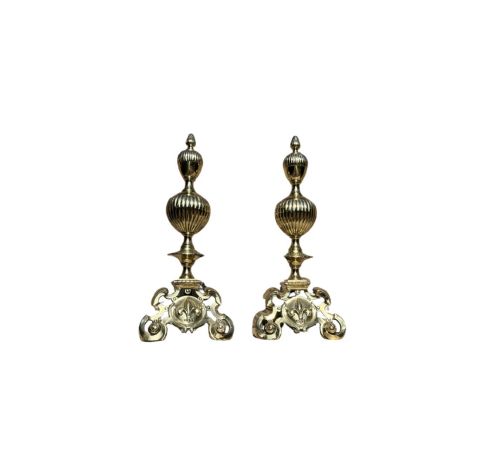
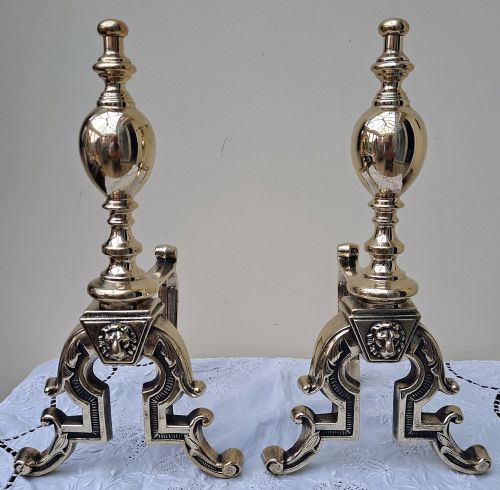
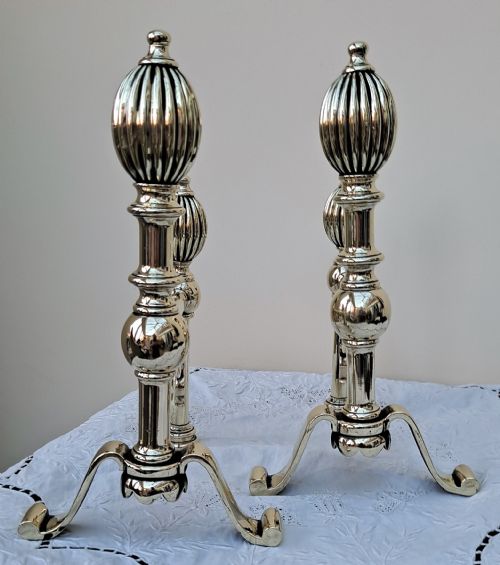
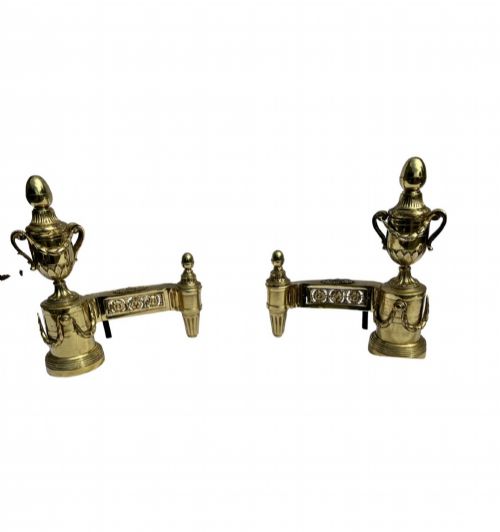
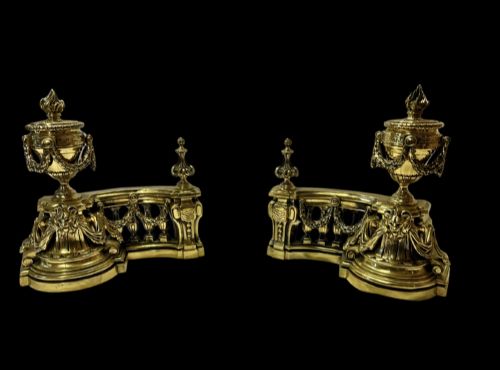
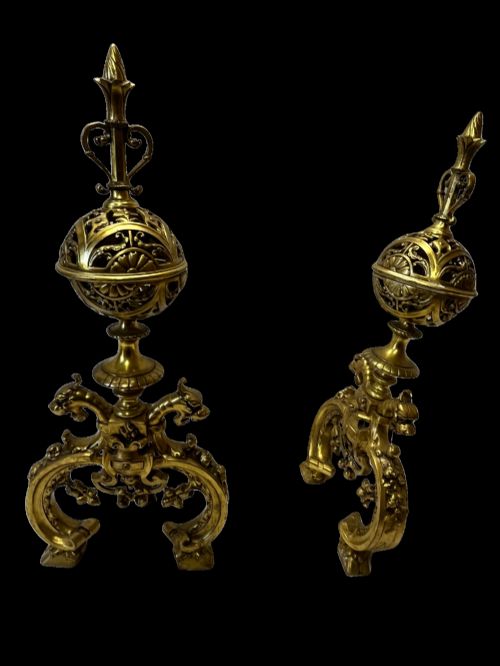
When you search for vintage brass andirons, you are looking at heavy hearth supports designed to hold logs above the hearth floor for better airflow. The pieces available here span the nineteenth century, including Victorian, Regency, and Georgian periods, alongside French rococo and baroque revival styles.
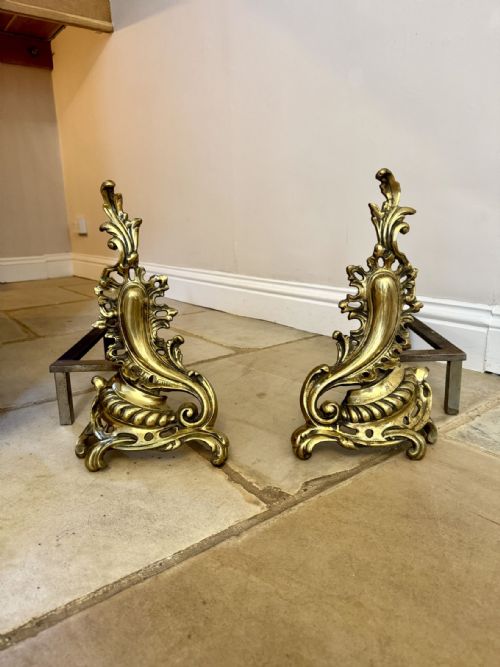
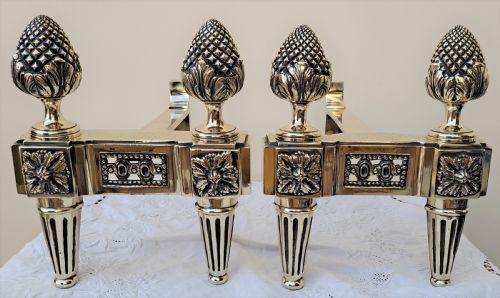
You will most commonly meet pairs of cast brass fire dogs, often accompanied by iron billets or paired with companion tool sets, fire baskets, and tool rests. These items originate from English and French workshops, showing styles from austere neoclassical lines to ornate cast scrollwork.
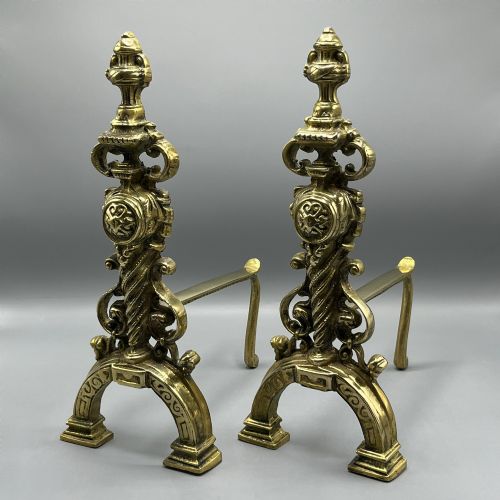
The form typically consists of an upright front standard supported by a horizontal iron bar running back into the hearth. They function both as practical supports for wood fires and as decorative centrepieces for the fireplace.
Distinctions in quality
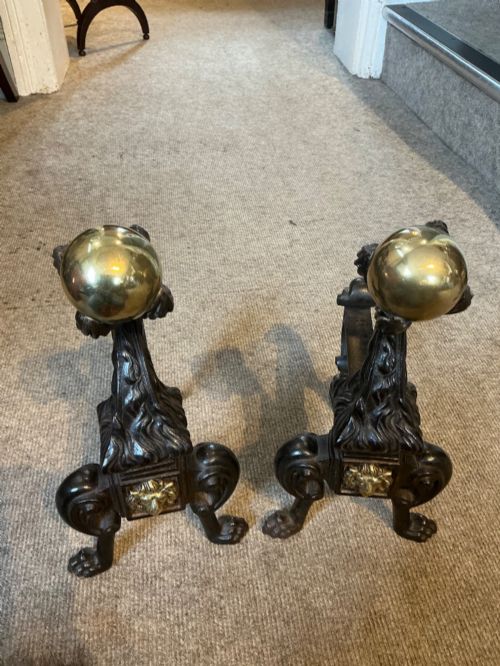
The distinction between standard production and the finest work lies in the crispness of the casting and the weight of the metal. Superior pairs show deep relief work, sharply defined acanthus leaves or claws, and substantial solid brass thickness rather than thin sheet plating.
Proportion and structural integrity also separate fine examples from ordinary ones. Well-made pieces pair heavy cast brass fronts securely with thick iron billets that do not warp under heat, maintaining straight alignment and steady balance on the hearth.
Claw and ball feet on nineteenth-century fire dogs ensure your logs are guarded by very stylish imaginary beasts.
James Cartland & Son
The Vintage Brass Andirons Glossary
- Andirons
- Supports for logs in an open fireplace, consisting of a horizontal bar and a vertical front standard. They are also frequently known as fire dogs.
- Chenet
- The French term for an andiron, often applied to decorative brass or ormolu-mounted hearth supports of continental origin. These frequently feature rococo or baroque styling.
- Fire basket
- A metal grate designed to hold coal or wood within a fireplace, sometimes incorporating integrated andirons or fire dogs as part of the assembly.
- Billets
- The horizontal iron bars extending backward from the front standard of an andiron to support the burning logs. They bear the primary weight and heat of the fire.
- Ormolu
- Finely ground high-zinc brass applied as a gilt finish to bronze or brass mounts, characteristic of decorative French hearth pieces.
Vintage Brass Andirons: Frequently Asked Questions
What is the difference between andirons and fire dogs?
The terms are generally used interchangeably to describe the same hearth furniture. Both refer to the upright metal supports placed at the front of a fireplace.
Historically, regional terminology varied, but modern usage applies both names to pairs of decorated stands holding wood off the hearth floor.
How do I know if they are solid brass?
Solid brass examples show heavy weight and consistent metal composition when inspected closely around edges and joints. Lighter pieces often utilise brass plating over iron or cast iron cores.
Testing with a magnet can help distinguish surface brass from iron elements, as solid brass is non-magnetic while the internal billets and bars remain iron.
Can these be used in a working fireplace?
Most antique pieces were built for active hearths using coal or wood, provided the iron billets remain structurally sound. The combination of cast brass and wrought iron handles high temperatures effectively.
Care should be taken with pieces featuring delicate ormolu mounts or fragile chased details, which suit decorative use better than roaring fires.
How do I date a Victorian set?
Victorian pieces often display registration marks, heavier cast ornamentation, and specific stylistic revivals like Gothic or Rococo forms. Examining the casting texture and assembly screws offers further clues to the decade of manufacture.
Comparing the design against standard nineteenth-century catalogues helps narrow the production period between the early and late Victorian eras.