




19th Century Fire Dogs
These 19th century fire dogs anchor an open hearth with structural weight and decorative presence, bringing period metalwork to a traditional fireplace.
19th Century Fire Dogs
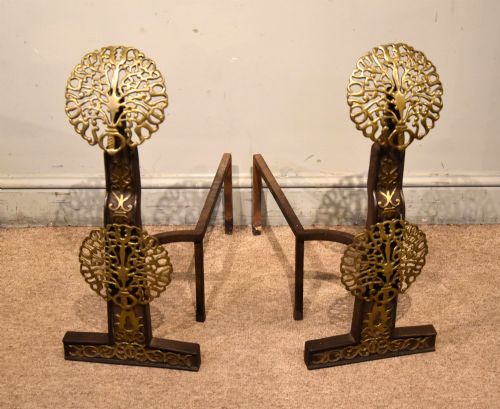
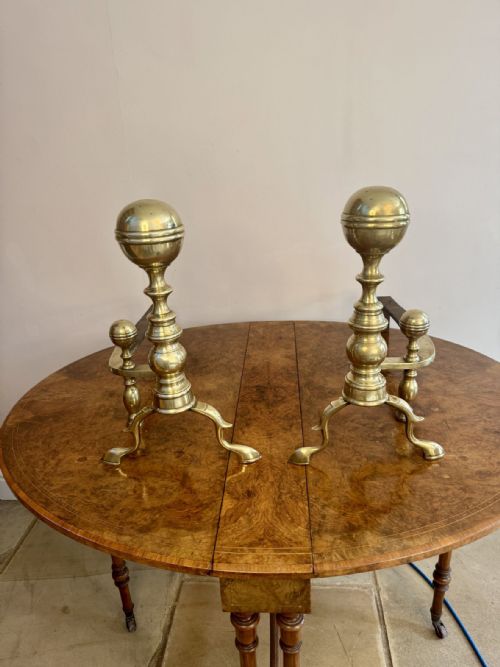
When searching for 19th century fire dogs, buyers encounter substantial hearth furniture designed to support logs above the hearth floor for better air circulation. These objects appear under alternative names such as andirons or chenets, spanning domestic English and French interiors.
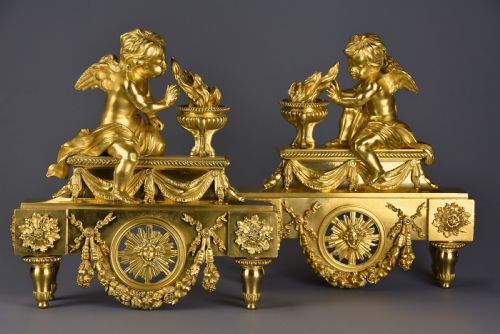
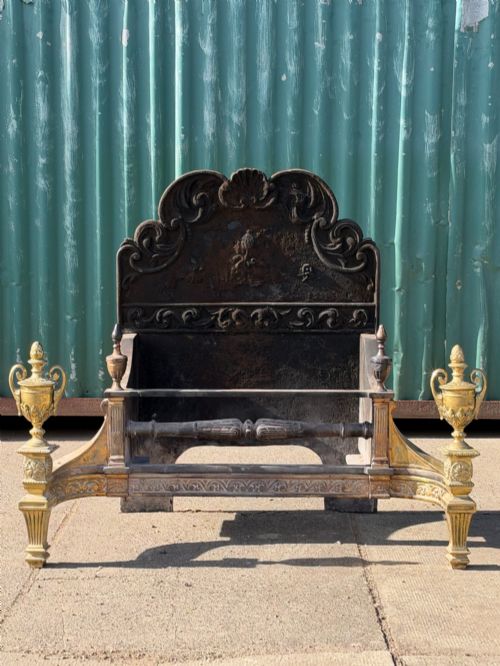
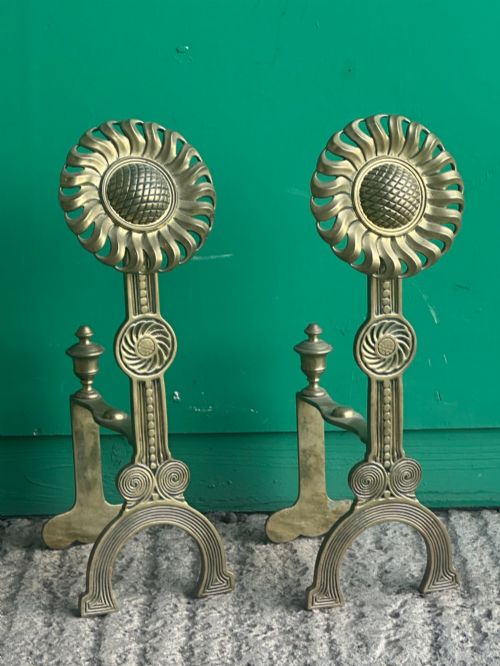
The selection here ranges from utilitarian wrought iron supports to decorative mantelpieces cast in brass, bronze, and ormolu. Most examples date from the Victorian era, alongside specific period revivals that emulate earlier seventeenth and eighteenth century aesthetics.
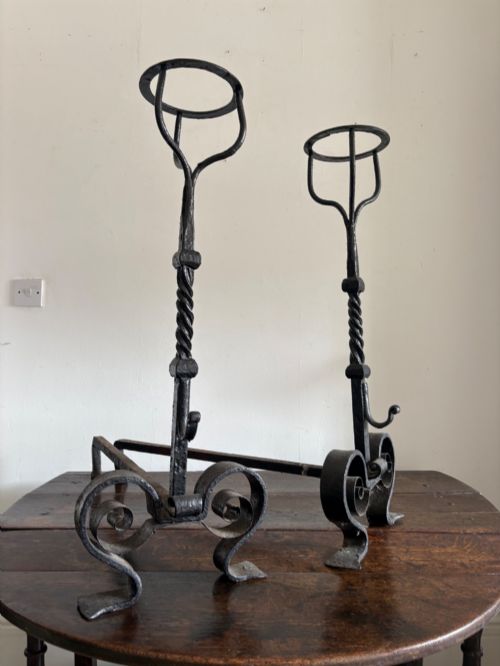
Forms vary from monumental iron standards exceeding eighty centimetres in height to smaller domestic pairs matched with grates or fenders. Buyers select these pairs according to hearth depth, metal finish, and the architectural style of the surrounding chimney piece.
How they were made
Foundry workers shaped these objects primarily through casting or forging, utilising iron, brass, and bronze. Cast iron and cast brass pieces allowed makers to produce sharp surface ornamentation, from floral motifs to figural sculptures.
Wrought iron and polished steel versions required manual smithing, yielding robust bars and scrolled legs designed to withstand intense hearth temperatures. Gilt bronze and ormolu examples received fine surface finishing and chemical gilding to achieve bright decorative highlights.
19th Century Fire Dogs Retail Price Guide 2026
Typical asking prices for 19th century fire dogs among the pieces listed under this phrase on Sellingantiques today, from the lower quarter to the upper quarter. They describe what is for sale here now, not the wider market.
Listings feature brass, wrought iron, cast iron, ormolu, and bronze across Gothic Revival, Aesthetic Movement, and Rococo styles.
What varies in quality
Quality in these fire dogs rests on the crispness of the cast detailing and the integrity of the materials used. Superior examples display deeply chiselled ornamentation on bronze or ormolu surfaces rather than soft, smoothed-over cast profiles.
Substantial weight and thick gauge metal separate robust utilitarian pairs from lighter decorative substitutes. The balance between the upright standard and the horizontal billet bar dictates stability when supporting heavy wood fuel.
Thomas Jeckyll·William Tonks·Carron Foundry
The 19th Century Fire Dogs Glossary
- Andiron
- A horizontal metal support raised on legs, used in pairs to hold logs in an open fireplace. They typically feature an ornate front standard.
- Chenet
- The French term for an andiron, frequently applied to decorative ormolu or bronze fire dogs made in France during the nineteenth century.
- Billets
- The horizontal iron bars extending backward from the front standard to support the burning logs. They bear the direct weight and heat of the fire.
- Fender
- A low metal guard placed on the hearth in front of the fire dogs to contain sparks and ash. They often match the metalwork of the accompanying andirons.
- Ormolu
- Gilt bronze produced by applying a mercury and gold amalgam to a bronze base. This technique creates a rich golden finish seen on formal nineteenth century pieces.
19th Century Fire Dogs: Frequently Asked Questions
How do I choose the right size fire dogs?
Measure the width and depth of your fireplace opening before selecting a pair. Taller standards suit deep hearths, while smaller pairs prevent overcrowding in modest grates.
Ensure the horizontal billet bars fit comfortably inside the fireplace without obstructing the back wall or side cheeks.
Can I actually burn wood on antique fire dogs?
Many nineteenth century iron and steel fire dogs were built for active hearth use and handle burning wood safely. Lighter decorative pairs made of ormolu serve primarily an aesthetic role.
Inspect the metal thickness and billet bar condition to determine if a pair can endure daily thermal stress.
How do I clean brass and iron fire dogs?
Remove surface soot and ash using a soft brush and warm soapy water, avoiding harsh chemical abrasives. Dry iron thoroughly and apply a light coat of microcrystalline wax to prevent oxidation.
Polish brass cautiously to preserve the aged patina that accumulates over decades of domestic use.
What is the difference between fire dogs and fire grates?
Fire dogs operate as a pair of independent uprights supporting logs directly on the hearth floor. A fire grate incorporates an integrated basket or cradle to hold coal and wood together.
Some larger setups combine fire dogs with a matching open basket grate placed between them.