



Black Cast Iron Andirons
Black cast iron andirons are robust hearth supports that steady fuel logs and anchor traditional fireplaces with structural presence.
Black Cast Iron Andirons
Black cast iron andirons serve as the structural firedogs that hold burning logs securely within an open hearth. When searching for black cast iron andirons, collectors encounter examples ranging from plain utilitarian forms to elaborate Victorian Gothic revival designs.
The pieces on this page span several centuries, including Georgian, Victorian, Edwardian, and earlier 16th century English pieces. Alongside standalone pairs, some listings pair the andirons with matching fire baskets, grates, or fender sets for a complete hearth arrangement.
How they were made
Foundry workers poured molten metal into sand or open moulds to shape the heavy cast iron bodies, producing solid utilitarian forms. Smiths incorporated wrought iron components and brass details to add structural strength and decorative contrast to the primary cast structure.
Makers often integrated firebrick linings within associated fire baskets to withstand sustained hearth temperatures. Surface finishing techniques left the iron in its raw dark state or applied protective coatings to resist soot and ash corrosion.
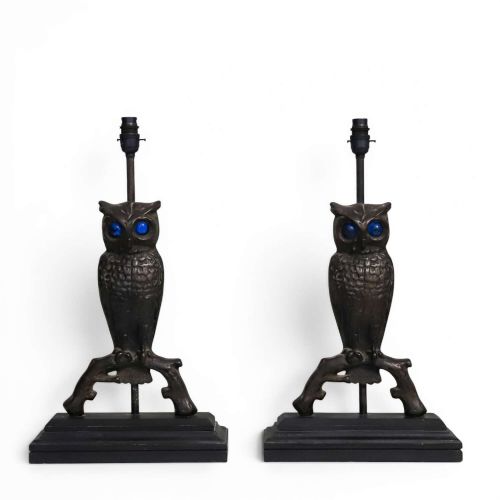
One unexpected pair of American cast iron owl lamps began life as 1930s andirons before someone converted them for domestic lighting.
What varies in quality
The weight and thickness of the cast iron distinguish heavy utilitarian pieces from lighter decorative examples. Substantial 19th century and early French or English pairs display thick casting walls designed to endure intense daily heat without warping.
The crispness of the moulded detail defines the visual merit of the pair. Sharp casting lines on animal motifs or Gothic architectural elements separate superior workshop output from worn secondary strikes.
The Black Cast Iron Andirons Glossary
- Andiron
- A metal support placed in a fireplace to hold logs above the hearth for better airflow. Also known as a firedog.
- Fire Basket
- A metal grate designed to contain solid fuel within a fireplace opening. It often incorporates or sits alongside matching andirons.
- Fire Dog
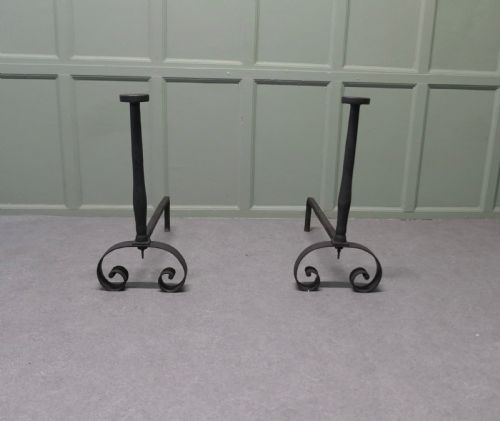
- An alternative term for an andiron, traditionally featuring an upright front standard and a horizontal log bar. These heavy irons support the wood fire.
- Cast Iron
- An iron-carbon alloy poured into moulds in a molten state. This material forms the rigid body of the andirons and resists high hearth temperatures.
- Wrought Iron
- Iron worked by heating and hammering rather than casting. It provides tough, fibrous support elements in mixed-metal hearth sets.
Black Cast Iron Andirons: Frequently Asked Questions
How do you use andirons in a fireplace?
Andirons stand upright on the hearth floor with their horizontal bars extending backward into the fireplace. Logs rest across these bars to allow air circulation underneath for an efficient burn.
They support the fuel away from the masonry base while anchoring the visual composition of the hearth opening.
What is the difference between andirons and fire baskets?
Andirons are a pair of separate vertical supports designed to hold loose logs directly on the hearth floor. Fire baskets combine a grate container with integrated andiron legs into a single unit.
Baskets contain smaller coal or wood fragments, whereas andirons suit larger split logs.
How do I identify a Victorian andiron?
Victorian andirons frequently display Gothic Revival motifs, heavy architectural casting, or ornate surface decoration. They often appear as part of larger fireplace sets with matching fenders and tool rests.
Compare the casting style and proportions against dated examples from the mid to late nineteenth century.
Can I use antique andirons with a modern gas fire?
Antique andirons serve primarily as decorative front pieces or functional log supports in open wood-burning hearths. Many buyers place them in decorative fireplace openings without burning solid fuel.
Check the dimensions of your fireplace recess to ensure the upright standards fit the available depth.