
Vintage Botanical Picture
A vintage botanical picture brings the garden indoors through varied mediums, offering centuries of preserved floral and natural artistry for the home.
Vintage Botanical Picture
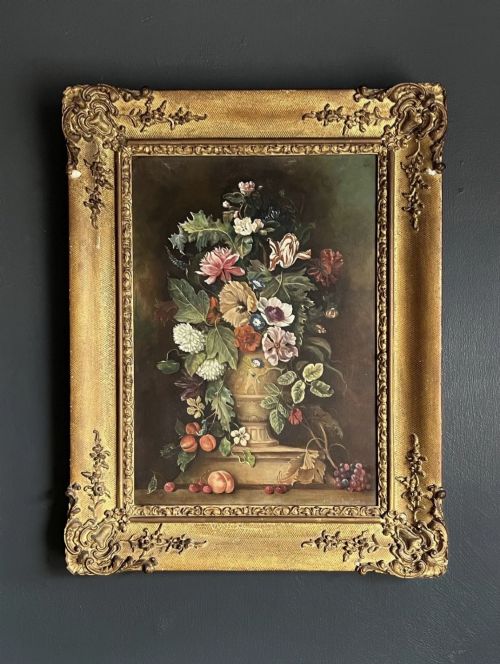
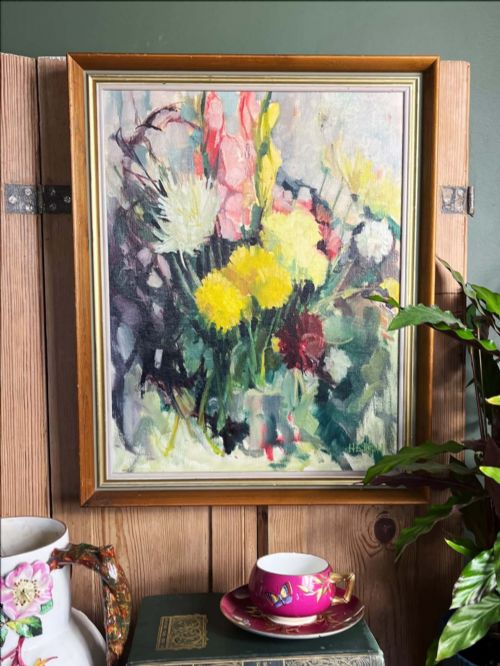
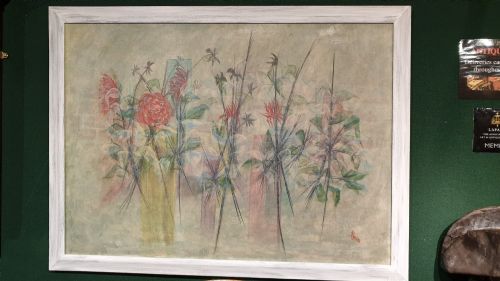
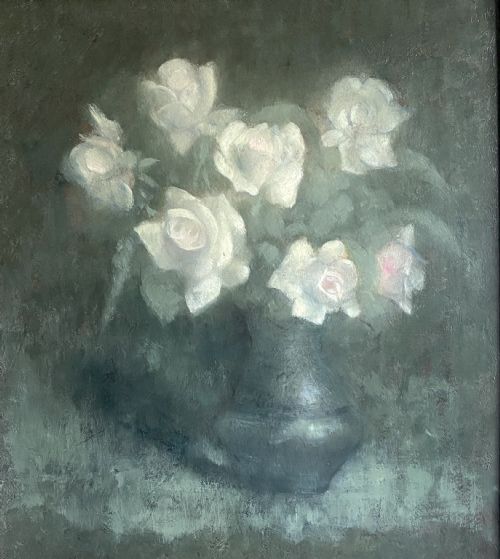
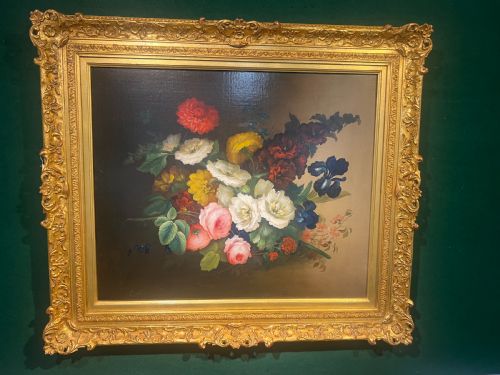
A vintage botanical picture encompasses wall art, paintings, oil paintings, and framed artwork created across multiple centuries. These pieces record flowers, fruits, and gardens through the eyes of artists working in diverse regional traditions.
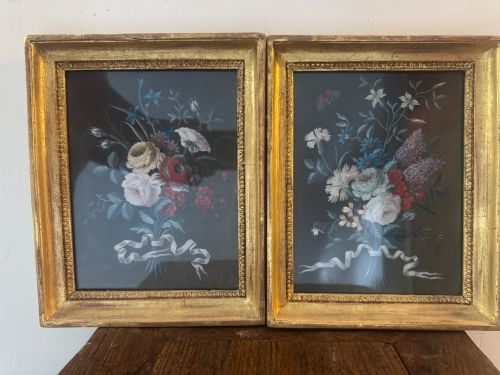
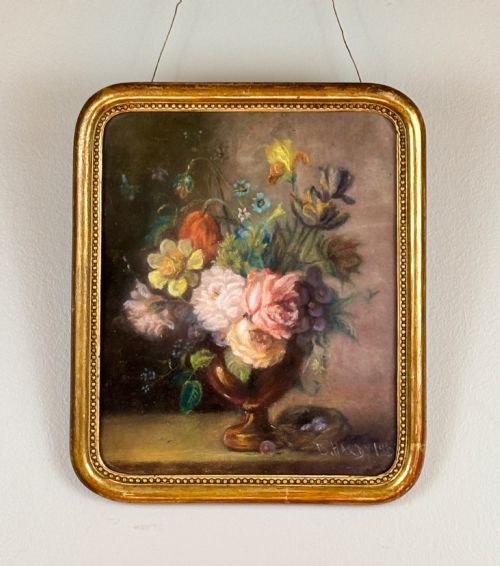
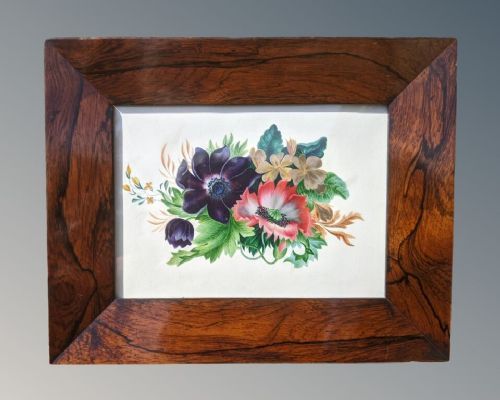
The selections available range from 18th-century gouache and Georgian pastels to mid-century oil paintings and textile art. Buyers frequently encounter 19th-century watercolours alongside mid-century floral compositions set within period frames.
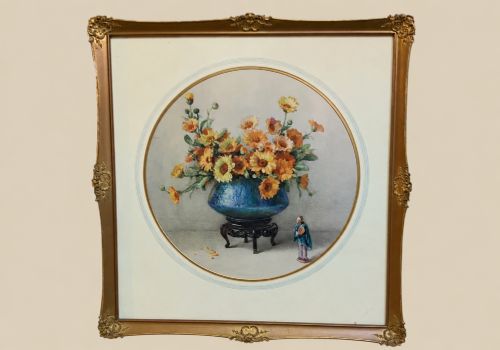
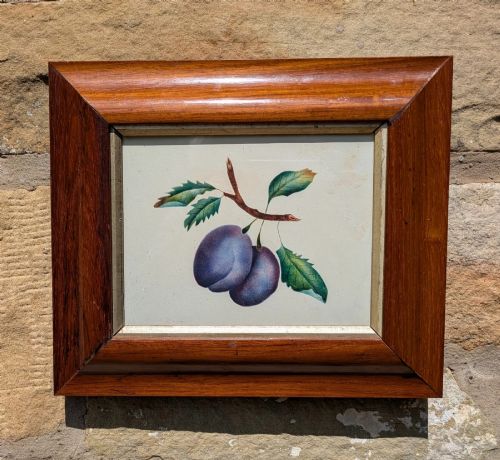
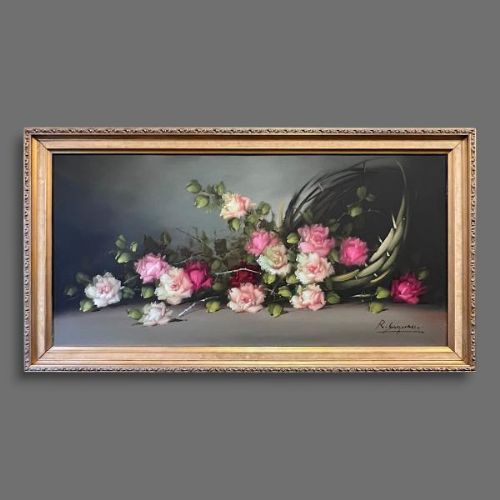
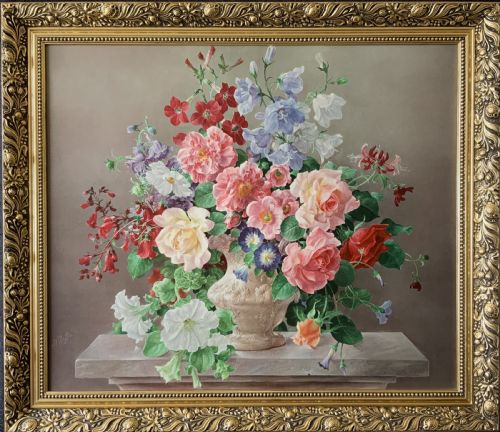
Subjects extend from simple studies of plums and roses to elaborate arrangements of Dutch flowers and garden landscapes. Works utilise paper, canvas, board, and textile panels to capture natural forms.
How they were made
Artists deployed watercolour, gouache, oil paint, and pastel upon paper, canvas, and board to render botanical subjects. Many works combine media, incorporating pencil and gouache with watercolour across delicate studies.
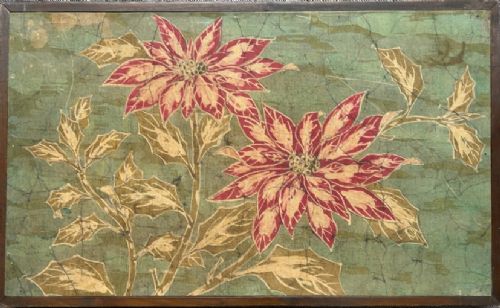
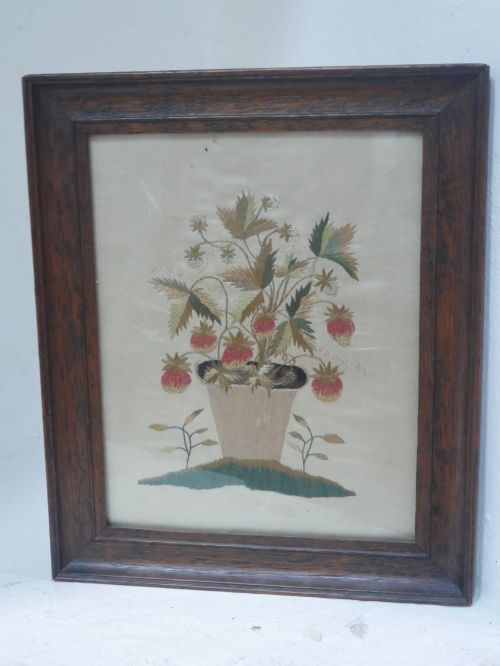
Needlework and embroidery form a distinct group of textile art, executed with fine threads to depict flowers, pots of strawberries, and birds. Batik panels represent further textile experimentation from the mid-century.
Mounting and framing involved wood, glass, gold leaf, gesso, and rosewood, frequently incorporating carved gilt frames or Kashmiri walnut.
Several floral studies sneak in unexpected Chinese objects or wandering mandarin ducks among the roses.
What varies in quality
The handling of pigment and line dictates the success of a botanical study, where precision in depicting petals and foliage separates casual works from accomplished art. The strength of the composition and the balance of colour within floral arrangements reflect the painter's skill.
Materials contribute significantly to the character of a piece, from the density of an oil paint application on canvas to the delicate precision of layered watercolour and gouache on paper. Original framing, particularly period gilt gesso or rosewood frames, enhances the integrity of the surviving artwork.
Edwin Steele·D Hardy·Catherine Thomas·James Tower·Harry Wanless·Amile Coppieters·Lilian Stannard·Robin MacKertich
The Vintage Botanical Picture Glossary
- Watercolour
- A paint consisting of pigment suspended in a water-soluble binder, commonly applied to paper for botanical studies.
- Gouache
- An opaque watercolour paint containing white pigment added to create denser, heavier colour passages.
- Gesso
- A plaster-like mixture applied to wood frames before gilding with gold leaf, creating a smooth base for ornamentation.
- Oleograph
- A mechanical print textured to imitate an oil painting, frequently produced in the 19th and 20th centuries.
- Needlework
- A form of textile art created by stitching thread onto a fabric ground to form pictorial compositions.
Vintage Botanical Picture: Frequently Asked Questions
What periods do these pictures span?
The listings span from the 18th century through the Victorian era and into the mid-20th century. This timeline covers diverse aesthetic movements including Georgian, Art Nouveau, and Mid-Century Modern.
Earlier works rely on traditional watercolour and oil techniques, while later pieces explore mixed media, textiles, and bold impressionist brushwork.
Are these works original paintings?
The selection includes hand-painted watercolours, oils on canvas or board, gouache studies, and original pastels. Signed pieces by period artists appear alongside historic needlework panels and embroidered bird studies.
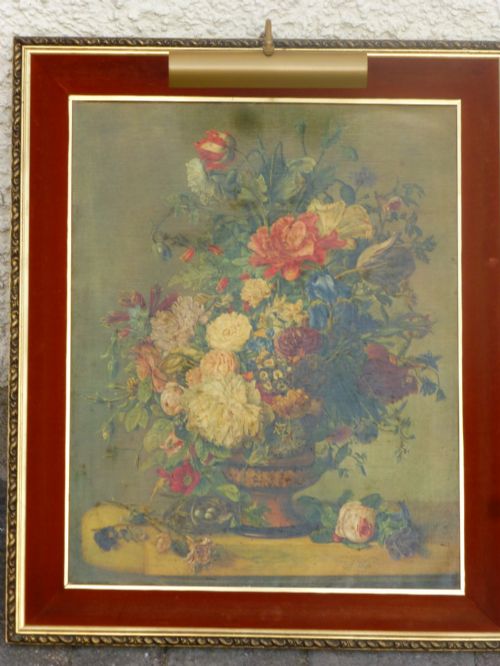
Certain listings also comprise vintage oleograph prints reproducing classic floral still life compositions.
How were botanical pictures framed originally?
Many works retain their period framing, featuring carved wood, gilt gesso, rosewood, and Kashmiri walnut. French aesthetic movement pewter frames and simple gilt mouldings also appear across the selection.
These frames often complement the medium, protecting delicate watercolours behind glass or supporting heavy oil canvases.
What subjects besides flowers appear?
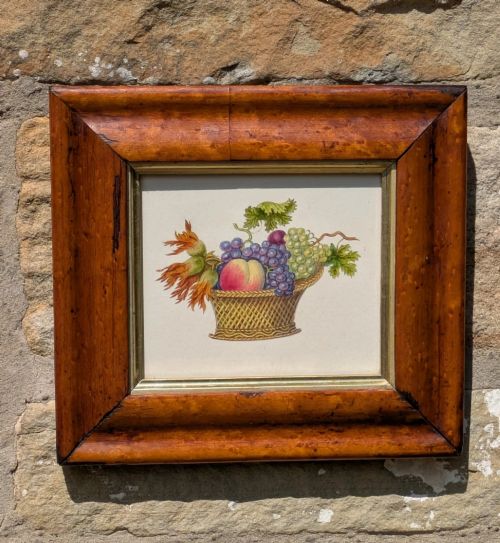
Alongside traditional floral arrangements and garden scenes, artists depicted fruit compositions, birds, and natural history studies. Subjects include bowls of apples, baskets of plums, mandarin ducks, and landscape views.
Textile panels and embroideries further expand the imagery to include decorative pots of strawberries and detailed botanical studies.