



Antique Botanical Engraving
These antique botanical engraving works bring natural history into a room through precise ink lines and delicate hand-colouring.
Antique Botanical Engraving
When you search for an antique botanical engraving, you are looking at printed plates depicting plants, flowers, and foliage produced across the eighteenth and nineteenth centuries. These printed studies range from individual folio sheets extracted from natural history volumes to framed works ready for display.
On this page, you are most likely to meet nineteenth century examples, including hand-coloured plates issued in French and British botanical publications. They often arrive framed in wood behind glass, preserving the paper sheets from atmospheric damage.
Materials and technique
Makers produced these plates by carving fine lines into copper or steel printing plates using sharp burins, applying dark ink to the recessed channels, and pressing the image onto dampened paper under heavy pressure. Artisans then added watercolours by hand using fine brushes, applying pigment within the printed boundaries to render accurate botanical colours.
The paper utilised for these publications was typically handmade from rag pulp, lending a heavy texture and cream tone that supports aged ink and watercolour without degradation. Framed pieces frequently utilise simple wooden mouldings and protective glass to secure the delicate paper sheets.
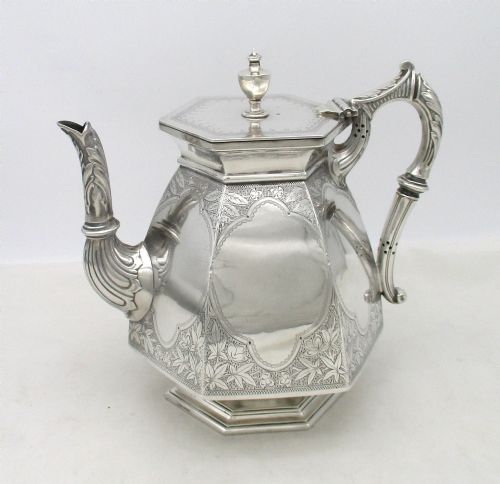
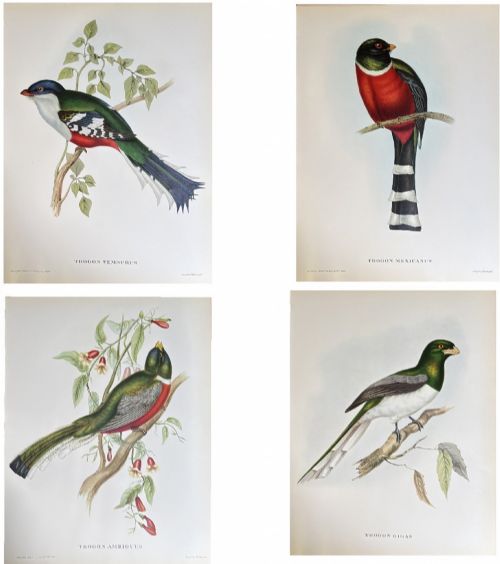
Several botanical plates share wall space with nineteenth-century silver teapots, gold signet rings, and taxidermy bird studies.
Judging the standard
Quality rests upon the precision of the initial plate cutting and the skill applied during the hand-colouring process. Finer plates display microscopic accuracy in leaf veins and petal edges, whilst superior colouring relies on subtle washes rather than heavy opaque paints that obscure the engraved lines.
The condition of the paper surface and the vibrancy of the original ink also dictate the merit of a piece. Examples retaining crisp plate marks and clean margins sit at the upper end of the range, whereas trimmed sheets or heavy foxing reduce visual appeal.
George Edwards·John Curtis·Pancrace Bessa·William Swainson·Georg Wolfgang Knorr
The Antique Botanical Engraving Glossary
- Engraving
- A printmaking technique where an artist cuts lines directly into a metal plate with a steel tool. The resulting grooves hold the ink for the printing press.
- Plate mark
- The indentation left on the paper by the edge of the printing plate under pressure. It proves the work came from a traditional press.
- Hand-coloured
- A print finished with watercolour applied by hand after the printing stage. This method was standard for natural history plates before colour lithography.
- Foxing
- Brown spots caused by chemical reactions in aged paper exposed to humidity. It is a common occurrence in historical book illustrations.
- Folio
- A large book format created by folding sheets once. Many loose botanical prints originate from dismantled volumes of this size.
Antique Botanical Engraving: Frequently Asked Questions
How should I frame an antique botanical engraving?
Protect the paper by using acid-free mount board and framing it behind glass to block ultraviolet light. Keep the piece away from direct sunlight to prevent the hand-applied watercolours from fading over time.
Ensure there is a small gap between the paper and the glass using a window mount so the delicate sheet avoids condensation damage.
Are these prints original to the stated period?
Authentic plates originate from the publication dates recorded in the evidence, such as the eighteenth or nineteenth centuries. Check for plate marks and paper ageing to confirm the piece stems from the stated era rather than being a modern photographic reproduction.
Examine the ink under magnification to verify it sits within engraved grooves rather than resting as tiny dots from a modern printer.
How do I spot hand-colouring?
Look closely at the pigment using a magnifying glass to check for subtle brush strokes and slight variations in colour density. Hand-applied watercolour sits softly on the paper fibres and stays within the printed boundaries.
Printed colour from later lithographic processes appears as uniform dot patterns or flat, mechanical fills under magnification.
Why do some prints have trimmed margins?
Earlier collectors often trimmed book plates to fit smaller frames or albums, removing the outer margins where publication text and plate numbers originally appeared. While full margins are preferred by purists, trimmed examples remain suitable for decorative wall display.
Check whether the plate mark remains intact near the image edge, as this indicates how much of the original paper sheet survives.