


Victorian Flower Illustration
These Victorian flower illustration works on paper capture botanical studies and floral still lifes that bring nineteenth-century naturalism directly into modern interiors.
Victorian Flower Illustration
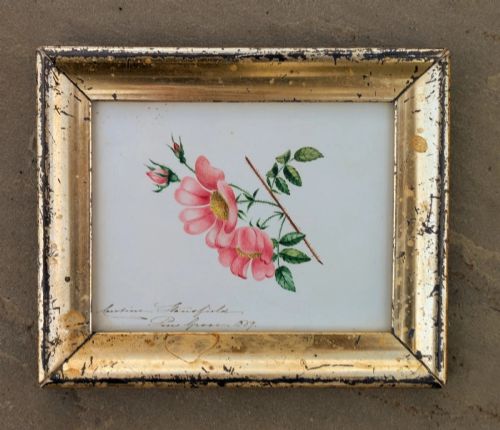
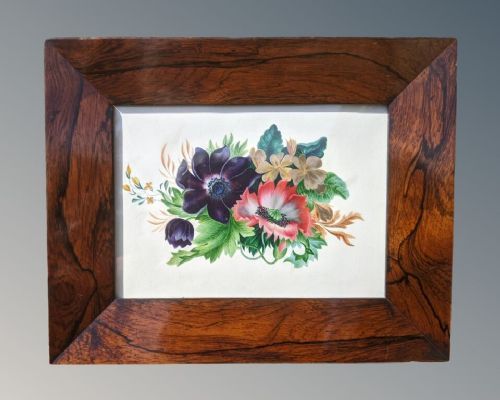
When you search for a victorian flower illustration, you encounter original nineteenth-century waterpaintings and antique works on paper depicting botanical subjects and floral arrangements. These pieces range from detailed studies of fuchsias and wild roses to elaborate floral still lifes set in jugs or baskets.
The selections on this page span several decades of the nineteenth and early twentieth centuries, featuring distinct Victorian botanical styles alongside later Edwardian interpretations. You will find both signed individual paintings by named artists and anonymous studies executed with careful brushwork.
Framed presentation forms dominate the available selection, often housed in period wooden surrounds such as rosewood or gilt frames. These artworks serve as traditional wall art that reflects the period's deep fascination with natural history and garden flora.
Materials and construction
Artists executed these works primarily with watercolour paint upon paper substrates, capturing delicate petal structures and leaf veins through fluid washes and fine detail. The reliance on paper meant these illustrations required protective framing to survive over the centuries.
Makers housed these works behind glass within timber frames, utilising materials such as rosewood and gilded wood to complement the botanical subjects. These frames provide both structural preservation and a distinct period aesthetic that defines the presentation of the art.
Nineteenth-century botanical artists clearly possessed immense patience, unlike anyone trying to water a pelargonium in a crowded Victorian parlour.
Assessing quality and merit
Quality in these waterpaintings rests upon the precision of the brushwork and the botanical accuracy shown in the rendering of petals, leaves and stems. Finer examples display a sophisticated handling of light and shadow, particularly in complex still lifes featuring multiple blooms.
The provenance and attribution to documented painters elevate certain pieces above anonymous studies. Additionally, the condition of the original paper and the authenticity of the accompanying period frame influence the overall character of the artwork.
Henrietta Creswell·Eloise Harriet Stannard·Jabez Bligh·Charlotte Isa James·Annie Mary Youngman·Minnie Smythe
The Victorian Flower Illustration Glossary
- Watercolour
- A painting method where the paint is made of pigments suspended in a water-based solution. This technique allows for translucent washes of colour that mimic the delicate qualities of flower petals.
- Botanical
- Pertaining to the scientific study or artistic depiction of plants. These works often combine artistic merit with accurate anatomical detail of species like azaleas and pelargoniums.
- Still Life
- A work of art depicting mostly inanimate subject matter, typically commonplace objects which may be either natural or man-made. In this context, flowers are arranged in jugs or baskets.
- Gilt Wood
- Wood that has been treated with gold leaf or gold paint to give a metallic sheen. This material was frequently utilised for framing important nineteenth-century pictures.
- Rosewood
- A heavy, hard wood that exhibits a dark grain and takes a fine polish. It was a preferred material for Victorian picture frames.
Victorian Flower Illustration: Frequently Asked Questions
What subjects appear in these watercolours?
The artworks primarily depict single flower studies, such as fuchsias, wild roses, pelargoniums and azaleas, alongside elaborate floral still lifes.
Artists frequently placed these blooms in decorative jugs or woven baskets, capturing the textures of the petals and foliage against neutral backgrounds.
How should I frame and hang these watercolours?
These works on paper require protection from direct sunlight to prevent the watercolour pigments from fading over time.
Display them away from moisture-prone areas and ensure they remain sealed behind glass within their original or period-appropriate wooden frames.
Are these pieces original works or prints?
The majority of the selections consist of original watercolour paintings executed by hand on paper during the nineteenth and early twentieth centuries.
A small number of period prints also appear, offering alternative decorative options from the same eras.
What periods do these artworks represent?
The listings predominantly feature nineteenth-century items created during the Victorian era, alongside a few early twentieth-century examples.
Dates span from the mid-nineteenth century through to the Edwardian period and the 1920s.