
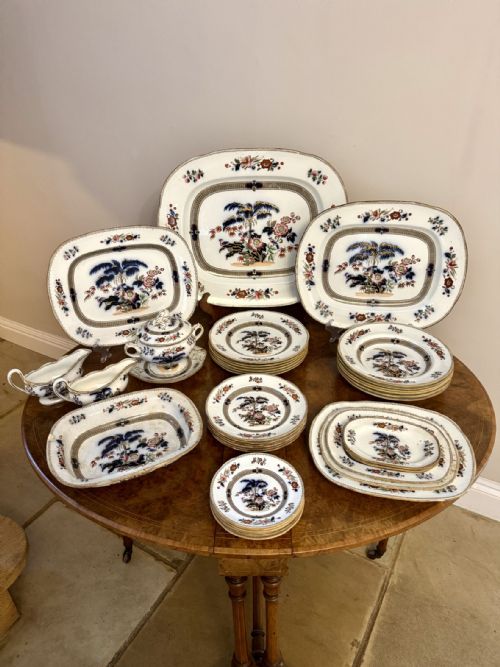
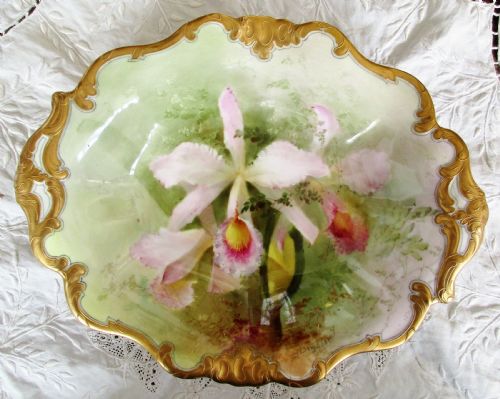
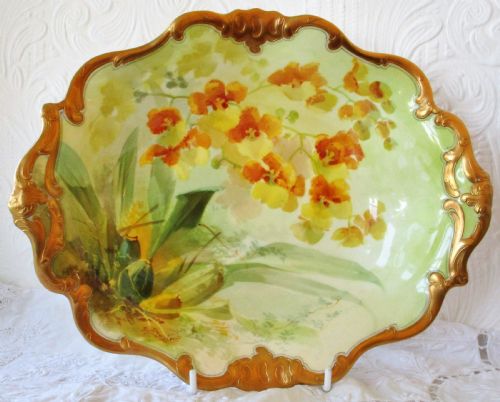
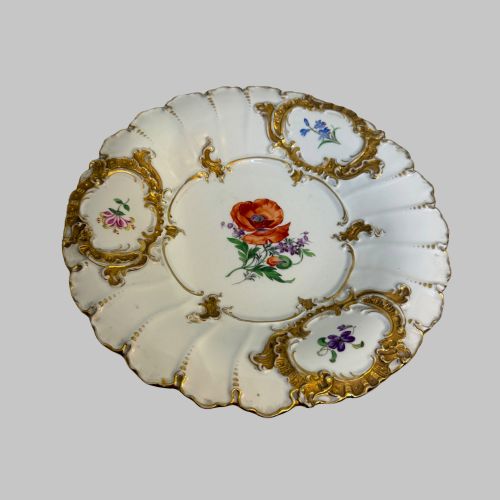
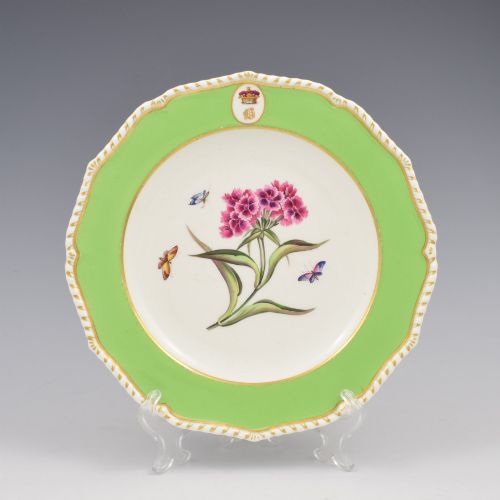


Antique Botanical Plate
An antique botanical plate brings the meticulous study of flora and fauna straight onto porcelain and bone china surfaces.
Antique Botanical Plate
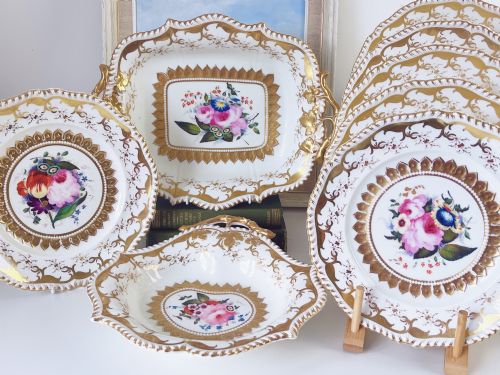
An antique botanical plate encompasses cabinet plates, dessert services, and serving dishes produced across the eighteenth and nineteenth centuries.
The pieces appearing most frequently on this page hail from the Georgian and Regency eras through the Victorian period, utilising forms designed for formal dining and display.
Makers ranged from prominent English porcelain factories to continental works, translating natural specimens onto ceramic surfaces with careful brushwork.
Materials and technique
Manufacturing relied upon refined porcelain, bone china, and creamware, shaped into plates and dishes before receiving hand-painted botanical or ornithological motifs.
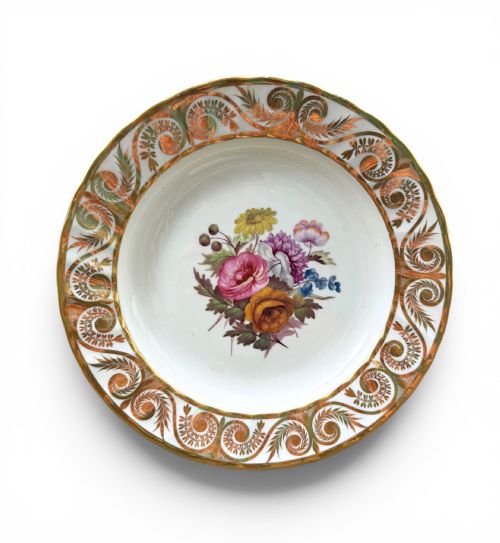
Gilt, gold leaf, and enamel details frequently accent the central painted studies, fired securely onto the ceramic bodies to ensure lasting definition.
Listings span the eighteenth, nineteenth, and early twentieth centuries, featuring earthenware, porcelain, and bone china forms.
Judging the work
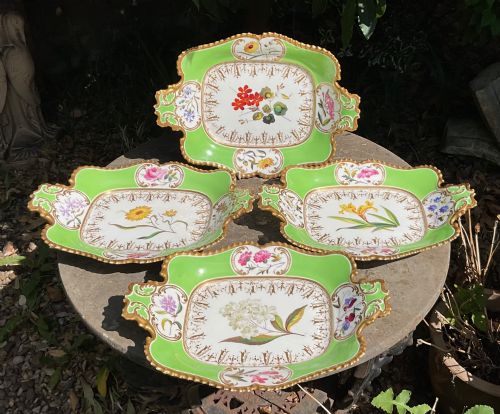
Quality rests upon the precision and naturalism of the hand-painted flora, where botanical accuracy separates standard factory decoration from superior artistic execution.
The crispness of the porcelain body and the controlled application of gilding or enamel borders determine the overall refinement of the finished dish.
Grainger Lee And Co·Wedgwood·George Jones·Meissen·Chamberlains Worcester·Moses Webster·Minton·Royal Doulton·Bloor Derby·Barr Flight And Barr·Furstenberg·Spode·Sevres·Coalport·Royal Worcester·Kornilov Brothers·Chelsea Derby·James Giles·Ridgway·Thomas Moorcroft·Nantgarw·Thomas Dickson·Elkin And Newbon
The Antique Botanical Plate Glossary
- Cabinet plate
- A decorative ceramic plate intended primarily for display in a cabinet or on a wall rather than for practical dining use. These pieces often feature elaborate painted subjects and gilt borders.
- Bone china
- A type of porcelain containing bone ash, developed in England to achieve a strong, translucent body. It provides a smooth white ground well-suited for detailed botanical painting.
- Gilt
- A thin layer of gold applied to the rim or border of a ceramic piece. This decorative technique highlights the contours of the plate.
- Creamware
- A fine-grained earthenware with a pale yellowish-cream glaze, developed during the eighteenth century. It served as a durable canvas for painted botanical decoration.
- Enamel
- Opaque vitreous material fused to the ceramic surface during firing to create vibrant, permanent colours. Painters used enamel pigments to render accurate shades of petals and leaves.
Antique Botanical Plate: Frequently Asked Questions
How were botanical plates used originally?
These pieces formed parts of larger dessert services or functioned as cabinet plates displayed in formal rooms. Diners admired the hand-painted flower and bird studies between courses.
Over time, collectors shifted their focus toward preserving individual plates or matched sets for decorative display rather than active dining.
Can I use antique botanical plates for food?
While these items were originally made for dining and dessert service, modern use is generally discouraged. Historic glazes and delicate hand-painted enamels can suffer damage from cutlery and dishwashers.
Displaying them on walls or in cabinets protects the fragile ceramic bodies and preserves the painted botanical details for the future.
How do I identify the period of a plate?
Dating relies on factory marks stamped or painted on the reverse, alongside the distinctive styles of the ceramic body and border decoration. Georgian and Regency pieces often feature soft-paste or early bone china bodies with hand-written pattern numbers.
Later Victorian and early twentieth-century examples introduce printed factory marks and more saturated enamel palettes that reflect changing aesthetic movements.
What subjects besides plants appear on these plates?
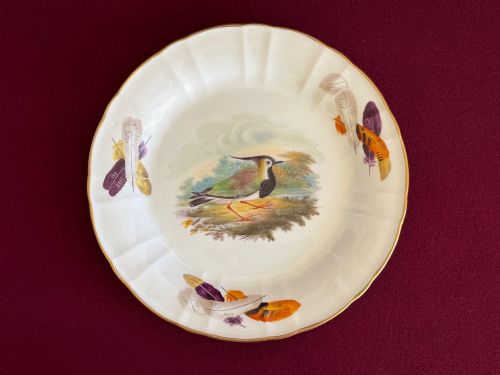
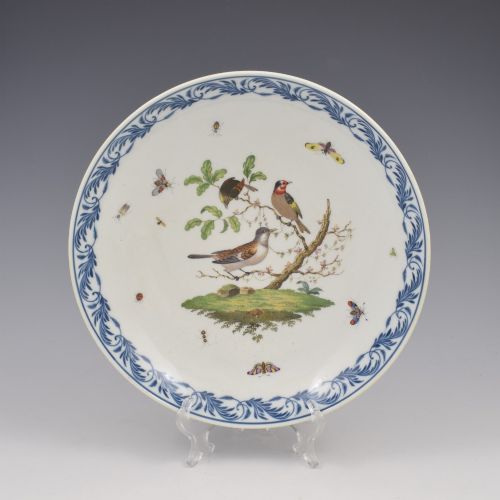
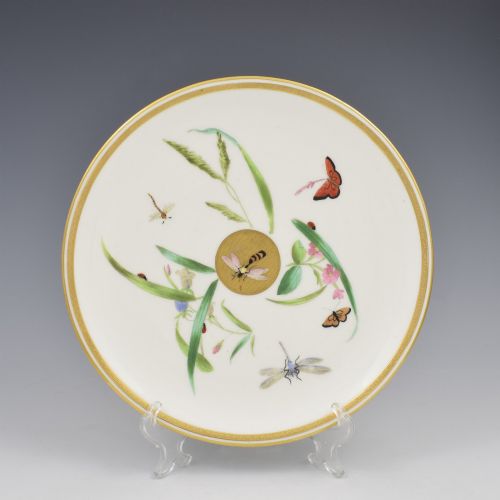
Botanical plates frequently incorporate ornithological studies, featuring birds such as lapwings alongside floral sprays. Garden insects, butterflies, and armorial crests also appear within the painted compositions.
These natural history motifs reflected a broader Regency and Victorian fascination with scientific cataloguing and botanical illustration.