
Hand Painted Cabinet Dish
A hand painted cabinet dish is a decorative ceramic piece designed for display rather than dining, prized for its miniature artistry and rich porcelain body.
Hand Painted Cabinet Dish
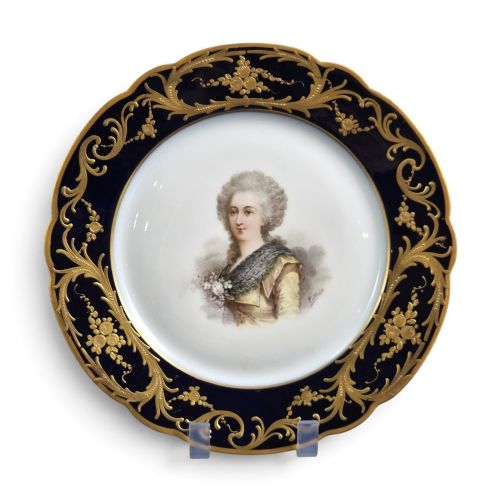
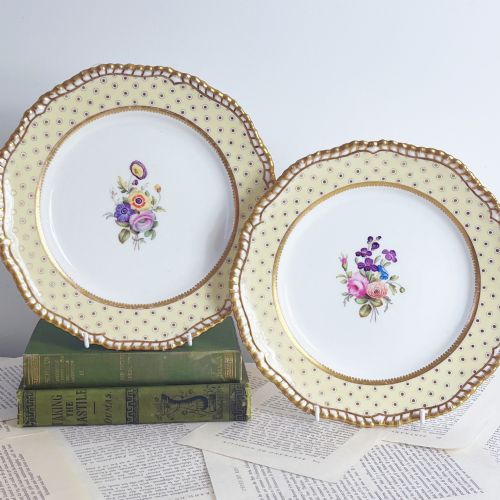
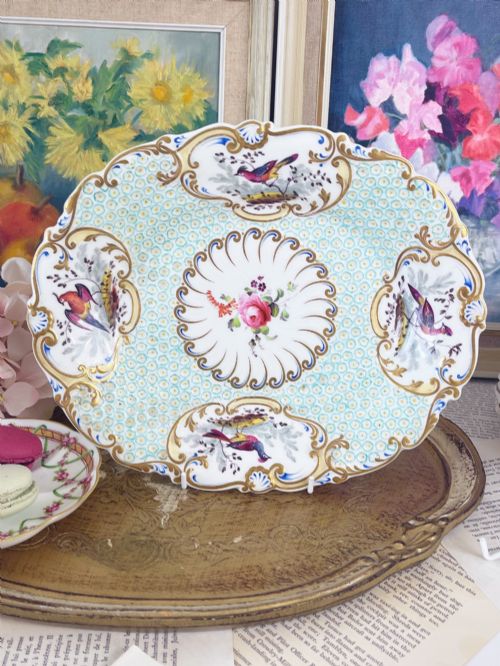
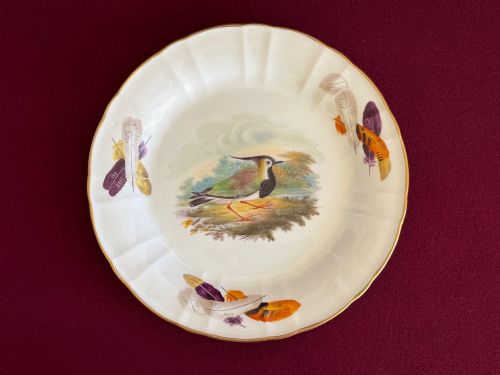
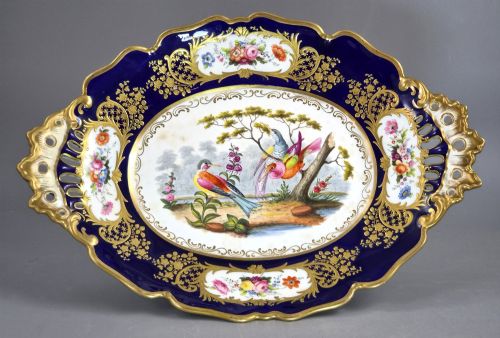
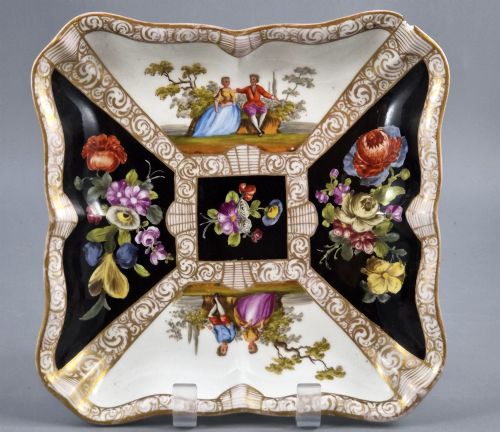
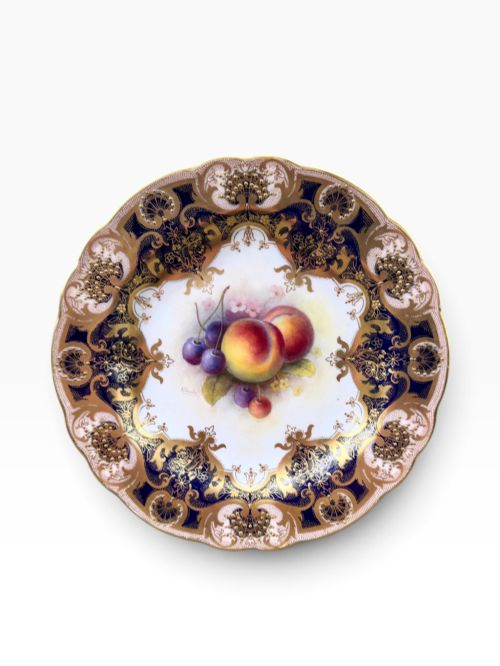
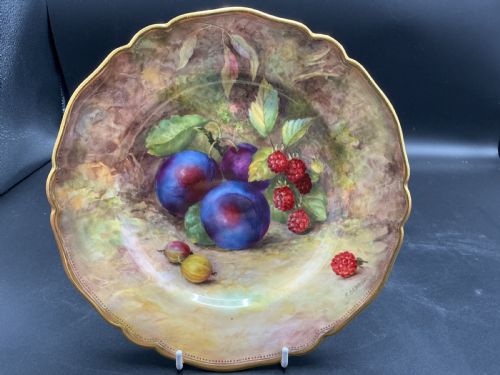
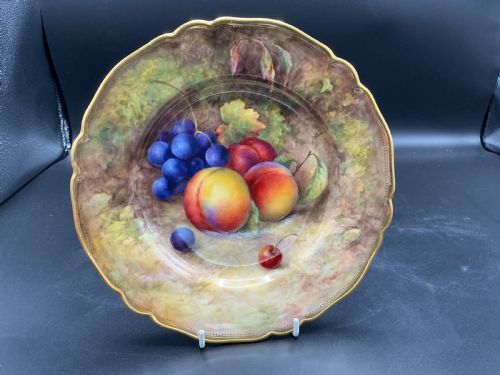
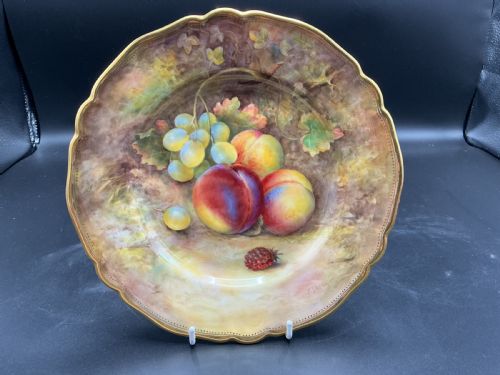
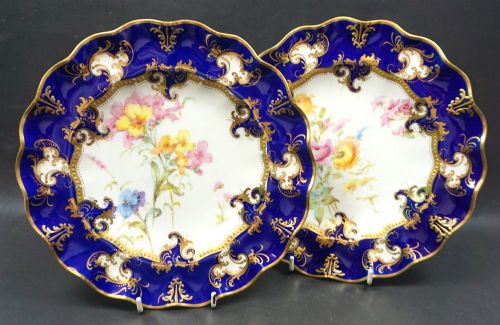
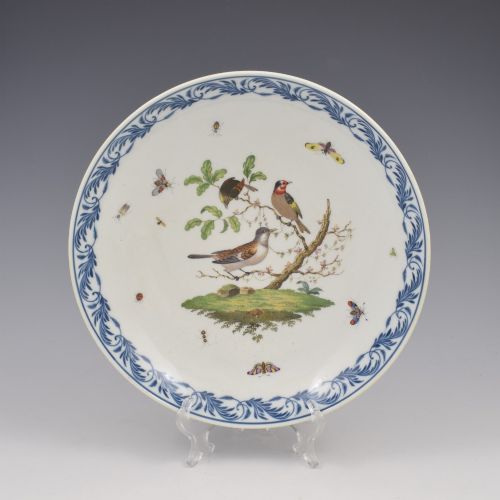
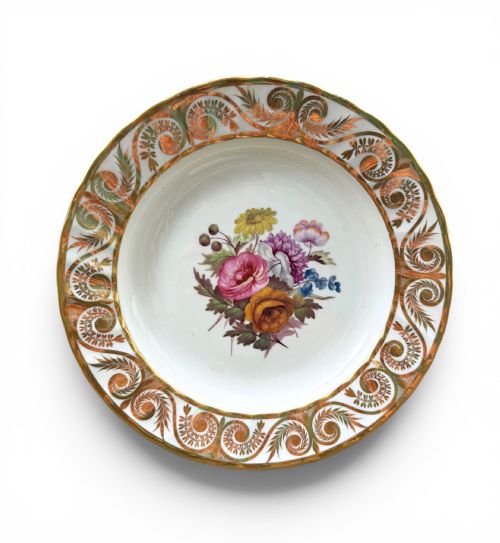
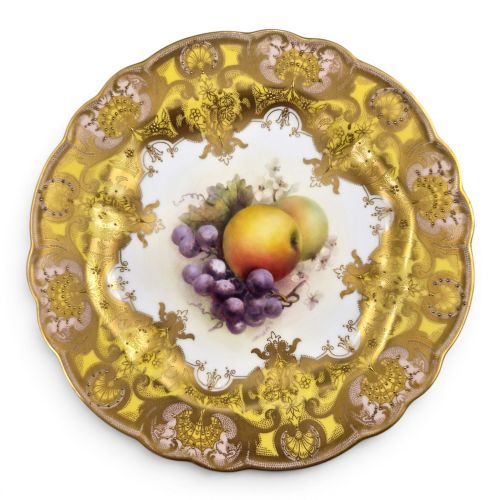
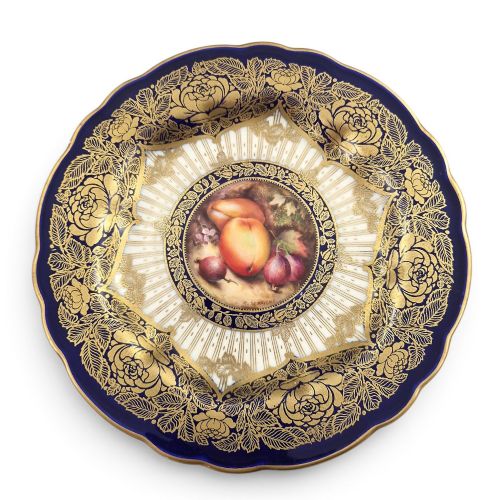
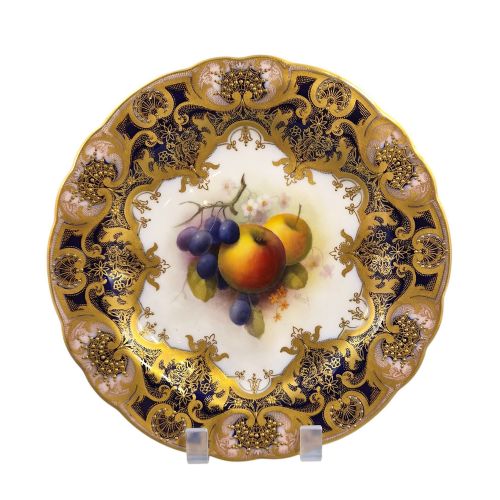
A hand painted cabinet dish encompasses cabinet plates, dessert dishes, and square or oval platters created primarily for display in parlours or drawing rooms rather than for practical table use. When searching this phrase, a buyer encounters examples ranging from eighteenth-century soft-paste porcelain to twentieth-century bone china and earthenware. The selection on this page leans heavily towards British and continental porcelain from the nineteenth century, featuring hand-painted botanical studies, birds, and fruit scenes.
Makers and factories across England and Europe produced these pieces to showcase elite ceramic bodies, often decorated by named artists who specialised in botanical, ornithological, or figural subjects. Forms include reticulated plates, armorial dessert pieces, and square or oval serving dishes with gilt enrichment. These objects were collected by discerning households to signal taste and refinement, preserved in glazed cabinets rather than subjected to daily wear.
Materials and Craftsmanship
The foundation of these pieces relies on fine porcelain, soft-paste porcelain, bone china, or ironstone, shaped into plates, trays, and dishes before initial firing. Glaze was applied to create a smooth, vitreous surface capable of receiving delicate mineral pigments. Potters utilised cobalt blue, rich enamel colours, and intricate gilding, employing gold leaf and liquid gilding to accent borders and motifs.
Painting required skilled ceramic artists to apply polychrome enamels by hand, followed by secondary or tertiary kiln firings to fuse the pigments and metallic highlights permanently to the glaze. Techniques such as blue scale grounds, transfer printing combined with hand-colouring, and gilt work distinguish the production methods of factories like Royal Worcester, Meissen, and Sèvres.
British and continental porcelain factories dominate the selection, with numerous pieces bearing hand-painted fruit and bird studies by named artists.
Evaluating Quality and Execution
Quality in a hand painted cabinet dish rests primarily on the skill of the brushwork and the artistic ambition of the painted subject. Pieces featuring signed work by accomplished ceramic artists display superior depth, fine detail in facial expressions or plumage, and careful shading that elevates them above standard factory output.
The refinement of the porcelain body, the complexity of the moulding or reticulation, and the lavishness of the gilding further divide the ordinary from the exceptional. A well-balanced composition, pristine enamel preservation, and sophisticated use of cobalt ground or raised gold accents mark the upper tiers of production.
Spode·H & R Daniel·Coalport·Meissen·Royal Worcester·Royal Crown Derby·Derby·Sèvres·Minton·Royal Doulton·John Davenport·Copeland·Doe & Rogers·Bloor Derby·John Ridgway·Barr, Flight and Barr·Furstenberg
The Hand Painted Cabinet Dish Glossary
- Cabinet plate
- A decorative ceramic plate intended specifically for display in a cabinet or on a wall rather than for use at the dining table. These items typically feature elaborate hand-painted scenes or gilded borders.
- Soft-paste porcelain
- An artificial porcelain composition fired at lower temperatures than hard paste, developed in Europe during the eighteenth century. It possesses a characteristic warm, slightly creamy glaze and body.
- Reticulated
- Pierced or openwork decoration cut into the rim or body of a ceramic piece before firing, often forming geometric or floral lattice patterns. This technique requires considerable skill to prevent warping in the kiln.
- Armorial
- Bearing a coat of arms or heraldic crest commissioned by a noble family or institution. Such pieces were frequently ordered as part of extensive bespoke dinner or dessert services.
- Enamel
- Opaque or translucent vitreous composition applied to ceramics and fused by firing to provide permanent, vibrant colour decoration. Enamels allow for detailed miniature painting on glazed surfaces.
Hand Painted Cabinet Dish: Frequently Asked Questions
How were cabinet dishes used?
Cabinet dishes were created almost exclusively for display in formal rooms rather than for serving food. Wealthy households placed them on sideboards, mounted them on walls, or housed them within glass-fronted cabinets to showcase artistic taste.
Because they were spared daily use and washing, many survive in remarkably pristine condition with their delicate enamels and gilding intact.
How do I identify the maker?
Makers are typically identified through factory marks, painted ciphers, or impressed stamps found on the underside of the ceramic body. Many nineteenth-century and twentieth-century pieces also feature handwritten titles or artist signatures on the reverse.
Comparing pattern numbers and stylistic traits such as border designs or cobalt ground treatments helps attribute unmarked or worn examples to specific potteries.
What is the difference between a plate and a dish?
In ceramic terminology, a plate generally refers to a flat or slightly concave vessel with a distinct rim, designed for individual portions or presentation. A dish often encompasses broader, deeper, or non-circular formats such as oval platters, square serving trays, or reticulated dessert vessels.
Both forms served decorative display functions when embellished with hand-painted cabinet art.
Can these dishes be hung on walls?
Many historic cabinet plates and dishes were fitted with pierced feet or metal hanging wires by past owners to enable wall display. If hanging a piece, use professional spring-loaded plate hangers with rubber-coated tips to distribute weight evenly without stressing the porcelain body.