
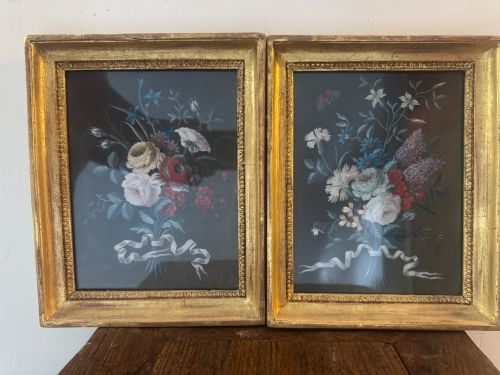
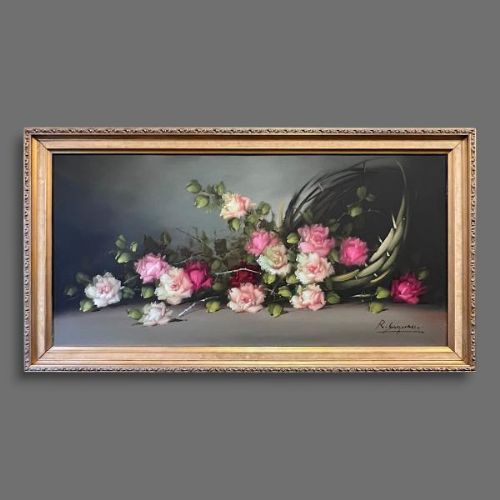
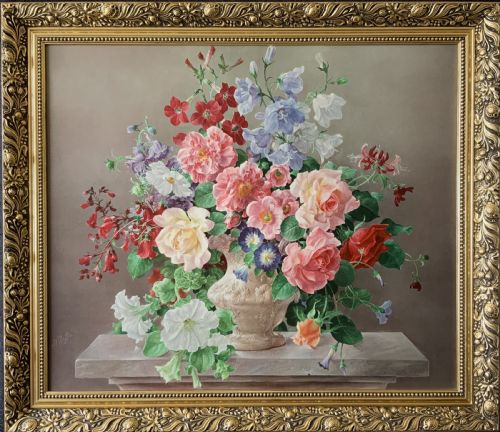
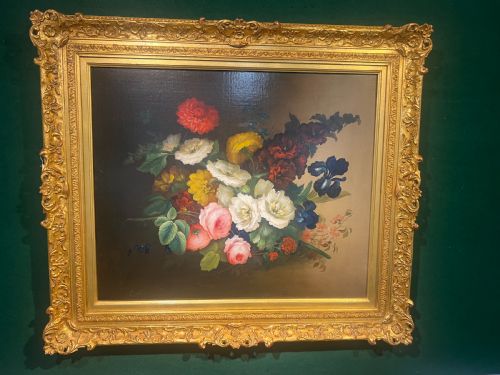


Framed Flower Picture
When you search for a framed flower picture, you enter a rich tradition of botanical and still life art spanning multiple centuries.
Framed Flower Picture
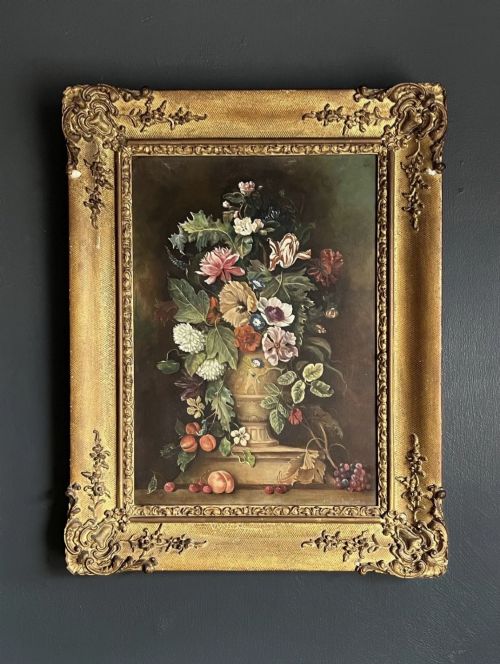
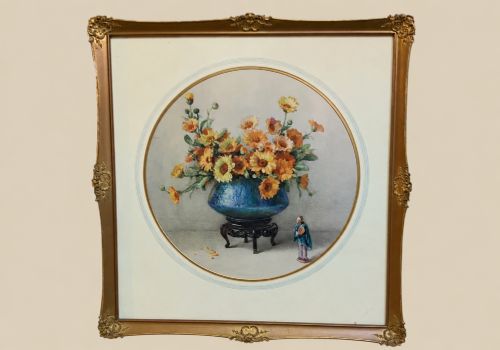
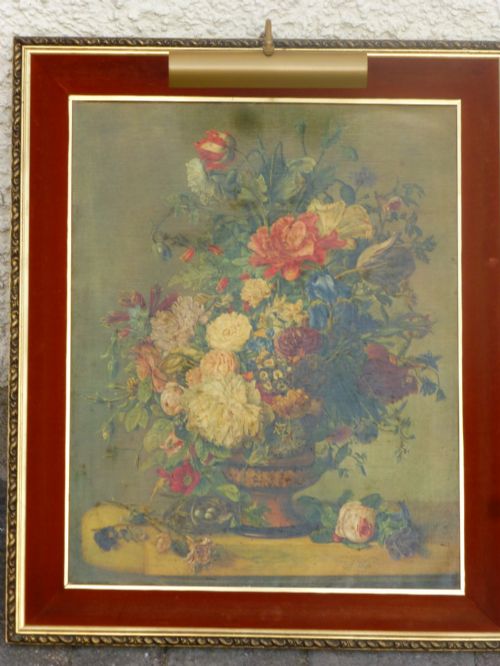
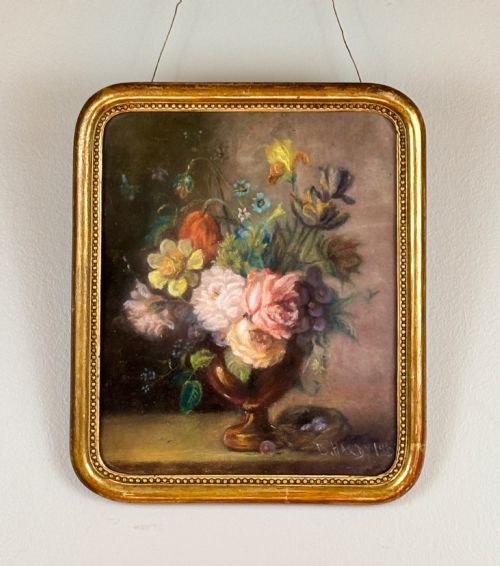
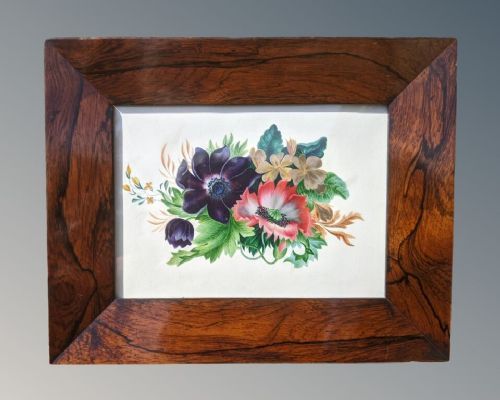
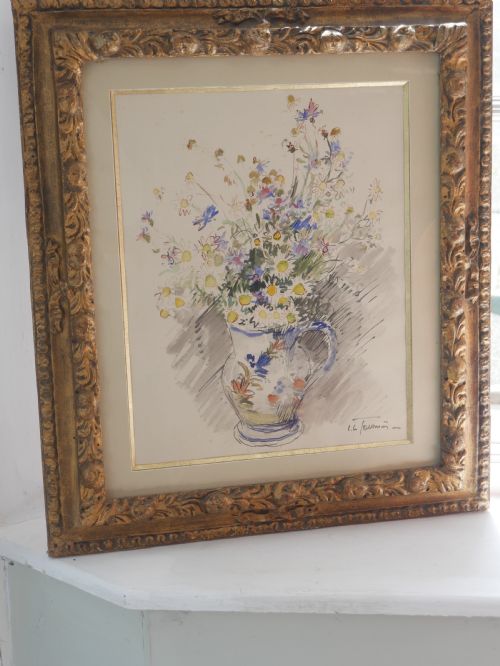
A framed flower picture encompasses a wide variety of botanical and floral subjects executed in oil paint, watercolour, gouache, pastel, and cut paper. These works capture everything from structured garden landscapes to intimate still life studies of roses, lilies, and marigolds.
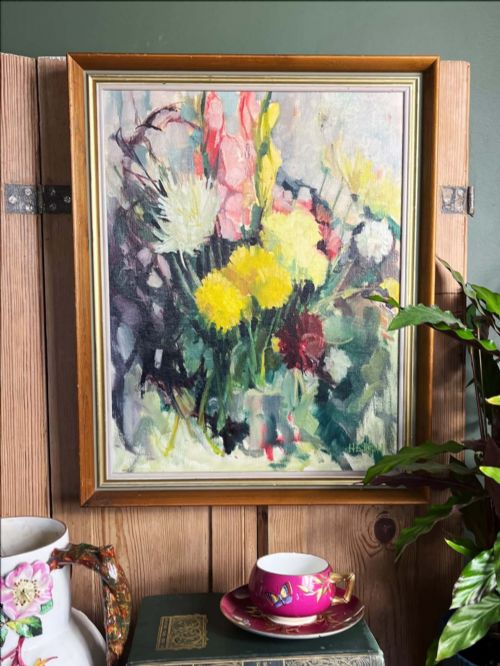
The selections available range from nineteenth-century watercolours and Victorian depictions of chrysanthemums to mid-century impressionist oil paintings and Dutch golden age style compositions. Buyers frequently encounter pieces housed in period gilt gesso frames that complement the botanical subject matter.
Origins span British, Dutch, French, and Italian hands, reflecting diverse regional approaches to floral portraiture across the nineteenth and twentieth centuries.
Materials and construction
Artists utilised oil paint on canvas or board, watercolour on paper, gouache, and tempera to render petals and leaves with distinct textures. Paper and silk served as delicate supports for botanical watercolours and traditional Chinese compositions.
The completed works find their presentation in wood frames finished with gesso and gold leaf, providing structural support and visual depth. Protective glass frequently covers works on paper to preserve the pigments against atmospheric wear.
Listings feature works spanning from the eighteenth century through the mid-twentieth century, executed in oil paint, watercolour, and gouache.
Factors of quality and execution
Quality rests in the precision of the brushwork, the naturalism of the floral arrangement, and the harmony between the artwork and its framing. Stronger examples demonstrate confident handling of light upon petals and leaves, while lesser pieces rely on formulaic repetition.
The integrity of the mounting materials also dictates value, with original period frames carrying more aesthetic weight than later replacements. The preservation of the underlying paper or canvas without excessive fading separates museum-grade specimens from standard decorative examples.
Edwin Steele·D Hardy·Catherine Thomas·James Tower·Harry Wanless·Amile Coppieters·Lilian Stannard·Eloise Harriet Stannard·Stuart Armfield·Grace Hastie·Phyllis I Hibbert·Marian Chase·Henry Schouten·Pierre Joseph Redoute·Jennifer Toombs·Charlotte Isa James·Alice Macallan Swan·Emily Selinger
The Framed Flower Picture Glossary
- Gesso
- A plaster-like mixture applied to wood frames to create a smooth surface for gilding. This preparation allows for intricate moulded ornamentation around the edge of the artwork.
- Gouache
- An opaque water-based paint that dries to a matte finish, offering stronger coverage than watercolour. Artists use it to achieve dense, saturated floral tones.
- Oleograph
- A mechanical colour print on canvas that simulates an oil painting. These prints often mimic the textured surface and appearance of genuine brushwork.
- Tempera
- A permanent, fast-drying painting medium consisting of coloured pigment mixed with a water-binder such as egg yolk. It produces a durable, flat finish seen in mid-century works.
- Trompe l'oeil
- An art technique involving extremely realistic imagery in order to create the optical illusion that the depicted objects exist in three dimensions.
Framed Flower Picture: Frequently Asked Questions
How do I date a framed flower picture?
Dating relies on examining the substrate, framing materials, and stylistic signatures. Nineteenth-century examples often utilise heavy gesso frames and traditional watercolours, while mid-century pieces show looser impressionist brushwork.
Signatures, paper watermarks, and backing boards offer further clues to the exact decade of creation.
Are watercolours prone to fading?
Works on paper remain sensitive to direct sunlight, which can diminish delicate pink and yellow floral pigments over time. Proper conservation framing with UV-protective glass mitigates this risk.
Positioning pieces away from direct windows preserves the intensity of the original hues.
How should I display antique floral art?
Display these works on interior walls protected from excessive moisture and extreme temperature fluctuations. Stable household conditions prevent the wood frames and paper supports from warping.
Pairing pieces with period furniture enhances their historical context within a room.