


Vintage Floral Watercolour
A vintage floral watercolour brings the quiet observation of gardens and hedgerows directly onto the wall inside a domestic room.
Vintage Floral Watercolour
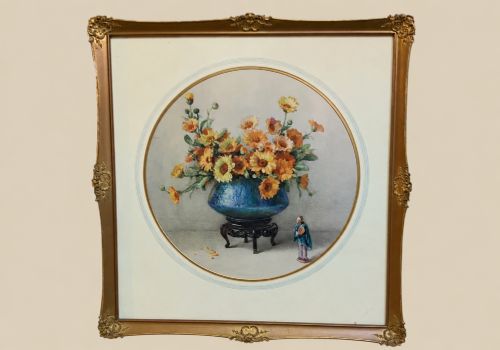
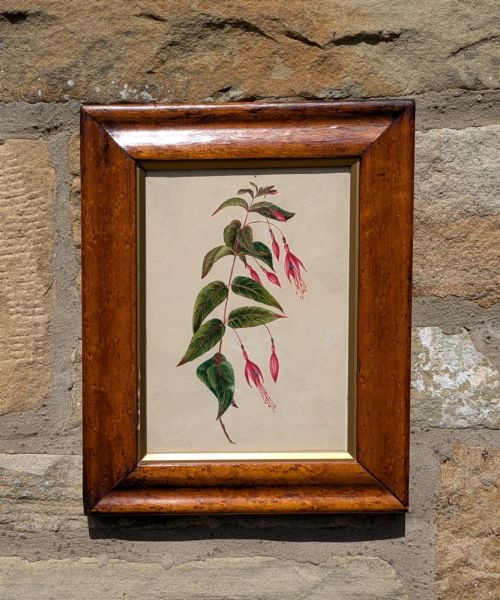
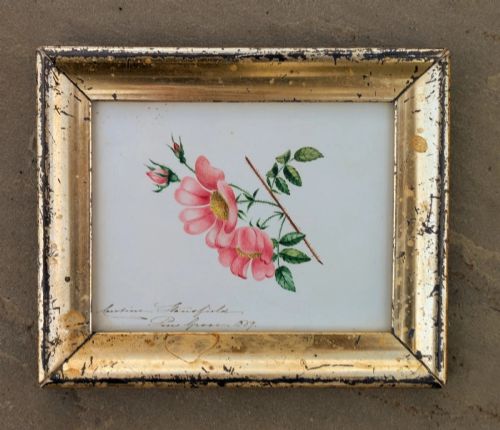
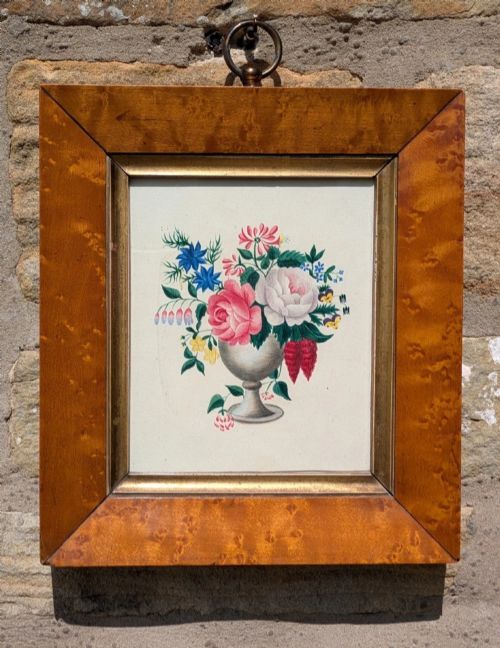
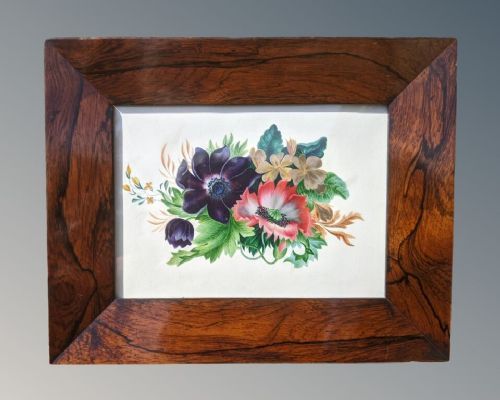
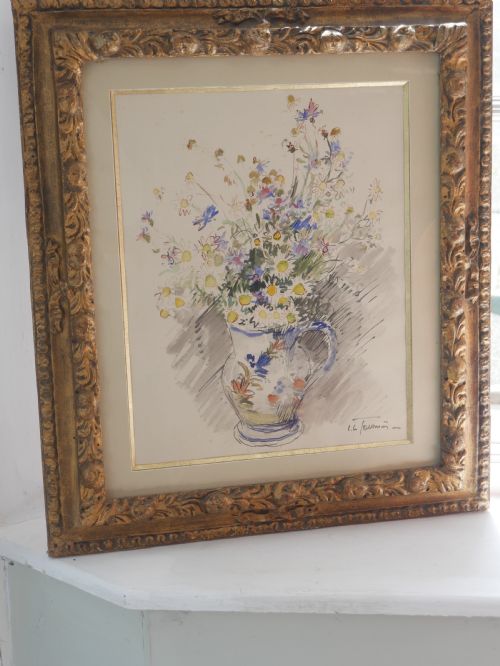
When searching for a vintage floral watercolour, a buyer encounters painted studies of garden flowers, wild roses, and botanical arrangements created across the nineteenth and twentieth centuries. The selection spans straightforward botanical records to impressionistic still-life compositions showing blooms in jugs, vases, and walled gardens.
Most examples found on this page date from the Victorian and Edwardian eras through to the mid-century period. These works capture specific flower varieties including fuchsias, marigolds, and wallflowers rendered with varying degrees of illustrative precision and painterly freedom.
Materials and methods of execution
Artists applied watercolour pigment and sometimes gouache or pencil onto paper sheets to build up translucent washes and opaque highlights. The papers used range from standard fine art stocks of the period to heavier textured sheets capable of holding pooled washes.
Works are typically preserved behind glass and housed within wooden or gilt wood picture frames, often reflecting the aesthetic tastes of their original period of production.
Vintage Floral Watercolour Retail Price Guide 2026
Typical asking prices for vintage floral watercolour among the pieces listed under this phrase on Sellingantiques today, from the lower quarter to the upper quarter. They describe what is for sale here now, not the wider market.
Materials recorded across the selection include traditional watercolour paint and pigment, pencil, gouache, paper, glass, wood, and gilt wood frames.
Distinctions in quality and execution
The distinction between ordinary and exceptional works lies in the sureness of the brushwork and the artist's command of light across petal surfaces and foliage. Stronger pieces demonstrate careful observation of botanical structure combined with assured handling of transparent pigment.
Framing and paper preservation further separate pieces, as works kept away from direct sunlight retain the vibrancy of their original pigments while acidic backing papers can cause discolouration.
James Tower·Harry Wanless·Henrietta Creswell·William Edward Fox·Lester Sutcliffe·Lilian Stannard·Rowland Henry Hill·Margaret Laing·Phyllis I Hibbert·Marian Chase·Owen Bowen·Charlotte Isa James·Alice Macallan Swan·Marion Broom·Edith Alice Andrews·Jane Utley·Beatrice Parsons·Theresa Sylvester Stannard·George Frederick Nicholls·Arthur H Buckland·Amy Reeve-Fowkes·Minnie Smythe
The Vintage Floral Watercolour Glossary
- Watercolour
- A paint consisting of pigment suspended in a water-soluble binder, applied in translucent washes onto paper.
- Gouache
- An opaque water-based paint often used alongside watercolour to add highlights and solid colour areas.
- Botanical study
- A precise visual recording of a plant's structure, growth habit, and floral characteristics.
- Still life
- A painting featuring inanimate subject matter, frequently domestic arrangements of cut flowers in jugs or vases.
- Aesthetic movement
- A late nineteenth-century design style emphasising visual beauty over narrative or moral content.
Vintage Floral Watercolour: Frequently Asked Questions
How should I hang a vintage floral watercolour?
Keep these works away from direct, strong sunlight to prevent the pigments from fading over time. Position them on interior walls where environmental conditions remain relatively stable.
Ensure the frame is securely hung from appropriate picture hooks rather than simple picture wire alone if the piece carries heavy glass.
Can I reframe an antique watercolour safely?
A professional framer can replace old acidic mount boards with acid-free archival alternatives to protect the paper from further degradation. Retaining the original frame is often desirable if it belongs to the period of the artwork.
Discuss conservation-grade glass options with your framer to reduce ultraviolet light exposure.
How do I identify the period of a painting?
Examine the framing style, paper type, and any inscriptions or signatures left by the artist on the front or reverse. Stylistic clues such as the looser brushwork of mid-century pieces versus the tighter precision of Victorian studies also help.
Matching known dates of active artists listed on the work provides a reliable timeframe for its creation.
Were these paintings made as scientific illustrations?
Some pieces on this page function as strict botanical studies intended for scientific record or instruction, while others are purely decorative still-life works. Artists often painted garden flowers simply to capture their seasonal beauty.
The presence of decorative containers like jugs and plates usually indicates a domestic art piece rather than a strict botanical folio.