

Victorian Walnut Chest Drawers
When choosing a victorian walnut chest drawers, you are investing in nineteenth-century timberwork that brings warmth and practical storage to a room.
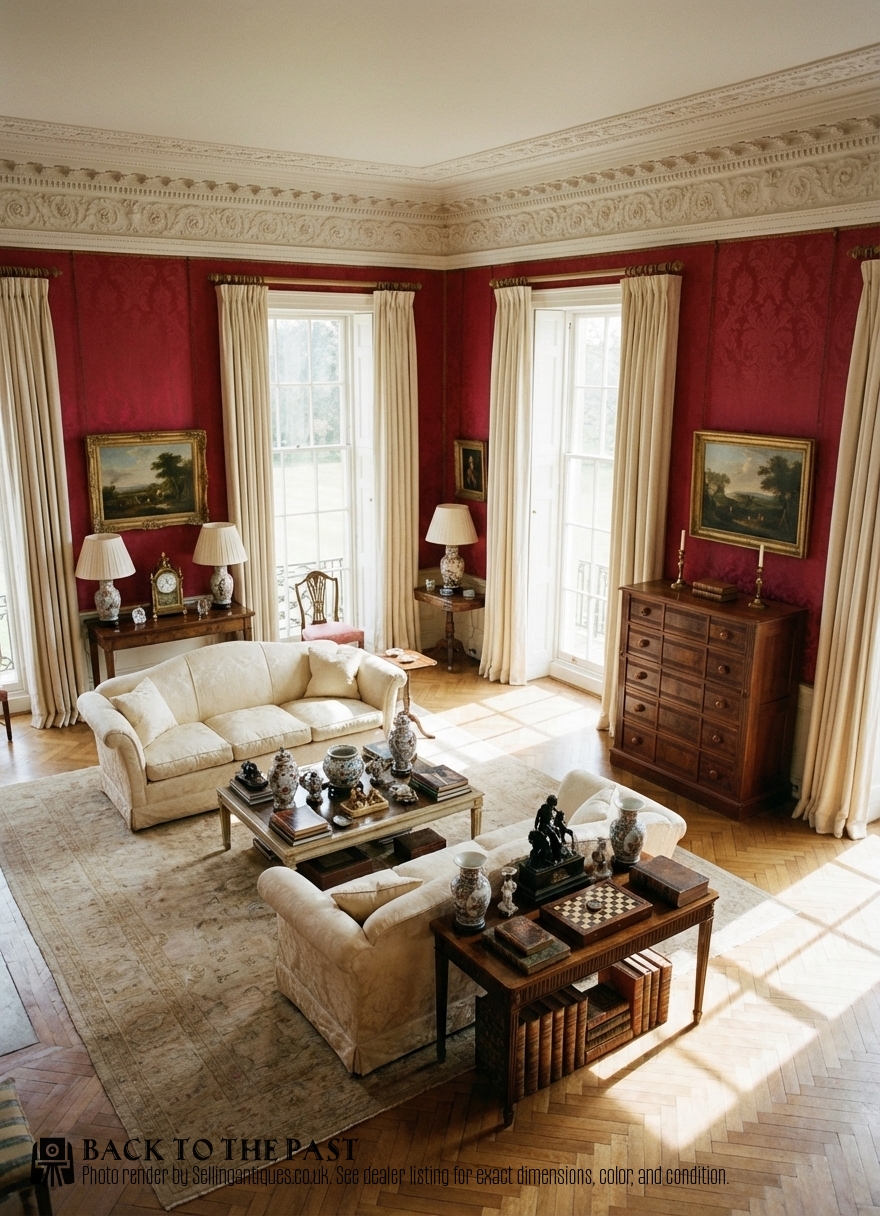
Victorian Walnut Chest Drawers
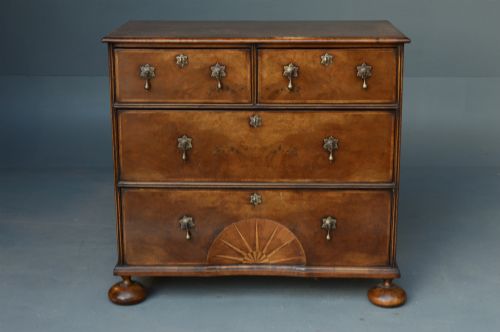
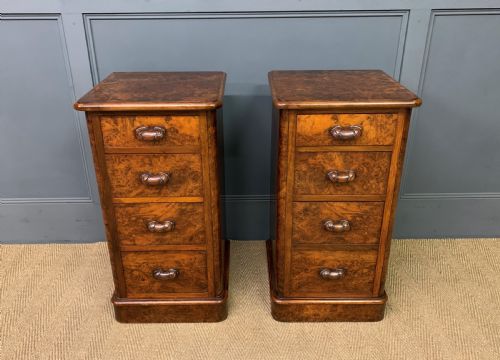
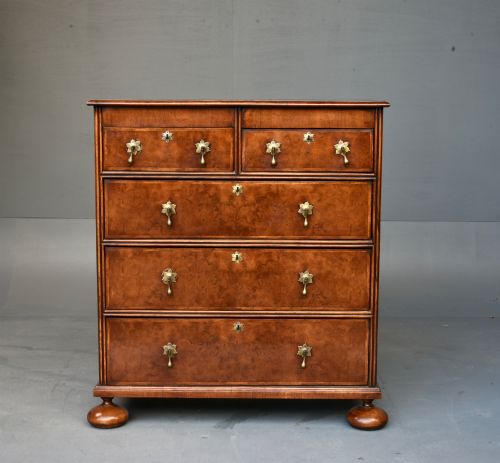
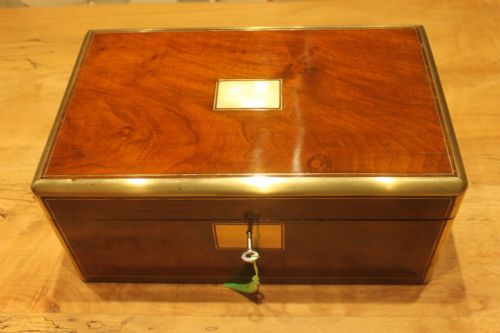
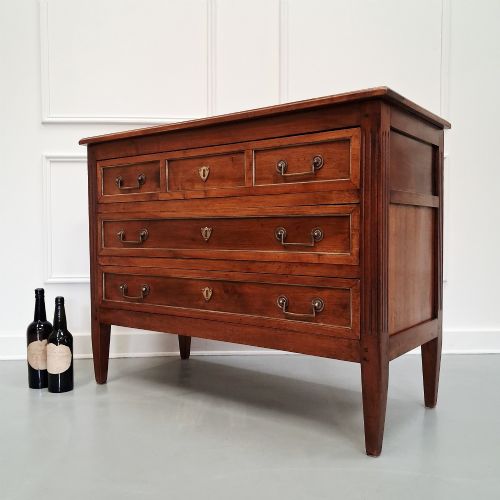
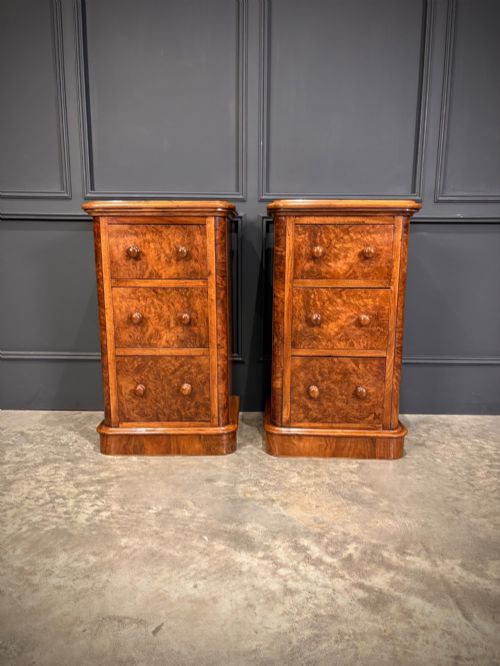
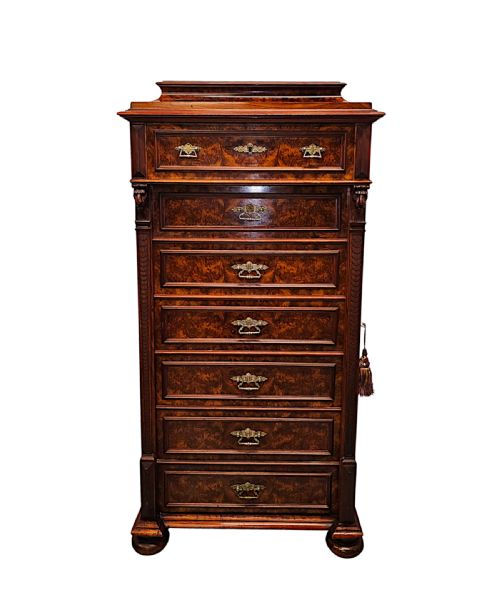
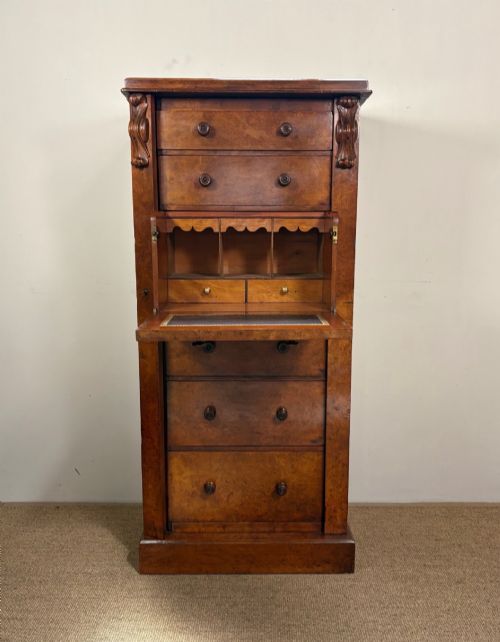
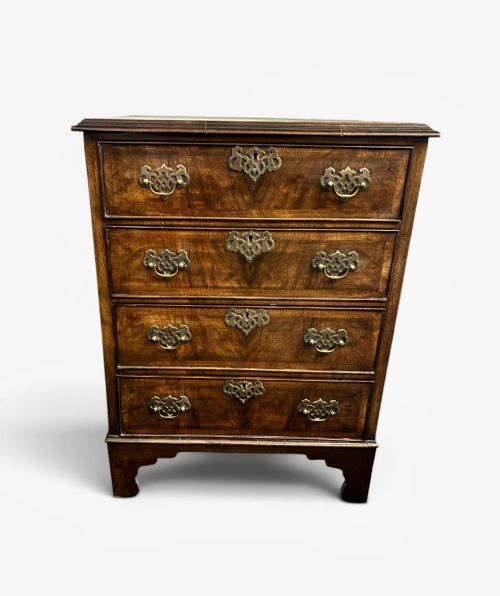
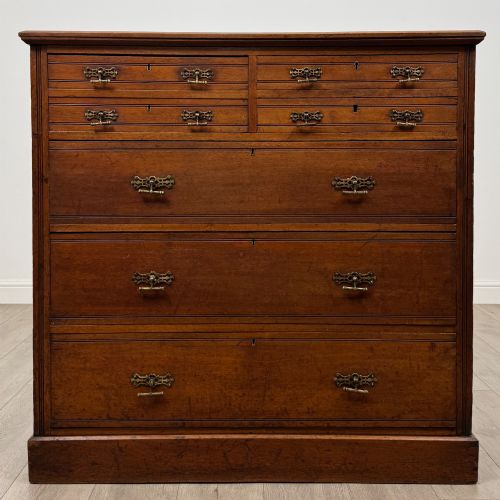
A victorian walnut chest drawers is a nineteenth-century storage piece primarily defined by its rich timber surface and functional drawer arrangement. Buyers seeking this phrase encounter standard bedroom chests alongside specialised forms such as tall Wellington chests, compact bedside lockers, and military campaign pieces.
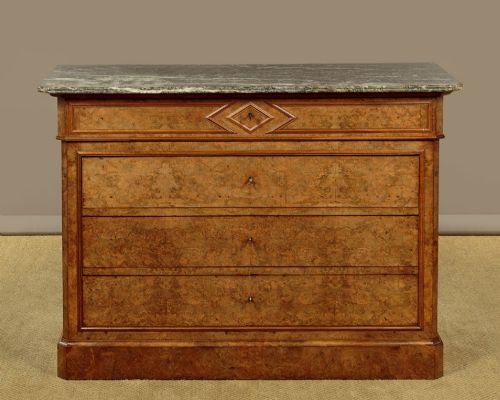
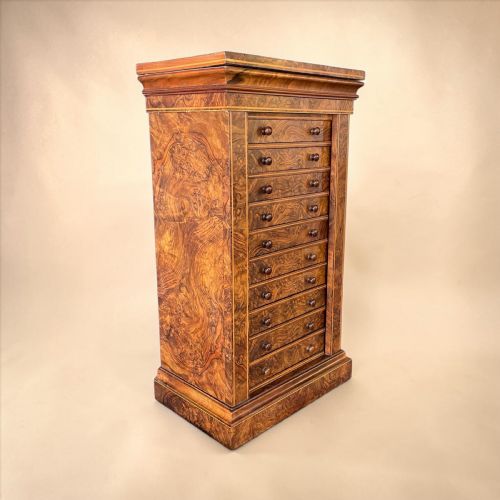
The selection ranges from robust solid timber carcases to sophisticated veneered examples featuring burr walnut figures. Most pieces date from the mid to late Victorian decades, reflecting the era's preference for dense grain patterns and formal proportions.
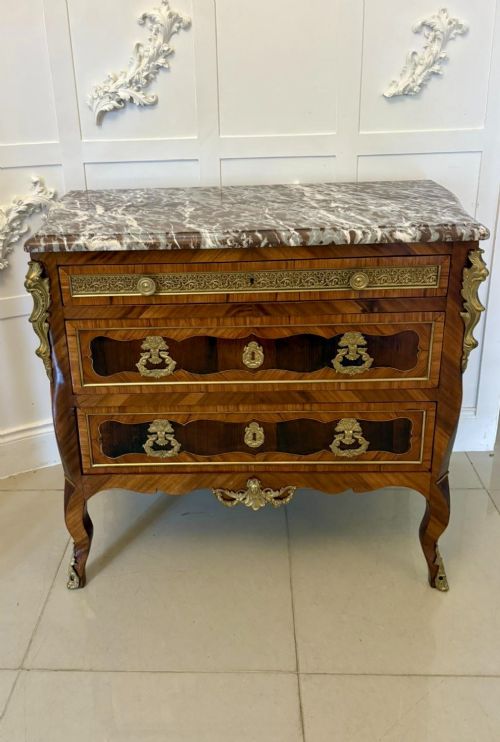
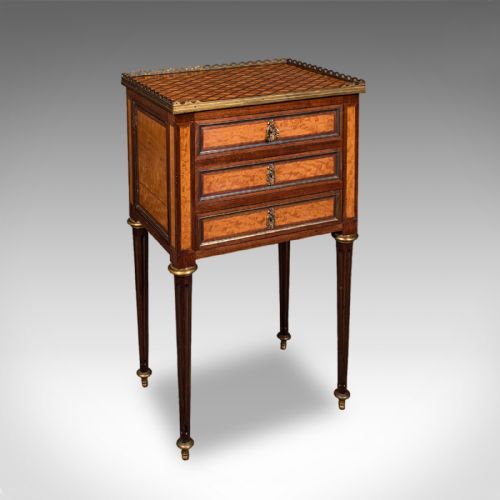
Makers often incorporated graduated drawer stacks or locking mechanisms, while French revival and Dutch baroque influences occasionally introduced marquetry and marble tops to the standard chest format.
How They Were Made
Cabinetmakers utilised walnut veneers, particularly burr walnut, laid over secondary woods like pine or mahogany to create striking figured drawer fronts. Timber selection governed the visual impact, with grain patterns carefully matched across the facade.
Construction relied on traditional joinery, incorporating dovetailed drawer boxes and solid framing. Brass hardware, ormolu mounts, and turned wooden handles completed the assembly, securing the structural integrity of these nineteenth-century pieces.
Victorian Walnut Chest Drawers Retail Price Guide 2026
Typical asking prices for victorian walnut chest drawers among the pieces listed under this phrase on Sellingantiques today, from the lower quarter to the upper quarter. They describe what is for sale here now, not the wider market.
Listings feature walnut, burr walnut, and satin walnut timbers across Victorian and Edwardian periods.
What Varies in Quality
Quality rests on the selection and preservation of the walnut veneer, where thoughtful grain matching across the drawer fronts distinguishes finer workshops from standard production. The crispness of carved details, the integrity of inlaid marquetry, and the weight of secondary timbers also signal superior craftsmanship.
Maker attribution elevates certain pieces, particularly those bearing the stamps of established cabinet-makers who maintained rigorous standards in interior construction and locking mechanisms. Original hardware and undisturbed surface patination further separate exceptional survivals from heavily restored examples.
Jas Shoolbred·Edwards and Roberts·Gillows·Holland and Sons·Druce and Co
The Victorian Walnut Chest Drawers Glossary
- Burr walnut
- A highly figured timber veneer sliced from the growths on walnut trees, prized for its swirling, knotty patterns. It forms the decorative face on many Victorian drawer fronts.
- Wellington chest
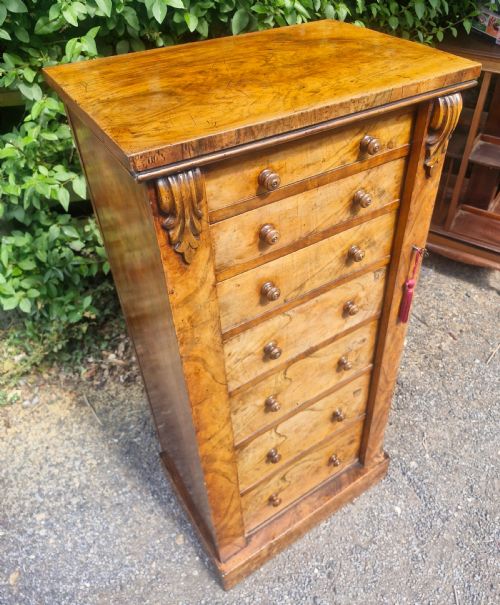
- A tall, narrow chest of drawers secured by a hinged locking side pilaster that fastens all drawers simultaneously. This form originated in the nineteenth century for efficient paper and linen storage.
- Campaign chest
- A portable chest built in two sections with recessed brass handles and corner brackets, designed for military transport. Walnut and mahogany examples appear frequently in nineteenth-century inventories.
- Marquetry
- The art of forming decorative patterns by fitting together thin veneers of different woods. Dutch revival and Victorian pieces frequently display floral or geometric motifs executed in this technique.
- Linen press
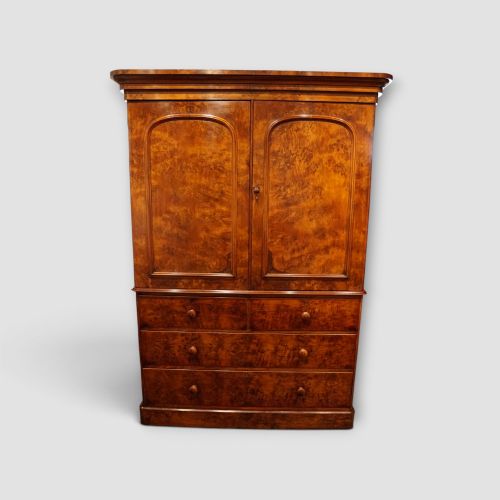
- A large storage cabinet featuring upper sliding trays enclosed by doors, positioned above a base of lower drawers. These pieces provide deep capacity within domestic bedroom settings.
Victorian Walnut Chest Drawers: Frequently Asked Questions
What is a Wellington chest?
A Wellington chest is a tall, narrow configuration featuring multiple graduated drawers secured by a locking side pilaster. This hinged flap fastens over the drawer edges to prevent opening.
Cabinetmakers designed these pieces during the nineteenth century to store documents or linens securely in compact spaces.
How do I identify burr walnut?
Burr walnut exhibits swirling, circular grain patterns created by clustered knots and growths in the timber. It appears as a decorative veneer across drawer fronts and top panels.
This figured wood contrasts sharply with the straight grain of standard walnut carcases.
Were these chests used in bedrooms?
Bedrooms served as the primary destination for standard chests and bedside lockers, providing essential domestic storage. Tall variants and secretaire models also functioned in dressing rooms and studies.
Smaller apprentice pieces served as cabinetmakers' demonstration models rather than domestic furniture.
What distinguishes a campaign chest?
Campaign chests feature recessed brass handles and protective corner brackets designed to withstand military transport. They are constructed in separate sections for easier handling.
Walnut and mahogany versions combine this structural ruggedness with polished domestic finishes.