



Carved Walnut Tall Chest
A carved walnut tall chest brings height and rich grain to a room, offering generous storage in a vertical footprint.
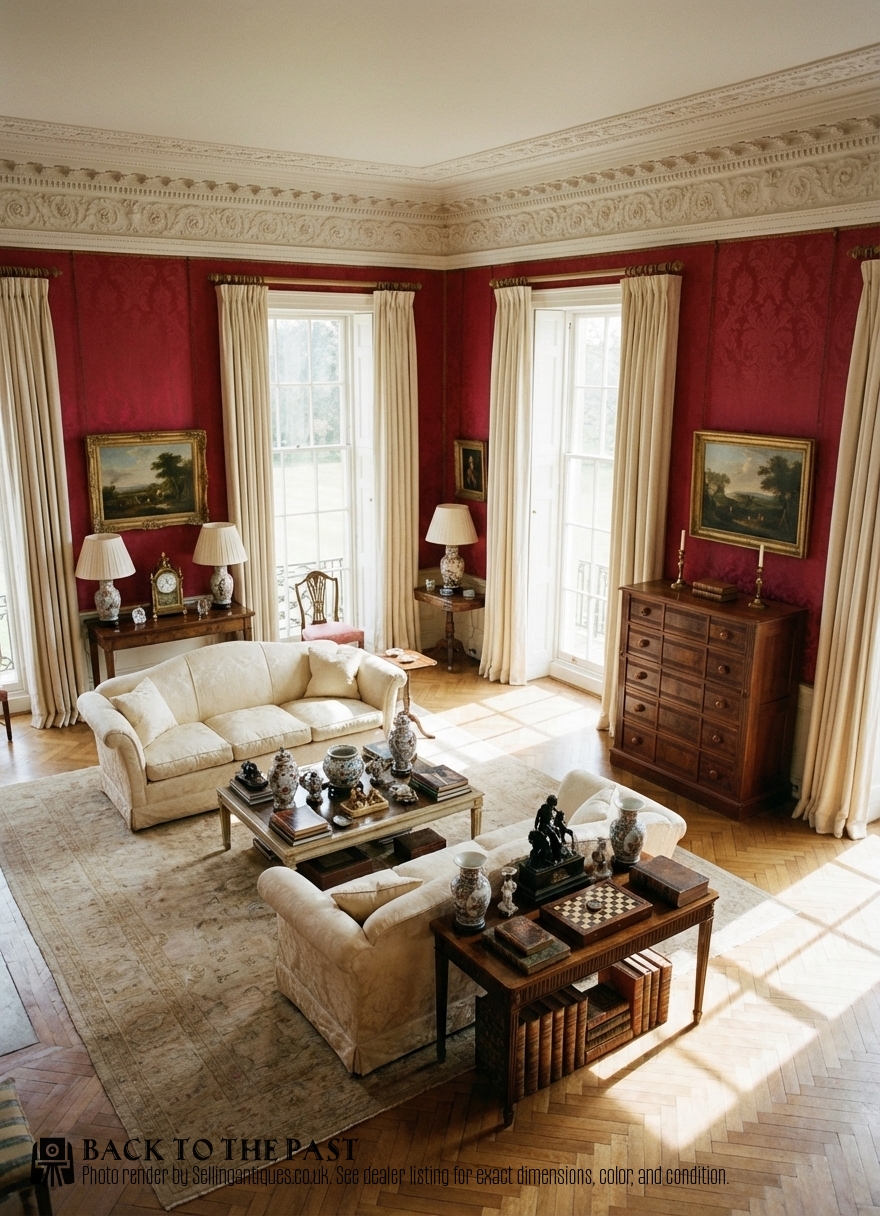
Carved Walnut Tall Chest
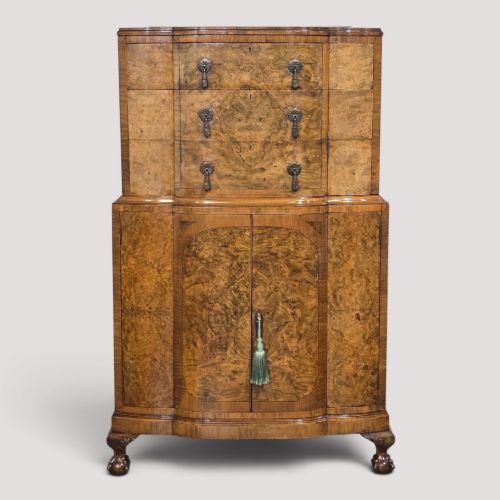
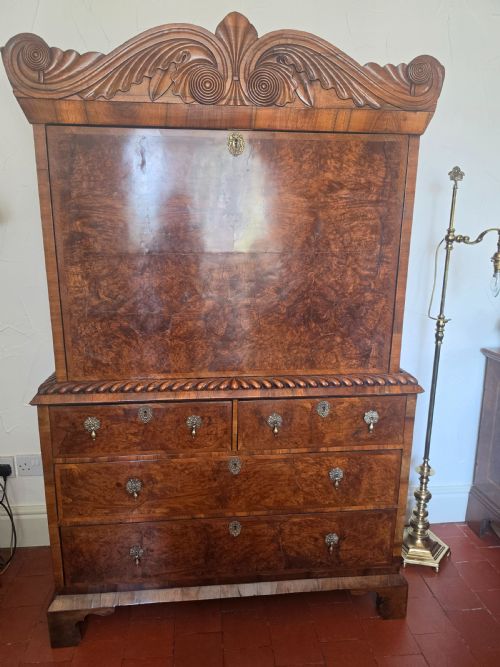
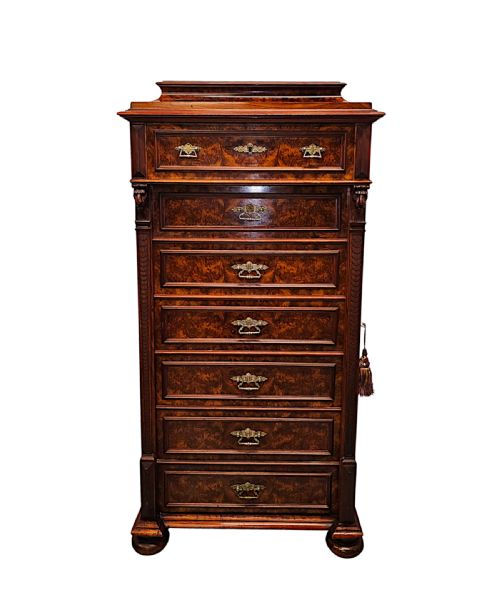
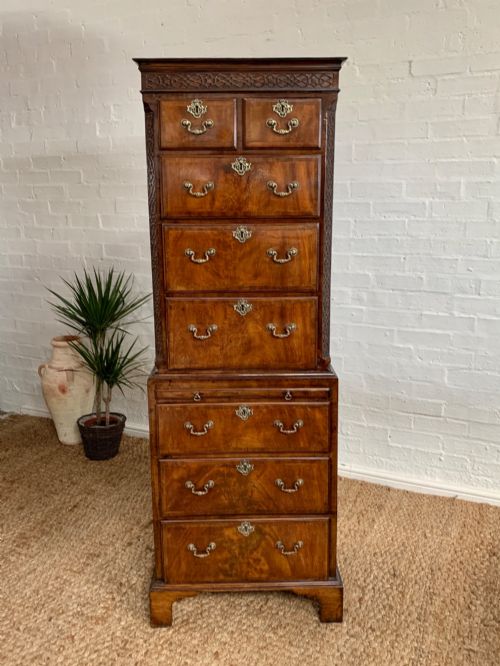
When you search for a carved walnut tall chest, you encounter a variety of tall storage forms ranging from nineteenth century Wellington chests and George III style tallboys to eighteenth century escritoires and chests on stand. Walnut, burr walnut and oak appear across Victorian, Queen Anne, and later periods, alongside forms such as banks of drawers and writing cabinets.
The pieces on this page lean heavily toward nineteenth century examples, including Victorian pieces from the eighteen sixties and eighties, alongside eighteenth century roots and early twentieth century manifestations. The forms combine practical vertical drawer stacking with ornamental carving and rich veneers.
How they were made
Cabinet makers utilised solid walnut, burr walnut veneers, and secondary timbers such as oak to build these tall forms. Surfaces often display the distinct figuring of burr walnut, paired with brass hardware.
Construction techniques involve traditional joinery to support the substantial weight of tall drawers, escritoires, and chests on stand, finished with detailed carving suited to Victorian, Queen Anne, and George III styles.
Carved Walnut Tall Chest Retail Price Guide 2026
Typical asking prices for carved walnut tall chest among the pieces listed under this phrase on Sellingantiques today, from the lower quarter to the upper quarter. They describe what is for sale here now, not the wider market.
The furniture styles represented range from Queen Anne and George III style to French provincial and Victorian designs.
What varies in quality
The standard of a carved walnut tall chest rests on the choice of timber figures, particularly the depth and movement in burr walnut veneers. Finer pieces demonstrate precision in the execution of carving and the integration of secondary woods like oak.
Proportion and structural integrity distinguish exceptional cabinet work from simpler utility pieces, particularly in tall formats where drawer alignment and locking mechanisms on Wellington chests demand meticulous fitting.
The Carved Walnut Tall Chest Glossary
- Wellington chest
- A tall, slender chest of drawers featuring a hinged locking stile on one side that secures all the drawers at once. This form typically dates from the nineteenth century.
- Escritoire
- A writing cabinet containing a fall-front desk section combined with drawers. These pieces blend storage with a dedicated writing surface.
- Chest on stand
- A chest of drawers elevated on a separate frame or stand with legs. This configuration lightens the visual weight of tall storage furniture.
- Tallboy
- A tall chest of drawers made in two sections, often featuring a smaller chest stacked upon a larger base. George III style examples frequently utilise this configuration.
Carved Walnut Tall Chest: Frequently Asked Questions
What is a Wellington chest?
A Wellington chest is a tall, narrow set of drawers distinguished by a locking wooden bar down one side. This bar fastens into place with a key, securing every drawer simultaneously.
Cabinet makers designed these pieces during the nineteenth century to store shirts or documents securely within a compact floor footprint.
How do I identify burr walnut?
Burr walnut is recognisable by its dense, swirling grain patterns filled with small circular nodes and intricate knots. This figuring comes from a growth deformity on the walnut tree.
Craftsmen sliced these patterns into thin veneers to adorn the drawer fronts and primary panels of high-status furniture.
Where were tall chests used?
Tall chests served primarily in bedrooms and dressing rooms to maximise vertical storage without occupying excessive floor space. Their height allowed for numerous drawers.
Certain variations, such as escritoires or writing cabinets, also functioned in studies or libraries for correspondence and record keeping.
What is a chest on stand?
A chest on stand consists of a main drawer section elevated upon a separate supporting frame with legs. This form lifts the heavy storage body off the floor.
Originating in earlier centuries, this design imparts a lighter visual proportion compared to standard floor-standing chests of drawers.