


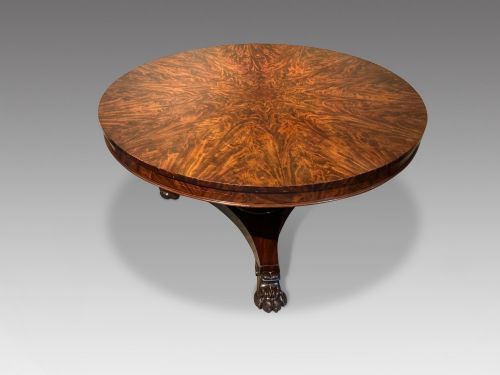
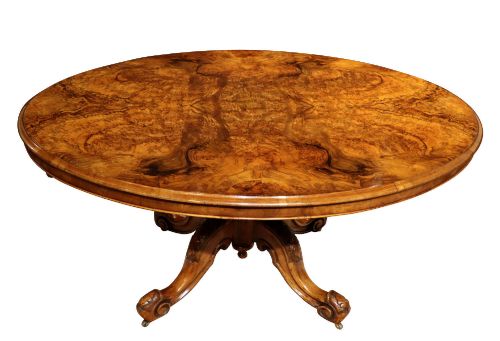
Victorian Tilt Top Loo Table
A victorian tilt top loo table combines generous oval timber surfaces with a clever pivoting mechanism designed to save space when not in service.
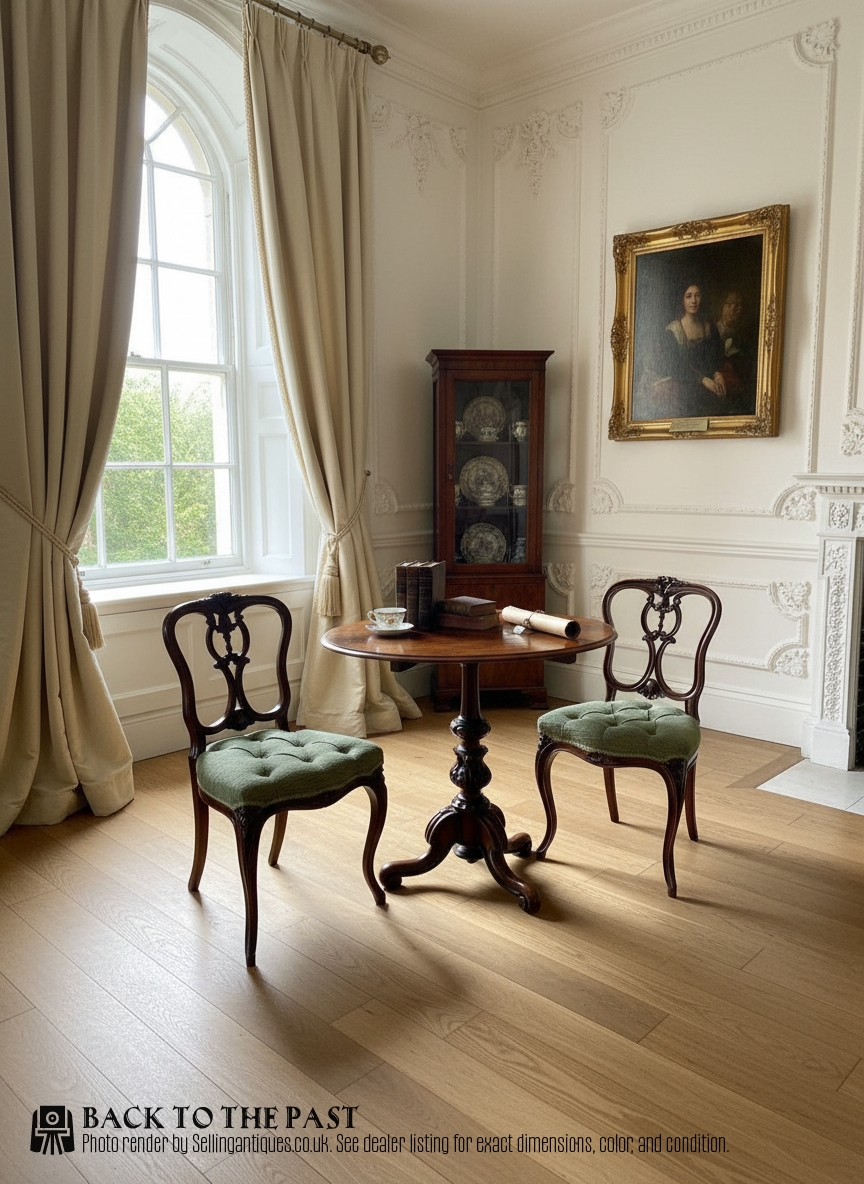
Victorian Tilt Top Loo Table
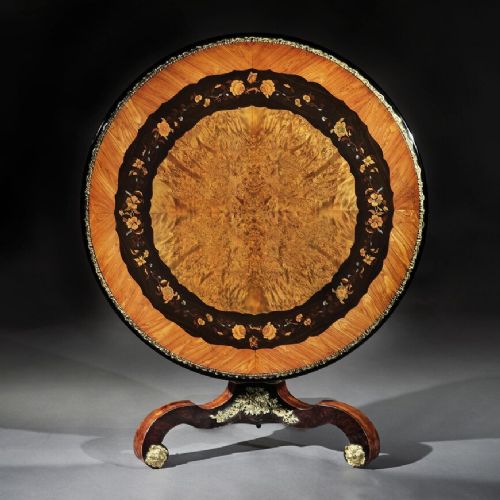
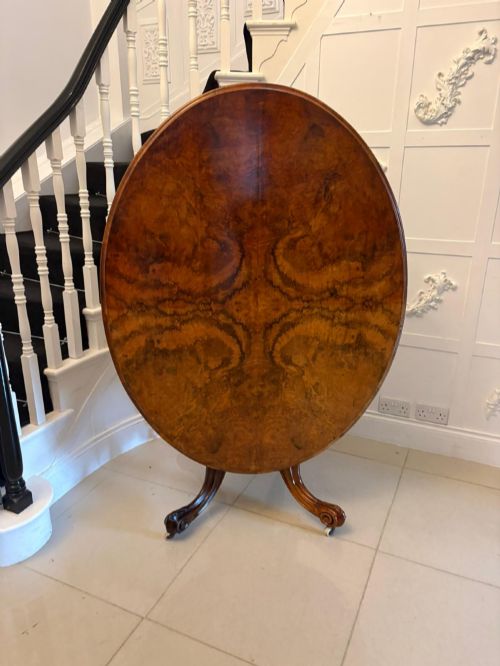
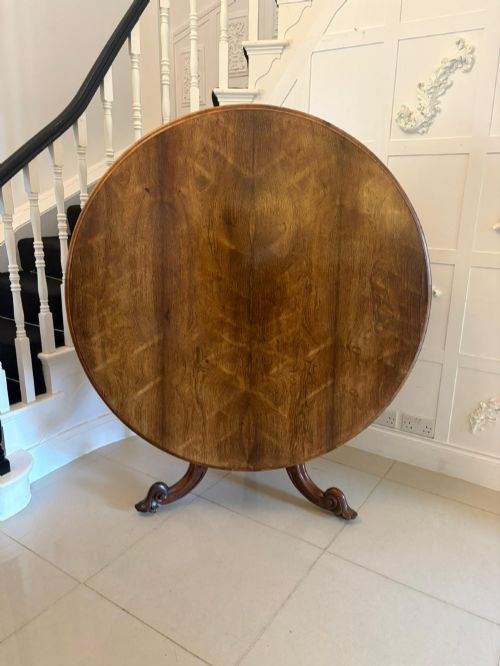
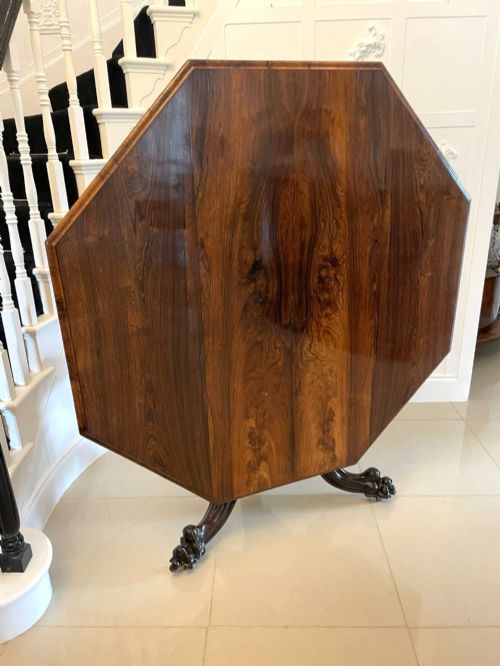
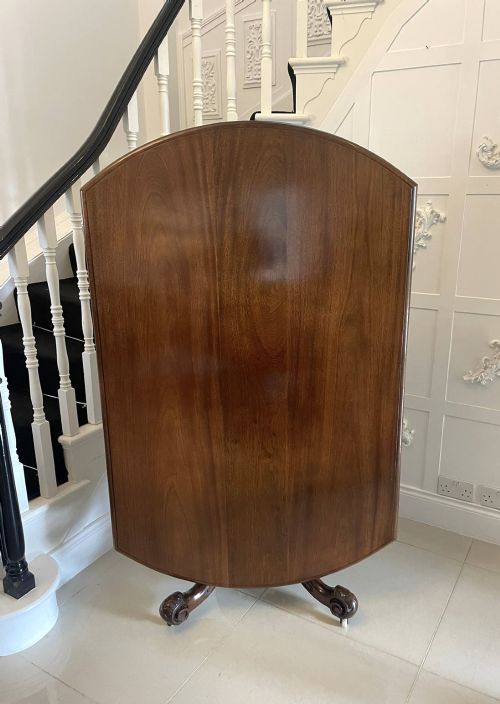
A victorian tilt top loo table is primarily encountered as a substantial oval or circular dining and centre table dating from the nineteenth century. These pieces typically feature a tilting mechanism that allows the top to lock into a vertical position against the pedestal base when not in use.
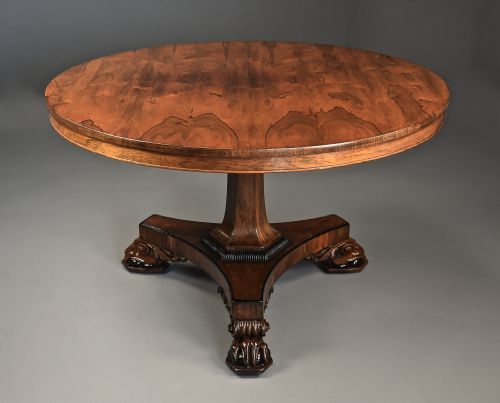
The form bridges domestic dining and parlour use, often appearing in burr walnut, rosewood, or mahogany. Most examples on this page date from the mid-nineteenth century, particularly around 1860, reflecting the height of Victorian production for large family homes.
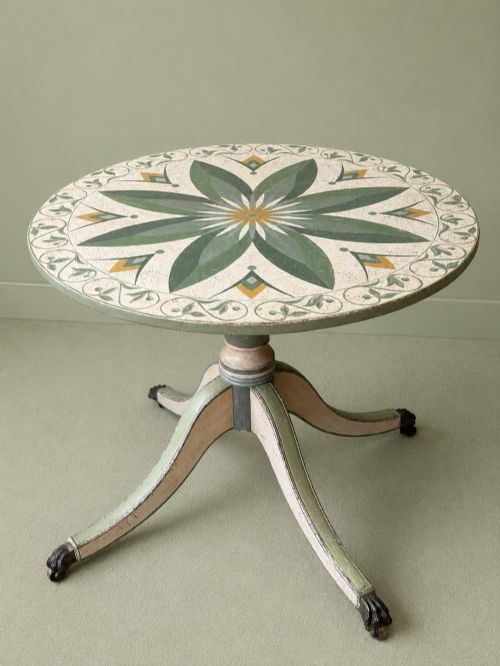
Makers and workshops utilised diverse stylistic influences, ranging from French Revival and Aesthetic Movement to Anglo-Indian designs. The core function remains consistent, providing a large surface for gathering that pivots flat for storage against a wall.
How they were made
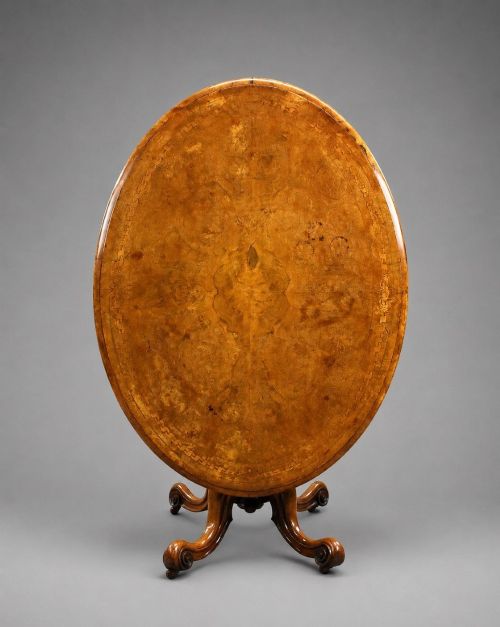
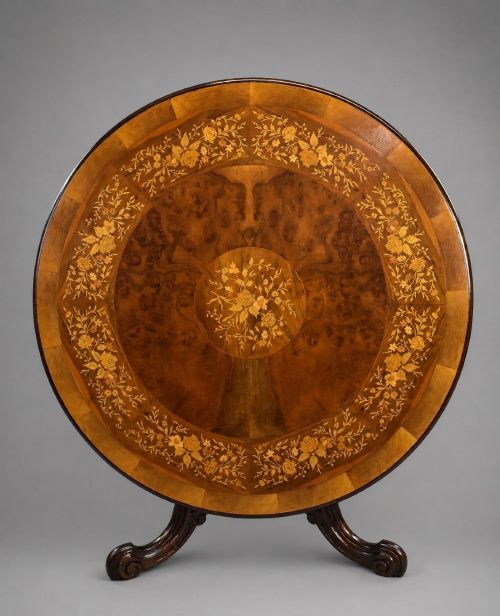
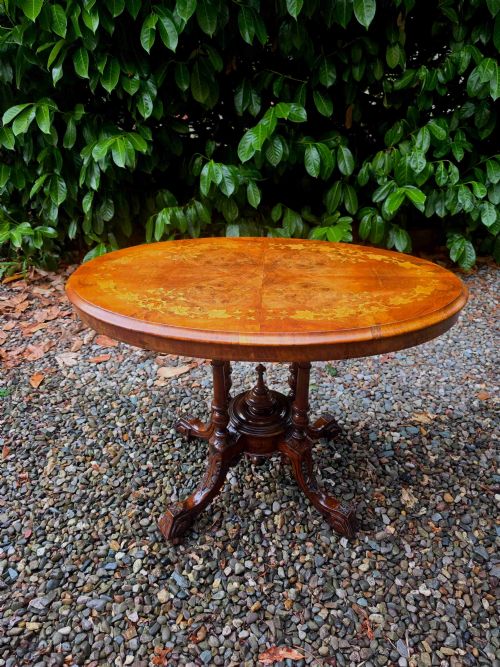
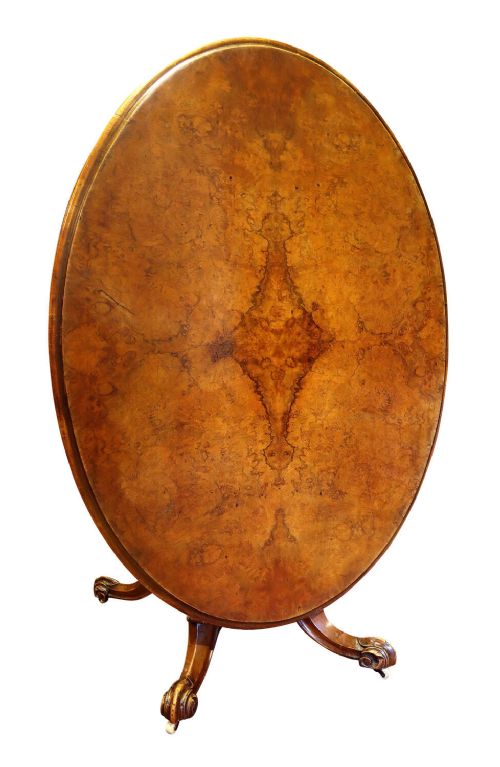
Cabinet makers built these tables using dense timbers such as mahogany, rosewood, and walnut, often applying highly figured burr walnut veneers to the expansive oval tops. Crossbanding and boxwood inlay provided geometric borders, while carved solid wood formed the structural columns and bases.
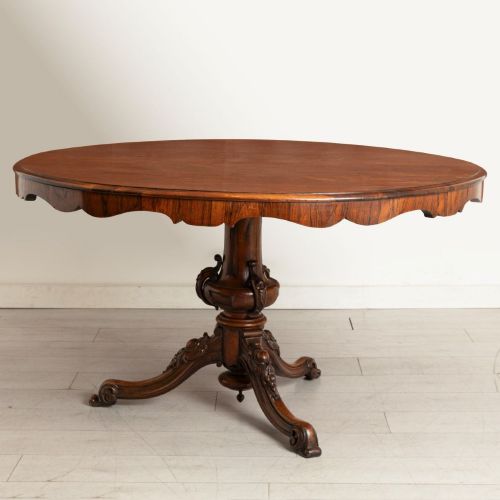
The tilting mechanism relied on a robust brass catch and pivot block secured beneath the top, allowing the heavy surface to rotate and lock securely. Pedestals frequently took the form of turned columns resting upon carved tripod or quadrapod scroll feet.
Victorian Tilt Top Loo Table Retail Price Guide 2026
Typical asking prices for victorian tilt top loo table among the pieces listed under this phrase on Sellingantiques today, from the lower quarter to the upper quarter. They describe what is for sale here now, not the wider market.
Card players kept spare counters hidden in pockets, trusting the heavy pivot mechanism not to flip mid-wager.
What varies in quality
Quality reveals itself in the choice and matching of timber veneers, particularly the grain symmetry across large oval burr walnut tops. Superior examples display intricate marquetry and precise boxwood stringing rather than plain surfaces.
The sculpture of the wooden base dictates the grade of the piece, moving from simple turned pedestals to heavily carved quadrapod bases with detailed scrollwork. The engineering of the tilting mechanism also distinguishes standard workshop output from distinguished cabinet makers.
Edward Holmes Baldock·Gillows
The Victorian Tilt Top Loo Table Glossary
- Tilt top
- A pivoting table surface that rotates from horizontal to vertical. This clever engineering allowed large tables to be stored flat against a wall when dinner finished.
- Loo table
- A large nineteenth century parlour table designed for card games like loo. They naturally doubled as breakfast and centre tables in grand rooms.
- Burr walnut
- A highly prized timber harvested from walnut tree growths, producing swirling, knotty patterns. Cabinet makers sliced this wood into thin veneers for tabletops.
- Marquetry
- The art of creating decorative patterns on furniture using thin pieces of wood veneer. Artisans inlaid contrasting timbers like boxwood to form floral or geometric motifs.
- Quadrapod base
- A heavy central pedestal supported by four carved feet. This sturdy four-way arrangement countered the tipping weight of large oval tops.
Victorian Tilt Top Loo Table: Frequently Asked Questions
What is a loo table?
A loo table is a large nineteenth century table originally built for playing the card game loo. Because of their generous oval proportions, they served equally well for breakfast and general dining.
Their defining characteristic is the pivoting mechanism. This allowed the entire top to tilt vertically, clearing floor space when the room was needed for other activities.
Why do they tilt?
Nineteenth century homes required multi-functional rooms where furniture could be easily rearranged. Tilting the top allowed bulky dining tables to slide out of the way against parlour walls.
The brass catch held the heavy timber firmly in place during meals. Releasing the catch required only a simple turn, tipping the surface upright with minimal effort.
How do I date a Victorian table?
Dating relies on observing changes in timber preference and decorative styles across the nineteenth century. Rosewood and heavy mahogany dominated earlier decades, while burr walnut became fashionable around mid-century.
Stylistic shifts also provide clues, moving from William IV architectural pedestals to ornate Victorian carved quadrapod bases and later Aesthetic Movement details.
Where should I place one?
These tables make a dramatic centrepiece in large entrance halls or living rooms where their figured timber tops can be viewed from all sides. They function effectively as daily dining tables or occasional library surfaces.
Keeping the table tilted against a wall when not entertaining recaptures historical domestic practice. It also protects the polished veneer from accidental daily wear.