



Rosewood Parlour Table
A rosewood parlour table brings the dark, richly figured warmth of Victorian and Edwardian timber into a room as a centre or occasional piece.

Rosewood Parlour Table
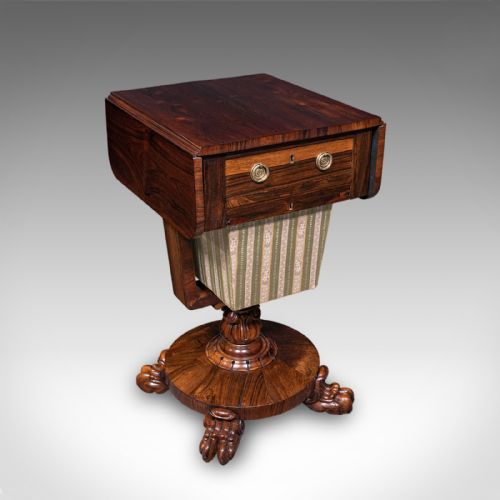
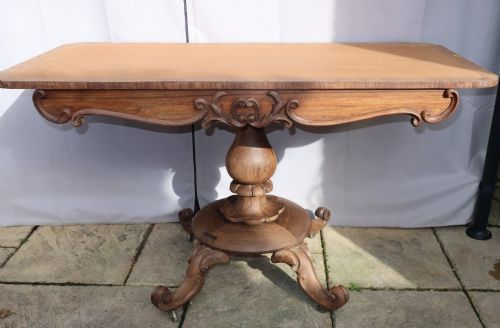
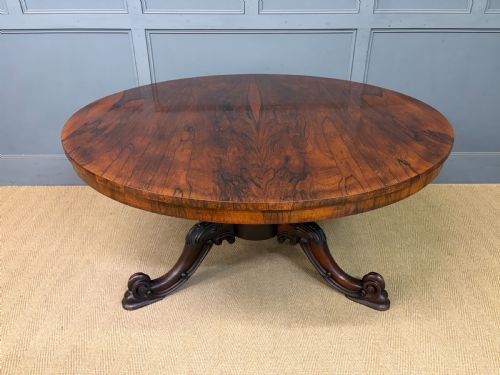
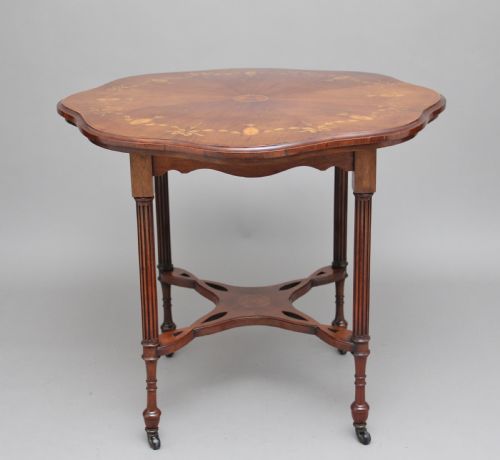
A rosewood parlour table is typically encountered as a mid-nineteenth-century centre table, a occasional table, or a loo table resting on a turned pillar and carved base. These tables were designed for formal reception rooms, serving as the physical focal point for gathering, working, or displaying ornaments. The examples found here span the Victorian, Edwardian, William IV, and Regency periods, showing how the form evolved from heavy, architectural pedestals to lighter, inlaid occasional pieces.
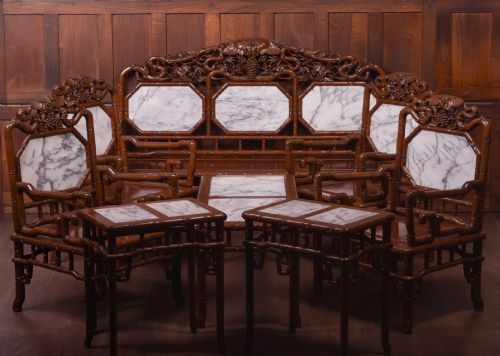
Beyond the standard occasional or centre table, the evidence shows related forms such as sewing tables, ladies hobby tables, chess boards, and larger loo tables that tilt on their bases. The woods utilised include solid timber and rich veneers, frequently augmented with marquetry or satinwood stringing. While many pieces originate in England, Chinese export carved hardwood suites also appear, demonstrating the global reach of nineteenth-century taste.
The buyer must distinguish between a dedicated centre table meant to sit free in the middle of a room and smaller occasional tables pushed against a wall. The presence of shaped oval tops, octagonal surfaces, and drop leaves indicates the varied functions these tables served in domestic interiors. Every piece relies on the dense, dark grain of rosewood to impart a sense of formal weight and polish.
Assessing quality and execution
Quality in these tables rests upon the selection of the timber veneer and the crispness of the carving on the base and legs. Finer examples display symmetrical grain patterns across the top and meticulous marquetry or satinwood stringing that remains flush with the surrounding wood. Lesser pieces rely on plain, unfigured timber with mechanical carving that lacks depth and sharpness.
The stability of the central pillar and the smoothness of any tilt-top or drop-leaf mechanism separate better-made tables from simpler production. Joinery at the apron and legs must remain rigid under daily use, without looseness in the peg or screw fixings. The depth of the hand-applied polish, rather than a thick modern surface coating, determines how well the natural figuring of the rosewood is expressed.
Rosewood Parlour Table Retail Price Guide 2026
Typical asking prices for rosewood parlour table among the pieces listed under this phrase on Sellingantiques today, from the lower quarter to the upper quarter. They describe what is for sale here now, not the wider market.
The listings show tables spanning the Regency, William IV, Victorian, and Edwardian periods, utilising rosewood, satinwood, and brass.
The Rosewood Parlour Table Glossary
- Centre table
- A table finished on all sides designed to stand free in the middle of a room rather than against a wall. These pieces often feature circular, oval, or octagonal tops supported by a central pillar.
- Loo table
- A large Victorian card and conversation table featuring a tilting top that allowed it to be stored upright against a wall when not in use. The circular or shaped top rests on a heavy carved pedestal.
- Marquetry
- The art of applying pieces of veneer to a structure to form decorative patterns and pictures. Makers used contrasting timbers such as satinwood to create geometric or floral motifs.
- Occasional table
- A small, light table intended for a specific, intermittent domestic use such as holding a lamp or book. These are common in the Edwardian period with slender legs and inlaid tops.
- William IV
- A transitional design period spanning the early nineteenth century characterised by robust classical proportions and heavy scrolled feet. Furniture from this era often uses dense rosewood with minimal excessive ornamentation.
Rosewood Parlour Table: Frequently Asked Questions
What is a rosewood parlour table used for?
These tables served as functional centrepieces in nineteenth-century reception rooms for holding lamps, books, or tea services. They also provided a stable surface for needlework, games, or general conversation.
Today, they function well in modern interiors as coffee tables, lamp tables, or statement pieces placed in the middle of a sitting room. Their varied heights and top shapes allow them to fit easily into different domestic layouts.
How do I date a rosewood table?
Dating relies on observing the combination of the timber, the style of the pedestal base, and any inlay techniques. Regency and William IV pieces tend to feature heavy architectural columns and bold scrolling feet, while Victorian examples often introduce shaped oval tops and tilt-top mechanisms.
Edwardian tables generally appear lighter in proportion, frequently incorporating delicate satinwood stringing and slender legs. Examining the secondary timbers beneath the top provides further clues regarding the era of manufacture.
Can I use a loo table flat?
Yes, when the wooden or brass catch beneath the top is locked into position, the table remains entirely flat and stable for daily use. The tilting mechanism was originally designed simply to save floor space when the room was cleared.
Owners should ensure the locking mechanism is securely engaged before placing heavy items on the surface. The pivot joint beneath requires gentle handling when transitioning between the vertical and horizontal positions.
How do I care for rosewood?
Rosewood benefits from regular dusting with a soft, dry cloth to prevent particulate accumulation on the polished surface. Avoiding direct sunlight and placing the table away from heat sources prevents the timber and veneer from drying out.
Occasional application of a suitable wax polish helps maintain the lustre of the wood without building up a heavy, cloudy residue. Care must be taken with liquids, using coasters to protect the antique polish from water marks.