
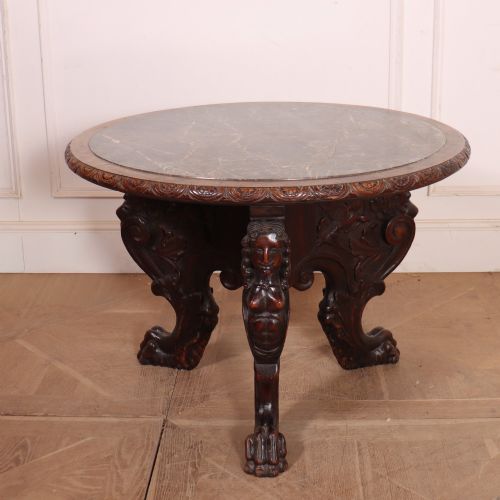
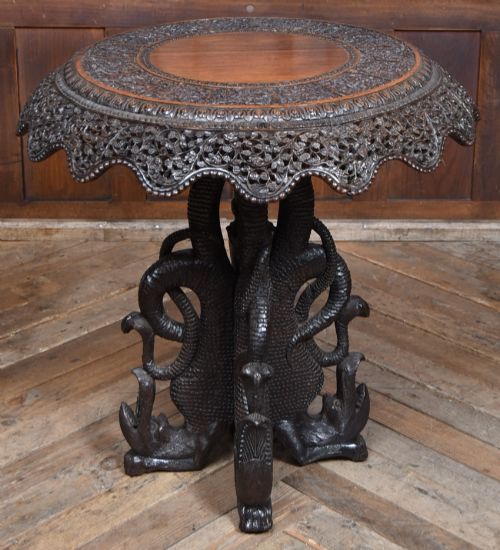

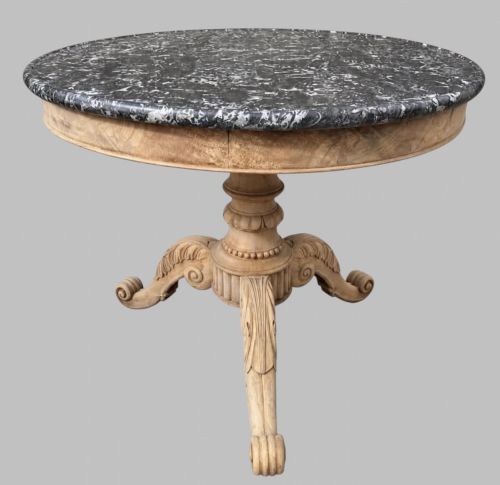
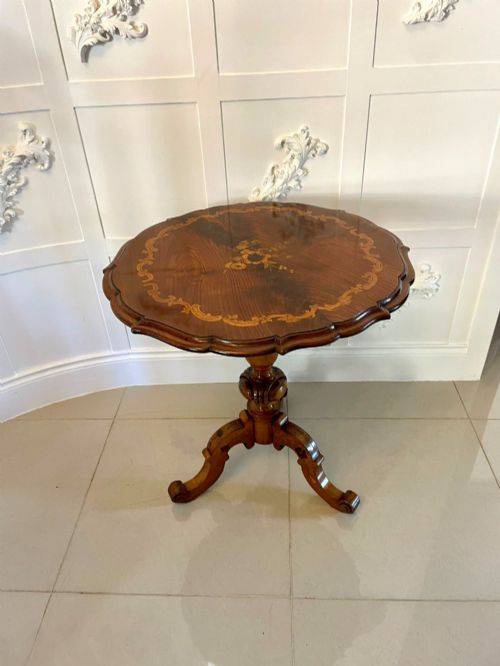
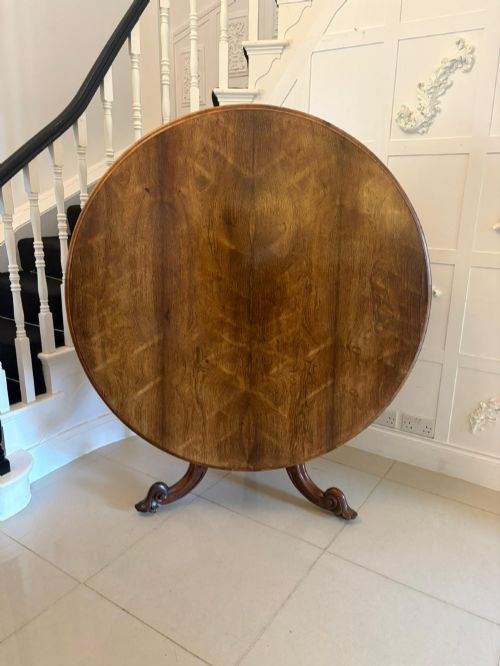
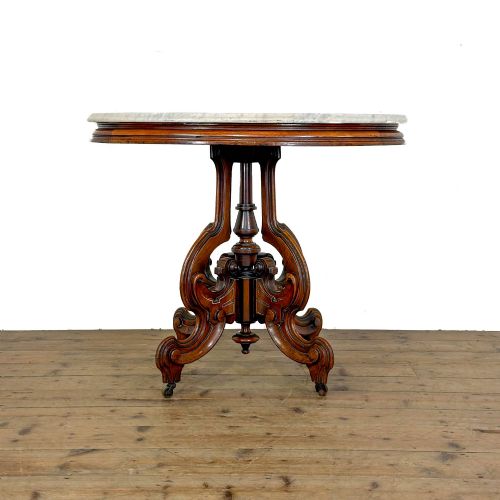
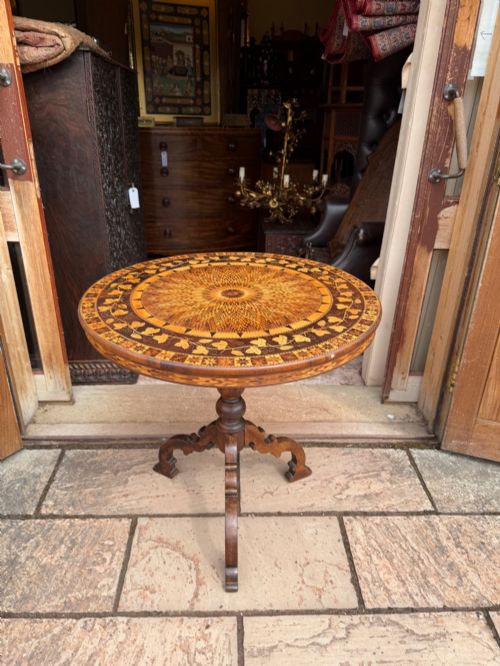
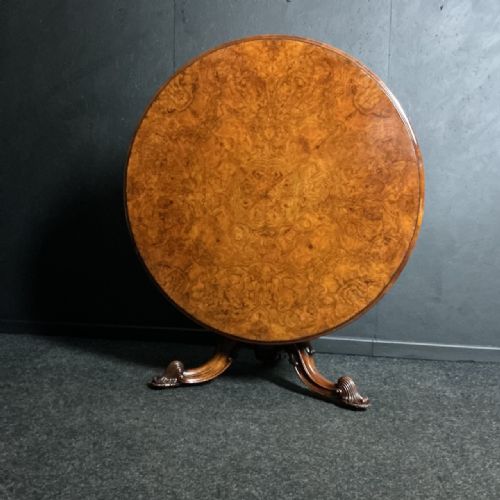

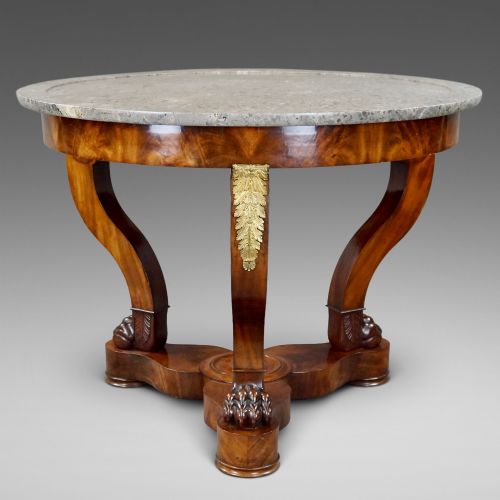
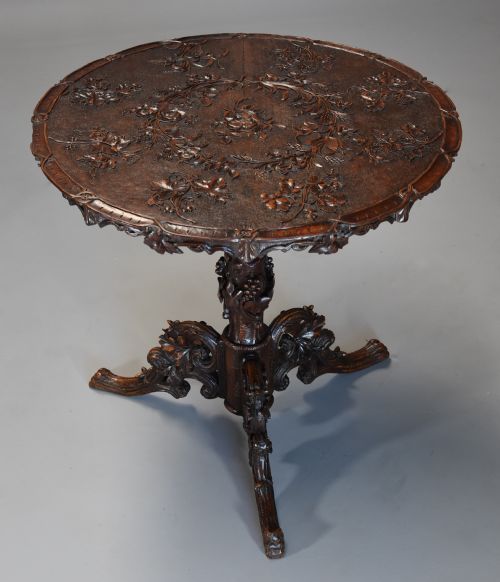
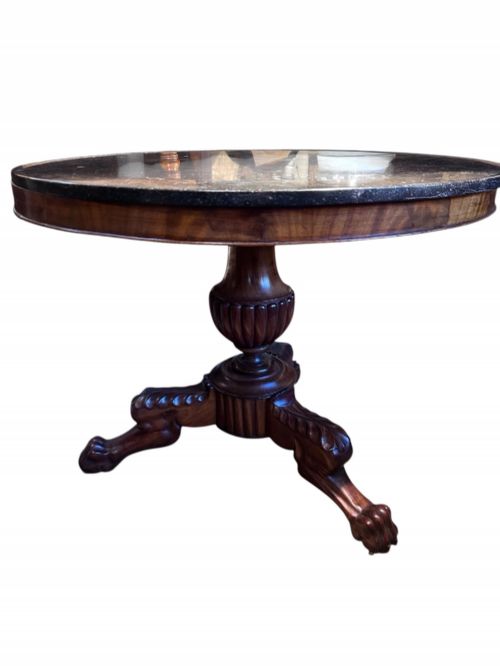
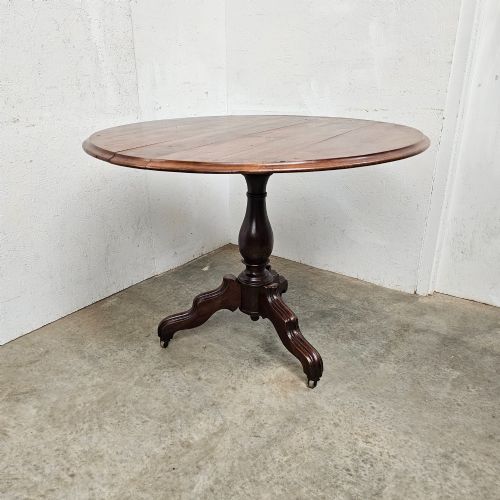
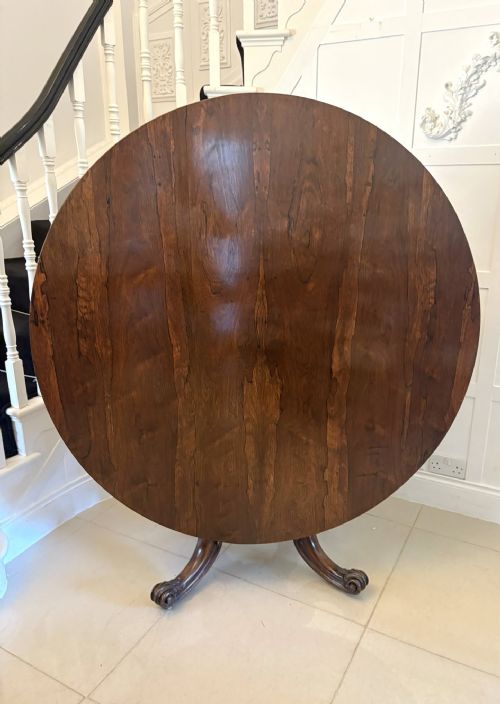
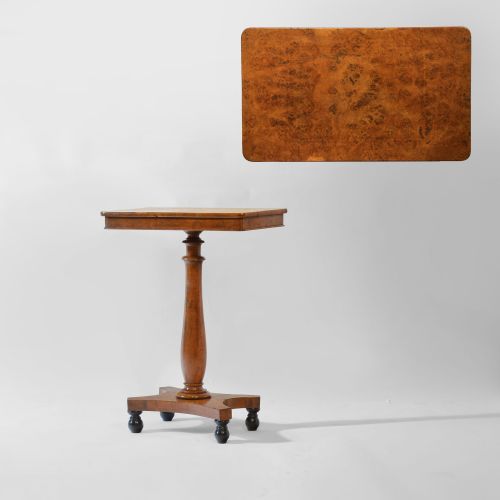
Carved Tripod Centre Table
A carved tripod centre table commands the middle of a room with rich timbers and steady three-legged balance.
What these pieces are
A carved tripod centre table stands independently in a room rather than against a wall, offering access from all sides. The pieces matching this carved tripod centre table search span the Victorian era, the nineteenth century, and eighteenth century Italian workshops.
Most examples found here take the form of dining tables, occasional tables, or tilt-top designs. The selection includes French gueridon styles alongside British Victorian furniture in mahogany, rosewood, and walnut.
Makers utilised ingenious snap-top and tilt-top mechanisms so the heavy timber tops could fold away when not in use. This versatility made them central to the social and domestic life of grand nineteenth-century interiors.
How they were made
Cabinetmakers built these tables from dense hardwoods including mahogany, rosewood, and burr walnut, often mounting them on robust wooden tripod bases. Decorative surfaces frequently feature intricate marquetry inlay and wood inlay, supplemented by brass elements.
The tops frequently employ a tilt-top or snap-top construction, allowing the timber surface to pivot on a central pillar supported by three carved legs. Skilled artisans shaped the solid wood pedestals by hand, applying decorative carvings to the knees and feet of the tripod base.
Retail Price Guide 2026
Typical UK retail prices for carved tripod centre table, calculated from the Sellingantiques database of over a million retail prices indexed since 2003. This retail price guide relies exclusively on Sellingantiques data; no external sources or auction records are used, so the figures do not describe the wider market.
Current listings span the Victorian period, the nineteenth century, and eighteenth century Italy, executed in mahogany, rosewood, walnut, and burr walnut.
What varies in quality
Quality reveals itself in the choice of timber and the precision of the marquetry inlay. Figured mahogany and burr walnut display dramatic grain patterns that elevate the visual presence of the piece.
The crispness of the hand-carving on the tripod base separates standard production from exceptional examples. A well-balanced pillar and sturdy leg assembly ensure the table stands firmly without wobble.
The Carved Tripod Centre Table Glossary
- Tilt-top
- A table top hinged to the pedestal so it can be turned vertically to save space. This mechanism requires careful engineering to maintain stability when locked flat.
- Marquetry
- Decorative patterns created by fitting thin pieces of wood veneer into a background panel. Artisans use contrasting timbers to form complex floral or geometric designs.
- Gueridon
- A small French table supported by a single central column or tripod base. The term originated in the seventeenth century for tables held by carved figures.
- Snap-top
- A table top fitted with a catch mechanism that secures the surface in a horizontal position. It releases to let the top pivot upright.
- Tripod base
- A furniture support consisting of three legs radiating from a central pillar. This design ensures firm contact on uneven floors.
Frequently Asked Questions
What is a centre table?
A centre table is designed to stand free in the middle of a room rather than against a wall. It is finished on all sides for viewing from any angle.
Historically, these tables held lamps, books, or decorative objects in large reception rooms.
How do tilt-top tables work?
Tilt-top tables feature a hinged mechanism beneath the surface connected to the central pillar. This allows the heavy timber top to pivot upright when not in use.
A catch or lock secures the table in the horizontal position during dining or display.
What is burr walnut?
Burr walnut is a timber taken from the growth excrescences on walnut trees. It exhibits complex, swirling grain patterns highly prized by cabinetmakers.
Tables featuring this wood often use veneer to display the striking natural patterns across the top.
Where were these tables placed?
These tables occupied the middle of Victorian parlours, drawing rooms, and dining halls. Their independent stance allowed guests to walk completely around them.
They served as functional dining surfaces or decorative focal points for displaying ornaments.