


Circular Marquetry Dining Table
A circular marquetry dining table brings striking geometric or floral inlay to the centre of a room, combining practical dining space with exceptional craftsmanship.
Circular Marquetry Dining Table
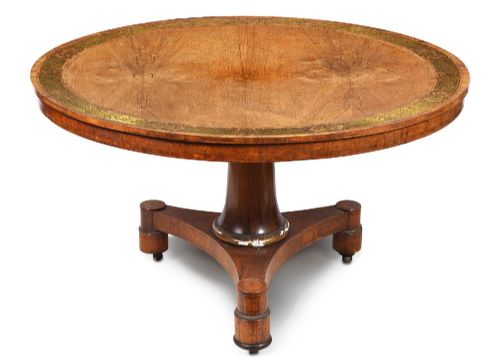
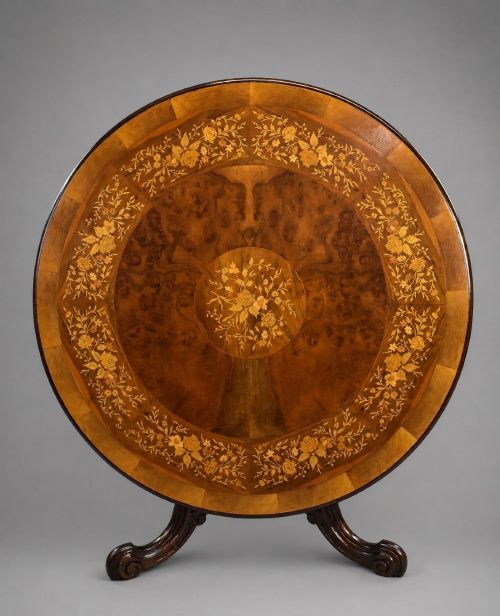
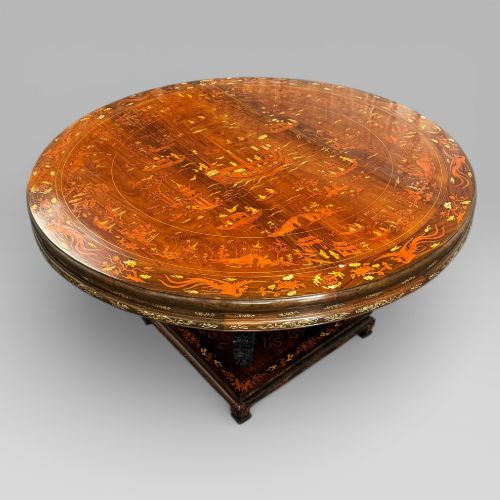
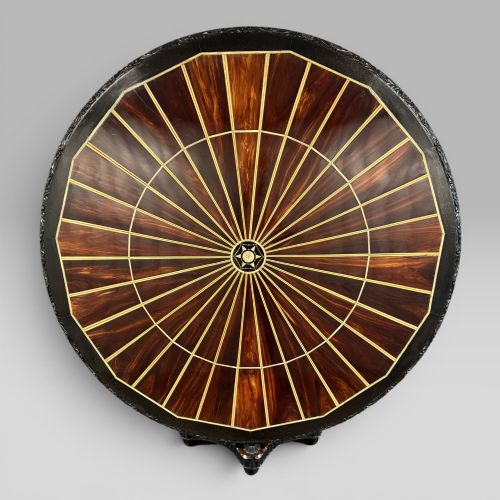
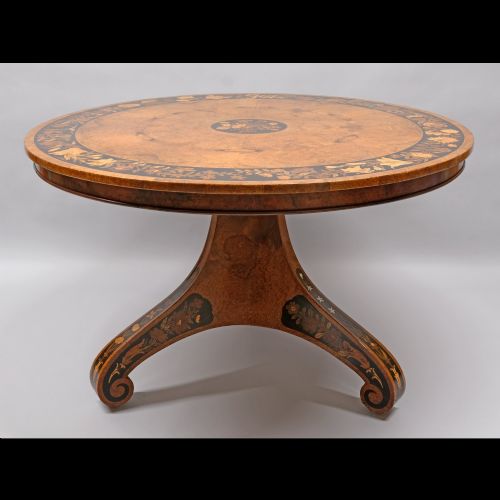
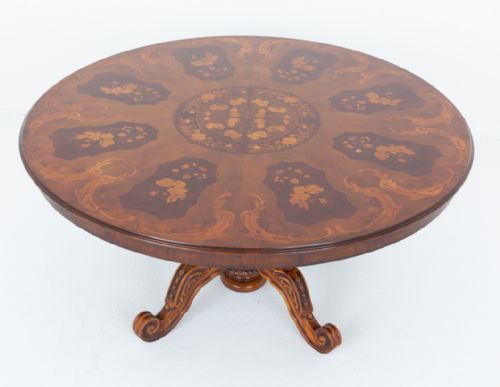
A circular marquetry dining table is primarily represented here by 19th-century, Regency, and Victorian centre or loo tables adapted for dining. These pieces feature balanced, round tops that rest on pedestals or carved central columns.
The materials span burr walnut, rosewood, and mahogany, decorated with elaborate marquetry inlay using fruitwood, boxwood, and ebony. Versions range from compact pedestal breakfast tables to substantial eight-seater dining formats.
Origins stretch across British Victorian workshops, Regency cabinets, and continental European output, including Italian neoclassical and Scandinavian art deco designs.
Assessing Quality and Execution
Quality rests heavily on the crispness and precision of the marquetry inlay and the choice of timber veneer. Superior examples employ highly figured burr walnut or dense rosewood with seamless grain matching across the circular top.
The complexity and depth of the carved woodwork on the pedestal and base distinguish high-end cabinet work from simpler vernacular production. Well-executed tables maintain structural rigidity in the central column and smooth tipping mechanisms where applicable.
Several tables retain clever tilt-top catches, designed so nineteenth-century servants could easily tuck them away against the parlour wall.
Edwards & Roberts·Holmes Baldock·Holland & Sons·John Kendal·George Smith
The Circular Marquetry Dining Table Glossary
- Marquetry
- Decorative veneer work where pieces of contrasting wood, shell, or ivory are fitted together to form geometric or pictorial designs. This technique covers the entire table top to create a rich visual texture.
- Burr walnut
- Timber taken from a growth deformation on a walnut tree, yielding intricate, swirling grain patterns. It forms the primary decorative surface for many high-quality Victorian tables.
- Centre table
- A freestanding table finished on all sides intended to stand in the middle of a room rather than against a wall. They frequently serve as the structural basis for circular dining formats.
- Breakfast table
- A small to medium dining table from the Regency or Victorian period, often featuring a tilt-top for easy storage. They provide the circular configuration common in modern dining spaces.
Circular Marquetry Dining Table: Frequently Asked Questions
How do I seat guests comfortably around a round table?
A circular surface encourages conversation because every guest shares a direct line of sight. Pedestal bases eliminate the obstruction of corner legs, allowing more flexibility with chair placement.
Ensure the diameter matches your room dimensions and chair widths so diners can move in and out easily.
What is a tilt-top mechanism used for?
Many Victorian and Regency pedestal tables feature a catch beneath the top allowing the surface to fold vertically. This historically saved floor space when the table was not in use.
Today, this feature remains a mark of traditional cabinet construction rather than an everyday necessity.
How do I care for antique wood surfaces?
Protect the polished timber from direct sunlight and extreme heat variations to prevent veneer lifting or fading. Use coasters and placemats to guard against moisture rings on the delicate marquetry.
Apply a traditional beeswax polish sparingly to maintain the natural lustre of the walnut or rosewood.
How do I distinguish Regency from Victorian styles?
Regency pieces often display classical restraint, incorporating brass inlay, rosewood, and clean architectural lines inspired by antiquity. They frequently date from the early nineteenth century.
Victorian furniture tends to be heavier, utilising burr walnut, richer floral marquetry, and more elaborate, heavily carved pedestal bases.