
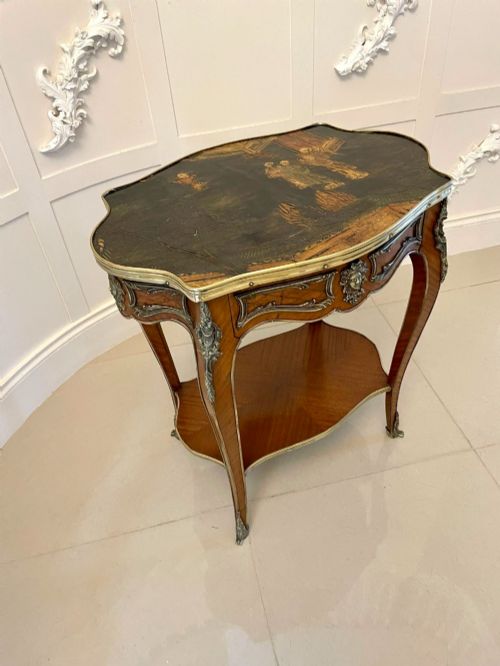
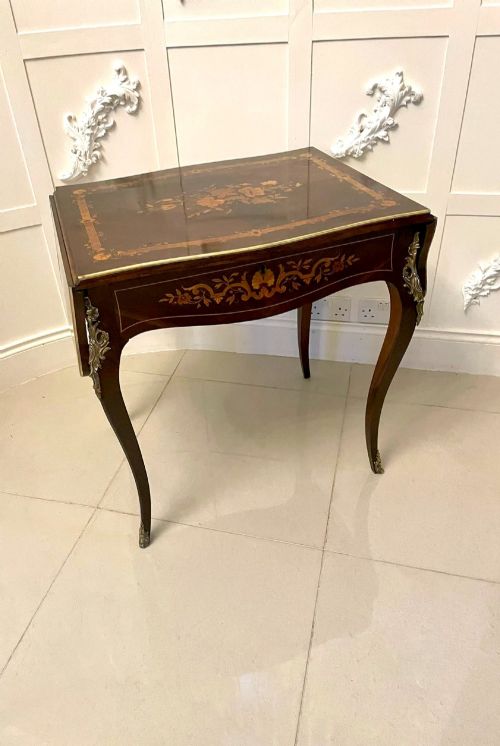
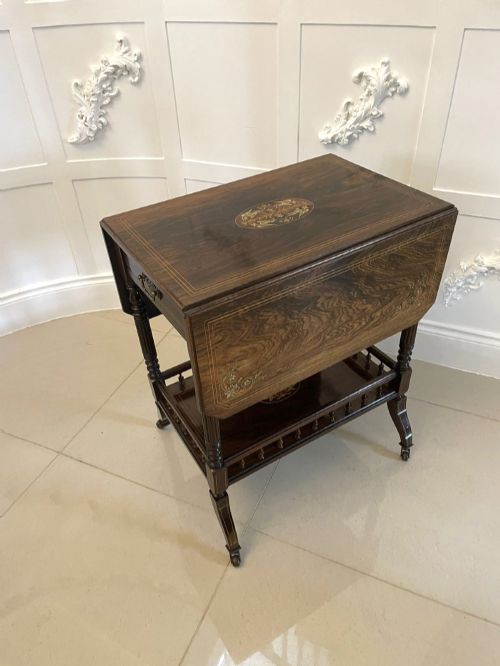

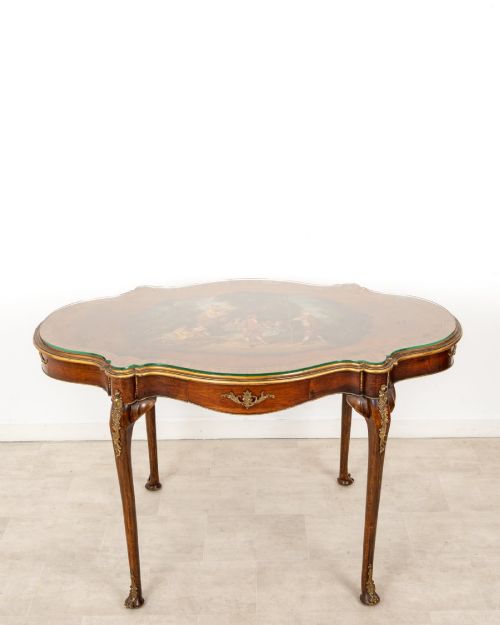
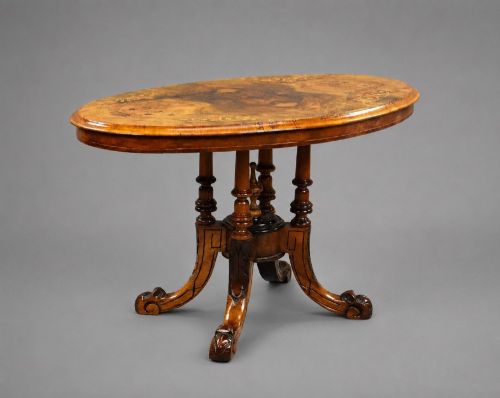
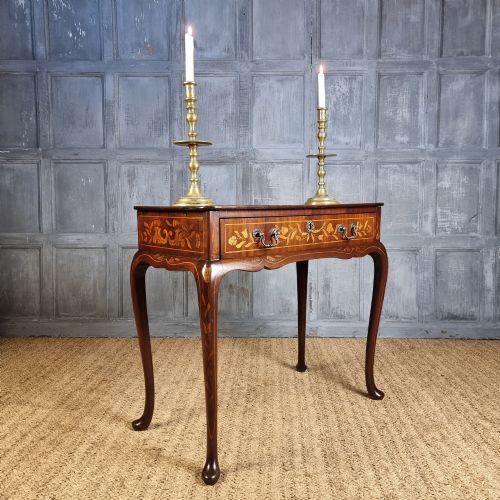
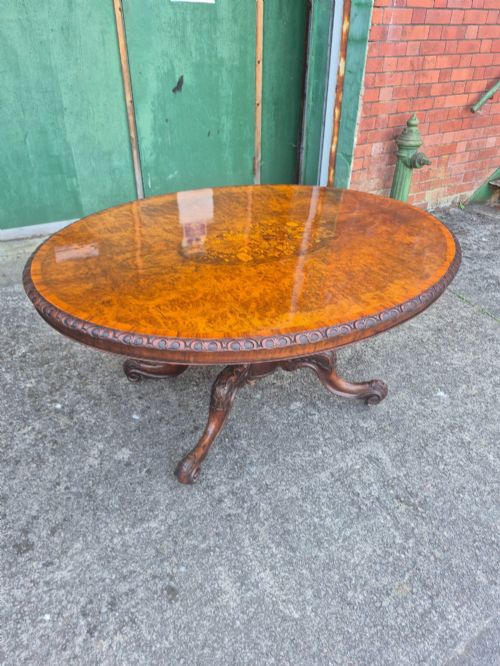
Brown Marquetry Centre Table
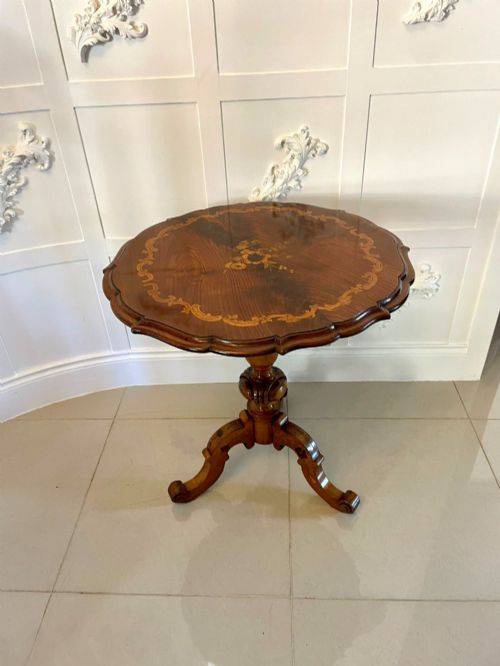
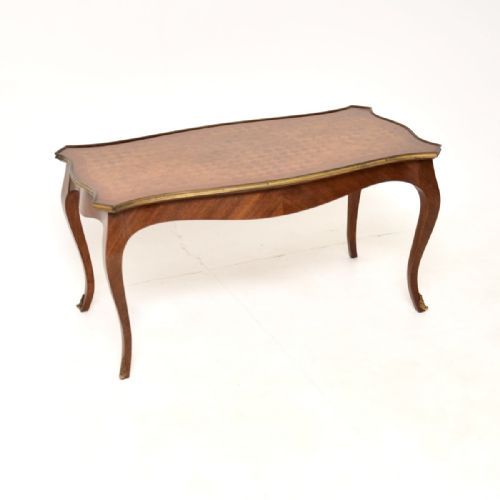
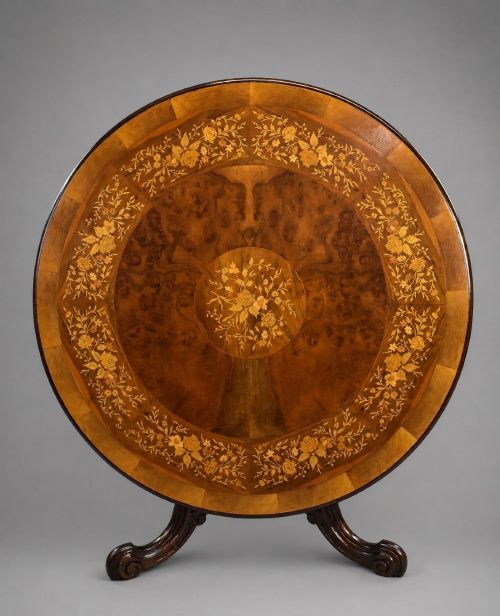
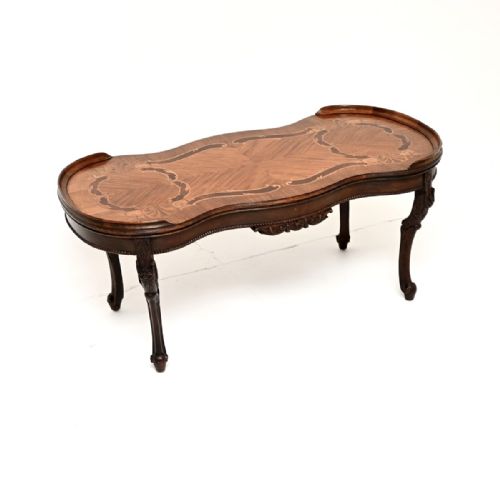
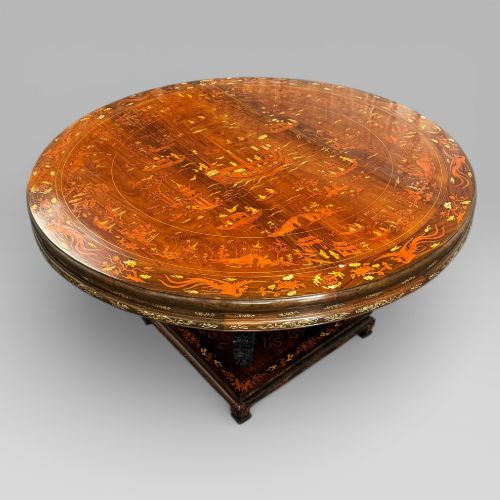
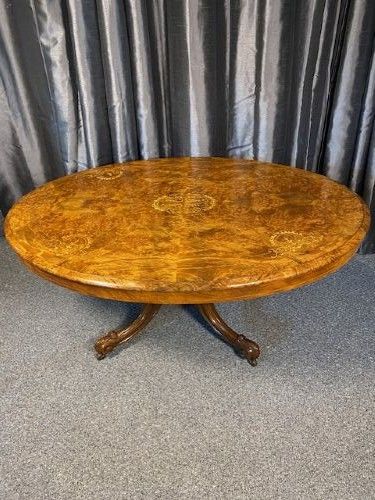
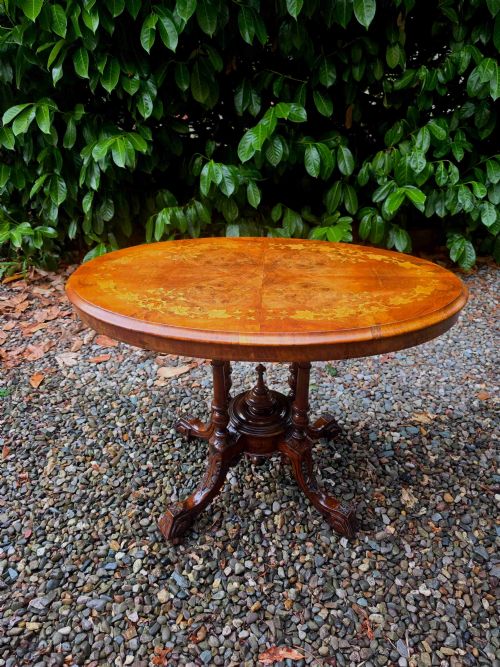
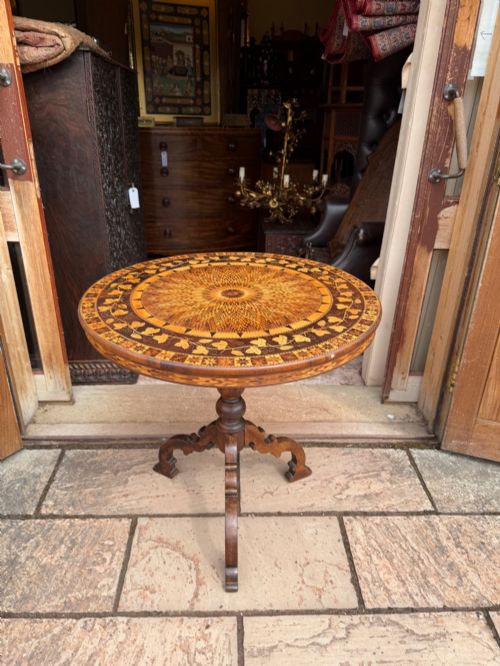
These brown marquetry centre table examples display intricate floral veneers across Victorian and French styles.
Brown Marquetry Centre Table
A brown marquetry centre table stands as a freestanding piece designed to occupy the middle of a room rather than sit against a wall. These tables appear frequently in Victorian, Edwardian, and Regency periods, often taking circular, oval, or octagonal forms.
The objects serve multiple functions across the historical listings, appearing as lamp tables, coffee tables, breakfast tables, and writing desks. Walnut and burr walnut dominate the structural timbers, providing a rich brown ground for elaborate top surfaces.
Makers and workshops across Britain, France, and Ireland produced these pieces using contrasting timbers. French variations lean towards Louis XV styling with ormolu mounts, whilst British examples prioritise figured burr walnut and geometric marquetry.
Materials and Construction
Cabinet makers utilised solid foundations of walnut, rosewood, kingwood, or mahogany, applying delicate veneers across the top surfaces. Marquetry inlay combined lighter woods like satinwood with dyed veneers to create pictorial or floral motifs.
Gilt bronze and ormolu mounts frequently accent the edges and legs of French-influenced pieces, requiring precise casting and chiselling. Secondary framing timbers support the heavy veneered tops, ensuring stability for freestanding placement.
Listings feature walnut, burr walnut, rosewood, kingwood, and satinwood across Victorian, Regency, and Edwardian periods.
Distinguishing Quality
The distinction between ordinary and exceptional tables rests in the depth of the timber selection and the precision of the veneer cutting. Highly figured burr walnut and densely packed marquetry indicate superior craftsmanship in Victorian workshops.
Mount quality separates standard production from exhibition pieces, where hand-chased ormolu and meticulous brass stringing elevate the design. The integrity of the internal framing and the symmetry of the timber grain determine the overall execution.
Edwards and Roberts·Holmes Baldock·Egan Workshop·François Linke
The Brown Marquetry Centre Table Glossary
- Marquetry
- Decorative veneer work arranged in pictorial or geometric patterns across a wooden surface. Craftsmen cut thin slices of various coloured woods to assemble intricate designs.
- Burr walnut
- Timber taken from the abnormal growth of a walnut tree, yielding swirling grain patterns. This wood was highly prized for table tops during the Victorian period.
- Ormolu
- Gilt bronze mounts applied to furniture edges and legs, particularly popular in French revival styles. The technique involves coating bronze with a gold amalgam.
- Freestanding
- Furniture finished on all sides so it can sit away from walls in the middle of an apartment. These pieces command attention from every angle.
- Parquetry
- Geometric wood inlay forming repeating patterns such as cubes or chequers. It differs from marquetry by using strict geometric arrangements rather than pictorial scenes.
- Kingwood
- A dense, dark exotic timber with golden-brown and violet streaks used in fine cabinet making. French workshops favoured this wood for high-status tables.
Brown Marquetry Centre Table: Frequently Asked Questions
Where should a centre table go?
These tables belong in the middle of a room where their veneered tops are visible from all sides. Placing them centrally allows them to function as display surfaces for lamps or decorative objects.
Ensure adequate clearance around the piece so the form and marquetry remain accessible in daily circulation.
How do I care for walnut veneer?
Protect the polished surfaces from direct sunlight and excessive heat to prevent the wood from drying out and cracking. Dust regularly with a dry cloth and avoid silicone-based polishes.
Maintain consistent room humidity levels to preserve the stability of the underlying timber and the delicate inlay work.
What is the difference between marquetry and parquetry?
Marquetry utilises varied veneers to form pictorial scenes, scrolls, or floral arrangements across a table top. Craftsmen cut curved and organic shapes to build intricate botanical motifs.
Parquetry relies strictly on geometric shapes and straight lines to create repeating patterns like cubes, triangles, or squares.
Are these tables sturdy enough for daily use?
Freestanding tables from the Victorian and Edwardian eras were built for drawing room hospitality rather than heavy duty tasks. Their structural integrity suits lamp placement, book storage, and occasional writing.
Avoid sitting or placing excessive weight on the outer edges to protect the decorative veneer and leg joints.