


French Marquetry Work Table
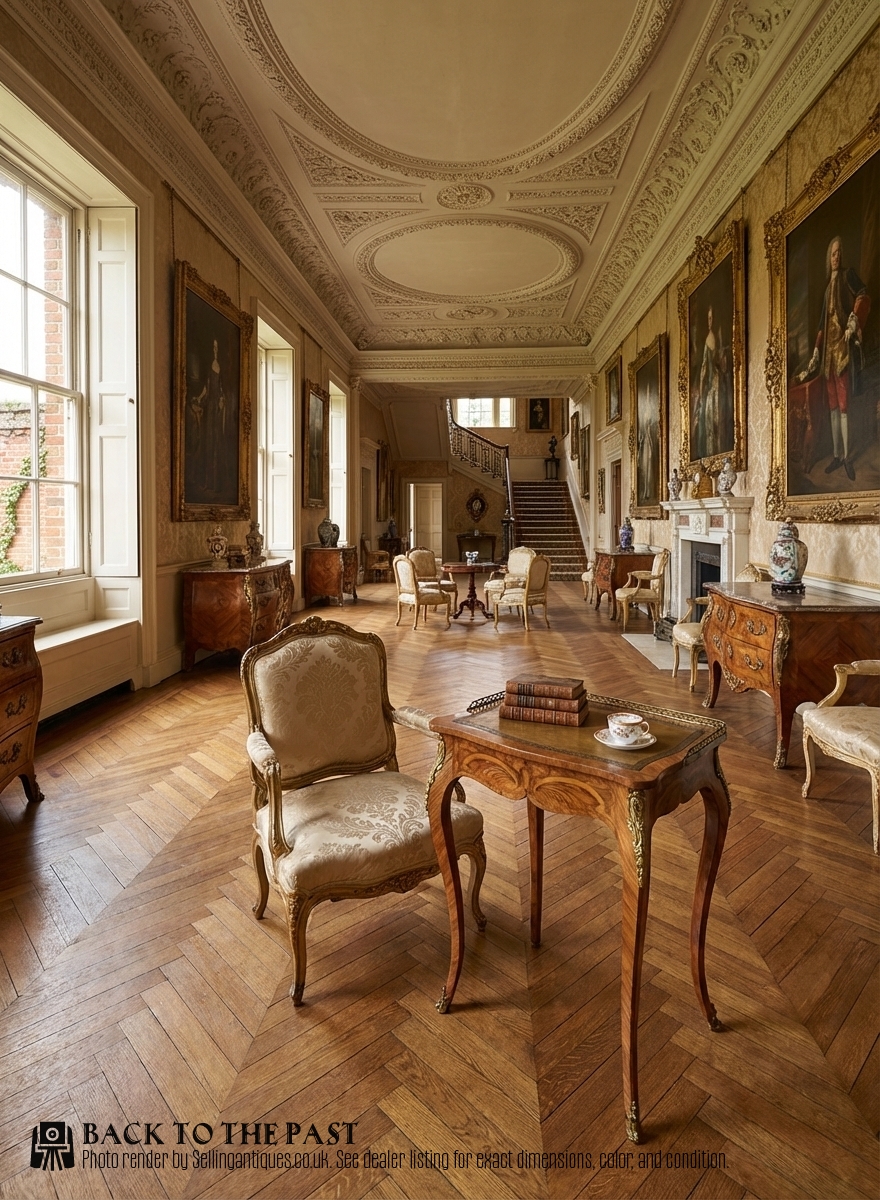
A french marquetry work table brings intricate floral veneers and gilded mounts together, offering a decorative surface paired with practical storage for needlework or correspondence.
French Marquetry Work Table
When you search for a french marquetry work table, you encounter nineteenth-century pieces designed for polite pursuits, combining writing surfaces, hidden compartments, and sewing wells. These tables typically emerge from the Victorian era and the Napoleon III period, spanning decades from eighteen-sixty to nineteen-ten.
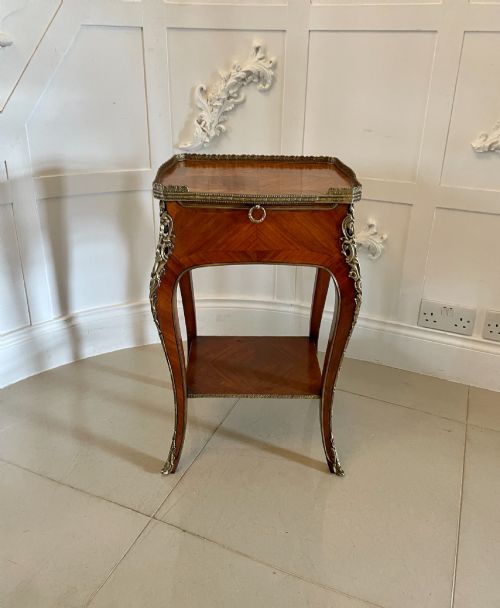
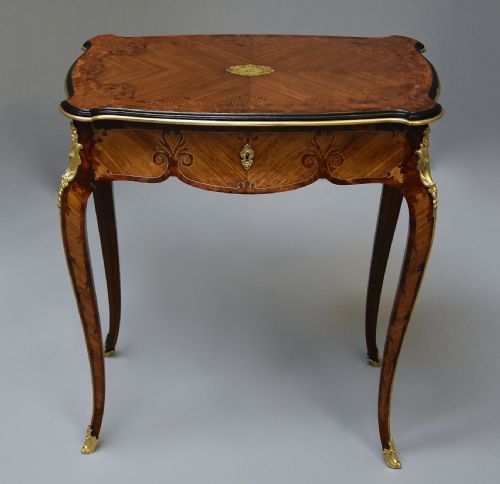
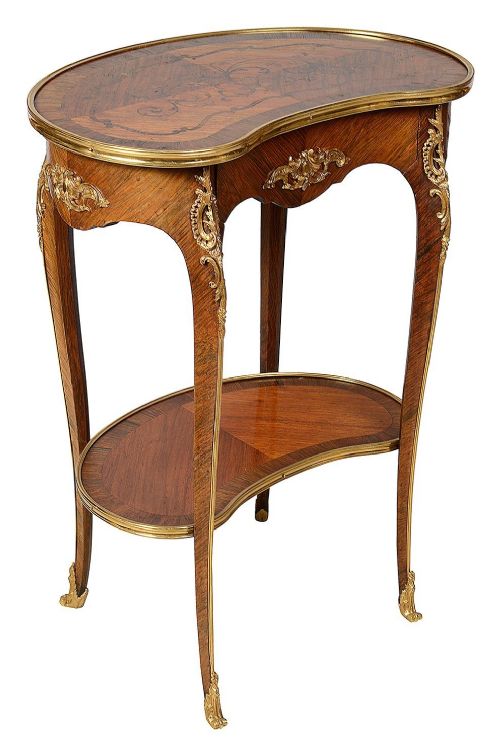
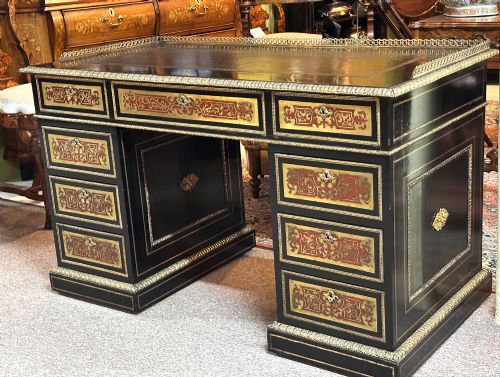
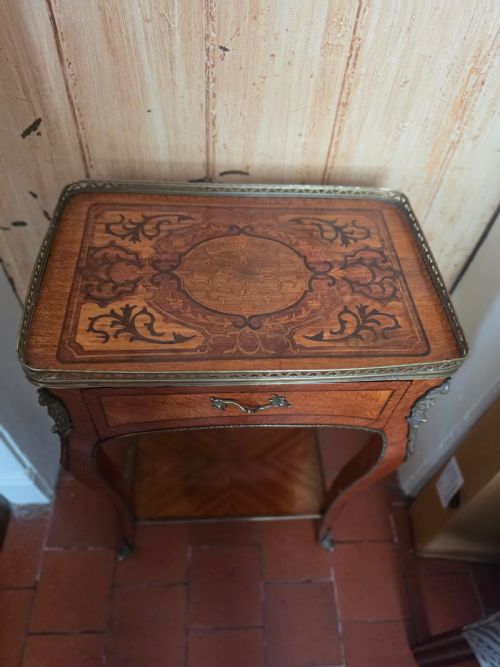
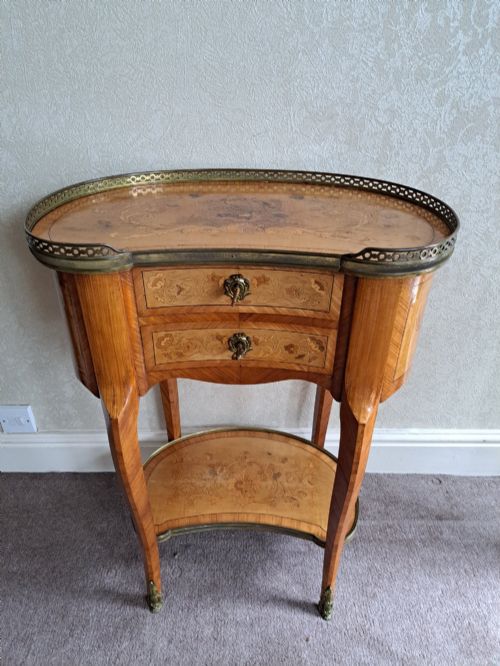
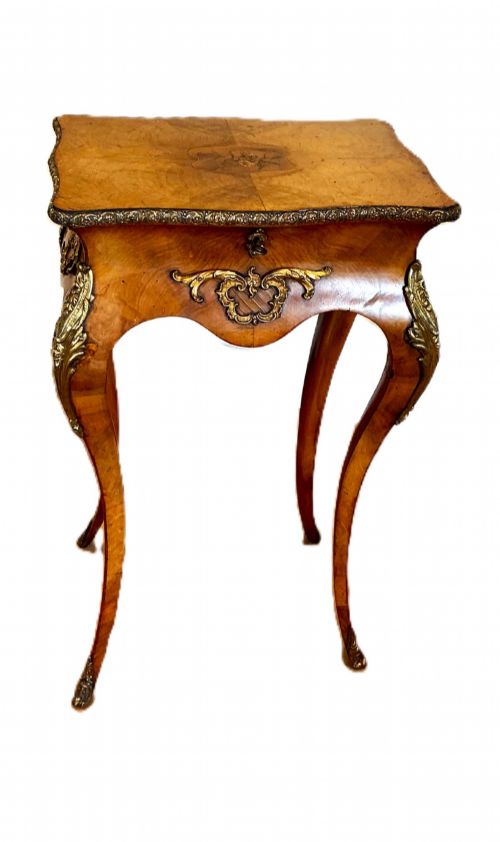
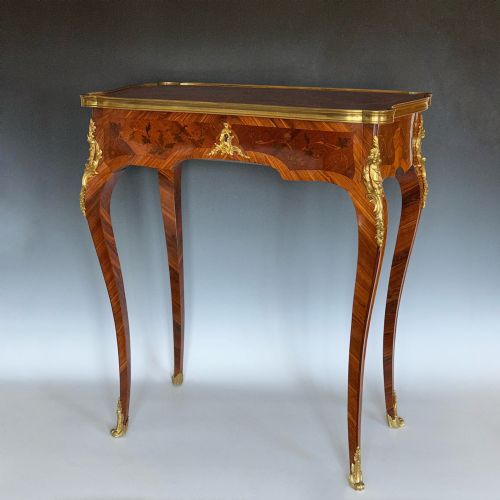
The physical forms on this page include multi-functional sewing tables, poudreuses that double as dressing surfaces, and compact lamp or occasional tables. Walnut, kingwood, and rosewood serve as the primary timbers, frequently enriched by contrasting veneer patterns and elaborate brass or ormolu mounts.
How they were made
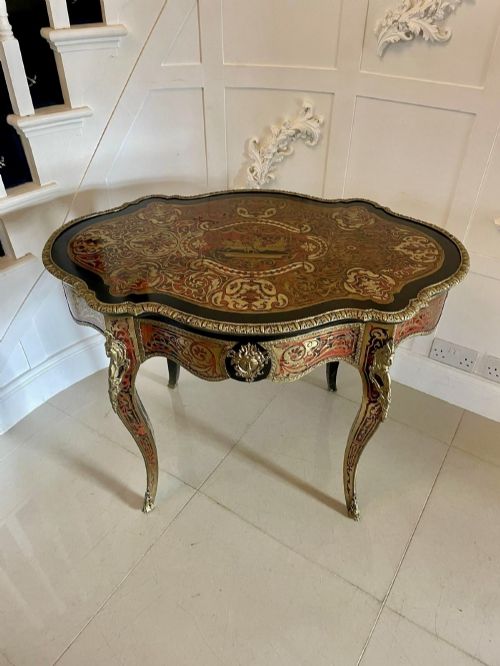
Cabinetmakers constructed these tables using dense hardwoods such as walnut and kingwood as a carcase, overlaid with finely sliced veneers arranged in pictorial or geometric marquetry. Artisans cut delicate patterns from various tinted woods, tortoiseshell, and brass, pressing them into the surface before applying hand-rubbed finishes.
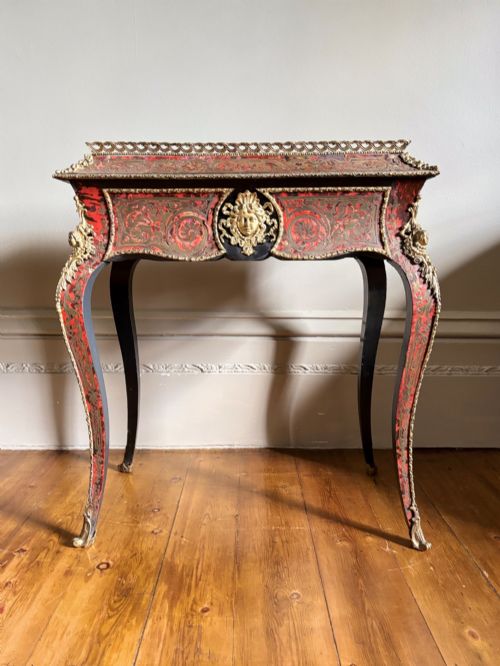
Gilded bronze mounts, known as ormolu, frame corners, aprons, and legs to accentuate the curvilinear profiles characteristic of Louis XV and Rococo revivals. Interior compartments often incorporate leather-lined writing slides, partitioned trays for threads, and silk-lined drop bags for textiles.
French Marquetry Work Table Retail Price Guide 2026
Typical asking prices for french marquetry work table among the pieces listed under this phrase on Sellingantiques today, from the lower quarter to the upper quarter. They describe what is for sale here now, not the wider market.
Secret drawers lurk beneath folding tops, originally designed to keep love letters safe from prying family members.
What varies in quality
The distinction between standard production and exhibition-grade pieces rests in the crispness of the brass cutting and the depth of the timber shading. Superior examples display seamless veneer matching across complex curves, whereas simpler pieces rely on stamped brass borders with minimal hand-chasing.
Internal mechanisms also differentiate the tier of manufacture, with better tables featuring synchronized lids, smooth drawer runners, and bespoke locking systems rather than basic glued partitions.
Maison Millet
The French Marquetry Work Table Glossary
- Marquetry
- Decorative veneer work forming pictorial or floral patterns by assembling small pieces of wood, tortoiseshell, or metal. This technique creates the pictorial surfaces seen across nineteenth-century furniture tops.
- Ormolu
- Gilded bronze mounts applied to furniture edges, feet, and corners for ornamentation. The term derives from the French for milled or ground gold.
- Poudreuse
- A multi-functional dressing table equipped with folding mirrors and compartments for cosmetics. These pieces frequently overlap in form with sewing and work tables.
- Boulle
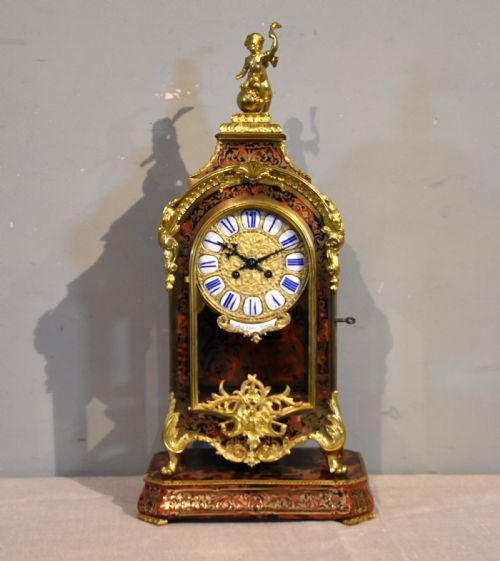
- Marquetry technique utilising tortoiseshell and brass inlay developed during the reign of Louis XIV. The method reverses the dark and light elements to striking decorative effect.
- Table en Chiffonière
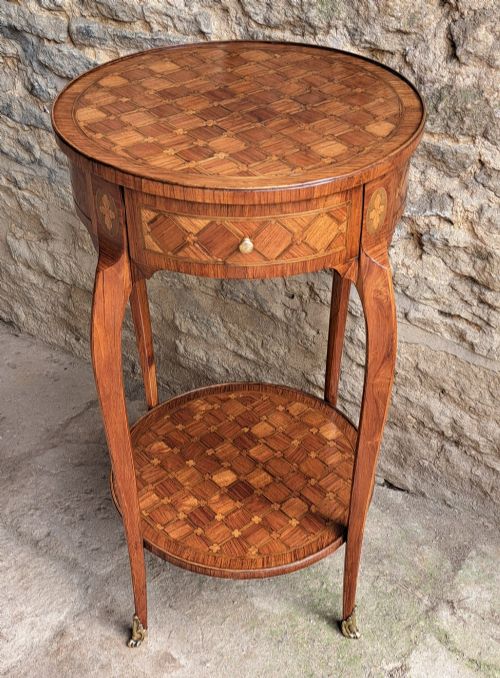
- A small French occasional table fitted with multiple drawers for sewing or small sundries. They stand on slender legs and often feature gallery tops.
French Marquetry Work Table: Frequently Asked Questions
What is a french marquetry work table used for?
These tables served nineteenth-century domestic life by providing a tidy surface for needlework, letter writing, and personal grooming. Ladies utilised the internal compartments and silk bags to store threads, bobbins, and correspondence out of sight.
Today, they function well as bedside cabinets, lamp tables, or decorative accents in sitting rooms. Their compact proportions allow them to fit easily beside armchairs while offering surface area and concealed storage.
What periods do these tables come from?
The pieces listed on this page originate predominantly from the nineteenth century, spanning the Victorian era and the French Napoleon III period. Stylistic revivals of the Louis XV and Louis XVI eras heavily influenced cabinetmakers during these decades.
Dates cluster around eighteen-sixty to eighteen-ninety, reflecting the height of revivalist furniture production in France and Britain. Occasional examples extend into the early twentieth century while maintaining traditional marquetry techniques.
How should I care for antique marquetry?
Maintain stable humidity levels in your room to prevent the delicate wood veneers and tortoiseshell inlays from shrinking or lifting. Keep the timber away from direct sunlight and heat sources to preserve the richness of the natural wood tones.
Apply a microcrystalline wax sparingly when the surface appears dry, and polish gently with a soft cloth. Avoid using liquid cleaners or silicone-based polishes that can degrade the antique finish.