

Victorian Style Footstool
A victorian style footstool brings low, practical comfort to a room, ranging from simple mahogany frames to elaborate carved walnut designs.
Victorian Style Footstool
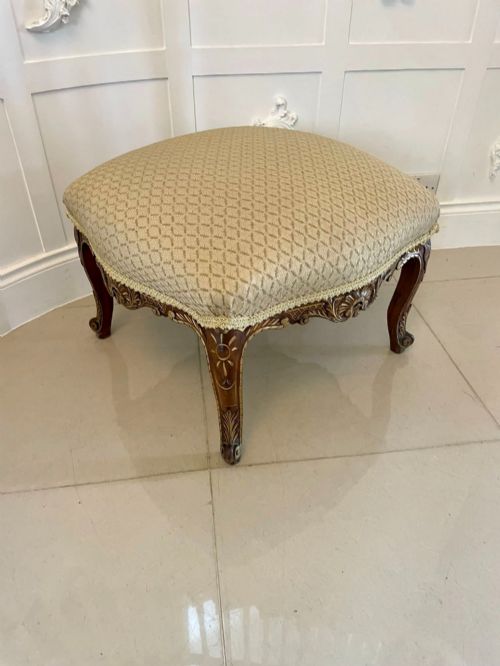
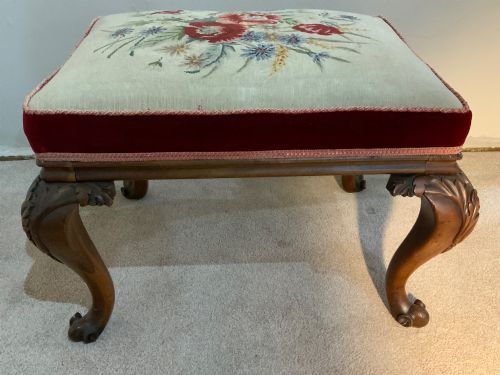
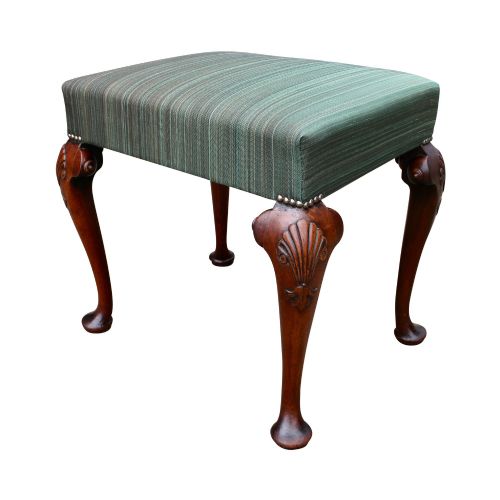
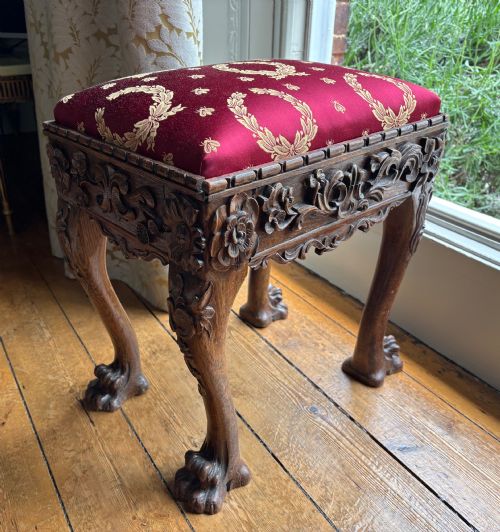
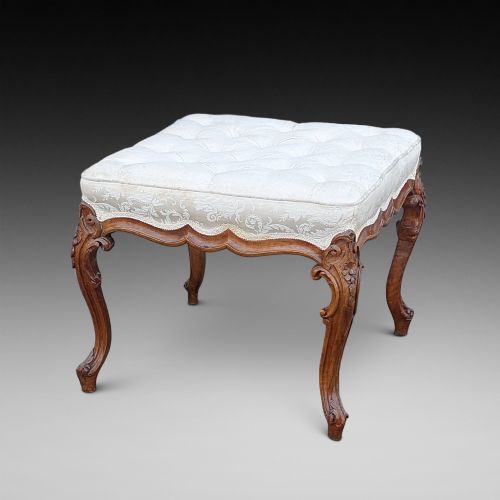
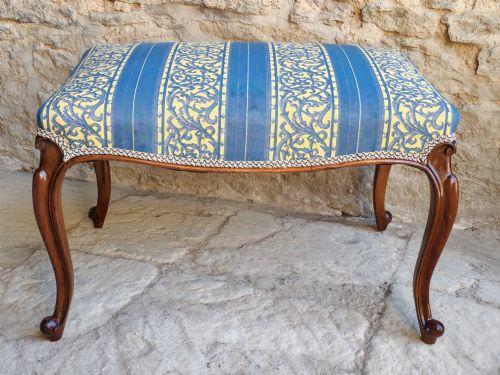
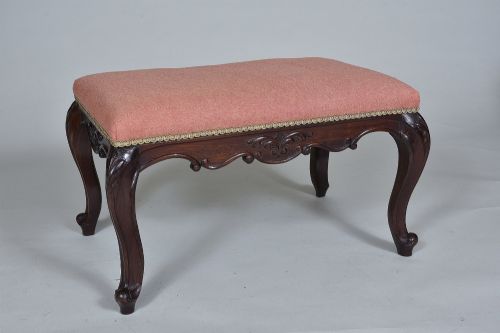
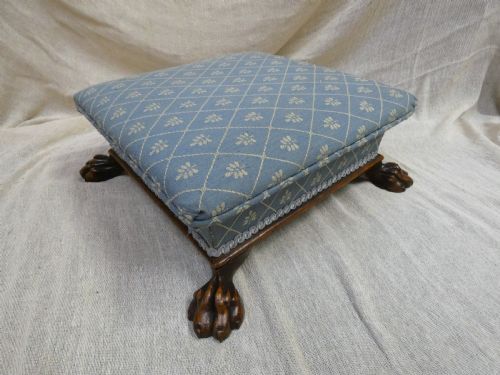
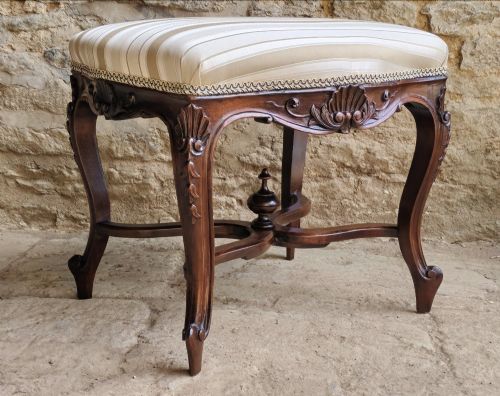
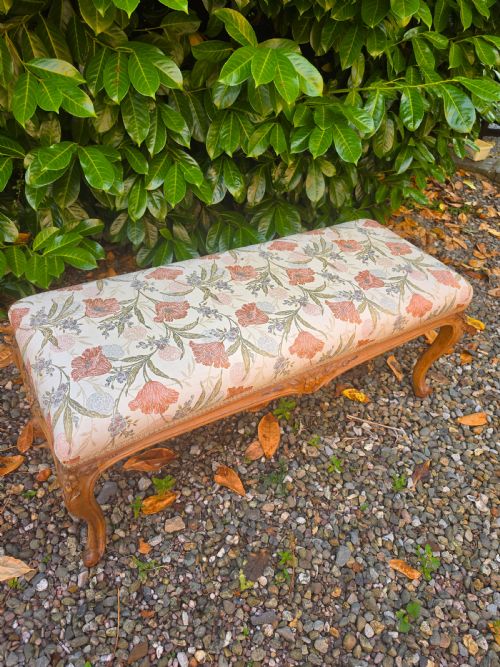
A victorian style footstool appears in several distinct forms across this selection, including low fireside pieces, dressing table seats, and larger ottomans or centre stools. Walnut and mahogany frame shapes span simple turned supports, cabriole legs with brass castors, and revivalist outlines such as Queen Anne or Rococo.
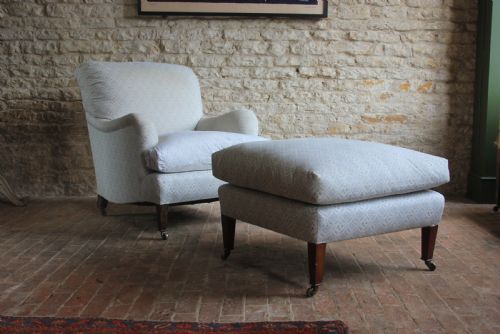
Most examples originate from the nineteenth century, including specific decades from the eighteen-fifties onward, alongside related Regency and Edwardian pieces. Buyers encounter various seating combinations, from freestanding items to stools paired with matching armchairs.
Materials and Construction
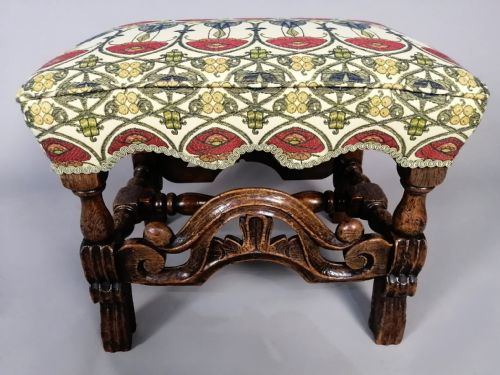
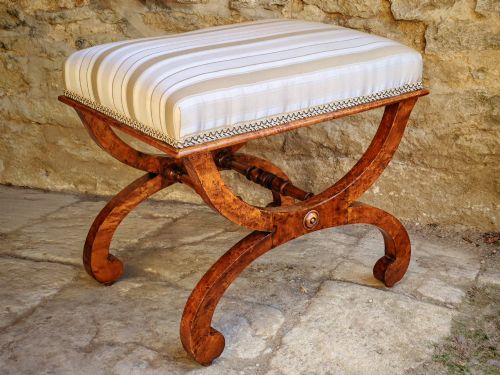
Frames rely predominantly on timbers like walnut and mahogany, supplemented by occasional uses of oak, burr maple, beechwood, and giltwood. Woodworkers shaped these materials through carving, turning, and joinery, frequently mounting low frames upon brass castors for mobility.
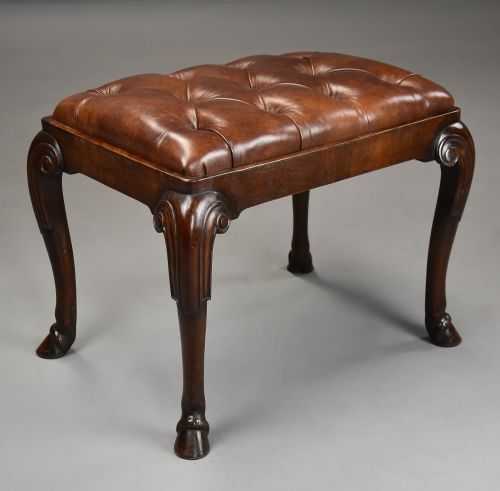
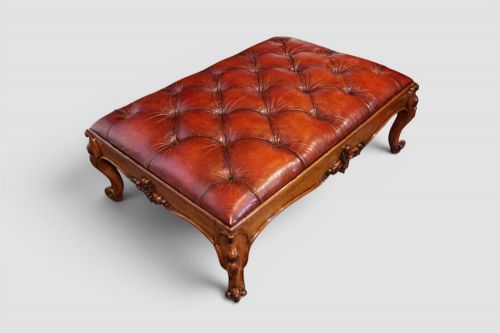
Upholstery techniques complete the pieces using a variety of textiles including fabric, velvet, leather, tapestry, and needlework. Deep buttoning appears across multiple leather and textile examples, while other variants utilise original or specialised designer fabrics.
Listings feature timbers such as walnut, mahogany, oak, burr maple, and beechwood.
Craftsmanship and Proportion
Quality separates through the crispness of timber carving, the selection of figured wood such as burr maple or walnut, and the integrity of the frame construction. Better examples maintain balanced proportions, particularly on low footstools and cabriole leg designs.
Upholstery execution and the retention of original materials or traditional hand-dyed leather further distinguish finer items from simpler utilitarian workshops.
Howard & Sons·Liberty & Co·Awn Pugin·William Morris
The Victorian Style Footstool Glossary
- Cabriole leg
- A furniture leg that curves outward at the knee and tapers inward to an ankle or foot, common on walnut and mahogany stools.
- Gout stool
- An adjustable footstool designed to elevate and support the foot or leg for health purposes.
- Ottoman
- A low, upholstered seat or footstool without a back or arms, often built on a larger scale for central room placement.
- Buttoning
- An upholstery method where depressions are pulled into the padding with buttons, creating a cushioned, patterned surface.
- Revival style
- A design approach that draws upon historical eras such as Queen Anne, Chippendale, or Rococo.
Victorian Style Footstool: Frequently Asked Questions
What is a gout stool?
A gout stool is an adjustable footstool designed to elevate the leg at a comfortable angle for resting.
Nineteenth-century examples often feature mechanical adjustments to alter the height or pitch according to the user's need.
How do I use a centre stool?
A centre stool serves as a flexible piece in a room, functioning as a low table, extra seating, or an ottoman.
Large buttoned leather versions work well positioned in the middle of a space or placed before a sofa.
How do I identify a Victorian footstool?
Victorian footstools are identified through timber choices like walnut and mahogany, distinct revival styles, and typical upholstery methods.
Low frames frequently sit on brass castors and employ deep buttoning or carved cabriole legs characteristic of the period.
Are these stools suitable for daily use?
These stools are built with sturdy timber frames designed to withstand regular domestic placement in living spaces.
Selecting a piece with robust upholstery or leather ensures it handles everyday seating or foot-resting demands.