




Brass Castor Footstool
A brass castor footstool brings practical low seating and rich period character to a room.
Brass Castor Footstool
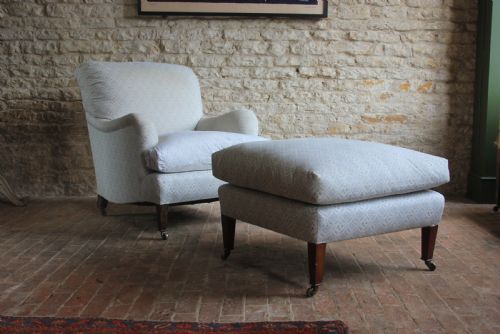
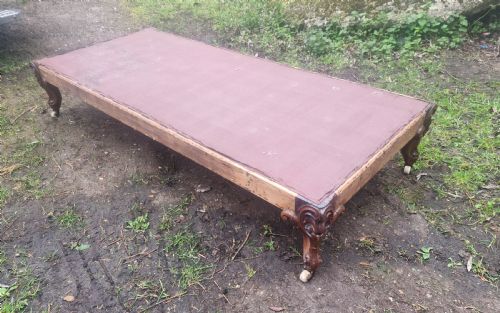
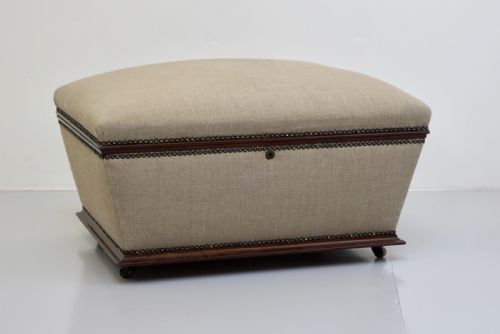
A brass castor footstool is a low seating piece designed for comfort and ease of movement around a room. When you search for a brass castor footstool, you find forms ranging from simple upholstered boxes to substantial ottomans and gout stools.
The pieces on this page span the Georgian, Regency, and Victorian eras, alongside Edwardian examples. You are most likely to encounter Victorian and 19th Century stools, often framed in timber and mounted on small metal wheels.
Makers such as Howard & Sons and James Shoolbred appear in the selection, alongside unbranded country house items. Styles stretch from restrained Regency designs to ornate Victorian Rococo Revival pieces.
Materials and construction methods
Makers built these frames using dense hardwoods like mahogany, walnut, and rosewood. These timbers provided the structural strength needed to support deep upholstery and frequent repositioning.
Brass castors were fitted to the feet to allow heavy upholstered stools and ottomans to glide smoothly across carpets and floors. Upholstery materials included chenille and various fabrics, often paired with buttoning.
Secondary framing held the internal padding securely while accommodating the metal fittings securely screwed into the base timber.
Brass Castor Footstool Retail Price Guide 2026
Typical asking prices for brass castor footstool among the pieces listed under this phrase on Sellingantiques today, from the lower quarter to the upper quarter. They describe what is for sale here now, not the wider market.
The listings feature timbers including mahogany, walnut, and rosewood alongside brass fittings and various upholstery fabrics across the 19th Century.
Assessing quality in period stools
Quality rests in the weight and selection of the timber frame beneath the upholstery. Denser hardwoods and robust internal joinery distinguish better examples from lighter utilitarian pieces.
The execution of the carving on woods like rosewood and mahogany reveals the skill of the workshop. Crisp, deliberate detailing separates finer pieces from simpler vernacular items.
The integration of the brass castors and the proportion of the frame dictate the overall harmony of the design.
Howard & Sons·James Shoolbred
The Brass Castor Footstool Glossary
- Castor
- A small wheel mounted on a swivel attached to the foot of a piece of furniture. It permits smooth movement across the floor.
- Gout stool
- A specialised low stool featuring an adjustable padded incline to support a foot or leg. These date frequently to the mid 19th Century.
- Ottoman
- A low, fully upholstered seat or box without arms or a back. It often includes internal storage accessed via a hinged lid.
- Chenille
- A fuzzy, tactile upholstery fabric woven with piled threads. It frequently appears on Regency and Victorian seating.
- Rococo Revival
- A 19th Century design style marked by exuberant, organic curves and naturalistic carving. It draws inspiration from 18th Century French decorative arts.
Brass Castor Footstool: Frequently Asked Questions
What is a brass castor footstool used for?
These pieces served primarily to support feet while sitting in armchairs or by the fire. Their low height made them practical additions to drawing rooms and libraries.
Many examples, particularly box ottomans, also provided discreet storage for blankets or sewing supplies within domestic spaces.
How do I identify a Regency footstool?
Regency pieces often display classical restraint, clean lines, and dark timbers such as mahogany. They may feature precise turning or subtle classical mounts.
Comparison with heavier Victorian Rococo Revival or carved rosewood pieces helps clarify the stylistic shifts across the 19th Century.
Are these stools suitable for everyday modern use?
Their sturdy hardwood frames and functional brass castors mean they adapt easily to contemporary living rooms. Many function well as informal coffee tables or extra seats.
Some pieces require reupholstering to match modern interiors, which also allows you to refresh worn padding.
How do I tell Victorian stools apart from earlier pieces?
Victorian examples frequently showcase deeper buttoning, heavier proportions, and timbers like walnut or rosewood. Earlier Georgian and Regency items tend to be leaner and more classically restrained.
Makers active in the later 19th Century introduced larger dimensions and more pronounced decorative carving.