




Traditional Upholstered Footrest
A traditional upholstered footrest offers timeless comfort, uniting period timber frames with tactile textile coverings.
Traditional Upholstered Footrest
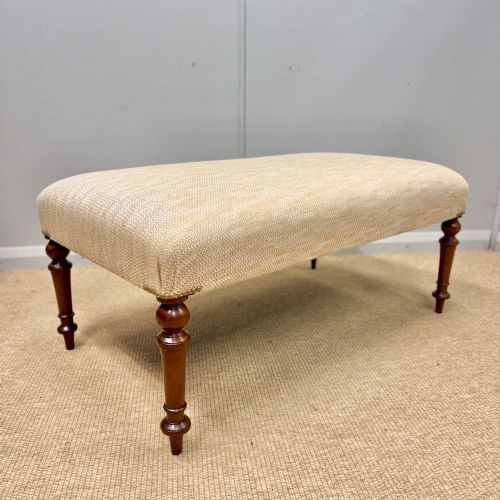
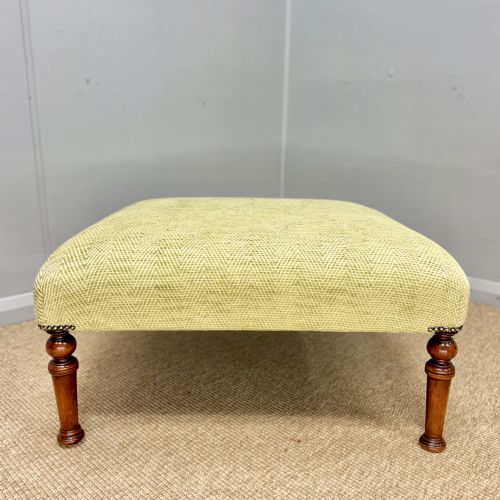
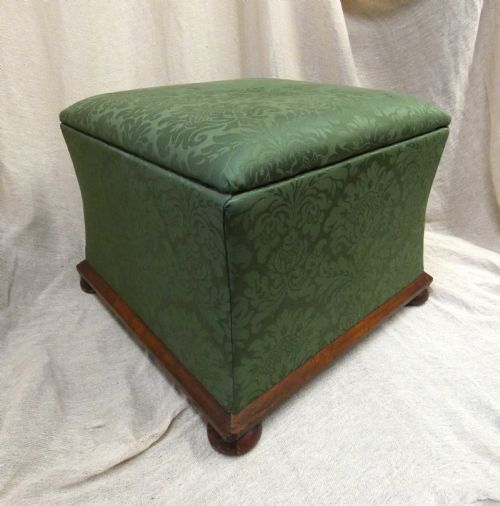
A traditional upholstered footrest takes the form of a low stool designed to support the feet while seated by the hearth or in a parlour. These pieces emerge in various timber frameworks and proportions, functioning as standard footstools, long benches, or compact ottomans.
The versions most commonly met on this page date from the nineteenth century into the early twentieth century, reflecting Victorian and Edwardian domestic habits. Makers often built them to accompany larger armchairs and sofas, matching the formal seating of the period.
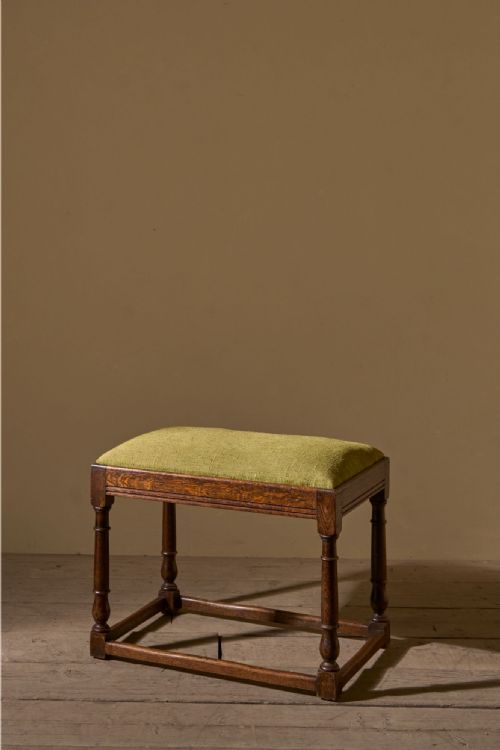
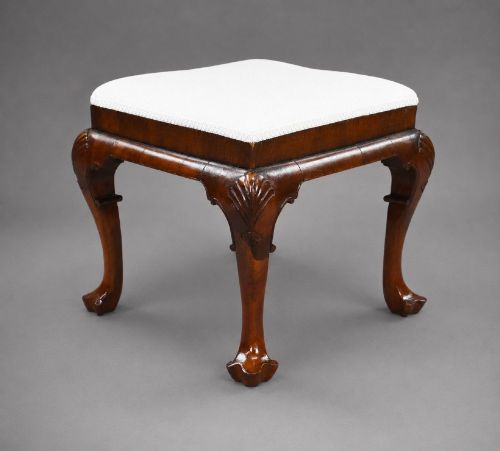
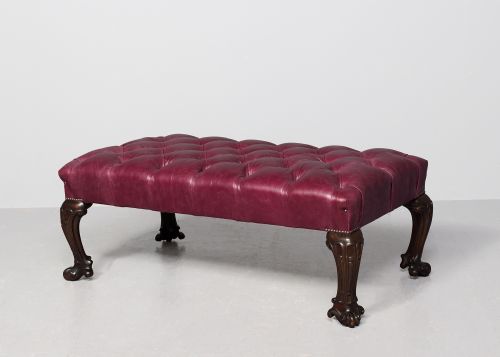
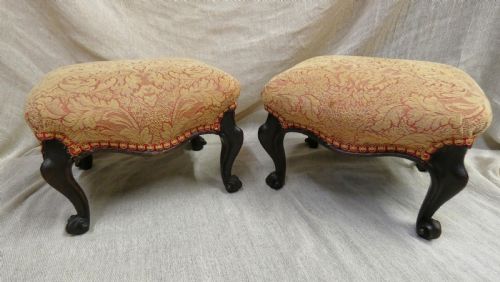
Makers utilised specific regional revival designs, producing Queen Anne, Chippendale, and George II style frames alongside simpler English country models. Walnut and mahogany form the core of the refined frames, while oak appears in earlier joint stool configurations.
Construction and materials
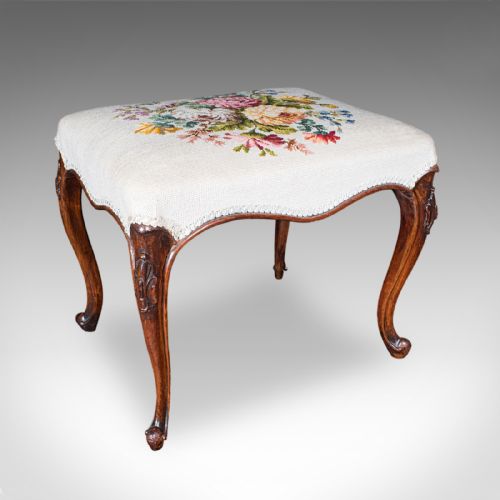
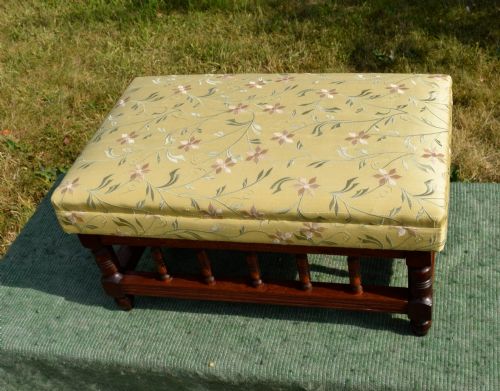
Frames rely on sturdy hardwoods such as mahogany, walnut, and oak, joined through traditional cabinet-making methods and occasionally enriched with hand-carved details. Woodworkers shaped cabriole legs or straight supports depending on the prevailing style.
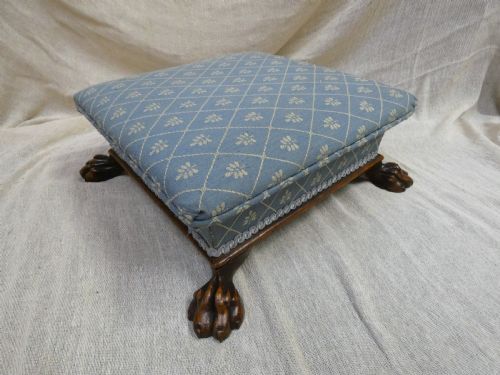
Upholstery techniques involve securing textiles over padding directly to the wooden base, utilising materials like wool, leather, hide, heavy linen, and tapestry. Needlepoint and kilim coverings frequently appear, alongside deep buttoning finished with brass castors on larger Victorian examples.
Traditional Upholstered Footrest Retail Price Guide 2026
Typical asking prices for traditional upholstered footrest among the pieces listed under this phrase on Sellingantiques today, from the lower quarter to the upper quarter. They describe what is for sale here now, not the wider market.
Design styles span from Queen Anne and Chippendale revivals to traditional Victorian forms.
Evaluating craftsmanship and condition
Quality rests heavily on the integrity of the underlying timber frame and the precision of any carved ornamentation. Heavier, solid mahogany or walnut structures with tight joinery demonstrate superior workshop origins compared to simpler utility pieces.
The choice of covering also distinguishes the tier of the piece, ranging from basic woven fabrics to dense needlepoint, kilim, or buttoned red hide. Retaining original castors and undisturbed period upholstery elevates the character of the footstool significantly.
Howard and Sons
The Traditional Upholstered Footrest Glossary
- Cabriole leg
- A furniture leg that curves outward at the knee and tapers inward toward the foot, mimicking an animal's limb. This form appears frequently on walnut and mahogany frames from the eighteenth century onward.
- Buttoning
- An upholstery technique where twine pulls the fabric deep into the padding and anchors it with fabric-covered buttons. This method creates a firm, geometric pattern on top of the stool.
- Joint stool
- A sturdy wooden stool constructed with mortise and tenon joints rather than turned legs glued into a seat. These oak pieces represent earlier domestic seating traditions.
- Kilim
- A flatwoven textile originating from the Near East and Central Asia, utilised as a durable and decorative upholstery covering. Collectors prize these ethnic weaves for their rich patterns and texture.
- Needlepoint
- Hand-stitched canvas embroidery using wool yarn to create dense, pictorial surfaces. Victorian makers frequently applied these intricate panels to fireside footstools.
Traditional Upholstered Footrest: Frequently Asked Questions
What periods do these footstools date from?
The listings span from the eighteenth century through the Victorian era and into the early twentieth century. Most examples cluster around the nineteenth century and the Edwardian period.
Craftsmen during these eras produced revival pieces echoing earlier George II and Queen Anne designs alongside contemporary Victorian forms. This creates a diverse range of historical aesthetics available for modern interiors.
How were these stools used originally?
Victorian households positioned these low stools beside firesides, dressing tables, and deep armchairs to elevate the feet and legs. Larger formats served as ottomans for general seating or resting tired limbs in drawing rooms.
Their compact size allowed servants to move them easily around the house depending on where warmth or comfort was required. Today, they serve identical functional roles while adding historic character to a room.
Are the upholstery fabrics original?
Some pieces retain period needlepoint, kilim, or leather coverings, while others feature newly applied upholstery reflecting traditional styles. Dealers frequently restore worn surfaces using appropriate historic textiles like heavy linen or wool.
Checking the listing details helps determine whether the fabric dates to the nineteenth century or represents a later renewal. Both options offer distinct advantages depending on whether you prioritise untouched age or clean usability.
How do I identify a revival style?
Revival pieces borrow decorative motifs and structural silhouettes from specific historical eras, such as Chippendale or Queen Anne. Cabinetmakers produced these in later centuries, incorporating classic elements like cabriole legs or carved mahogany details.
Examining the wood maturity, construction methods, and secondary timbers helps separate a later revival stool from an authentic early piece. The listings clearly distinguish these stylistic categories.