




Country House Ottoman
These country house ottomans and footstools bring low seating and padded comfort to a room, built from solid woods and upholstered for long service.
Country House Ottoman
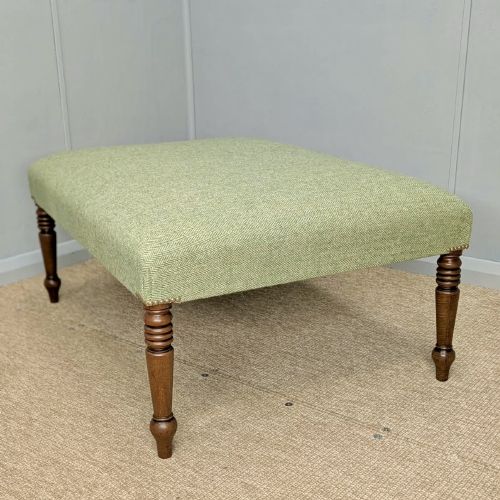
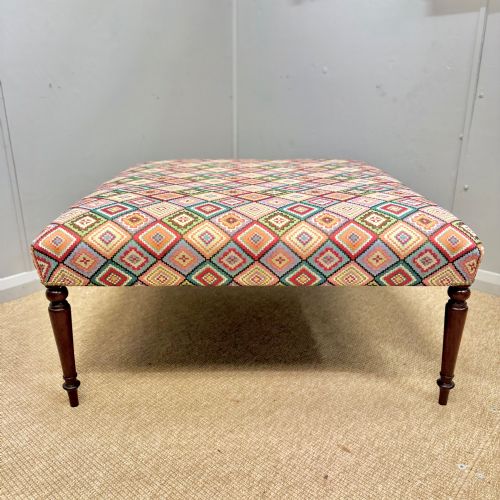
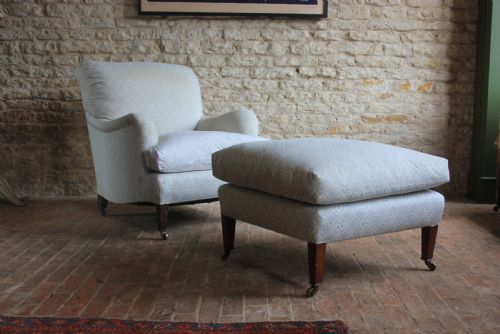
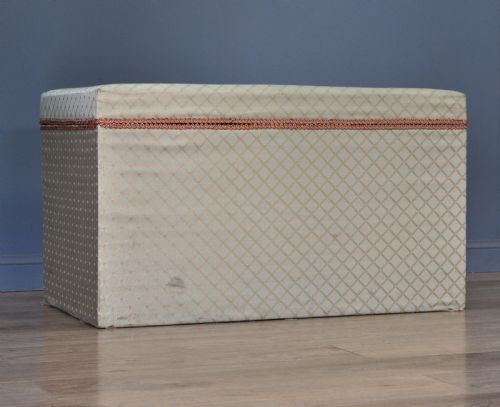
A country house ottoman combines functional storage with upholstered seating, appearing in large proportions suited to substantial rooms. These pieces serve multiple roles as footstools, blanket boxes, and centre stools depending on their internal capacity and top design.
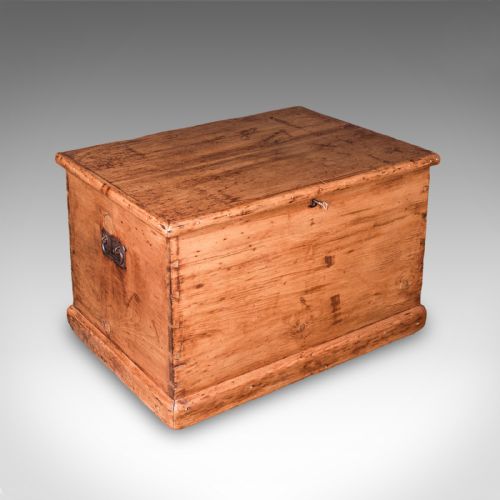
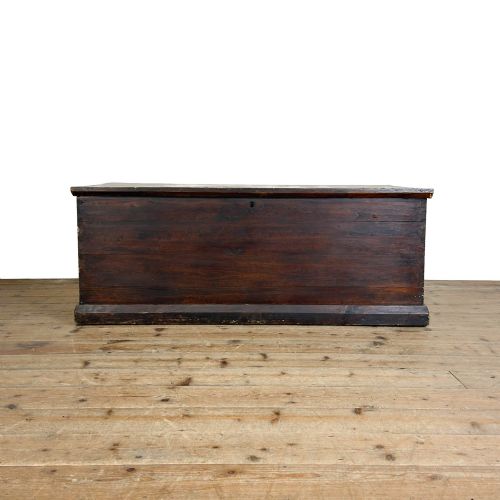
The versions most commonly met on this page date from the nineteenth century through the Edwardian period, often reflecting Victorian or Gothic Revival tastes. They range from simple pine kist storage chests to elaborately buttoned leather centre stools and matched armchair sets.
Makers and workshops of the era produced these forms in mahogany, walnut, and oak, frequently fitted with textiles or fine leather. Buyers encounter both lidded box ottomans designed for linen and large open stools meant for resting feet or sitting by a window.
Materials and construction
Makers utilised sturdy timbers such as mahogany, walnut, oak, and pine to build the underlying frames and storage boxes. These woods provided the structural rigidity needed for heavy domestic use and frequent movement.
Upholstery and surface treatments involved durable fabrics, tapestries, velvet, and buttoned leather stretched over supportive padding. Turned legs and castors frequently appeared on nineteenth century examples to ease mobility across heavy carpets.
Country House Ottoman Retail Price Guide 2026
Typical asking prices for country house ottoman among the pieces listed under this phrase on Sellingantiques today, from the lower quarter to the upper quarter. They describe what is for sale here now, not the wider market.
Listings feature eighteenth and nineteenth century periods alongside Edwardian pieces, constructed in mahogany, walnut, oak, pine, brass, leather, and fabric.
Gradations in quality
Quality in a country house ottoman rests upon the selection of timber and the integrity of the joinery within the frame or box. Dense hardwoods like walnut and mahogany signal a higher grade of manufacture than utilitarian pine storage chests.
The standard of upholstery and the choice of covering material, from standard fabric to specialist textiles and buttoned leather, define the upper tiers of production. Original castors, well-turned wooden legs, and documented workshop attribution further separate exceptional examples from standard domestic pieces.
Howard & Sons·Hallett & Sons
The Country House Ottoman Glossary
- Ottoman
- A low, upholstered seat or footstool lacking a back or arms, often featuring a hinged lid for internal storage. This form served both practical and decorative functions in large reception rooms.
- Centre stool
- A large, freestanding stool designed to sit in the middle of a room rather than against a wall. These pieces frequently feature substantial wooden frames and buttoned leather tops.
- Kist
- A traditional wooden storage chest or trunk used for blankets, toys, and household goods. Victorian examples in pine often doubled as robust domestic utility boxes.
- Gothic Revival
- An architectural and decorative style drawing inspiration from medieval forms. Pieces from this movement often display characteristic pointed arches, heavy oak construction, and formal tracery.
- Castor
- A small wheel mounted on a swivel attached to the legs of heavy furniture. They allowed large ottomans and stools to be repositioned easily across heavy carpets.
Country House Ottoman: Frequently Asked Questions
What is a country house ottoman?
A country house ottoman is a large, sturdy upholstered seat or storage box built during the nineteenth or early twentieth century. These pieces were designed for heavy daily use in substantial English residences.
They function as footstools, window seats, blanket boxes, and centre stools. Their generous proportions and durable materials suit traditional and contemporary living spaces alike.
How were old ottomans used?
Historically, these items served multiple domestic purposes ranging from storing household linens to providing extra seating around a fireplace. Lidded box ottomans kept blankets and toys out of sight while offering a padded surface on top.
Open stools acted as footrests for armchairs or served as window seats. Their sturdy wooden frames and castors made them easy to move where needed within large reception rooms.
How do I style an ottoman at home?
An ottoman works well as a central coffee table alternative when topped with a sturdy tray, or placed at the end of a bed for storage and seating. Their varied upholstery allows them to anchor a room's colour scheme.
Pairing a large buttoned leather or fabric stool with traditional armchairs creates a cohesive seating area. They also fit naturally beneath large windows as dedicated window seats.
How can I tell the period apart?
Dating relies on observing timber choices, upholstery styles, and hardware details such as castors and hinges. Nineteenth-century examples often feature dense woods like mahogany and walnut alongside hand-turned legs.
Later Victorian and Edwardian pieces frequently incorporate buttoned leather, printed fabrics, or painted finishes. Storage trunks in pine span the Victorian era with utilitarian dovetail construction and iron handles.