

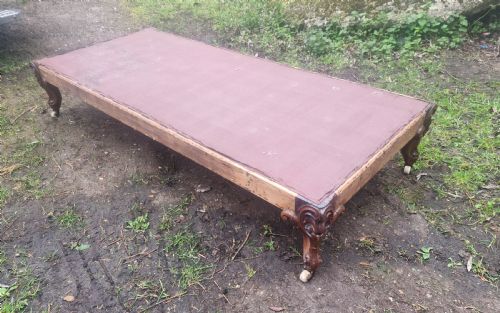


Large Rectangular Ottoman
A large rectangular ottoman brings generous proportions and comfort to a room, offering a sturdy surface to rest feet or sit.
Large Rectangular Ottoman
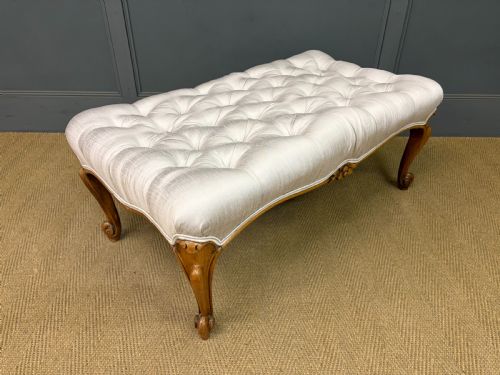
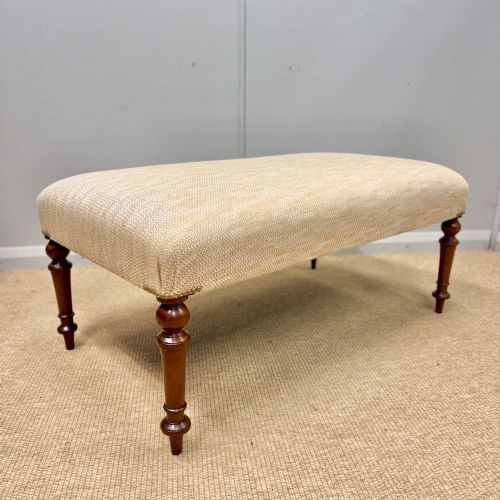
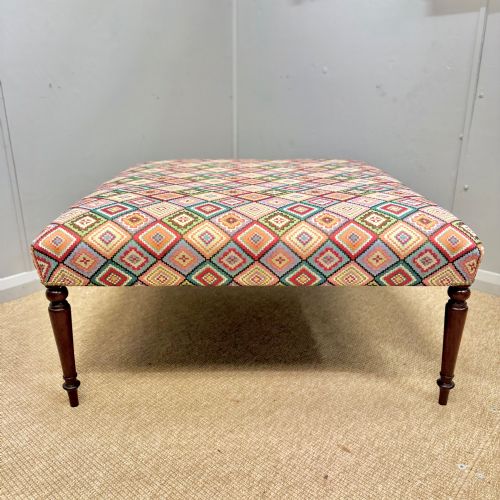
A large rectangular ottoman serves as a central footstool or seating piece within traditional interiors, often appearing in forms such as dressing table stools and centre stools. Buyers searching for a large rectangular ottoman will encounter substantial pieces from the nineteenth century alongside later revivals, frequently upholstered in woven fabric, leather, or plain textiles.
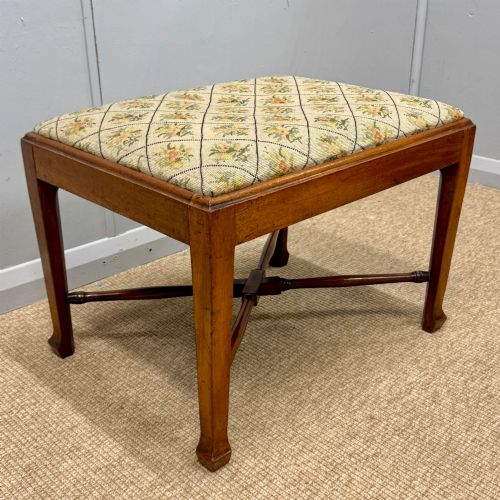
The nineteenth century examples dominate the selection, showcasing Victorian craftsmanship with carved rosewood, mahogany, or oak frames. Many pieces incorporate practical elements like brass castors or cross stretchers to support their generous dimensions.
Lower profiles and buttoned leather finishes appear among the Victorian items, while early twentieth century examples bring oak or timber constructions into the mix. English country house aesthetics heavily influence these designs, creating versatile furnishings suited to spacious living areas.
Materials and construction methods
Makers utilised dense timbers such as rosewood, mahogany, and oak to build the robust frames required for large footstools and ottomans. Carved details and cross stretchers provided structural stability while adding decorative character to the wooden bases.
Upholstery techniques involved traditional fabric coverings, buttoned leather, and woven textiles secured over padded foundations. Brass castors were frequently fitted to the feet, allowing movement for these heavy pieces across flooring.
Victorian and English country house styles dominate the available forms, ranging from dressing table stools to low footstools.
Distinguishing quality across examples
The refinement of the timber frame and the depth of carved detail separate standard pieces from finer examples. Rosewood and mahogany structures with intricate carving demonstrate a higher level of craftsmanship than plain oak or basic timber frames.
Original hardware, such as well-cast brass castors and sturdy cross stretchers, indicates superior construction. The integrity of the underlying frame and the quality of the chosen upholstery materials define the overall standard of each piece.
The Large Rectangular Ottoman Glossary
- Centre stool
- A freestanding stool designed to be viewed from all sides, often placed in the middle of a room rather than against a wall. These items typically feature finished woodwork all around.
- Cross stretcher
- Wooden rails connecting the legs near the base in an X-shape to increase stability. This structural element also provides decorative visual weight to larger frames.
- Brass castor
- A small swivelling wheel made of brass attached to the foot of a piece of furniture. It facilitates the repositioning of heavy items like large ottomans.
- Rosewood
- A heavy, durable timber with a rich grain frequently utilised in quality nineteenth century furniture. Its dark appearance suits formal Victorian interior styles.
Large Rectangular Ottoman: Frequently Asked Questions
Where should I place a large rectangular ottoman?
These substantial pieces work effectively in the middle of a spacious room as a centre stool or positioned in front of a large sofa. Their generous proportions provide a practical surface for seating or resting feet.
In traditional settings, they complement country house aesthetics and anchor large open spaces by balancing the surrounding furniture arrangement.
How do I identify Victorian pieces?
Victorian examples often feature dense timbers such as rosewood and mahogany, accompanied by distinct decorative elements like carved woodwork and buttoned leather upholstery. The inclusion of brass castors is also typical of this era.
Dates attributed to these items generally span the nineteenth century, reflecting the prevailing styles of English craftsmanship from that period.
What is an Anglo Indian stool?
An Anglo Indian stool reflects the fusion of British furniture forms with traditional Indian carving techniques and native timbers. These pieces exhibit distinct regional craftsmanship while maintaining the scale required for European interiors.
They offer an eclectic alternative to standard Victorian designs while fulfilling the same practical function.
Can I reupholster these ottomans?
Many pieces are suited for reupholstering, allowing owners to select fabrics that match modern interior schemes. Some items explicitly require new fabric to restore their appearance.
Retaining the original timber frame ensures the structural integrity remains intact while updating the top layer of textile.