


Buttoned Ottoman Bench
These buttoned ottoman bench pieces bring leather, mahogany, and walnut into domestic rooms with practical elegance.
Buttoned Ottoman Bench
A buttoned ottoman bench combines upholstered seating with deep tufting, appearing across periods from the Regency era through to the early twentieth century. Buyers seeking this form encounter low stools, long benches, and window seats built for drawing rooms and libraries.
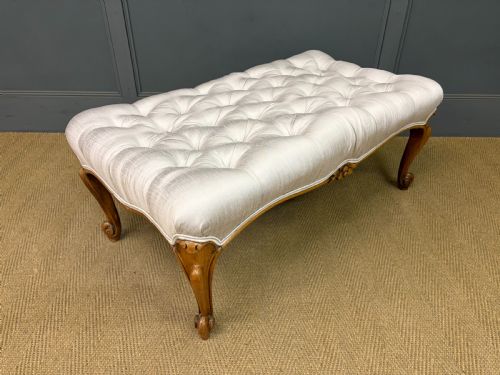
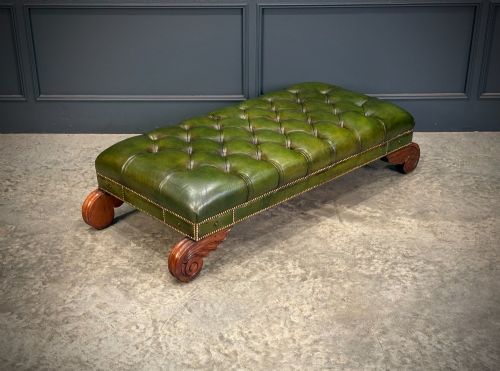
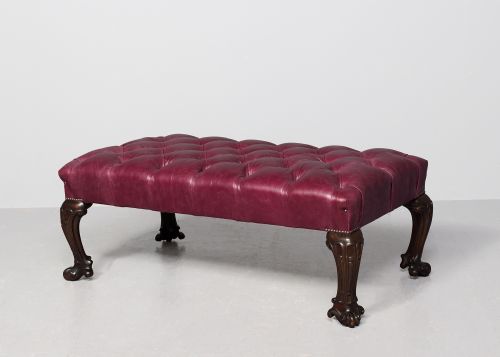
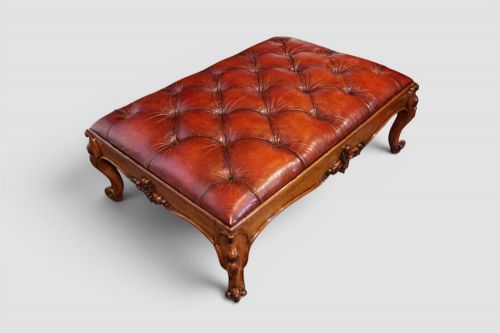
The Victorian period supplies many of the examples seen on this page, often framed in walnut or mahogany with red or green leather upholstery. These larger items frequently double as coffee tables in contemporary interiors while retaining their nineteenth-century proportions.
Materials and construction
Makers utilised timber frames of mahogany, walnut, and painted wood to support substantial upholstered surfaces. Mahogany and walnut provide structural strength for large stools and long benches.
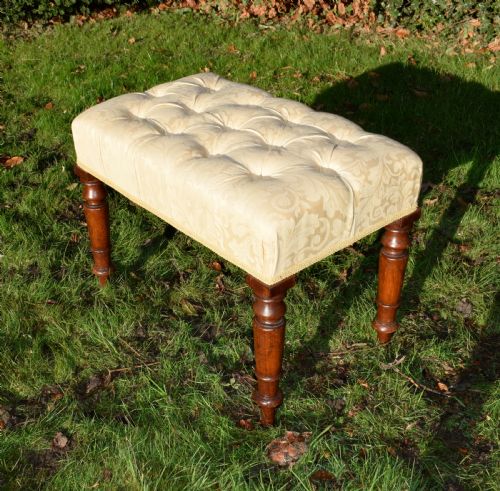
Upholstery relies on hand-dyed leather, red hide, fabric, and textiles secured with brass studs. Deep buttoning technique creates the characteristic indented pattern across the leather or fabric top.
Listings feature timber frames in mahogany, walnut, and painted wood alongside leather and fabric upholstery across multiple nineteenth-century periods.
Assessing quality and finish
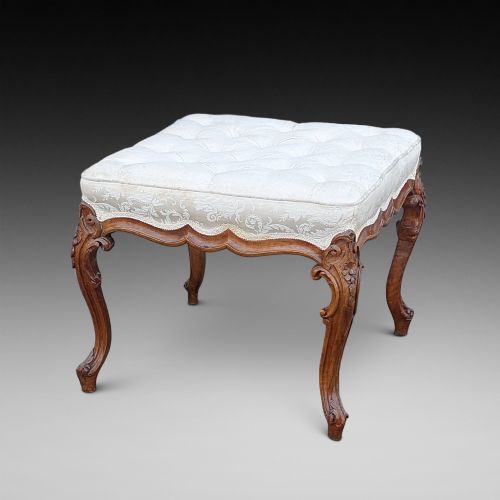
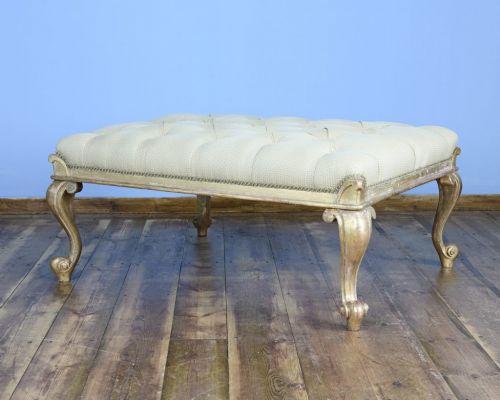
The refinement of the timber frame sets the baseline, from simple turned legs to cabriole supports, fluted details, or parcel gilt accents. Proportions range from standard footstools to grand scale country house ottomans.
Leather quality and the execution of the buttoning dictate visual depth. Hand-dyed finishes and brass-studded borders contribute to the formal presence of Regency and Victorian pieces.
James Shoolbred
The Buttoned Ottoman Bench Glossary
- Buttoned
- Upholstery secured with deep indentations held by buttons. This method draws the fabric or leather tight over the padding.
- Cabriole
- A furniture leg that curves outward and then tapers inward. This shape appears on Victorian walnut frames.
- Parcel gilt
- Partially gilded with gold leaf or paint. This treatment highlights carved wooden details on formal seating.
- Hide
- Animal skin used for heavy upholstery. Red hide provides a durable surface for footstools and long benches.
- Window seat
- A long narrow bench designed to fit within a window recess. These pieces feature upholstered tops and wooden frames.
Buttoned Ottoman Bench: Frequently Asked Questions
How do I use a buttoned ottoman bench today?
These pieces function well as coffee tables, end-of-bed seating, or low footstools in a living room. Their sturdy wooden frames and leather tops handle daily domestic use.
Larger country house versions provide substantial surface area while maintaining traditional nineteenth-century character in modern spaces.
What is the difference between a footstool and an ottoman?
Footstools generally offer compact dimensions intended primarily for resting feet. Ottomans tend to be larger bench forms suited for sitting or surface placement.
Many period examples bridge both categories through long proportions and buttoned leather upholstery.
How do I date a leather buttoned stool?
Dating relies on timber choice, leg style, and framing characteristics across periods like Regency, William IV, and Victorian. Mahogany and walnut usage shift alongside decorative details such as fluting or cabriole legs.
Buttoning depth and brass stud placement also reflect the manufacturing standards of nineteenth-century workshops.
Are these benches suitable for heavy daily use?
Period frames built from solid mahogany and walnut offer robust structural integrity. Quality leather upholstery endures regular sitting and placement of objects.
Routine care keeps the timber and hand-dyed surfaces stable over years of domestic life.