



Wooden Frame Footstool
These wooden frame footstool examples offer solid period craftsmanship and tactile upholstery, bringing genuine character to a traditional sitting room.
Wooden Frame Footstool
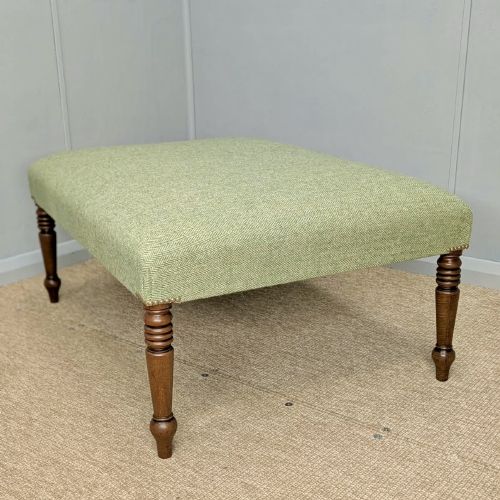
A wooden frame footstool combines a structural timber base with textile upholstery, serving as a low seat or rest for the feet. These pieces range from compact Victorian walnut frames to longer forms designed for domestic comfort.
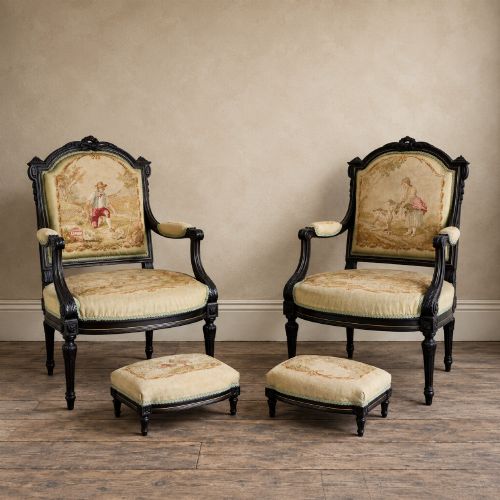
The versions most commonly met on this page date from the nineteenth century and early twentieth century. Examples span walnut, mahogany, and ebonised beech timbers, often pairing turned or carved frames with traditional fabric coverings.
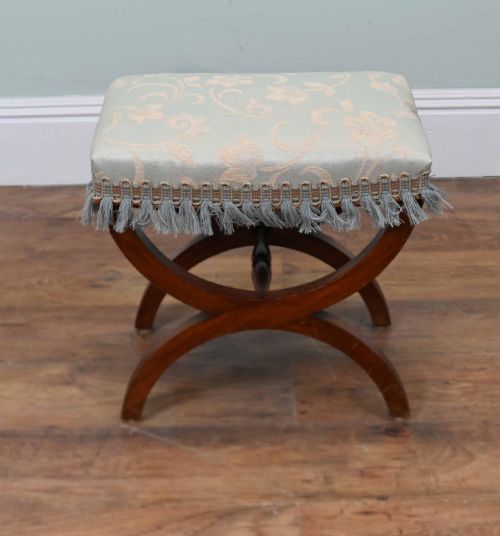
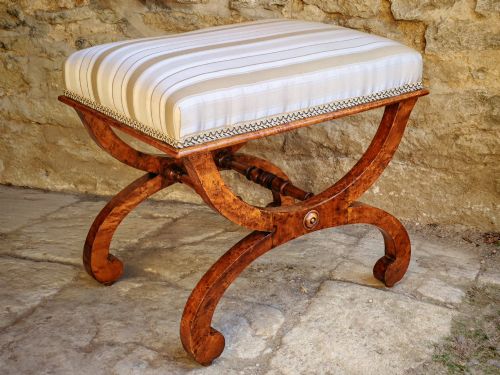
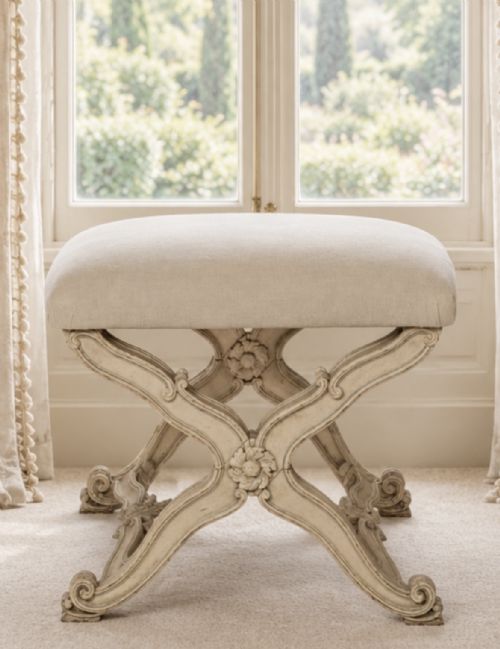
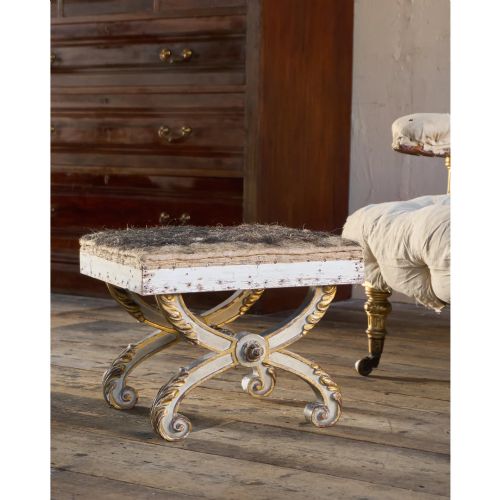
Makers and designers of the period adapted classic historical motifs, producing x-frame stools, curule shapes, and Queen Anne styles. Buyers find various configurations including long footstools, window seats, and adjustable forms.
How they were made
Frames rely on dense hardwoods such as mahogany, walnut, rosewood, and oak, shaped through traditional joinery and occasional carving. Selected pieces incorporate burr maple veneers or ebonised and gilt finishes to achieve distinct visual depth.
Upholstery techniques utilise traditional stuff-over methods, securing textiles over padding supported by webbing or cane. Surface finishes on the timber frame remain dependent on the period, ranging from polished mahogany to painted beech.
Wooden Frame Footstool Retail Price Guide 2026
Typical asking prices for wooden frame footstool among the pieces listed under this phrase on Sellingantiques today, from the lower quarter to the upper quarter. They describe what is for sale here now, not the wider market.
Listings feature nineteenth-century and early twentieth-century examples utilising mahogany, walnut, rosewood, and oak frames.
What varies in quality
The distinction between standard and superior pieces rests on the crispness of timber carving and the selection of cabinet wood. Dense grain in walnut or mahogany frames indicates better material selection by the maker.
Upholstery choice and structural rigidity also separate examples, where robust joinery prevents movement in the frame over decades of use.
Miles & Edwards
The Wooden Frame Footstool Glossary
- X-Frame
- A structural form utilising crossed timbers beneath the seat to distribute weight and create a curule silhouette. This geometric arrangement appears frequently in Regency and Victorian designs.
- Ebonised
- Timber treated with a dark stain or finish to imitate ebony. This technique gained popularity during the nineteenth century, particularly within aesthetic movement pieces.
- Kilim
- A flat-woven textile originating from the Middle East or Eastern Europe, often repurposed as durable upholstery for period footstools. These wool coverings introduce geometric patterns to wooden frames.
- Harris Tweed
- A cloth handwoven by islanders in the Outer Hebrides from pure virgin wool. It provides a tactile, hard-wearing surface for newly upholstered period frames.
- Curule
- An ancient chair shape featuring two curved legs forming an X-shape, adapted by nineteenth-century cabinet makers for luxury stools.
Wooden Frame Footstool: Frequently Asked Questions
Are wooden frame footstools sturdy enough for daily use?
Most nineteenth-century timber frames utilise robust hardwoods like mahogany or walnut joined by traditional methods, making them structurally sound for resting feet or sitting.
Buyers should inspect the joints for movement, as centuries of domestic use can occasionally loosen the original glue blocks within the frame.
How do I identify a Victorian footstool?
Victorian examples typically display heavier timber construction, often in walnut or rosewood, combined with turned legs or carved ornamental details.
Stylistic markers range from aesthetic movement ebonising to upholstered window seats featuring carved animal motifs.
What is an X-frame stool?
An X-frame stool uses intersecting timber supports beneath the seat to form a stable base, echoing ancient Roman curule designs.
Cabinet makers in the Regency and Victorian periods revived this geometric configuration to add architectural presence to small seating forms.
Can I mix different wood tones in a room?
Period interiors naturally accommodate mixed timbers because walnut, mahogany, and oak share warm organic undertones that complement one another.
Matching the historical era of the pieces matters less than ensuring the scale and finish of the footstool suit surrounding furniture.