
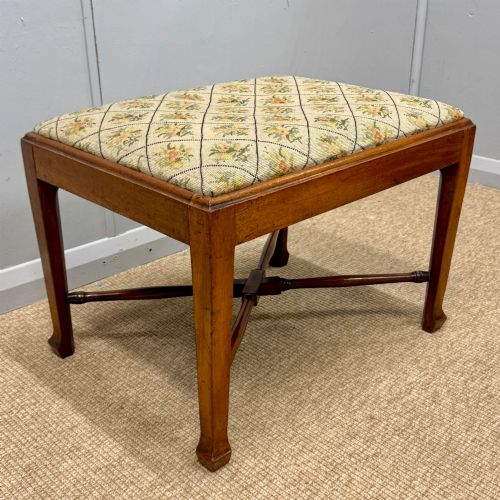


Antique Style Rectangular Stool
An antique style rectangular stool offers solid architectural form and traditional upholstery, providing a practical seat that anchors a period interior.
Antique Style Rectangular Stool
An antique style rectangular stool brings sturdy seating and period character to a room, frequently taking the form of low footstools, dressing table seats, and salon benches. When searching for an antique style rectangular stool, a buyer encounters pieces drawing on earlier centuries such as the Georgian and Baroque eras.
The evidence shows forms spanning the eighteenth through the early twentieth centuries, with revival designs dominating the selection. These pieces range from large dressing table stools with cross stretchers to long cane footstools and low frames set upon brass castors.
Makers of these later revival pieces looked back to earlier reigns, producing walnut and mahogany frames that echo George II and Chippendale aesthetics. Such stools function equally well before a dressing mirror or as a low footboard stool in a traditional reception room.
Materials and construction methods
Timbers selected for these frames include mahogany, walnut, and oak, chosen for their dense grain and suitability for carving. Workshops shaped these hardwoods into sturdy rectangular structures, often reinforcing the legs with cross stretchers for added stability.
Carving provides surface detail on the rails and legs, reflecting revival tastes through motifs such as shell work or scroll feet. Brass castors appear on larger footstools to ease movement across heavy carpets.
Upholstery forms an essential component of the construction, utilising textiles such as tapestry, wool, fabric, and damask. Skilled upholsterers secured these materials over supportive padding to create a firm yet comfortable resting surface.
Some nineteenth-century footstools sit surprisingly low to the floor on brass castors, built heavy enough to stay put while resting tired feet.
Assessing quality in period stools
Quality rests primarily in the crispness of the timber carving and the architectural proportion of the frame. Superior examples display deeply cut ornament on the mahogany or walnut rails rather than shallow, machine-pressed decoration.
The integrity of the structural joints and the weight of the selected hardwood determine the longevity of the piece. Heavier timbers and tight, well-fitted joinery distinguish finer workshop output from more utilitarian seating.
The Antique Style Rectangular Stool Glossary
- Cross stretcher
- An intersecting set of wooden bars connecting the legs beneath a stool to provide rigidity. This structural feature frequently appears on dressing table stools.
- Damask
- A reversible figured fabric traditionally woven with patterns in satin on a contrasting background. It often appears on fine revival salon seating.
- Giltwood
- Timber coated with a thin layer of gold leaf or metallic powder to imitate solid gold. This finish characterises decorative Baroque style frames.
- Castor
- A small wheel mounted in a swivel frame attached to the base of a furniture leg. It allows heavy footstools to be repositioned smoothly across the floor.
Antique Style Rectangular Stool: Frequently Asked Questions
Where should I place a rectangular stool?
These rectangular stools sit comfortably at the foot of a bed, beneath a dressing table, or beside a fireside armchair. Their low profile ensures they do not block sightlines in a room.
They also function well as occasional seating when guests gather, sliding neatly under console tables when not in use.
How do I identify a revival piece?
Revival furniture borrows stylistic vocabulary from earlier reigns, such as the heavy carving of the Georgian period applied to a nineteenth-century frame. Tool marks, timber oxidation, and construction hardware help date the physical wood independently of the decorative style.
Examining the underside reveals secondary woods and joint methods typical of Victorian or Edwardian workshops rather than true eighteenth-century methods.
Are these stools suitable for daily use?
Solid hardwood frames built from mahogany, walnut, or oak provide exceptional structural stability for everyday seating or resting feet. Their robust joinery easily withstands regular household demands.
Modern buyers often update the top textile while retaining the historic wooden frame beneath, ensuring the piece meets contemporary interior standards.
What maintenance do upholstered wood stools need?
Regular dusting with a soft cloth keeps the carved wooden rails free from grit, while periodic waxing preserves the finish of mahogany and walnut. Avoid placing timber frames in direct sunlight to prevent the wood from drying out.
Upholstery benefits from gentle vacuuming with an appropriate attachment to protect delicate textiles like tapestries and damask.