

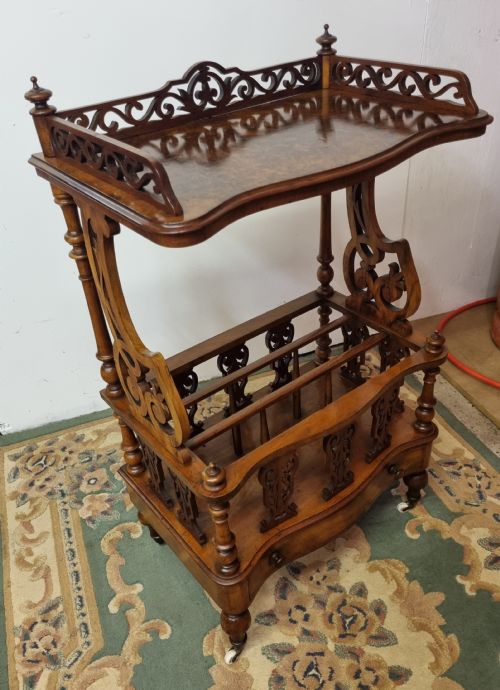
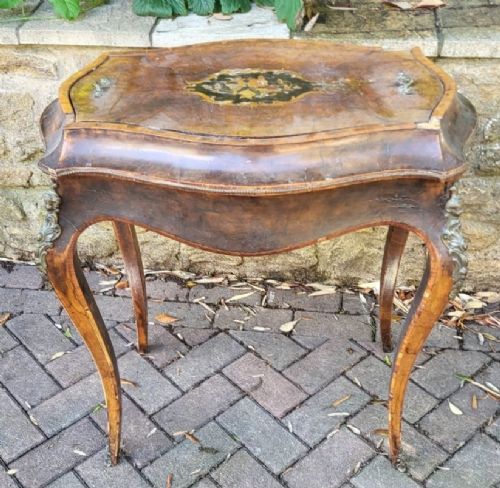

Victorian Serpentine Table
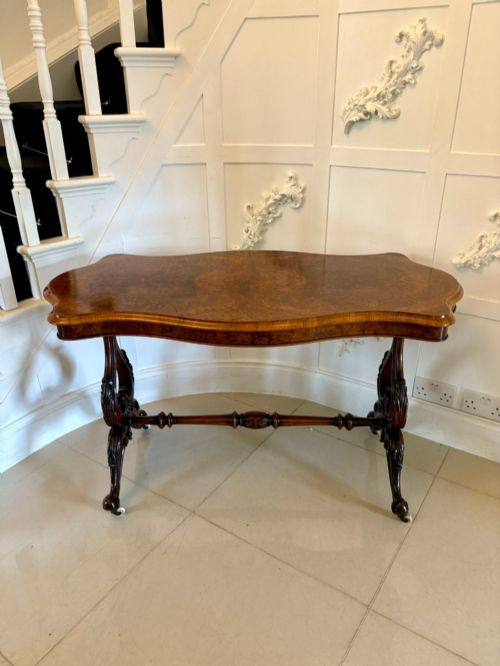
A victorian serpentine table brings undulating curves and rich burr walnut or mahogany into a room, offering a functional surface shaped with distinctive flowing lines.
Victorian Serpentine Table
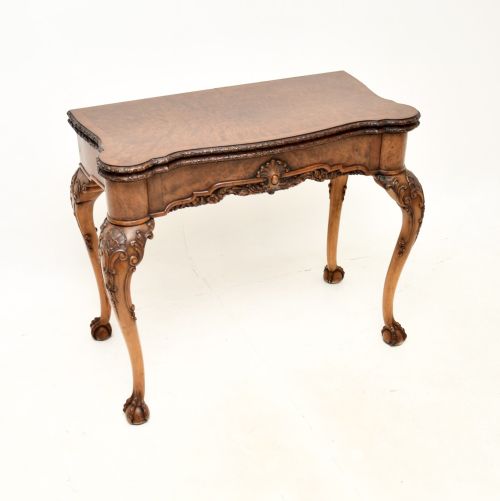
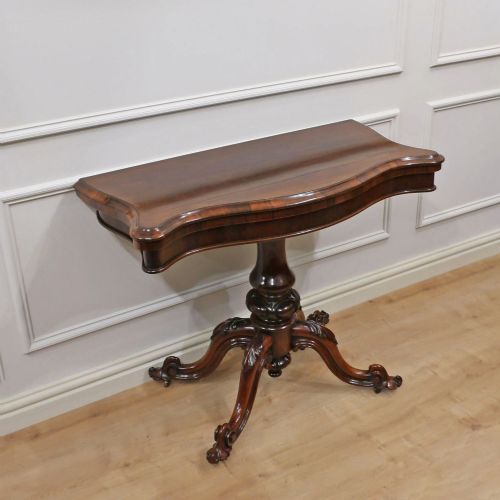
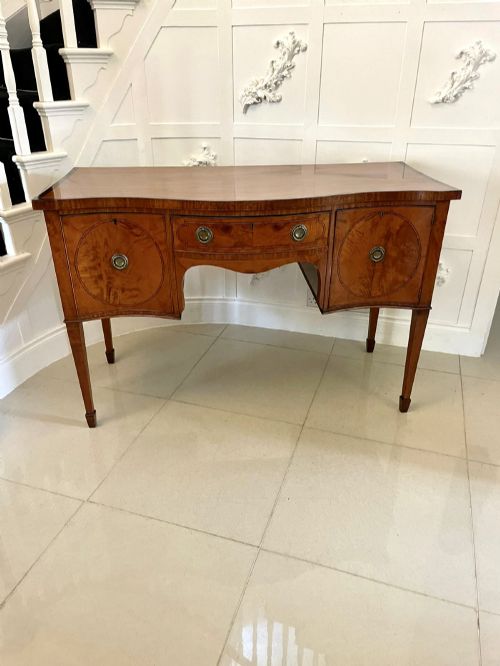
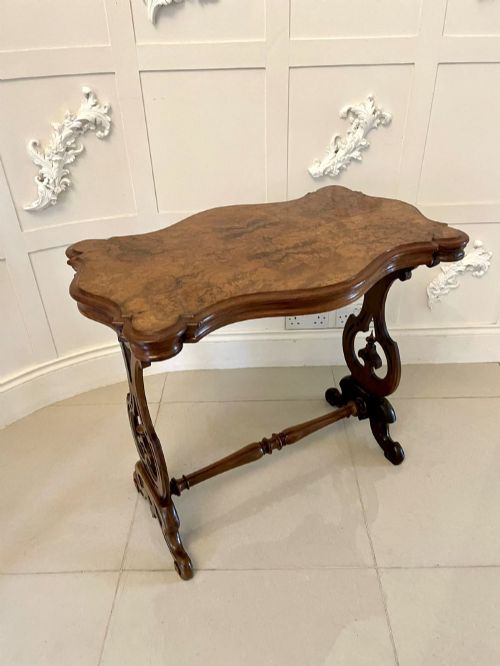
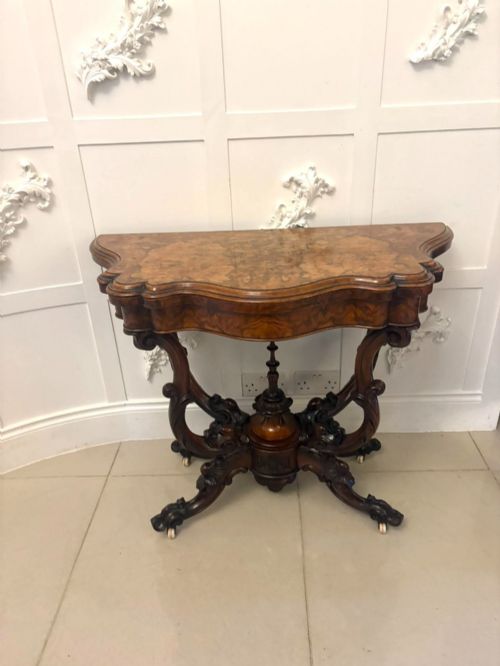
When searching for a victorian serpentine table, a buyer encounters distinctive furniture defined by a sinuous front edge that curves inward and outward. The selection is dominated by card tables, games tables, and centre tables produced during the nineteenth century.
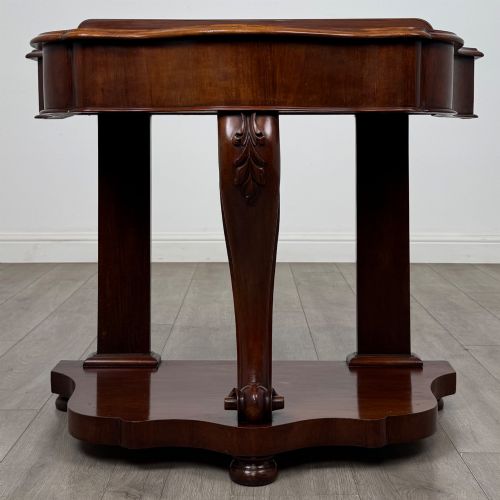
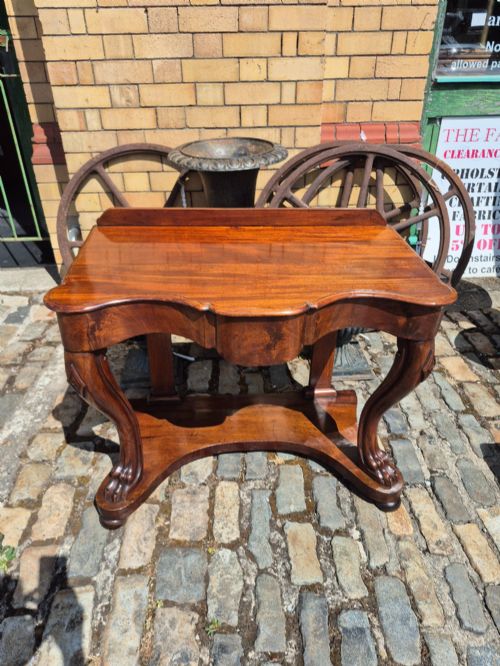
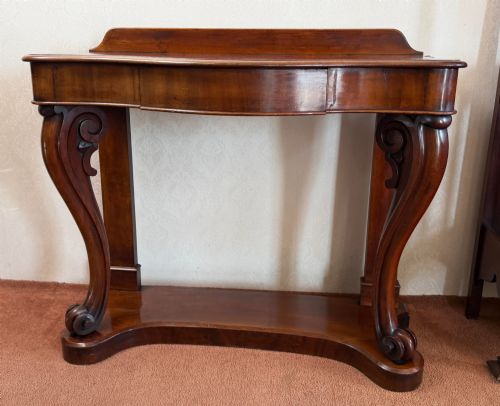
Makers of the period favoured burr walnut and rich mahogany, shaping the timber into console, side, and loo tables. These pieces often feature folding tops, swivel mechanisms, or carved stretcher bases suited to formal reception rooms.
The aesthetic leans heavily into Victorian interpretations of Rococo and Louis XV revivals. Surviving examples demonstrate how cabinet makers translated flowing continental curves into practical English household furniture.
How They Were Made
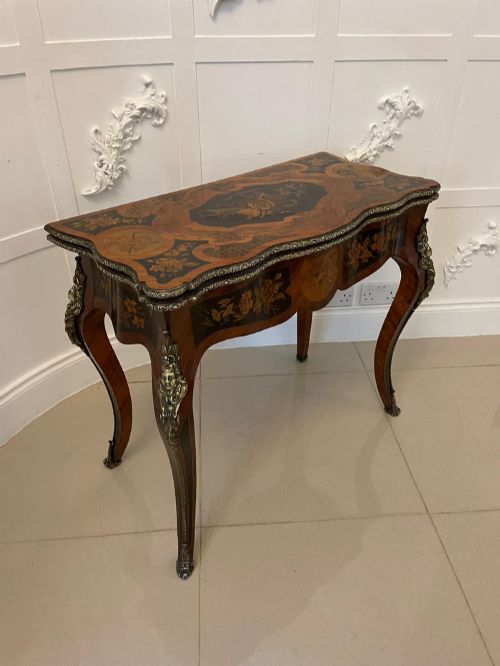
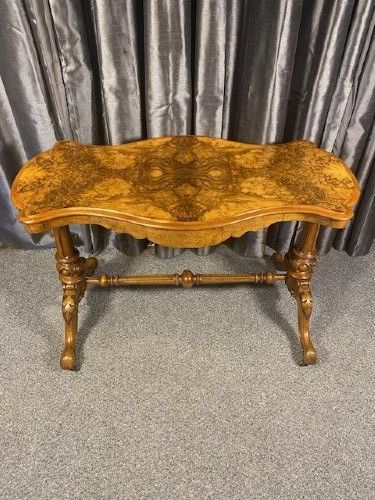
Craftsmen built these tables using solid foundational timbers like mahogany or oak, faced with highly figured burr walnut veneers to create striking grain patterns on the top surfaces. Marquetry inlay, satinwood banding, and kingwood borders frequently accent the primary woods.
The complex curved edge required precise sawing and edge-moulding by hand before the attachment of moulded skirts and cabriole legs. Ormolu mounts, brass castors, and hand-carved wooden baskets or stretcher supports completed the construction.
Card tables and centre tables form the majority of serpentine furniture available from nineteenth-century makers.
What Varies in Quality
The tier of a victorian serpentine table rests upon the choice of veneer and the depth of the figure within the walnut. Finer workshops selected symmetrical, highly burred sections that flowed naturally around the difficult curves of the serpentine edge.
Construction subtleties dictate the upper echelon, visible in crisply carved cabriole legs, robust folding mechanisms, and meticulous marquetry work. Lesser examples rely on plain timber veneers and mechanical shortcuts rather than hand-finished joinery.
Durand
The Victorian Serpentine Table Glossary
- Serpentine
- A shaped furniture front featuring a concave centre flanked by convex ends, resembling the curves of a snake. This profile demands high joinery skill.
- Burr Walnut
- Timber taken from the wart-like growths on walnut trees, yielding intricate, swirling grain patterns. It was extensively utilised for high-status Victorian table tops.
- Card Table
- A folding table designed for evening games, typically lined with baize and featuring a rotating or swing-out rear leg to support the opened leaf.
- Ormolu
- Gilded bronze mounts applied to furniture for decorative effect, popular in French revival pieces of the mid-nineteenth century.
- Canterbury
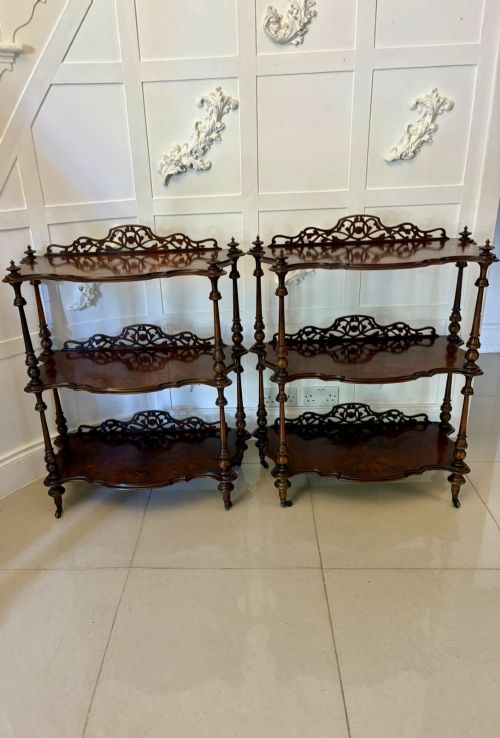
- A low stand with partitioned vertical sections for sheet music or folios, occasionally sharing stylistic traits with related occasional tables.
Victorian Serpentine Table: Frequently Asked Questions
How do I use a card table daily?
A folding card table functions well as a console against a wall when closed, revealing a baize-lined surface when opened for games or writing.
Positioning the piece away from direct heat prevents the walnut veneers from drying and lifting over time.
Are these tables sturdy enough for regular use?
Most centre and console tables possess robust mahogany or oak internal frames designed to withstand daily domestic demands.
Care should be taken when swinging open the tops of card tables to avoid straining the original wooden hinges.
How do I distinguish mid-Victorian from later pieces?
Mid-century examples from around 1850 to 1860 frequently display heavier, hand-carved stretcher bases and richer burr walnut figuring. Later nineteenth-century pieces tend towards lighter inlaid satinwood and machine-cut marquetry.
Examining the secondary timbers inside the frame often clarifies the period of manufacture.