


Victorian Walnut Sofa Table
When you search for a victorian walnut sofa table, you find drop-leaf timber furniture built for nineteenth-century drawing rooms.
Victorian Walnut Sofa Table
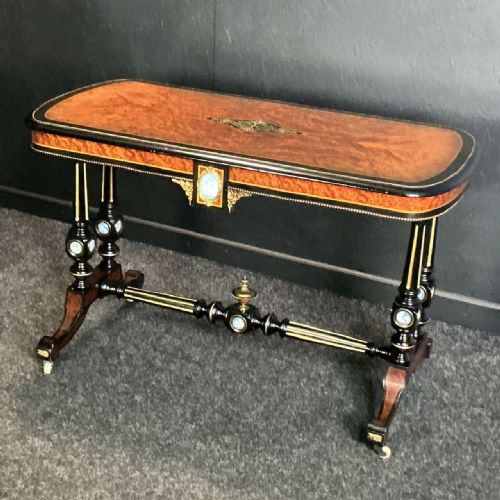
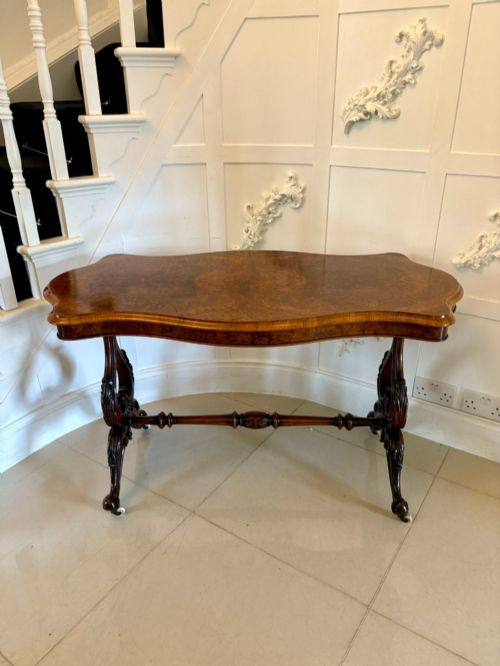
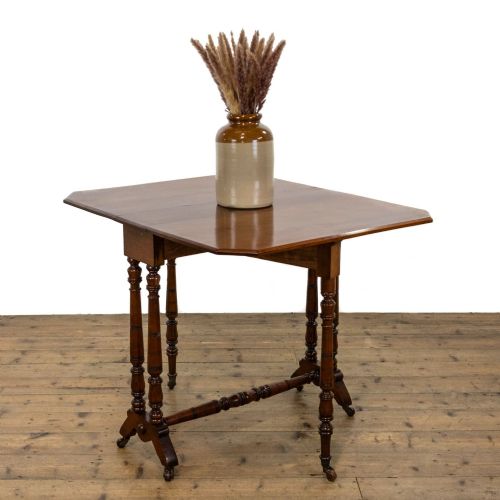
A victorian walnut sofa table is a timber occasional piece designed with drop leaves, often appearing alongside centre tables, library tables, and writing desks in nineteenth-century settings. The forms seen in the evidence span from drop-leaf examples to games tables, lamp tables, and small Sutherland tables.
Most pieces date from the nineteenth century, particularly the decades around 1850, 1860, and 1870, reflecting the peak of Victorian cabinet-making. These tables serve multiple functions today, acting as coffee tables, side tables, or console surfaces in contemporary rooms.
How they were made
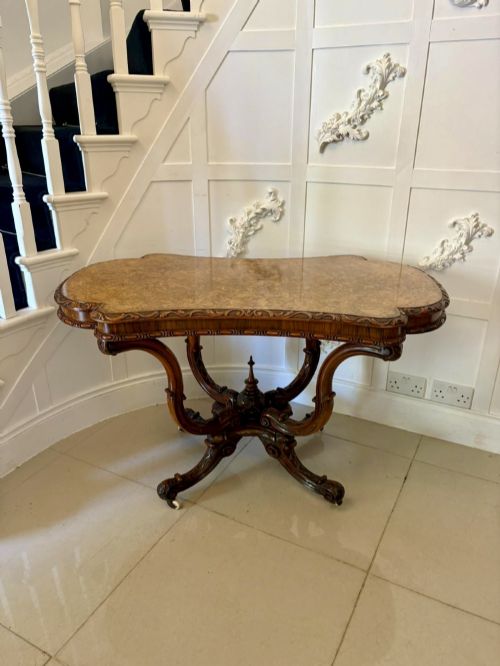
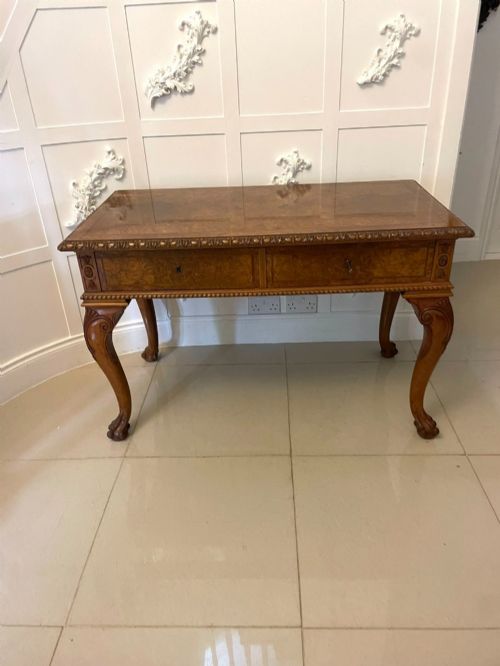
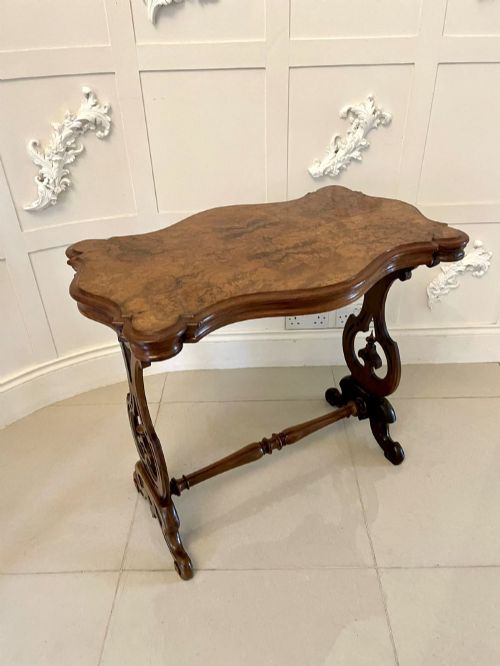
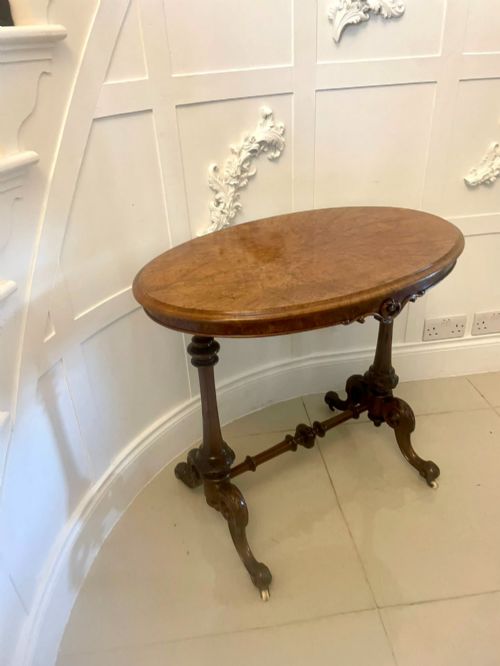
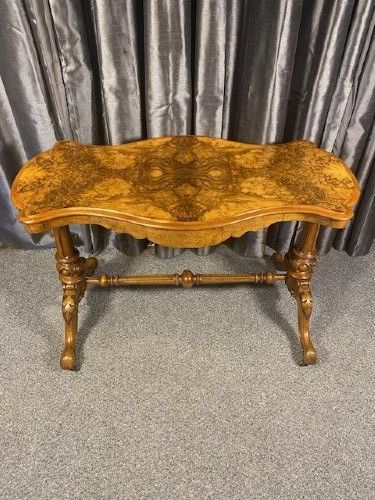
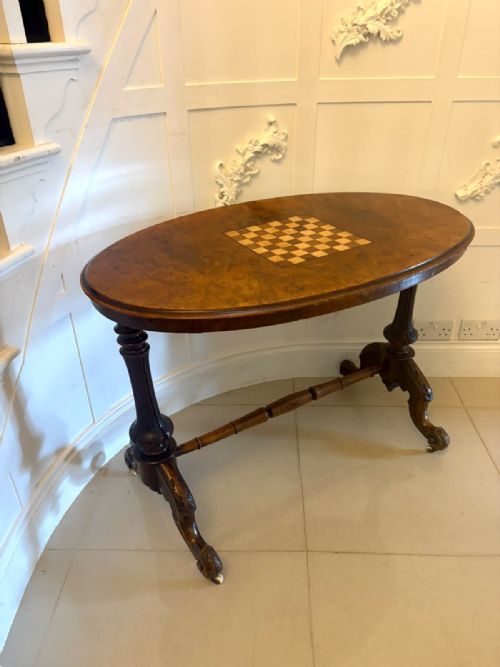
Makers utilised solid walnut and decorative burr walnut veneers applied to secondary timbers, creating rich grain patterns across table tops. Inlays of boxwood and wood marquetry frequently decorate the surfaces of mid-nineteenth-century examples.
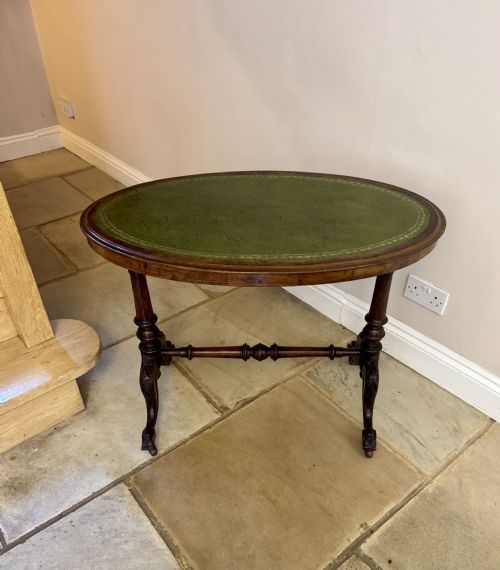
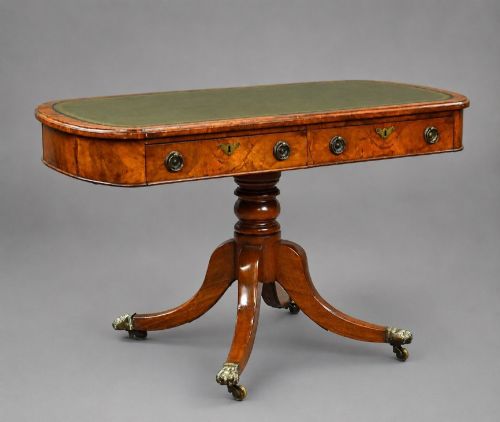
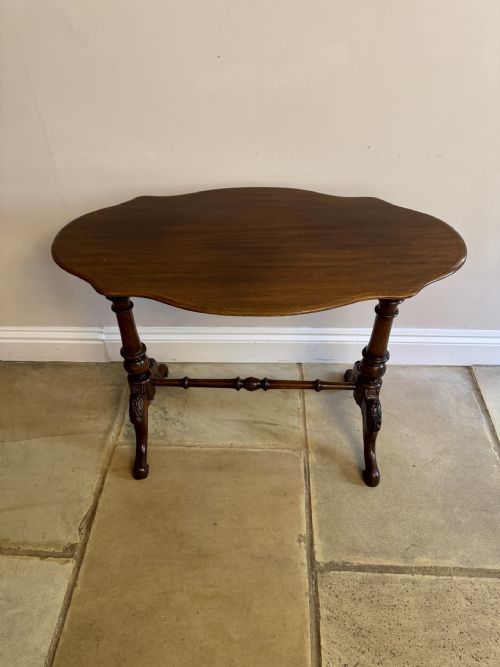
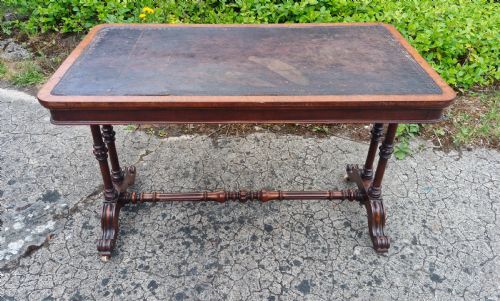
Structural elements incorporate turned spindle bases, barley twist supports, and carved pedestals, occasionally accented with ceramic castors, brass fittings, and leather writing inserts.
Victorian Walnut Sofa Table Retail Price Guide 2026
Typical asking prices for victorian walnut sofa table among the pieces listed under this phrase on Sellingantiques today, from the lower quarter to the upper quarter. They describe what is for sale here now, not the wider market.
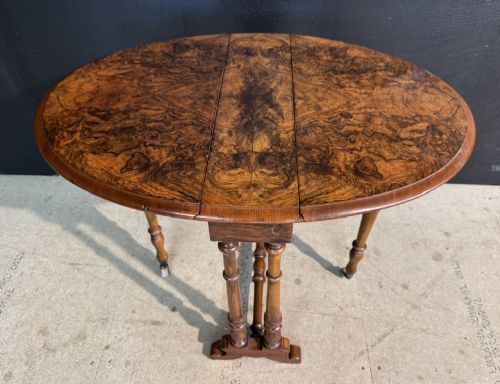
Baby Sutherland tables offer drop-leaf versatility scaled down for compact Victorian tea rooms.
What varies in quality
The standard of a victorian walnut sofa table depends heavily on the selection and matching of the burr walnut veneer across the top and drop leaves. Superior pieces exhibit lively, symmetrical grain patterns rather than plain timber surfaces.
Joinery execution and carving detail differentiate standard production from finer cabinet work, visible in the turning of the base supports and the crispness of any boxwood or marquetry inlay.
Edward’s And Robert’s
The Victorian Walnut Sofa Table Glossary
- Burr Walnut
- A figured wood veneer taken from the wart-like growths on walnut trees, prized for its swirling grain patterns. It appears on the top surfaces of many finer Victorian tables.
- Sutherland Table
- A narrow drop-leaf table with flaps that fold down almost vertically, supported by swinging legs. Miniature versions are especially compact.
- Marquetry
- Decorative patterns formed by fitting together thin slices of various wood veneers. Boxwood is frequently used for contrast in Victorian floral designs.
- Centre Table
- A freestanding table designed to be viewed from all sides rather than placed against a wall. Many pieces share structural traits with sofa tables.
Victorian Walnut Sofa Table: Frequently Asked Questions
What is a victorian walnut sofa table used for today?
These drop-leaf tables function well as compact desks, hallway console surfaces, or low coffee tables in sitting rooms.
Their narrow profile when the leaves are dropped makes them adaptable for smaller spaces.
How do I identify a burr walnut finish?
Burr walnut displays distinctive swirling, knotty grain patterns rather than straight parallel wood lines.
Cabinet-makers used this figured veneer on prominent surfaces like table tops to create visual depth.
What is the difference between a sofa table and a centre table?
Sofa tables feature drop leaves on either side and were traditionally placed near seating furniture.
Centre tables lack drop leaves and are built as freestanding pieces meant to occupy the middle of a room.
How do I date a nineteenth-century walnut table?
Dating relies on stylistic clues like pedestal carvings, leg turning, and the presence of marquetry inlay.
Most examples date from the mid-Victorian decades between 1850 and 1880.