
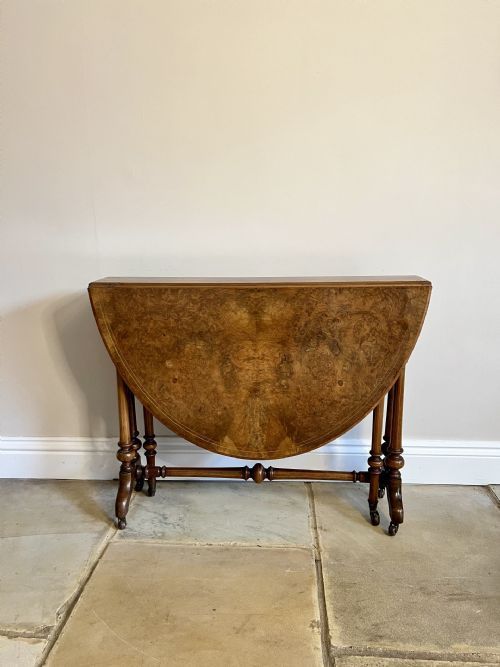


Victorian Sutherland Side Table
A victorian sutherland side table offers a clever folding design that saves space whilst bringing warmth to a room.
Victorian Sutherland Side Table
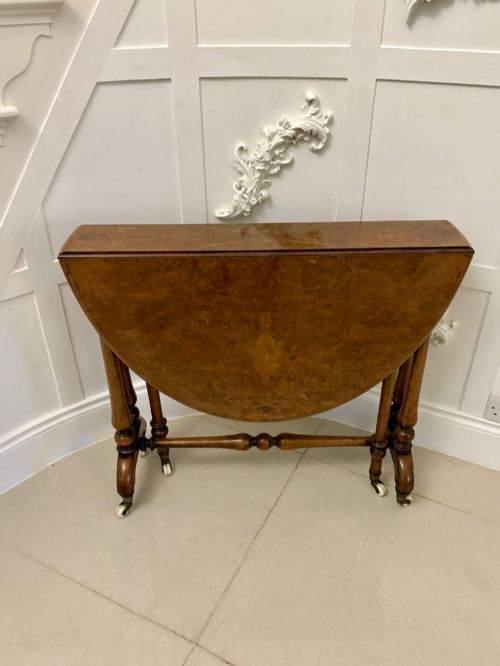
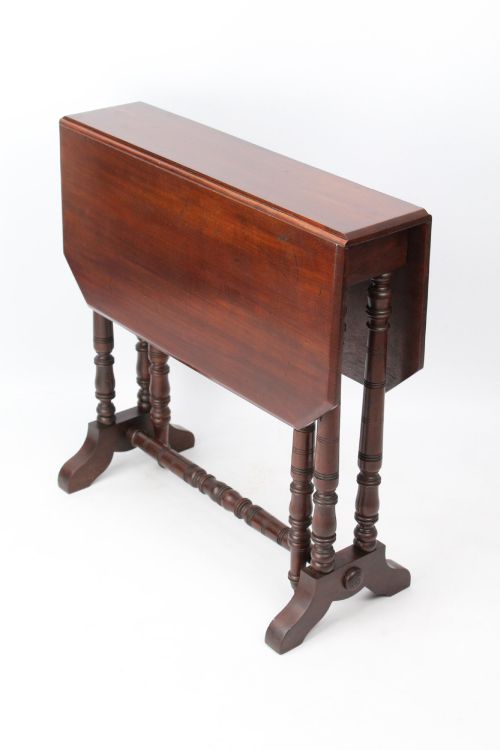
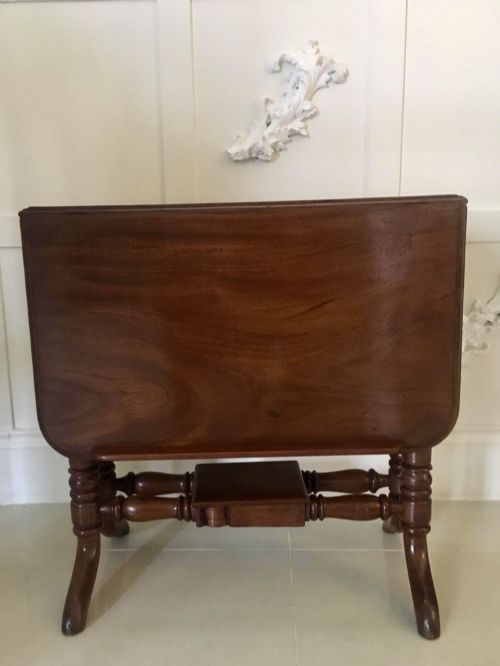
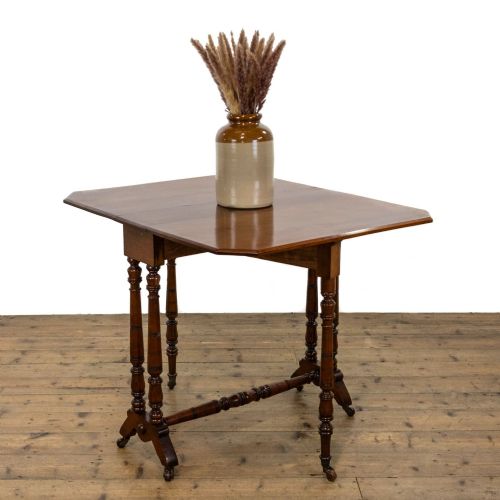
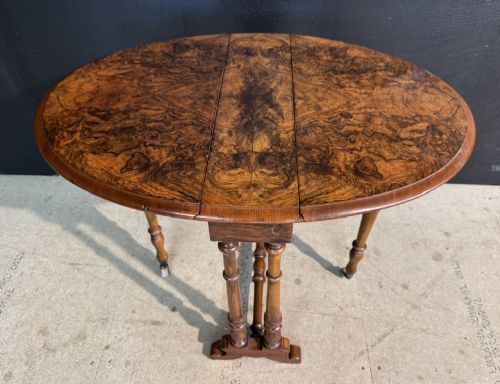
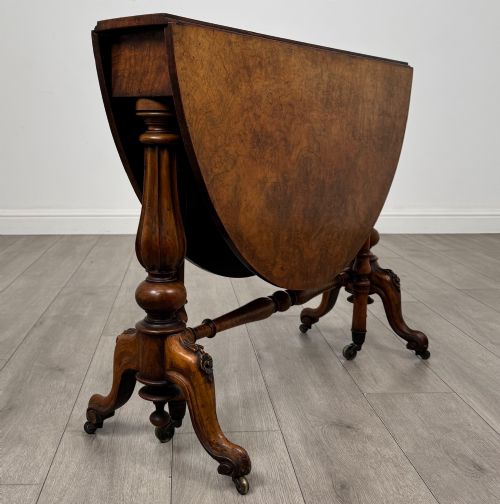
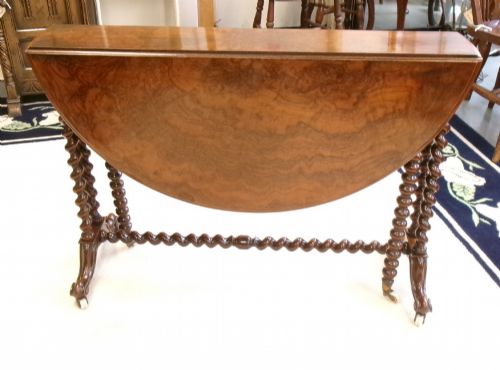
A victorian sutherland side table is a narrow drop-leaf table designed to fold completely flat when not in use. These pieces appear mostly in burr walnut and mahogany, spanning the nineteenth century from the eighteen-sixties onwards.
The format includes standard occasional pieces, reading tables, and smaller baby versions intended for low coffee or lamp use. Oval tops predominate, often supported on gate-leg frames with slender turned or fluted uprights.
Judging Quality
The distinction between ordinary and superior pieces rests on the grain selection within the timber and the crispness of any inlaid marquetry. Finer examples display symmetrical burr walnut figuring across both folding leaves and the central fixed top.
Stability in the gate-leg action and proportion in the turned underframe separate standard production items from workshop pieces with refined joinery.
Object types include occasional tables, reading tables, tea tables, and low coffee tables alongside standard drop-leaf formats.
Jenks & Woods
The Victorian Sutherland Side Table Glossary
- Sutherland table
- A narrow drop-leaf table with hinged flaps supported by swing legs that pull out from the frame. This design allows the table to fold to a slim profile.
- Burr walnut
- Timber taken from a tree growth showing complex swirling grain patterns. Cabinet makers prized this wood for decorative table tops.
- Marquetry
- Inlaid pieces of wood veneer fitted together to form decorative patterns or floral motifs. It requires precise hand-cutting.
- Gate-leg
- A hinged leg that swings outward from the centre frame to support an extended table leaf. It provides stability when the flaps are raised.
- Drop leaf
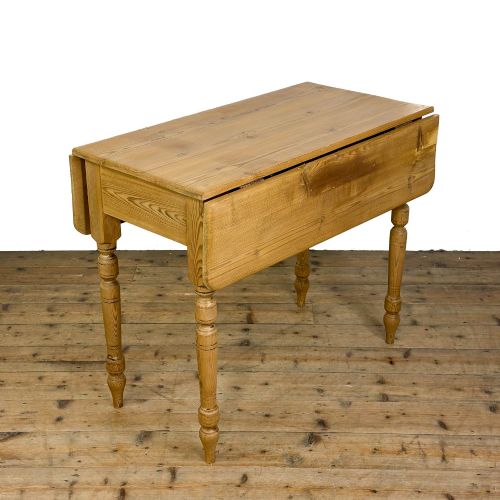
- A table top configuration featuring fixed centre boards with hinged flaps on either side. These flaps lower to reduce the footprint of the furniture.
Victorian Sutherland Side Table: Frequently Asked Questions
How do you fold a sutherland table?
Lift each drop leaf slightly to release the weight from the support leg. Swing the gate-leg inward toward the centre stretcher, then let the leaf drop down vertically.
This leaves the table in its narrowest storage position, ready to slide against a wall.
What room works best for a sutherland table?
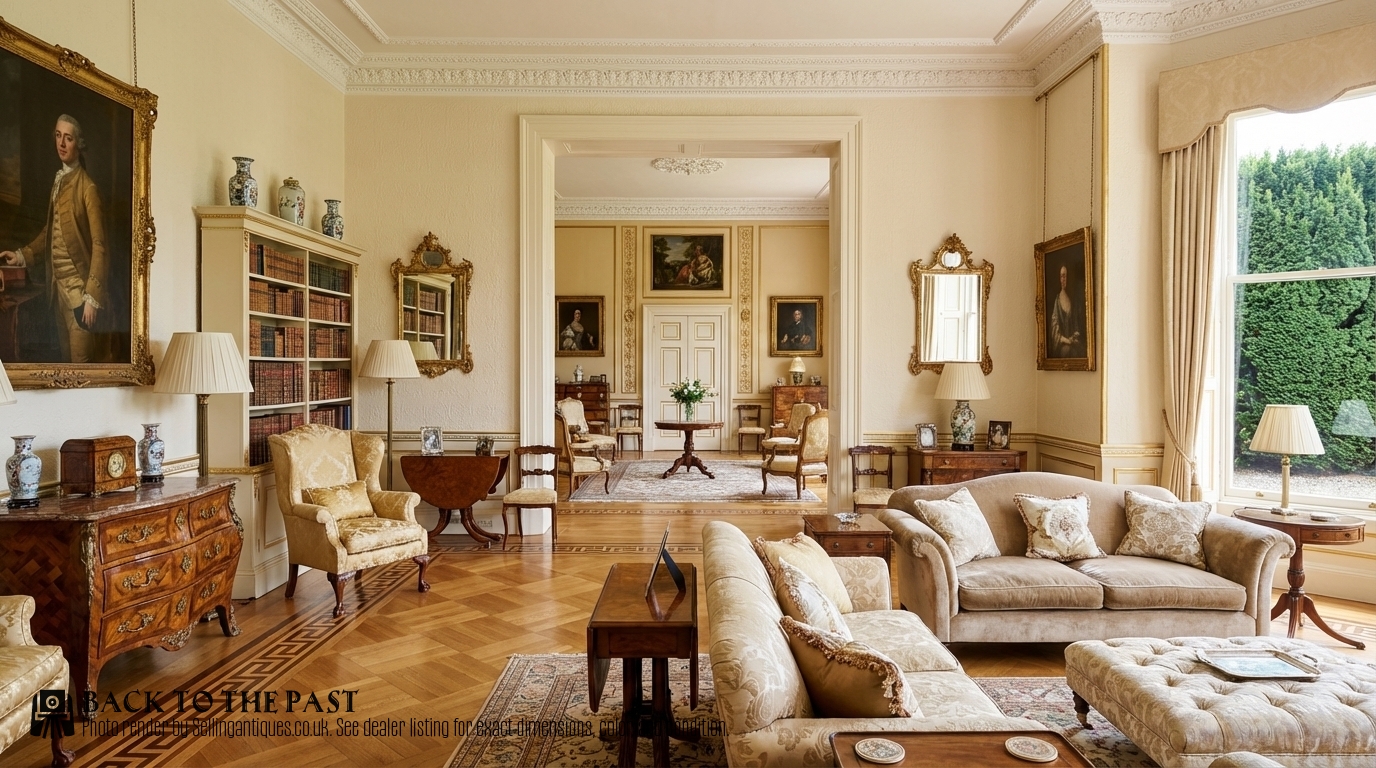
These tables suit sitting rooms and halls where space changes throughout the day. With flaps down, they occupy minimal depth against a wall.
Raised flaps provide a surface for books, lamps, or tea service when guests arrive.
How can you date a victorian sutherland table?
Examine the timber choices, underframe turning, and castor types. Eighteenth-century pieces favour mahogany, while burr walnut becomes common from the eighteen-sixties onward.
Later Victorian and Edwardian examples often feature satinwood stringing or lighter proportions.
What is a baby sutherland table?
A baby sutherland is a miniature version built with a lower overall height and smaller top dimensions. These compact pieces function well as low coffee tables or beside low seating.
They retain the standard folding flap mechanism of full-sized examples.