
Small Walnut Accent Table
A small walnut accent table brings rich grain and practical surface area into a room without dominating the floor plan.
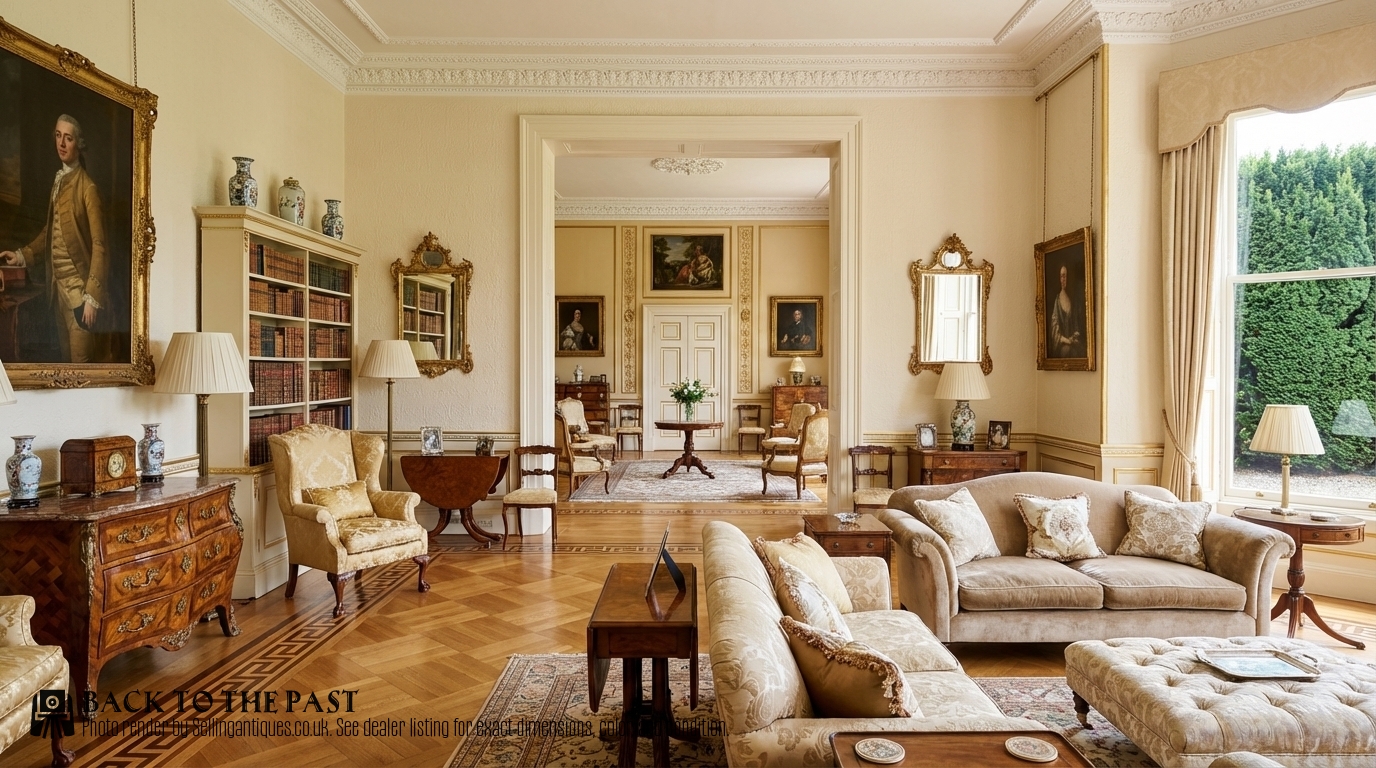
Small Walnut Accent Table
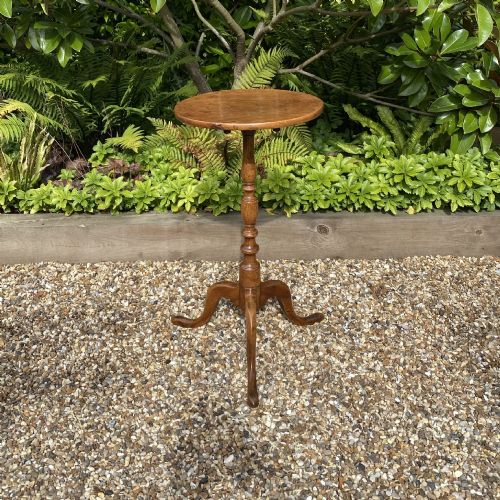
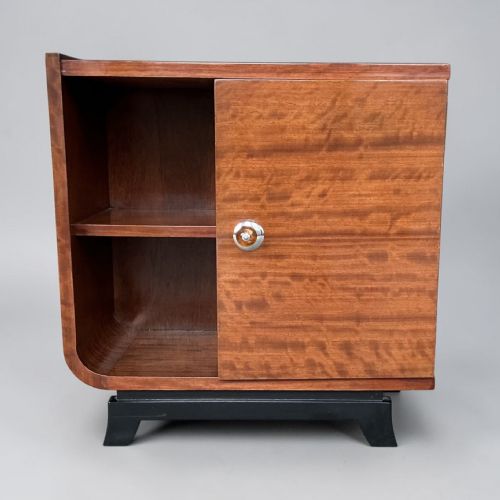
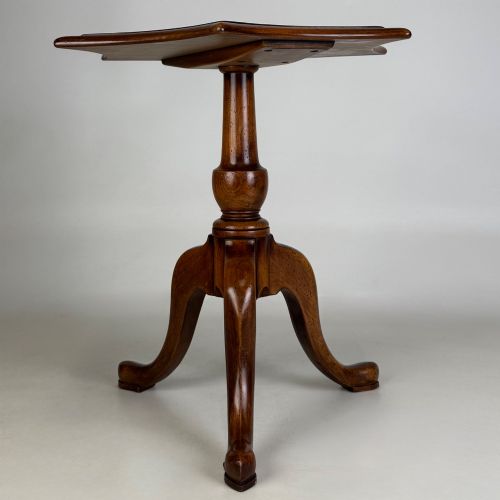
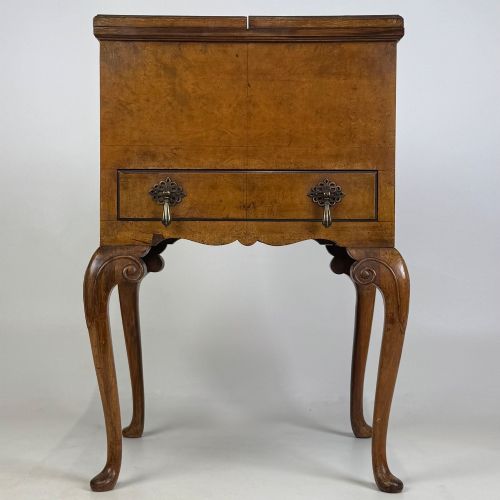
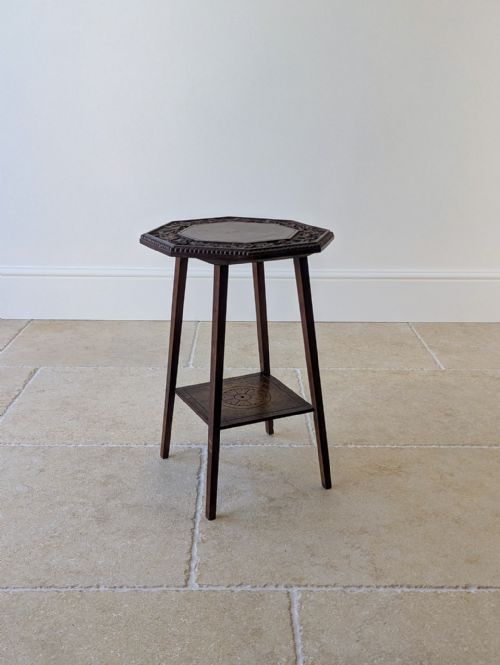
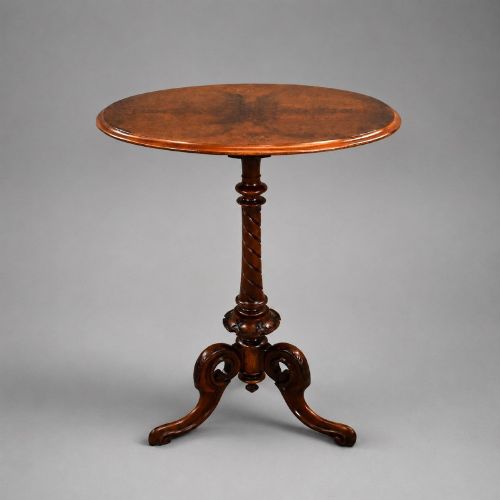
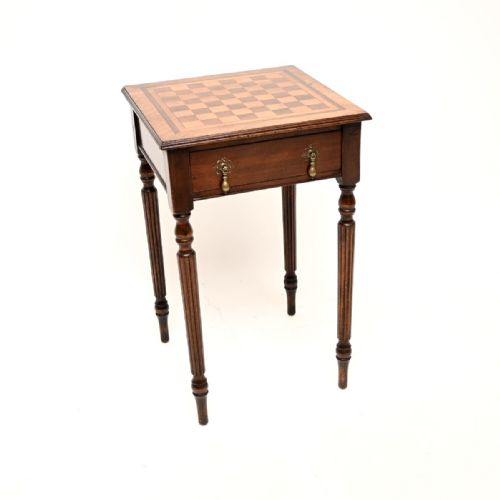
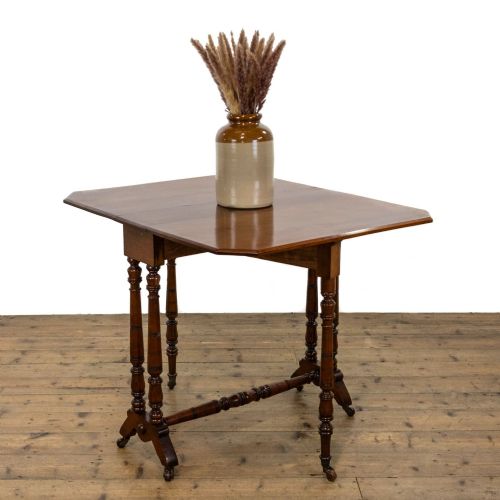
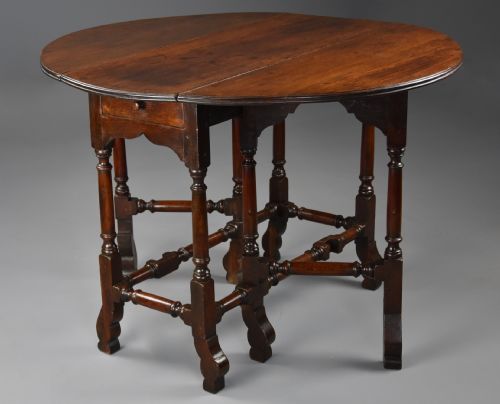
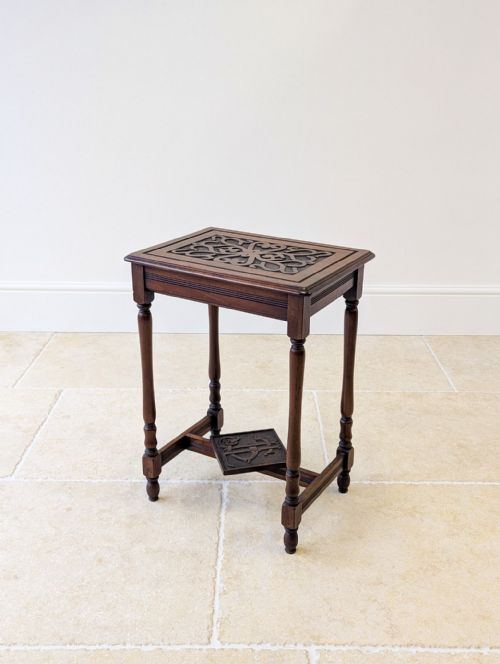
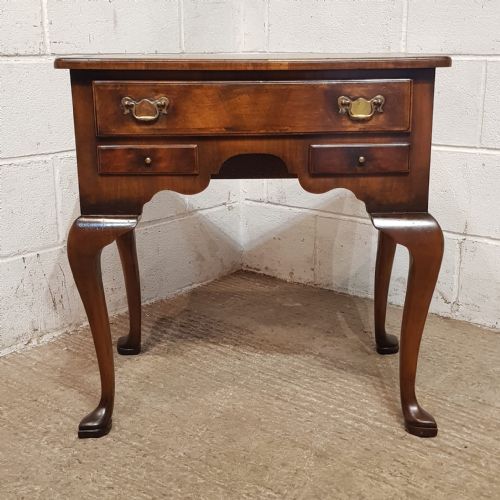
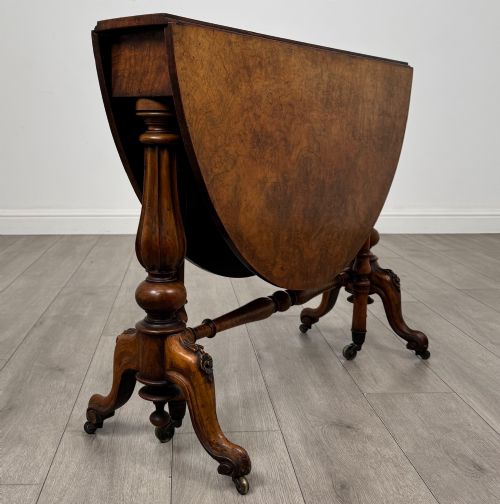
A small walnut accent table encompasses a variety of compact surfaces designed for occasional use, ranging from tripod wine tables to drop-leaf drop flap tables and lowboys. These pieces emerge predominantly from Victorian, Edwardian, and 18th-century periods, capturing styles such as Queen Anne Revival, Arts and Crafts, and Art Deco.
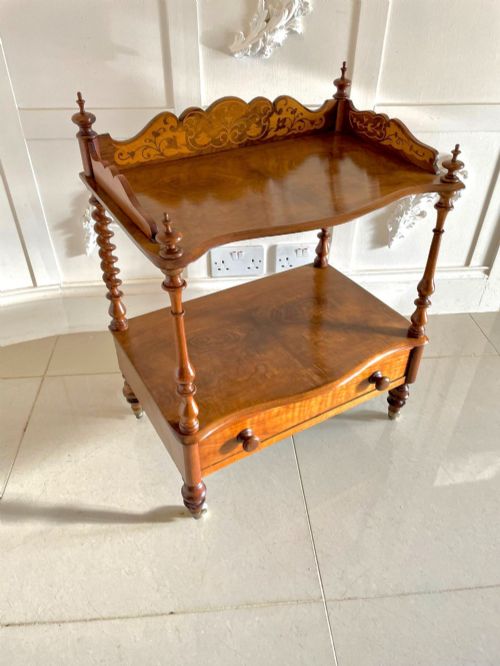
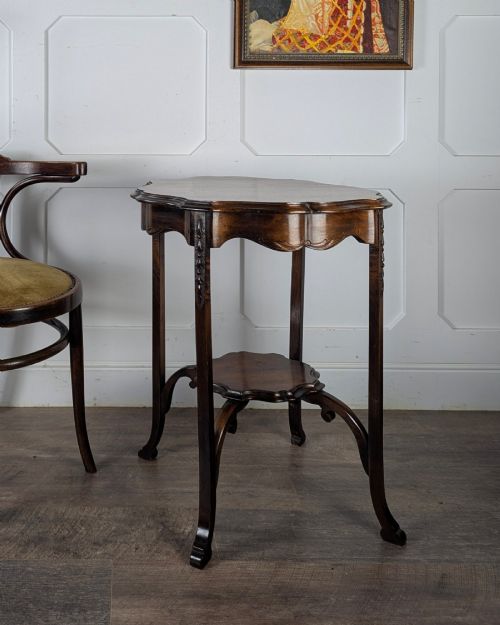
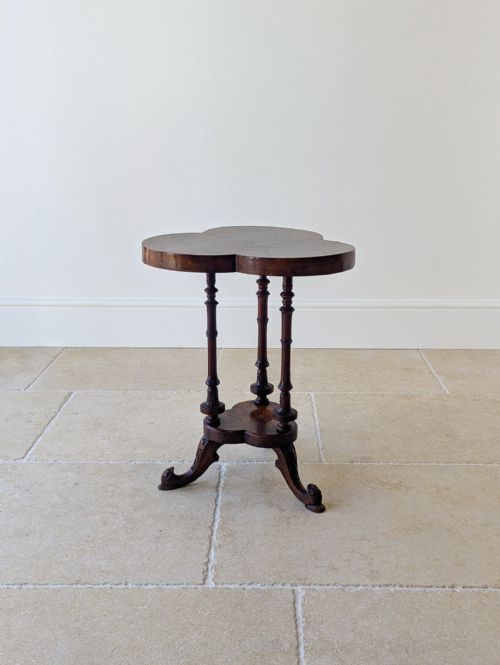
Buyers will frequently encounter occasional tables and lamp tables featuring circular, trefoil, or scalloped tops supported by pedestals, barley twist legs, or tripod bases. The selection also includes functional folding pieces like Sutherland tables and gateleg tables suited for compact spaces.
Materials and Construction
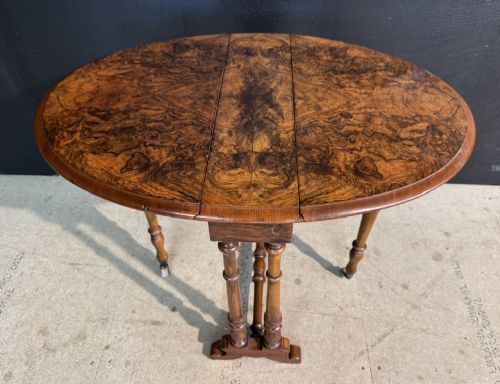
Cabinet makers utilised solid walnut alongside highly figured burr walnut veneer to create striking decorative surfaces on table tops and friezes. Figured walnut displays complex, swirling grain patterns that catch the light effectively.
Structural elements frequently incorporate secondary timbers like mahogany, while decorative details involve brass galleries, gilt bronze mounts, inlay, and marble inserts. Turning techniques produced intricate barley twist and bobbin legs on many Victorian and Edwardian examples.
Listings feature walnut accent pieces spanning the 18th century through the Victorian, Edwardian, and Art Deco periods.
Assessing Quality and Execution
Quality rests heavily on the selection of the timber veneer and the crispness of the carving or turning on the legs and pedestals. Superior examples display carefully matched burr walnut figuring across the table top rather than plain, uniform boards.
The stability of the tripod or gateleg mechanism dictates the structural integrity of the piece over time. Finer tables exhibit precise joinery, restrained inlay work, and original hardware such as brass galleries or swing brackets.
The Small Walnut Accent Table Glossary
- Burr walnut
- A veneer taken from the warted growth on a walnut tree, prized for its swirling, highly decorative grain pattern. It appears frequently on Victorian and Edwardian occasional tables.
- Sutherland table
- A narrow drop-leaf table with exceptionally small flaps supported by swinging gate legs. This form allows the table to fold flat for easy storage against a wall.
- Lowboy
- A small oak or walnut table with drawers, resembling the lower section of a highboy chest. Eighteenth-century and revival examples serve well as compact side tables.
- Bouillotte table
- A small French neoclassical circular table with a raised gallery edge, traditionally used for card games. These pieces often feature marble tops and candle slides.
- Pie crust table
- A small occasional table featuring a carved, raised, undulating rim resembling pastry crust edges. This decorative border is typically worked from solid walnut.
Small Walnut Accent Table: Frequently Asked Questions
Where should I place a small walnut accent table?
These compact tables fit easily beside a sofa, in a narrow hallway, or tucked into an empty corner as a lamp stand.
Their restrained proportions ensure they provide a practical surface without cluttering the circulation space of a room.
How do I clean a walnut table top?
Dust the surface regularly with a soft, dry cloth to prevent the accumulation of grit.
Avoid using silicone polishes or abrasive cleaners, applying a quality beeswax sparingly when the wood appears dry.
Can these tables support heavy lamps?
Most occasional tables and lamp tables are built to handle standard table lamps, books, and decorative objects safely.
Tripod tables require balanced placement of items to maintain stability on their central pillar bases.